涡轮控制器
CN → US| HS Code | Tariff Rate | Origin | Destination | Doc |
|---|---|---|---|---|
| 8481809020 | 37.0% | CN | US | Official Doc |
| 8481809035 | 37.0% | CN | US | Official Doc |
| 9032896075 | 36.7% | CN | US | Official Doc |
| 9032896085 | 36.7% | CN | US | Official Doc |
Product Images
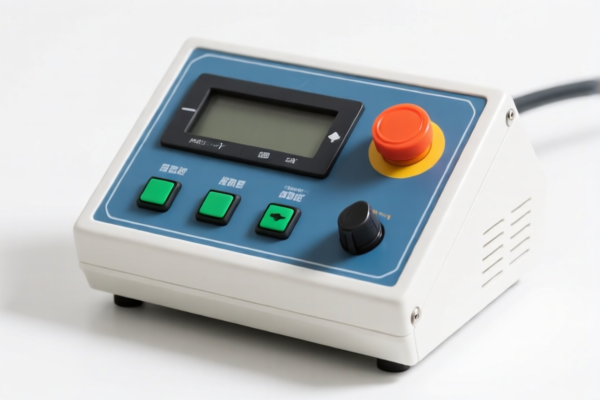
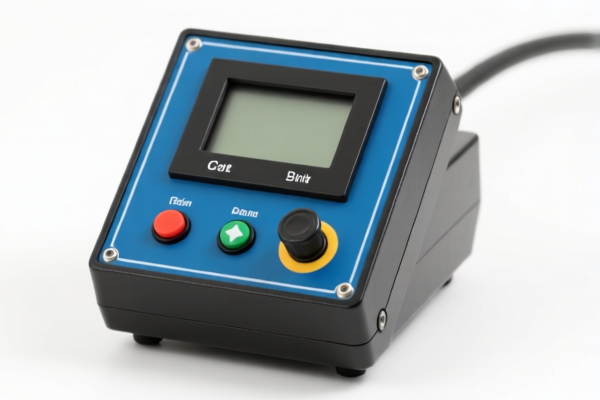
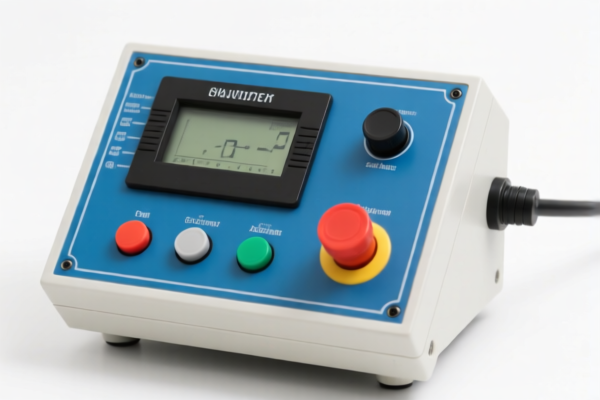
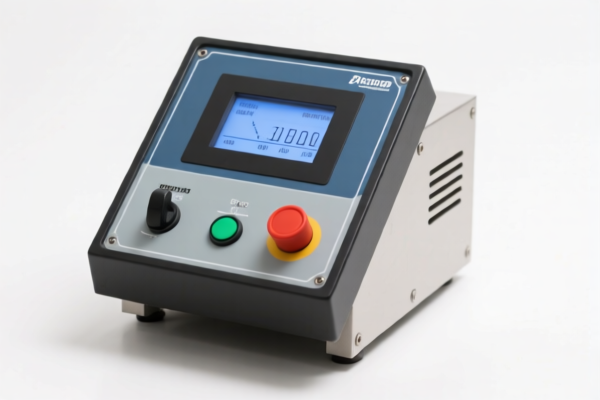
AI Analysis
🌪️ Turbine Controllers (Process Control & Valve Actuation Systems)
🌐 HS Code Reference & Customs Clearance Guide | 2026 Latest Tariff Analysis | Professional Clearance Strategy
📌 I. Product Definition & Classification: What Exactly is a "Turbine Controller"?
A Turbine Controller is a sophisticated device used to monitor, regulate, and control the operational parameters (such as speed, pressure, temperature, or flow rate) of a turbine system. In international trade, its classification depends heavily on its primary function and integration level:
- Process Control Instruments (General): Devices that regulate industrial processes (pressure, fluid dynamics) without being dedicated solely to valve operation → Classified under Chapter 90.
- Valve System Components: Parts specifically designed to actuate or control valves within a piping system, often receiving signal inputs for proportional operation → Classified under Chapter 84.
⚠️ Key Distinction Point:
- If the device functions as a standalone process regulator (managing overall turbine parameters, pressure/fluid logic) → It falls under Chapter 90 (Instruments/Devices).
- If the device functions as a valve control assembly or pneumatic actuator component (specifically integrated into valve systems) → It falls under Chapter 84 (Valves/Boilers).
📦 II. HS Code Classification Details (2026 Latest Tariff Authority Cross-Reference)
Based on the provided data, there are 5 potential HS Codes for Turbine Controllers. The choice depends on the specific technical configuration and functional logic declared.
| HS Code | Product Description / Rationale | Applicable Scenario | Primary Function Logic |
|---|---|---|---|
9032.89.60.75 |
Process Control Device: Other instruments and apparatus for process control. | Standalone turbine speed/pressure regulators not solely tied to valve mechanics. | ✅ Process Control (General Instrument) |
9032.89.60.85 |
Automatic Regulating/Control Apparatus: Other instruments in this category. | General automatic regulation devices for turbine systems (broad category). | ✅ Automatic Regulation (General) |
8481.80.90.35 |
Valve System Component: Proportional operation via control device signals. | Controllers specifically integrated into valve systems, responding to signals for proportional flow control. | ✅ Valve Control (Proportional Operation) |
8481.80.90.40 |
Pneumatic Actuator Support: Bottom-line logic for other categories. | Control components for turbine valve systems, specifically supporting pneumatic execution mechanisms. | ✅ Valve/Pneumatic Support (Support/Assembly) |
9032.81.00.80 |
Hydraulic/Pneumatic Regulator: Automatic regulation for pressure/fluid control. | Controllers specifically managing hydraulic or pneumatic pressure/fluid dynamics in the turbine. | ✅ Hydraulic/Pneumatic Regulation (Specific Fluid Control) |
🔍 Critical Reminder:
- Chapter 90 codes (9032...) are generally preferred if the device is a standalone control unit for the turbine’s operational logic (speed, temp, pressure monitoring).
- Chapter 84 codes (8481...) are stricter and apply if the device is fundamentally a valve attachment or actuator component.
- Misclassification can lead to significant duty differences or customs delays. The "Function Logic" is the deciding factor.
💰 III. 2026 Latest Tariff Rate Breakdown (Including Surcharges & Policy Add-ons)
✅ Applicable Country: United States (US)
✅ Origin: China (CN)
✅ Effective Date: 2025 November 10 onwards (including subsequent imports)
All listed HS codes for Turbine Controllers from China are subject to Section 301 Tariffs and IEEPA Surcharge. Below is the detailed breakdown.
🎯 1. Chapter 90 Classifications: 9032.89.60.75 & 9032.89.60.85
These codes classify the turbine controller as a general process control or automatic regulating instrument.
| Item | Content |
|---|---|
| Base Tariff | 1.7% (Ad Valorem) |
| Section 301 Surcharge | +25.0% (USITC Footnote 9903.88.01) |
| IEEPA Surcharge | +10.0% (Targeting China/HK products, effective Nov 10, 2025) |
| Total Effective Rate | 36.7% |
| Tax Calculation | CIF Value × 36.7% |
| De Minimis Eligibility | ❌ Denied (Not eligible for de minimis exemption) |
| Legal Authority Path | IEEPA:9903.01.25 → IEEPA:9903.01.24 → USITC:9032.89.60.75/85 → FOOTNOTE:9903.88.01 |
📌 Explanation:
- The 1.7% base rate is the standard Most Favored Nation (MFN) duty for instruments of Chapter 90.
- The 25% Section 301 tariff applies to all products listed in List 3/4 (process control equipment often falls here).
- The 10% IEEPA tariff is an additional layer for Chinese-origin goods.
- Total: 36.7%. This is a high-cost classification.
🎯 2. Chapter 84 Classifications: 8481.80.90.35 & 8481.80.90.40
These codes classify the turbine controller as a component of a valve system or pneumatic actuator support.
| Item | Content |
|---|---|
| Base Tariff | 2.0% (Ad Valorem) |
| Section 301 Surcharge | +25.0% (USITC Footnote 9903.88.01) |
| IEEPA Surcharge | +10.0% (Targeting China/HK products, effective Nov 10, 2025) |
| Total Effective Rate | 37.0% |
| Tax Calculation | CIF Value × 37.0% |
| De Minimis Eligibility | ❌ Denied (Not eligible for de minimis exemption) |
| Legal Authority Path | IEEPA:9903.01.25 → IEEPA:9903.01.24 → USITC:8481.80.90.35/40 → FOOTNOTE:9903.88.01 |
📌 Explanation:
- The 2.0% base rate is slightly higher than Chapter 90.
- The 25% + 10% surcharges remain the same.
- Total: 37.0%. This is the highest tariff scenario among the options.
🎯 3. Hydraulic/Pneumatic Specific: 9032.81.00.80
This code classifies the controller specifically as a hydraulic/pneumatic automatic regulator.
| Item | Content |
|---|---|
| Base Tariff | 0.0% (Ad Valorem) |
| Section 301 Surcharge | +25.0% (USITC Footnote 9903.88.01) |
| IEEPA Surcharge | +10.0% (Targeting China/HK products, effective Nov 10, 2025) |
| Total Effective Rate | 35.0% |
| Tax Calculation | CIF Value × 35.0% |
| De Minimis Eligibility | ❌ Denied (Not eligible for de minimis exemption) |
| Legal Authority Path | IEEPA:9903.01.25 → IEEPA:9903.01.24 → USITC:9032.81.00.80 → FOOTNOTE:9903.88.01 |
📌 Explanation:
- Best Case Scenario: The base duty is 0% for hydraulic/pneumatic regulators.
- However, the 25% + 10% surcharges still apply.
- Total: 35.0%. This is the lowest total tariff rate among the 5 options.
- Requirement: The product must clearly demonstrate it is an automatic regulator for hydraulic/pneumatic pressure or fluid flow. General "turbine controllers" that do not explicitly focus on hydraulic/pneumatic regulation may be rejected for this code.
🛠️ IV. Customs Clearance Practical Advice (Battle-Tested Pitfall Avoidance)
✅ 1. Required Documentation Checklist (Non-Negotiable)
| Document | Must Provide | Purpose |
|---|---|---|
| ✅ Technical Datasheet | ✔️ | Must specify: Control type (Process vs. Valve), Input/Output signals, Pressure/Fluid specs. |
| ✅ Functional Description | ✔️ | Explicitly state: "Is this a standalone process controller or a valve actuator component?" |
| ✅ Product Photos (Internal/External) | ✔️ | Show circuit boards, connections, and labeling to prove classification (e.g., hydraulic fittings for 9032.81.00.80). |
| ✅ Commercial Invoice | ✔️ | Must match HS Code description precisely. |
| ✅ Packing List | ✔️ | Confirm no unrelated parts (like general pipes) are included that could confuse classification. |
| ✅ Third-Party Test Reports | ✔️ | ISO, CE, or specific pressure-test reports (if applicable for 9032.81.00.80). |
✅ 2. Classification Strategy & Tips (Key Mnemonics)
🔥 “Hydraulic/Pneumatic First, Process Second, Valve Last!”
| Scenario | Recommended HS Code | Total Tax | Why? |
|---|---|---|---|
| Pure Hydraulic/Pneumatic Regulator | 9032.81.00.80 |
35.0% | Lowest base rate (0%). Must prove hydraulic/pneumatic focus. |
| General Turbine Process Controller | 9032.89.60.75 |
36.7% | Standard process control. Safe middle ground. |
| Valve System Control Component | 8481.80.90.35 / 40 |
37.0% | Highest tax. Only use if strictly a valve part. Avoid unless necessary. |
| Unknown/Mixed Function | 9032.89.60.85 |
36.7% | Broad "Other" category. Use if specific function doesn't fit 75 or 81. |
📌 Critical Tip:
- Do NOT classify as8481codes unless the device is physically attached to or inseparable from a valve system. If it’s a standalone box controlling the turbine, use Chapter 90.
- Do NOT assume9032.81.00.80applies automatically. You must prove it handles hydraulic/pneumatic media specifically. If it handles electrical signals to control a turbine shaft, it’s likely9032.89.60.75.
✅ 3. Special Handling for OEM/Custom Controllers
| Situation | Handling Advice |
|---|---|
| OEM Turbine Controller | Provide customer design specs. Declare "Controller for [Specific Turbine Model]". Avoid generic names like "Valve Part" if it’s a control unit. |
| Hydraulic/Pneumatic Focus | Highlight pressure sensors, fluid connectors, and hydraulic regulators in the description to justify 9032.81.00.80. |
| Integrated Systems | If sold with valves, declare only the controller as the controlled good. Do not bundle valve bodies unless invoiced separately to avoid misclassification of the entire kit. |
🌍 V. Global Market Comparison (2026 Latest)
| Market | Recommended HS Code | Est. Total Duty (China Origin) | Notes |
|---|---|---|---|
| 🇺🇸 USA | 9032.81.00.80 |
35.0% | Best rate. Requires hydraulic/pneumatic proof. |
| 🇺🇸 USA | 9032.89.60.75 |
36.7% | Standard safe option. |
| 🇨🇳 China (Export) | 9032.89.60.75 |
0% (Export Duty) | No export duty, but focus on US destination taxes. |
| 🇪🇺 EU | 9032.89.60 |
Varies (Likely 0-2%) | Check EU TARIC. No IEEPA/Section 301. |
| 🇮🇳 India | 9032.89.60 |
Varies (Likely 10-15%) | Check CBIC. No US-style surcharges. |
📌 Conclusion:
- USA is the highest-cost market due to Section 301 + IEEPA.
- Optimization Goal: Try to justify9032.81.00.80(35.0%) over9032.89.60.75(36.7%) and definitely avoid8481codes (37.0%).
- Differential: 0.3% on large shipments can be significant, but the main risk is rejection of the 35% code if not properly justified.
📌 VI. Common Mistakes & Pitfalls (Lessons Learned)
❌ Mistake 1: Classifying a standalone turbine controller as a Valve Part (8481).
👉 Consequence: Pay 37.0% instead of 36.7% or 35%. Customs may also delay shipment for re-evaluation.
❌ Mistake 2: Claiming 9032.81.00.80 for a purely Electrical Control Unit.
👉 Consequence: Rejection by Customs. Must prove Hydraulic/Pneumatic function. Backlog and potential fines.
❌ Mistake 3: Ignoring IEEPA Surcharge.
👉 Consequence: Underpayment. The 10% IEEPA is mandatory for Chinese goods regardless of HS Code.
❌ Mistake 4: Using vague descriptions like "Turbine Part".
👉 Consequence: Customs has no basis to determine function. High risk of audit.
✅ Correct Practice:
"Automatic Hydraulic Regulator for Turbine Pressure Control, Model XYZ, No Valve Body Included, FCC RoHS Compliant" → Justifies
9032.81.00.80.
🎯 VII. Conclusion: Professional Classification, Cost Savings, Smooth Clearance
🎯 Remember the Hierarchy:
🔹 "Hydraulic First (35%), Process Middle (36.7%), Valve Last (37%)"
🔹 "Prove Fluid Logic for 35%, Prove Control Logic for 36.7%"
🔹 "Always Add 35% Minimum for China-US Imports!"
📌 Pro Tip:
If your Turbine Controller is essential for national security or critical infrastructure, consider applying for a Section 301 Exclusion (if available) or Advance Ruling.
For non-Chinese origin (e.g., assembled in Vietnam or Mexico), IEEPA/Section 301 may not apply, potentially reducing duties to near 0-2%.
📣 Immediate Action:
📞 Consult your Customs Broker with Technical Datasheets
🚀 Optimize for9032.81.00.80if possible, otherwise9032.89.60.75
💡 Save 0.3-2.0% on every shipment through precise classification!
✨ Precision in Classification is Profit in the Pocket!
💼 Don’t let tax differences erode your margin!
Customer Reviews
About HS Code Classification
The Harmonized System (HS) is an internationally standardized nomenclature developed by the World Customs Organization (WCO) to classify traded products. Over 200 countries use the HS system as the basis for customs tariffs, trade statistics, and import/export regulations.
Each HS code follows a hierarchical structure:
- Chapter (2 digits) — Broad category of goods (e.g., Chapter 84: Machinery and Mechanical Appliances)
- Heading (4 digits) — More specific grouping within the chapter
- Subheading (6 digits) — Internationally standardized breakdown, used by all WCO member countries
- National subdivisions (8-10 digits) — Country-specific extensions for further classification, such as US HTSUS 10-digit codes
Correct HS code classification is essential for smooth customs clearance, accurate duty payment, and compliance with trade regulations. Misclassification can lead to customs delays, overpayment of duties, or penalties.
When importing from CN to US, the applicable tariff rates may include:
- Most-Favored-Nation (MFN) rate — The standard duty rate applied to WTO members
- General rate — Applied to countries without trade agreements
- Trade remedy duties — Additional tariffs such as Section 301 (anti-dumping), Section 232 (national security), or countervailing duties
The information provided on this page is for reference purposes only. For official classification, please consult with your local customs authority or a licensed customs broker.