润滑油清净分散剂
CN → US| HS Code | Tariff Rate | Origin | Destination | Doc |
|---|---|---|---|---|
| 3402905030 | 38.7% | CN | US | Official Doc |
| 3402901000 | 38.8% | CN | US | Official Doc |
| 3402422050 | 39.0% | CN | US | Official Doc |
| 3815905000 | 40.0% | CN | US | Official Doc |
| 3815903000 | 35.0% | CN | US | Official Doc |
Product Images
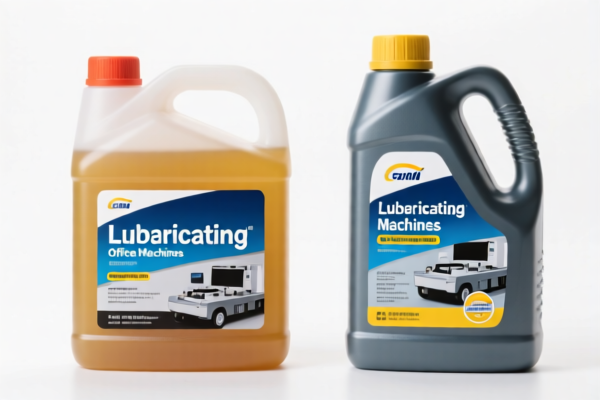
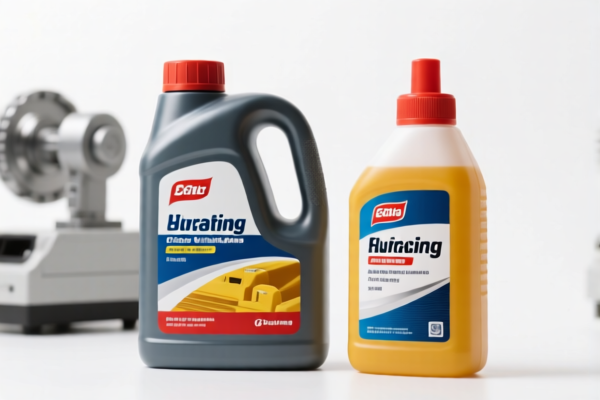
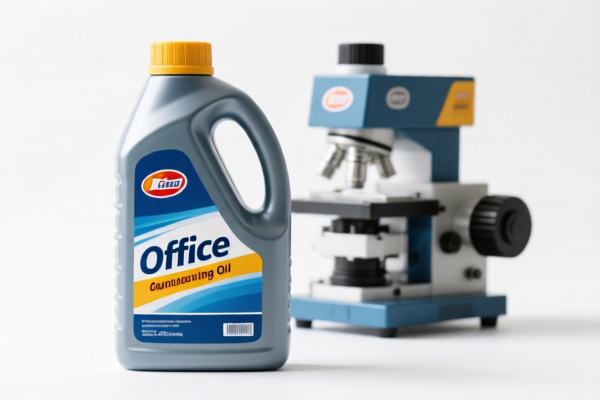
AI Analysis
🛢️ Lubricant Detergent-Dispersant (Additives for Lubricants)
🌐 HS Code Reference & Customs Clearance Guide | 2026 Latest Tariff Analysis | Professional Clearance Strategy for Chemical Additives
📌 I. Product Definition & Classification: What Exactly is "Lubricant Detergent-Dispersant"?
Lubricant Detergent-Dispersants are high-performance chemical additives added to engine oils and industrial lubricants to maintain engine cleanliness. Their dual function is critical: 1. Detergent (清净): Neutralizes acidic byproducts of combustion (sulfuric/nitric acids) and prevents high-temperature deposits (varnish, carbon) on pistons and rings. 2. Dispersant (分散): Keeps low-temperature soot, sludge, and contaminants suspended in the oil, preventing them from agglomerating into harmful deposits that clog filters or engines.
⚠️ Key Classification Challenge:
- These are typically complex chemical mixtures, often based on sulfonates, phenates, or magnesium/calcium salts, or non-ionic surfactants (like polyisobutylene succinimides).
- They can fall under Chapter 34 (Surface Active Agents/Cleaning Preparations) or Chapter 38 (Miscellaneous Chemical Products/Catalysts/Additives), depending on the specific chemical nature and primary function asserted in the declaration.
📦 II. HS Code Classification Details (2026 Latest Tariff Alignment)
Based on the provided data, here are the 5 most likely HS Code matches for "Lubricant Detergent-Dispersant," ranked by functional logic and tax implications.
| HS Code | Product Description | Logic for Matching | Total Tax Rate (US/CN) |
|---|---|---|---|
| 3402.90.50.30 | Other Surface Active Agents | "Cleaning" Function Match: The term "Detergent" (清净) aligns directly with "Cleaning preparations" in Chapter 34. If the product is marketed primarily for its cleaning/detergency action on engine parts. | 38.7% |
| 3402.90.10.00 | Other Surface Active Agents | Surfactant Category: Fits the broad category of "Synthetic cleaning agents" and organic surfactants. A safe, broad classification for generic detergent-dispersant additives. | 38.8% |
| 3402.42.20.50 | Non-ionic Surface Active Agents | Material Composition Match: Specifically if the dispersant is based on Oleic Acid (fatty acid) or other animal/vegetable-derived fat substances. Highlights the "non-ionic" nature common in polyolefin dispersants. | 39.0% |
| 3815.90.50.00 | Other Reaction Initiators, Accelerators, Catalysts | Chemical Auxiliary Nature: Views the additive as a "chemical aid" that regulates or accelerates combustion byproduct neutralization. Fits the "Miscellaneous Chemical Products" chapter if viewed as a process aid rather than a cleaner. | 40.0% |
| 3815.90.30.00 | Other Chemical Products (Inorganic/Non-specific) | General Chemical Aid: Broad catch-all for chemical additives that don't fit specific subheadings. Assumes "Detergent-Dispersant" is a generic chemical stabilizer/accelerator. | 35.0% |
🔍 Critical Distinction:
- Chapter 34 (3402) is favored if the product is primarily sold as a "Cleaning/Detergent" agent or Surfactant.
- Chapter 38 (3815) is favored if the product is sold as a Lubricant Additive/Catalyst or Chemical Stabilizer.
- Note: The tax rates vary significantly (35% - 40%) due to different base tariffs and specific US trade policy footnotes.
💰 III. 2026 Latest Tariff Rate Breakdown (Including Additional Duties)
✅ Applicable Country: United States (US)
✅ Origin: China (CN)
✅ Effective Time: Post-November 2025 (Includes Section 301 & IEEPA surcharges)
🎯 1. 3402.90.50.30 – Best Match for "Detergent" Function
- Base Tariff: 3.7%
- Section 301 (25%): +25% (USITC Footnote 9903.88.01 applicable to chemical preparations)
- IEEPA (10%): +10% (China-specific surcharge)
- Total Rate: 38.7%
- Legal Basis:
IEEPA:9903.01.25→USITC:3402.90.50.30→FOOTNOTE:9903.88.01 - De Minimis: ❌ Not Eligible (Deny De Minimis for China origin)
🎯 2. 3402.90.10.00 – Broad Surfactant Category
- Base Tariff: 3.8%
- Section 301 (25%): +25%
- IEEPA (10%): +10%
- Total Rate: 38.8%
- Note: Nearly identical to above, but slightly higher base duty. Safe for general surfactant declarations.
🎯 3. 3402.42.20.50 – Oleic Acid/Non-Ionic Specific
- Base Tariff: 4.0%
- Section 301 (25%): +25%
- IEEPA (10%): +10%
- Total Rate: 39.0%
- Note: Use only if the product is specifically derived from Oleic Acid or vegetable/animal fats. Misclassification here can lead to audits.
🎯 4. 3815.90.50.00 – Chemical Catalyst/Auxiliary
- Base Tariff: 5.0%
- Section 301 (25%): +25%
- IEEPA (10%): +10%
- Total Rate: 40.0%
- Note: Higher base duty makes this the most expensive option in the Chapter 34/38 overlap. Only use if the product is strictly defined as a "Catalyst" or "Reaction Initiator."
🎯 5. 3815.90.30.00 – General Chemical Product (Lowest Tax)
- Base Tariff: 0.0%
- Section 301 (25%): +25%
- IEEPA (10%): +10%
- Total Rate: 35.0%
- ⚠️ High Risk: This is the lowest tax rate (35%). However, it requires proving the product is a "general chemical product" without specific surfactant or detergent characteristics. High scrutiny risk if the product contains sulfonates/phenates (classic detergents). Customs may reclassify to 3402 if surfactant properties are dominant.
🛠️ IV. Customs Clearance Practical Advice (Pitfall Avoidance Guide)
✅ 1. Required Documentation Checklist
| Document | Required? | Description |
|---|---|---|
| ✅ MSDS (SDS) | ✔️ | Must specify chemical composition, CAS numbers, and function. |
| ✅ Product Specification Sheet | ✔️ | Must detail "Detergent" vs. "Dispersant" ratio and base oil type. |
| ✅ Label/Packaging Photos | ✔️ | Clear view of chemical name, hazard symbols, and net weight. |
| ✅ Certificate of Origin | ✔️ | Essential for determining IEEPA applicability. |
| ✅ Commercial Invoice | ✔️ | Must describe item as "Lubricant Additive" or "Detergent-Dispersant," not vague terms. |
| ✅ Third-Party Test Report | ✔️ | Proof of chemical nature (e.g., GC-MS analysis) if disputed. |
✅ 2. Declaration Strategy (Key Mantra)
🔥 "Function First, Composition Second, Avoid Vague Terms!"
| Scenario | Recommended Declaration | Risk |
|---|---|---|
| Product is primarily a Surfactant | "Surface Active Agent for Lubricants" | Low risk, use 3402 codes. |
| Product is a Complex Oil Additive | "Lubricant Additive, Detergent Type" | Medium risk, may require chemical analysis. |
| Product contains Oleic Acid | "Non-ionic Surface Active Agent, Oleic Acid Based" | Use 3402.42.20.50. |
| Product is a Catalyst | "Reaction Accelerator for Chemical Process" | Use 3815.90.50.00 (High tax). |
📌 Warning: Do NOT declare as "Lubricating Oil" (HS 2710). Detergent-dispersants are additives (usually <5-10% in final blend), not the base oil itself. Misclassification as 2710 is a major red flag.
✅ 3. Special Cases & Handling
| Situation | Handling Advice |
|---|---|
| OEM Custom Formulations | Provide formula breakdown to Customs. If >50% is surfactant, Chapter 34 is safer. |
| Mixed Imports | Do not mix with base oils in one HS Code. Declare additives separately. |
| High Value Shipments | Consider Advance Ruling from CBP to lock in HS Code and tax rate before shipment. |
| Use of 3815.90.30.00 (35%) | Only use if you have strong chemical evidence that the product does not function primarily as a surfactant or cleaner. Otherwise, risk of penalty. |
🌍 V. Global Market Comparison (2026 Update)
| Country/Region | Recommended HS Code | Base Tariff | Additional Tax (China) | Total Est. | Notes |
|---|---|---|---|---|---|
| 🇺🇸 USA | 3402.90.50.30 |
3.7% | +35% (301+IEEPA) | 38.7% | Strict on "Cleaning" vs. "Chemical" distinction. |
| 🇺🇸 USA (Low Tax Route) | 3815.90.30.00 |
0.0% | +35% | 35.0% | High audit risk. Requires strong chemical justification. |
| 🇨🇳 China (Import) | 3402.90.50.30 |
6.5% | 0% | 6.5% | No US-style surcharges. Lower barrier. |
| 🇪🇺 EU | 3402.90.90 |
0% | 0% | 0% | Favorable for chemical additives under certain conditions. |
| 🇯🇵 Japan | 3402.90.000 |
0% | 0% | 0% | Generally tariff-free for chemical additives. |
📌 Conclusion:
- USA is the most complex market due to layered tariffs (301 + IEEPA).
- Chapter 34 is safer for "Detergent" products, but Chapter 38 may offer lower taxes if chemically defensible.
- EU/Japan offer significant duty advantages for these chemical products.
📌 VI. Common Errors & Pitfalls (Blood Lessons)
❌ Error 1: Declaring as "Lubricating Oil" (HS 2710)
👉 Consequence: Misclassification penalty, potential seizure, as additives are not base oils.
❌ Error 2: Using vague terms like "Chemical Stuff" or "Oil Additive" without HS Code specificity
👉 Consequence: Customs holds shipment for inspection, delays clearance by weeks.
❌ Error 3: Choosing 3815.90.30.00 without chemical proof
👉 Consequence: Customs reclassifies to 3402 (38.8%) + fines for undervaluation of duty.
❌ Error 4: Ignoring IEEPA applicability
👉 Consequence: Underpayment of the 10% IEEPA surcharge, leading to retroactive duties + interest.
✅ Correct Practice:
"Lubricant Additive, Detergent-Dispersant, Based on Calcium Sulfonate, Net Weight 50kg, CAS # [Insert], HS Code: 3402.90.50.30"
🎯 VII. Conclusion: Precise Classification Saves Money!
🎯 Remember the Mantra:
🔹 "Detergent = Surfactant (Ch 34), Catalyst = Chemical Aid (Ch 38)."
🔹 "Tax Gap is 5% (35% vs 40%), but Penalty Gap is 100%+!"
🔹 "Always declare 'Lubricant Additive,' never 'Lubricating Oil.'"
📌 Pro Tip:
If your shipment value is high, file for a CBP Binding Ruling before shipping. This locks in the HS Code and tax rate, providing legal certainty and avoiding surprise bills at US Customs.
📣 Immediate Action:
📞 Consult a licensed customs broker + Provide SDS + Apply for Advance Ruling
🚀 Ensure smooth clearance, minimize duty risk, and maximize profit margins!
✨ Professional Clearance Starts with Accurate Classification!
💼 Your bottom line depends on the first three digits of your HS Code!
Customer Reviews
About HS Code Classification
The Harmonized System (HS) is an internationally standardized nomenclature developed by the World Customs Organization (WCO) to classify traded products. Over 200 countries use the HS system as the basis for customs tariffs, trade statistics, and import/export regulations.
Each HS code follows a hierarchical structure:
- Chapter (2 digits) — Broad category of goods (e.g., Chapter 84: Machinery and Mechanical Appliances)
- Heading (4 digits) — More specific grouping within the chapter
- Subheading (6 digits) — Internationally standardized breakdown, used by all WCO member countries
- National subdivisions (8-10 digits) — Country-specific extensions for further classification, such as US HTSUS 10-digit codes
Correct HS code classification is essential for smooth customs clearance, accurate duty payment, and compliance with trade regulations. Misclassification can lead to customs delays, overpayment of duties, or penalties.
When importing from CN to US, the applicable tariff rates may include:
- Most-Favored-Nation (MFN) rate — The standard duty rate applied to WTO members
- General rate — Applied to countries without trade agreements
- Trade remedy duties — Additional tariffs such as Section 301 (anti-dumping), Section 232 (national security), or countervailing duties
The information provided on this page is for reference purposes only. For official classification, please consult with your local customs authority or a licensed customs broker.