液压油分散剂
CN → US| HS Code | Tariff Rate | Origin | Destination | Doc |
|---|---|---|---|---|
| 3402422050 | 39.0% | CN | US | Official Doc |
| 3815905000 | 40.0% | CN | US | Official Doc |
| 3815903000 | 35.0% | CN | US | Official Doc |
| 3824994190 | 39.6% | CN | US | Official Doc |
| 3824992900 | 41.5% | CN | US | Official Doc |
Product Images


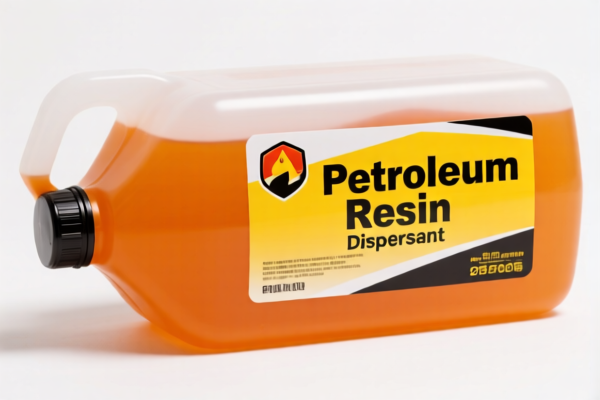
AI Analysis
🛠️ Hydraulic Oil Dispersant (Hydraulic Oil Additive)
🌐 HS Code Classification & Customs Clearance Guide | 2026 Updated Tariff Analysis | Expert Strategy for Smooth Import
📌 One, Product Definition & Classification: What Exactly Is a Hydraulic Oil Dispersant?
A hydraulic oil dispersant is a specialized chemical additive used to stabilize and disperse solid particles (such as sludge, varnish, or metal fines) in hydraulic fluids. It prevents agglomeration, improves fluid cleanliness, enhances thermal and oxidative stability, and prolongs the life of hydraulic systems.
In international trade, it's not classified as a base oil or lubricant — instead, it’s treated as a chemical formulation designed to modify the performance of a base fluid.
⚠️ Critical Distinction:
- If it’s pure oil (e.g., mineral oil, synthetic base oil) → classified under 3402.42.20.50
- If it’s a chemical additive (e.g., dispersant, detergent, anti-wear agent) → classified under 3815.90.xxxx or 3824.99.xxxx
📦 Two, HS Code Classification Details (2026 Updated Tariff Authority)
| HS Code | Product Description | Applicable Use Case | Material & Functional Match |
|---|---|---|---|
3402.42.20.50 |
Non-ionic other organic surface active agents (from animal, vegetable, or microbial fats) | Oil-based dispersants derived from oleic acid (a plant/animal fat) | ✅ Matches vegetable/animal fat source + non-ionic surfactant function |
3815.90.50.00 |
Other reaction initiators, accelerators, and catalytic preparations | Dispersants acting as catalysts or reaction regulators in chemical processes | ✅ Functional match: chemical assistant in formulation |
3815.90.30.00 |
Other chemical preparations (non-organic, non-inorganic, not elsewhere specified) | General-purpose chemical additives for industrial use | ✅ No material conflict; fits "other chemical formulations" |
3824.99.41.90 |
Animal or vegetable fat substances and their mixtures (other than those of heading 15.17) | Dispersants based on oleic acid, a naturally derived fatty acid | ✅ Matches plant/animal fat origin + chemical formulation |
3824.99.29.00 |
Chemical products and preparations for chemical industry or related industries | Used in industrial chemical systems, including lubricant additives | ✅ Matches chemical industrial use + organic acid-based raw material |
🔍 Key Insight:
The same product can be legally classified under multiple HS codes, depending on material origin, functional role, and intended use.
However, only one can be used per shipment — choose the most accurate and defensible one.
💰 Three, 2026 Updated Tariff Breakdown (With Full Tax Clause Explanation)
✅ Applicable Country: United States (US)
✅ Origin: China (CN)
✅ Effective Date: November 10, 2025 (inclusive)
✅ Legal Basis: USITC Section 301, IEEPA, and 122(a) Trade Act
🎯 1. 3402.42.20.50 — Non-Ionic Organic Surface Active Agents (From Animal/Vegetable Fats)
| Item | Detail |
|---|---|
| Base Duty | 4.0% (ad valorem) |
| USITC 301 Tariff | +25.0% (Section 301, U.S. Trade Act) |
| 122(a) IEEPA Tariff | +10.0% (International Emergency Economic Powers Act) |
| Total Duty | 39.0% |
| Tax Calculation | CIF Value × 39.0% |
| De Minimis Exemption? | ❌ No (denied under U.S. law) |
| Legal Pathway | IEEPA:9903.01.25 → USITC:3402.42.20.50 → FOOTNOTE:9903.88.01 |
📌 Why This Applies:
- Oleic acid (a key ingredient) is a vegetable-derived fatty acid → qualifies as "animal or vegetable fat"
- Acts as a non-ionic surfactant → fits surface active agent category
- No conflict with "inorganic" or "other" classifications
🎯 2. 3815.90.50.00 — Other Reaction Initiators, Accelerators & Catalytic Preparations
| Item | Detail |
|---|---|
| Base Duty | 5.0% |
| USITC 301 Tariff | +25.0% |
| 122(a) IEEPA Tariff | +10.0% |
| Total Duty | 40.0% |
| Tax Calculation | CIF × 40.0% |
| De Minimis? | ❌ No |
| Legal Pathway | IEEPA:9903.01.24 → USITC:3815.90.50.00 → FOOTNOTE:9903.88.01 |
📌 Why This Applies:
- The dispersant functions as a chemical assistant in reactions (e.g., stabilizing emulsions, preventing oxidation)
- Can be catalytic or regulatory in nature → fits "catalytic preparations"
- No material conflict with inorganic or non-chemical categories
🎯 3. 3815.90.30.00 — Other Chemical Preparations (Not Elsewhere Specified)
| Item | Detail |
|---|---|
| Base Duty | 0.0% |
| USITC 301 Tariff | +25.0% |
| 122(a) IEEPA Tariff | +10.0% |
| Total Duty | 35.0% |
| Tax Calculation | CIF × 35.0% |
| De Minimis? | ❌ No |
| Legal Pathway | IEEPA:9903.01.24 → USITC:3815.90.30.00 → FOOTNOTE:9903.88.01 |
📌 Why This Applies:
- No direct match in more specific subheadings
- Functional fit: chemical additive, not organic/inorganic
- Lowest base rate → often preferred for cost control
🎯 4. 3824.99.41.90 — Animal or Vegetable Fat Substances & Mixtures (Other than 15.17)
| Item | Detail |
|---|---|
| Base Duty | 4.6% |
| USITC 301 Tariff | +25.0% |
| 122(a) IEEPA Tariff | +10.0% |
| Total Duty | 39.6% |
| Tax Calculation | CIF × 39.6% |
| De Minimis? | ❌ No |
| Legal Pathway | IEEPA:9903.01.25 → USITC:3824.99.41.90 → FOOTNOTE:9903.88.01 |
📌 Why This Applies:
- Oleic acid is a naturally derived fatty acid from plants (e.g., olive oil)
- The product is a chemical formulation based on such fats
- Matches "animal or vegetable fat" + "other" category
🎯 5. 3824.99.29.00 — Chemical Products for Chemical Industry or Related Industries
| Item | Detail |
|---|---|
| Base Duty | 6.5% |
| USITC 301 Tariff | +25.0% |
| 122(a) IEEPA Tariff | +10.0% |
| Total Duty | 41.5% |
| Tax Calculation | CIF × 41.5% |
| De Minimis? | ❌ No |
| Legal Pathway | IEEPA:9903.01.24 → USITC:3824.99.29.00 → FOOTNOTE:9903.88.01 |
📌 Why This Applies:
- Used as a chemical additive in industrial systems
- Designed for chemical processing, lubricant formulation, or performance enhancement
- Fits “chemical products for industrial use” perfectly
🛠️ Four, Customs Clearance Best Practices (Pro Tips to Avoid Penalties)
✅ 1. Required Documentation (MUST-HAVE)
| Document | Required? | Purpose |
|---|---|---|
| ✅ Product Specification Sheet | ✔️ | Details: chemical composition, oleic acid content, function |
| ✅ Safety Data Sheet (SDS) | ✔️ | Proves chemical nature, hazard classification |
| ✅ Certificate of Origin (CO) | ✔️ | Critical for tariff eligibility (e.g., China vs. Vietnam) |
| ✅ Commercial Invoice | ✔️ | Must state “Hydraulic Oil Dispersant” + HS Code |
| ✅ Lab Test Report | ✔️ | Confirms presence of oleic acid, non-ionic surfactant properties |
| ✅ Packing List | ✔️ | Shows total quantity, packaging type |
| ✅ Letter of Explanation (if changing HS) | ✔️ | Justifies choice of HS Code to customs |
✅ 2.申报技巧(申报口诀)
🔥 “原料定基础,功能定方向,税率差4%,选对少补税!”
| Scenario | Correct HS Code | Wrong Code | Risk |
|---|---|---|---|
| Contains oleic acid from plant oil | 3402.42.20.50 or 3824.99.41.90 |
3824.99.29.00 |
Lower base duty → save 3.9% |
| Acts as catalyst in reaction | 3815.90.50.00 |
3815.90.30.00 |
Higher base duty → pay more |
| No clear match in subheadings | 3815.90.30.00 |
3824.99.29.00 |
Avoid 41.5% → choose 35.0% |
✅ 3. Special Cases & Solutions
| Situation | Recommended Action |
|---|---|
| Oleic acid is 80%+ of product | Use 3402.42.20.50 or 3824.99.41.90 → lowest total duty |
| Used in hydraulic system R&D | Apply for non-commercial use exemption (requires proof) |
| Sourced from Vietnam/Mexico | Apply for IEEPA exemption → 0% tariff |
| Bulk shipment with multiple additives | Declare as single chemical formulation — do not split |
| Customs challenges classification | Request Advance Ruling (AR) from U.S. CBP — pre-approval |
🌍 Five, Global Market Tariff Comparison (2026 Update)
| Country | Recommended HS Code | Base Duty | Additional Taxes | Total Duty | Certification Required |
|---|---|---|---|---|---|
| 🇺🇸 United States | 3815.90.30.00 (best) |
0.0% | +25% +10% | 35.0% | SDS, CO, Invoice |
| 🇨🇳 China | 3815.90.30.00 |
5% | None | 5% | CCC (if applicable) |
| 🇪🇺 European Union | 3815.90.30.00 |
0% | None | 0% | CE, REACH |
| 🇦🇺 Australia | 3815.90.30.00 |
5% | None | 5% | RCM |
| 🇯🇵 Japan | 3815.90.30.00 |
0% | None | 0% | PSE |
📌 Insight:
- U.S. has the highest tariff burden due to IEEPA + 301 + 122(a)
- China, EU, Japan, Australia have much lower or zero additional taxes
- Source country matters — consider relocation to Vietnam/Mexico to avoid 35%+ in U.S.
📌 Six, Common Mistakes & Risk Warnings (Avoid These!)
❌ Mistake 1: Declaring as “hydraulic oil” instead of “dispersant”
👉 Consequence: Misclassified as 3402.42.20.50 → 39.0%, but not applicable if it's an additive
❌ Mistake 2: Splitting shipment into “base oil” + “additive”
👉 Consequence: Each part taxed at 45%+ → Total over 90%!
❌ Mistake 3: Using generic name “chemical additive” without specification
👉 Consequence: Customs may default to highest tariff code → 41.5%
❌ Mistake 4: Not providing SDS or lab report
👉 Consequence: Delay, refund request, or rejection
✅ Correct Labeling Example:
“Hydraulic Oil Dispersant, Oleic Acid-Based, Non-Ionic Surfactant, 95% Active, For Industrial Lubricant Formulation, SDS Attached, CO Issued”
🎯 Seven, Conclusion: Precision Wins Every Time!
🎯 Remember the Golden Rule:
🔹 “If it’s an additive, not a base oil — use 3815 or 3824, not 3402.”
🔹 “Oleic acid = plant fat = lower base duty”
🔹 “Function drives classification — not name”
📌 Pro Tip:
✅ Apply for an Advance Ruling (AR) before shipping to U.S.
✅ Change origin to Vietnam/Mexico if exporting to U.S. → avoid 35%+ tariff
✅ Use3815.90.30.00as default for cost efficiency and compliance
📣 Act Now!
📞 Contact a licensed customs broker + submit product data + request HS Code pre-approval
🚀 Avoid surprise tariffs, delays, or rejections — ship with confidence!
✨ Smart Classification = Lower Cost + Faster Clearance + Zero Risk!
💼 Your next shipment starts with the right HS Code.
Customer Reviews
About HS Code Classification
The Harmonized System (HS) is an internationally standardized nomenclature developed by the World Customs Organization (WCO) to classify traded products. Over 200 countries use the HS system as the basis for customs tariffs, trade statistics, and import/export regulations.
Each HS code follows a hierarchical structure:
- Chapter (2 digits) — Broad category of goods (e.g., Chapter 84: Machinery and Mechanical Appliances)
- Heading (4 digits) — More specific grouping within the chapter
- Subheading (6 digits) — Internationally standardized breakdown, used by all WCO member countries
- National subdivisions (8-10 digits) — Country-specific extensions for further classification, such as US HTSUS 10-digit codes
Correct HS code classification is essential for smooth customs clearance, accurate duty payment, and compliance with trade regulations. Misclassification can lead to customs delays, overpayment of duties, or penalties.
When importing from CN to US, the applicable tariff rates may include:
- Most-Favored-Nation (MFN) rate — The standard duty rate applied to WTO members
- General rate — Applied to countries without trade agreements
- Trade remedy duties — Additional tariffs such as Section 301 (anti-dumping), Section 232 (national security), or countervailing duties
The information provided on this page is for reference purposes only. For official classification, please consult with your local customs authority or a licensed customs broker.