清洗毛刷
CN → US| HS Code | Tariff Rate | Origin | Destination | Doc |
|---|---|---|---|---|
| 4417006000 | 35.0% | CN | US | Official Doc |
| 4417008090 | 40.1% | CN | US | Official Doc |
| 9603101500 | 0.0% | CN | US | Official Doc |
| 9603109000 | 27.5% | CN | US | Official Doc |
| 4417006000 | 35.0% | CN | US | Official Doc |
Product Images
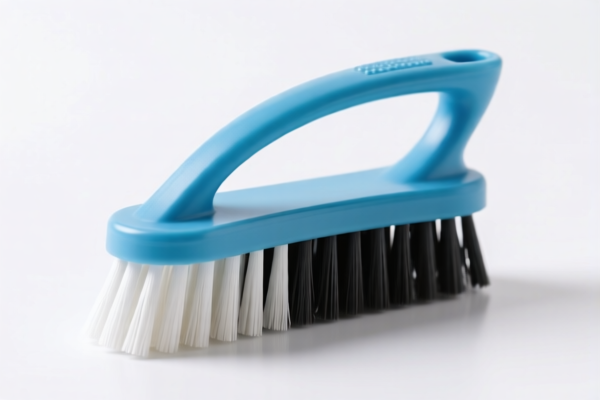


AI Analysis
🧼 Cleaning Brushes
🌐 HS Code & Tariff Guide | 2026 Latest Customs Classification | Professional Import Strategy
📌 One Product, Multiple Classifications — Know Your Code to Avoid 45%+ Tariffs!
📦 一、Product Definition & Classification: What Exactly Is a "Cleaning Brush"?
A cleaning brush is a hand-held or tool-mounted brush used for surface cleaning, dust removal, scrubbing, or grooming. In international trade, brushes are classified based on:
- Material (wood, plant fiber, synthetic fiber, metal)
- Structure (handle + bristles, brush head only, or full tool)
- Function (floor cleaning, surface scrubbing, industrial use, etc.)
⚠️ Critical Distinction:
- If made of wooden handle + natural/organic bristles → likely 4417.00.60.00 or 4417.00.80.90
- If made of plant-based or synthetic bristles, no wood → likely 9603.10.15.00 or 9603.10.90.00🎯 Key Insight:
Even if the product looks like a "broom" or "duster", material and structure determine the HS Code — not appearance.
📊 二、HS Code Classification Breakdown (2026 Official Tariff Table)
| HS Code | Product Description | Material & Structure | Tax Rate | Key Notes |
|---|---|---|---|---|
4417.00.60.00 |
Wooden brush body with bristles, used for cleaning | Wooden handle + bristles, no metal parts | 35.0% | Common for hand brushes, floor brushes, or industrial scrubbers |
4417.00.80.90 |
Other wooden brush bodies (non-specific) | Wooden handle + bristles, not covered by 4417.00.60.00 | 40.1% | "Other" category — higher tariff due to lack of specificity |
9603.10.15.00 |
Brushes with bristles made of plant material or synthetic fiber, for cleaning | No wood, bristles from natural or synthetic fiber | 5¢ each + 17.5% | Per-unit duty — not ad valorem! |
9603.10.90.00 |
Other brushes (not specified), including cleaning types | Non-wood, non-specific bristles, general cleaning use | 27.5% | "Other" category — common fallback for mixed materials |
🔍 Why This Matters:
- Same product can be classified under different HS Codes depending on material composition. - Misclassification → 45%+ tariffs, delays, or even seizure.
💰 三、2026 Tariff Breakdown (US Focus) — Full Tax Clause Details
✅ Applicable Country: United States (US)
✅ Origin: China (CN)
✅ Effective Date: November 10, 2025 (including future imports)
🎯 1. 4417.00.60.00 — Wooden Brush Body with Bristles
| Tax Item | Details |
|---|---|
| Base Duty | 0.0% (ad valorem) |
| Section 301 (USITC) Additional Duty | +25.0% |
| Section 122 (IEEPA) Additional Duty | +10.0% |
| Total Effective Rate | 35.0% |
| Tax Calculation | CIF Value × 35.0% |
| De Minimis Threshold | ❌ Not applicable (denied) |
| Legal Basis Path | IEEPA:9903.01.25 → IEEPA:9903.01.24 → USITC:4417.00.60.00 → FOOTNOTE:9903.88.01 |
📌 Explanation:
- 25% from Section 301 (USITC) — trade remedy against China for unfair practices
- 10% from IEEPA (International Emergency Economic Powers Act) — national security-related tariffs
- No base duty, but 35% total due to two附加 taxes
🎯 2. 4417.00.80.90 — Other Wooden Brush Bodies
| Tax Item | Details |
|---|---|
| Base Duty | 5.1% |
| Section 301 (USITC) Additional Duty | +25.0% |
| Section 122 (IEEPA) Additional Duty | +10.0% |
| Total Effective Rate | 40.1% |
| Tax Calculation | CIF Value × 40.1% |
| De Minimis Threshold | ❌ Not applicable |
| Legal Basis Path | IEEPA:9903.01.25 → IEEPA:9903.01.24 → USITC:4417.00.80.90 → FOOTNOTE:9903.88.01 |
📌 Why Higher?
- 5.1% base duty due to "other" classification
- Still subject to 25% + 10% — total 40.1%
- No room for error — even minor material differences push to this code
🎯 3. 9603.10.15.00 — Brushes with Plant or Synthetic Bristles (No Wood)
| Tax Item | Details |
|---|---|
| Base Duty | 5¢ per unit (per piece) |
| Section 301 (USITC) Additional Duty | +7.5% |
| Section 122 (IEEPA) Additional Duty | +10.0% |
| Total Effective Rate | 5¢ each + 17.5% |
| Tax Calculation | (5¢ + CIF Value × 17.5%) per unit |
| De Minimis Threshold | ✅ Applicable (if total value < $800) |
| Legal Basis Path | IEEPA:9901.25 → IEEPA:9903.01.24 → USITC:9603.10.15.00 → FOOTNOTE:9903.88.01 |
📌 Critical Detail:
- Per-unit duty — not based on value!
- Even a $1 brush costs 5¢ + 17.5% → $0.225 per unit
- High volume? → Massive cumulative cost!
🎯 4. 9603.10.90.00 — Other Brushes (General Cleaning Use)
| Tax Item | Details |
|---|---|
| Base Duty | 10.0% |
| Section 301 (USITC) Additional Duty | +7.5% |
| Section 122 (IEEPA) Additional Duty | +10.0% |
| Total Effective Rate | 27.5% |
| Tax Calculation | CIF Value × 27.5% |
| De Minimis Threshold | ❌ Not applicable |
| Legal Basis Path | IEEPA:9901.25 → IEEPA:9903.01.24 → USITC:9603.10.90.00 → FOOTNOTE:9903.88.01 |
📌 Why This Code?
- Used when material is unclear or not wood + bristles
- Still subject to 27.5% — not low-risk!
🛠️ 四、Customs Clearance Best Practices (Pro Tips)
✅ 1. Essential Documentation (Must-Have!)
| Document | Required? | Why It Matters |
|---|---|---|
| ✅ Product Specification Sheet | ✔️ | Show material (wood, plant fiber, synthetic) |
| ✅ Material Test Report | ✔️ | Prove bristle type (e.g., "nylon", "broomcorn") |
| ✅ Product Photos (with close-ups) | ✔️ | Show handle material, bristle type, structure |
| ✅ Commercial Invoice | ✔️ | Must state: “Cleaning Brush, [Material], [HS Code]” |
| ✅ Certificate of Origin (CO) | ✔️ | If from Vietnam/Mexico, may qualify for IEEPA exemption |
| ✅ Packing List | ✔️ | Show units per box, total count — crucial for 5¢ each duty |
| ✅ Technical Drawings (if complex) | ✔️ | Help customs verify structure |
✅ 2.申报技巧(申报口诀)
🔥 “木头看4417,纤维看9603,5¢每件要记清,拆包申报=罚款!”
| Scenario | Correct HS Code | Wrong Code | Risk |
|---|---|---|---|
| Wooden handle + synthetic bristles | 4417.00.60.00 |
9603.10.15.00 |
35% vs 17.5% → 17.5% difference |
| Plant bristles, no wood | 9603.10.15.00 |
4417.00.60.00 |
5¢ + 17.5% vs 35% → Higher cost |
| Mixed materials, unclear | 9603.10.90.00 |
4417.00.80.90 |
27.5% vs 40.1% → 12.6% higher |
| 10,000 units, 5¢ each | 9603.10.15.00 |
Split into 100 packages | $500 vs $50,000+ |
✅ 3. Special Cases & Solutions
| Scenario | Recommended Action |
|---|---|
| Brushes with metal parts | Check if 4417 still applies — if metal is only for fasteners, may still qualify |
| Custom-designed brushes | Apply for Advance Ruling (Pre-ruling) — get official HS Code confirmation |
| High-volume shipments | Use 9603.10.15.00 with de minimis if total < $800 |
| From Vietnam/Mexico | Apply for IEEPA exemption — 0% tariff possible |
| Brushes for industrial use | Confirm if 9603.10.90.00 applies — may qualify for lower rate |
🌍 五、Global Customs Comparison (2026)
| Country | Recommended HS Code | Tariff | Certification | Notes |
|---|---|---|---|---|
| 🇺🇸 USA | 4417.00.60.00 |
35.0% | None | High-risk — no de minimis |
| 🇨🇳 China | 4417.00.60.00 |
5% | CCC | No extra duties |
| 🇪🇺 EU | 9603.10.15.00 |
0% | CE | No extra tariffs |
| 🇦🇺 Australia | 9603.10.15.00 |
5% | RCM | No extra duties |
| 🇯🇵 Japan | 9603.10.15.00 |
0% | PSE | No extra tariffs |
📌 Takeaway:
- USA is the only market with 35%+ tariffs on cleaning brushes from China
- Vietnam/Mexico origin = potential 0% — consider shifting production
📌 六、Common Mistakes & Warning Signs (Avoid These!)
❌ Mistake 1: Calling a wooden brush “synthetic brush” to avoid 35%
👉 Result: Misclassification → penalties + back taxes
❌ Mistake 2: Not declaring bristle type on invoice
👉 Result: Customs may default to 4417.00.80.90 → 40.1%
❌ Mistake 3: Splitting 10,000 brushes into 100 packages to use de minimis
👉 Result: $50,000+ in duties instead of $500 → huge loss
❌ Mistake 4: Using “brush” as generic name without material detail
👉 Result: Automatic fallback to 9603.10.90.00 → 27.5%
✅ Correct Labeling:
“Cleaning Brush, Wooden Handle, Synthetic Bristles, 100mm, Model XYZ, 9603.10.15.00”
🎯 七、Final Verdict: Know Your Code, Save Your Profit!
🎯 Remember the Golden Rule:
🔹 “Wood → 4417, Fiber → 9603, 5¢ each → Count Every Unit, Splitting = Disaster!”
🔹 “HS Code is not a guess — it’s your profit margin!”
📌 Pro Tip:
📞 Apply for a Pre-Ruling (Advance Ruling) from U.S. Customs — get official confirmation of HS Code before shipping
🚀 Reduce risk, avoid penalties, and save thousands per shipment
📣 Act Now!
📞 Contact a customs broker with U.S. tariff expertise
📂 Provide product photos, material report, and invoice
🛠️ Get HS Code pre-approval — avoid 40%+ tariffs
✨ Smart Classification = Smooth Clearance = Profit Growth!
💼 Your next shipment shouldn’t be a tax trap — make it a win!
Customer Reviews
About HS Code Classification
The Harmonized System (HS) is an internationally standardized nomenclature developed by the World Customs Organization (WCO) to classify traded products. Over 200 countries use the HS system as the basis for customs tariffs, trade statistics, and import/export regulations.
Each HS code follows a hierarchical structure:
- Chapter (2 digits) — Broad category of goods (e.g., Chapter 84: Machinery and Mechanical Appliances)
- Heading (4 digits) — More specific grouping within the chapter
- Subheading (6 digits) — Internationally standardized breakdown, used by all WCO member countries
- National subdivisions (8-10 digits) — Country-specific extensions for further classification, such as US HTSUS 10-digit codes
Correct HS code classification is essential for smooth customs clearance, accurate duty payment, and compliance with trade regulations. Misclassification can lead to customs delays, overpayment of duties, or penalties.
When importing from CN to US, the applicable tariff rates may include:
- Most-Favored-Nation (MFN) rate — The standard duty rate applied to WTO members
- General rate — Applied to countries without trade agreements
- Trade remedy duties — Additional tariffs such as Section 301 (anti-dumping), Section 232 (national security), or countervailing duties
The information provided on this page is for reference purposes only. For official classification, please consult with your local customs authority or a licensed customs broker.