湿盐马皮
CN → US| HS Code | Tariff Rate | Origin | Destination | Doc |
|---|---|---|---|---|
| 4104195080 | 13.3% | CN | US | Official Doc |
| 4101201020 | 17.5% | CN | US | Official Doc |
| 4101501091 | 17.5% | CN | US | Official Doc |
| 4104115080 | 13.3% | CN | US | Official Doc |
Product Images
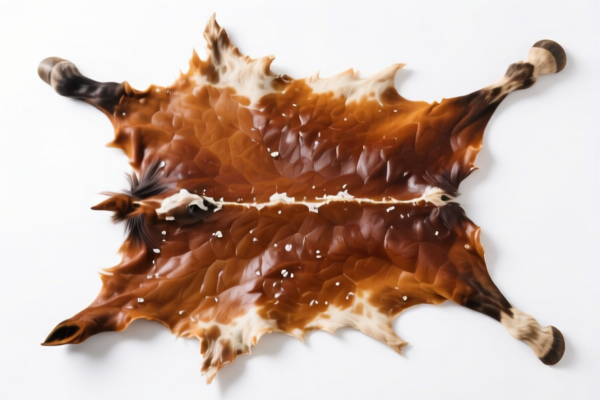
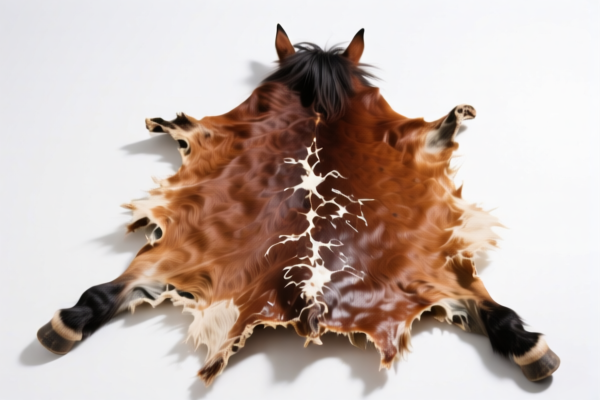
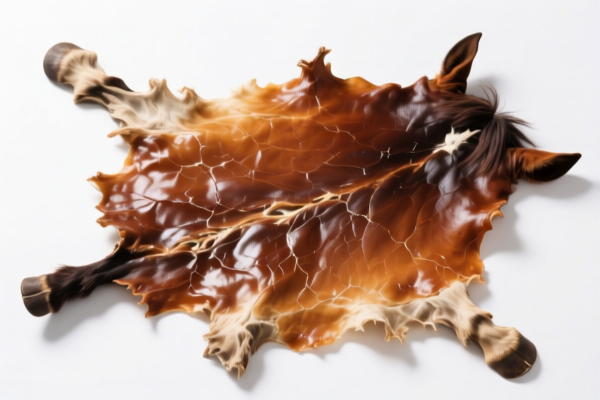
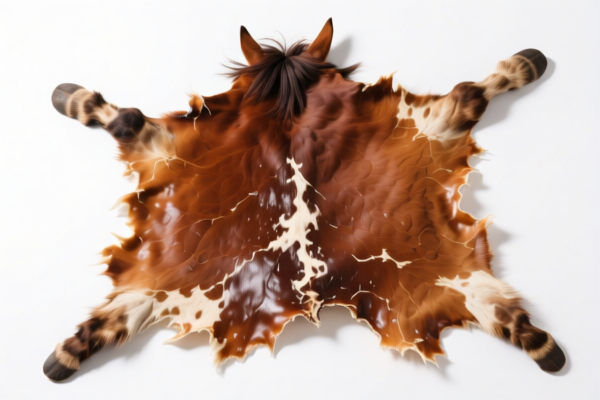
AI Analysis
🐎 Salted Horse Hides (Wet-Salted)
🌐 HS Code Reference & Customs Clearance Guide | 2026 Latest Tariff Analysis | Professional Strategy
📌 I. Product Definition & Classification: What Exactly Are "Salted Horse Hides"?
Salted Horse Hides (Wet-Salted) are raw animal skins derived from horses (Equus ferus caballus), preserved through the application of salt to prevent decomposition. In international trade, their classification hinges on two critical factors:
1. Species: Specifically from horses (Horsae/Horses), not cattle or other bovines.
2. State: "Wet-salted" (or simply "salted") is considered a preliminary processing state or wet state, falling under Chapter 41 (Leather) rather than Chapter 2 (Meat) or Chapter 05 (Animal products not elsewhere specified).
⚠️ Key Distinction:
- If the hide is fresh, chilled, or frozen without salt → Likely Chapter 2 or 5 (different duties).
- If the hide is salted (wet or dry) → Falls under Chapter 41.01 or 41.04, depending on the specific HS code interpretation of "wet-state" vs. "semi-tanned."
- Crucial Point: Even if "wet-salted," customs may interpret it as "wet-state raw hide" (4101) or "semi-tanned leather" (4104). The provided data reflects four possible classifications based on varying customs interpretations of "salted" as either raw hide preservation or semi-tanning.
📦 II. HS Code Classification Details (2026 Latest Tariff Authority Comparison)
| HS Code | Product Description | Scenario | Is it Semi-Tanned? | Total Tax |
|---|---|---|---|---|
4104.19.50.80 |
Salted horse hides, material: horsehide, state: salted, classified as wet-state/preliminary processed leather under tanned/semi-tanned | Salted hides treated as "semi-tanned" or "wet-state" leather | ✅ Yes (interpreted as semi-tanned/wet-state) | 13.3% |
4101.20.10.20 |
Salted horse hides, material: equine, salted matches preservation method for untanned raw hides | Salted hides classified as untanned raw hides (Chapter 41.01) | ❌ No (raw hide) | 17.5% |
4101.50.10.91 |
Salted horse hides, material: equine original skin, salted is primary form of raw skin processing | Salted hides classified as raw equine skins under 41.01.50 | ❌ No (raw skin) | 17.5% |
4104.11.50.80 |
Salted horse hides, material: horse, state: leather, salted is a form of semi-tanning | Salted hides explicitly classified as semi-tanned leather | ✅ Yes (semi-tanned) | 13.3% |
🔍 Critical Insight:
- 4101.xxxx: Refers to Raw Hides and Skins, including wet-salted. These face higher tariffs (17.5%) due to being less processed.
- 4104.xxxx: Refers to Tanned or Semi-Tanned Leather. If customs interprets "wet-salted" as a semi-tanning process, these face lower tariffs (13.3%).
- The 4.2% difference (17.5% vs. 13.3%) is significant. Proper documentation is key to supporting the lower-rate classification if applicable.
💰 III. 2026 Latest Tariff Rate Breakdown (Including Additional Taxes & Policy Surcharges)
✅ Applicable Country: United States (US)
✅ Origin: China (CN)
✅ Effective Date: 2025/2026 (current regime)
🎯 1. 4104.19.50.80 & 4104.11.50.80 —— Salted Horse Hides (Classified as Semi-Tanned/Wet-State Leather)
| Item | Detail |
|---|---|
| Base Tariff Rate | 3.3% (ad valorem) |
| Section 301 Tariff | 0.0% (not listed under specific 301 exclusions for this subheading) |
| 122 Clause Tariff (IEEPA) | +10.0% (Against China, effective 2025+) |
| Total Effective Tax Rate | 13.3% |
| Tax Calculation | CIF Value × 13.3% |
| De Minimis Eligibility | ❌ Not Eligible (Deny De Minimis) |
| Legal Basis Path | IEEPA:122 → USITC:4104.19.50.80 / 4104.11.50.80 |
📌 Explanation:
- These HS codes are classified under Chapter 41 (Leather), specifically 41.04 (Other Tanned or Semi-Tanned Leather).
- The 10% IEEPA tariff applies due to China origin.
- No Section 301 tariff is applied to these specific subheadings in the provided data, resulting in a lower total rate of 13.3%.
- Strategy: If your product can be documented as "semi-tanned" or "wet-state leather" (rather than raw hide), this classification saves 4.2% in duties.
🎯 2. 4101.20.10.20 & 4101.50.10.91 —— Salted Horse Hides (Classified as Raw Hides/Skins)
| Item | Detail |
|---|---|
| Base Tariff Rate | 0.0% (ad valorem for raw hides) |
| Section 301 Tariff | +7.5% (Specific 301 rate for raw hides/skins from China) |
| 122 Clause Tariff (IEEPA) | +10.0% (Against China, effective 2025+) |
| Total Effective Tax Rate | 17.5% |
| Tax Calculation | CIF Value × 17.5% |
| De Minimis Eligibility | ❌ Not Eligible (Deny De Minimis) |
| Legal Basis Path | IEEPA:122 → Section 301:7.5% → USITC:4101.20.10.20 / 4101.50.10.91 |
📌 Explanation:
- These HS codes fall under Chapter 41.01 (Raw Hides and Skins).
- Although the base tariff is 0%, the Section 301 tariff of 7.5% is applied specifically to raw hides/skins from China.
- The 10% IEEPA tariff is added on top.
- Total: 17.5%. This is higher than the 4104 classification.
- Risk: If customs determines your "wet-salted" hide is raw (not semi-tanned), you will pay this higher rate.
🛠️ IV. Customs Clearance Practical Advice (Battle-Tested Pitfall Avoidance)
✅ 1. Required Documentation Checklist (Non-Negotiable)
| Document | Mandatory? | Purpose |
|---|---|---|
| ✅ Product Specification Sheet | ✔️ | Must specify: Species (Horse), Preservation Method (Wet-Salted), Weight, Dimensions |
| ✅ Process Flow Chart | ✔️ | Shows salting process, duration, salt concentration. Crucial to argue for "semi-tanned" if possible. |
| ✅ Photos (Inside/Outside) | ✔️ | Show salt residue, hide condition, labeling. |
| ✅ Commercial Invoice | ✔️ | Must clearly state "Salted Horse Hides" or "Wet-Salted Equine Hides". Avoid vague terms like "Animal Skins." |
| ✅ Packing List | ✔️ | Detail net/gross weight, number of hides. |
| ✅ Origin Certificate | ✔️ | Confirm China origin (triggers 122/301 tariffs). |
| ✅ Third-Party Lab Report | ✔️ | Optional but helpful: Confirm no excessive chemical treatment beyond salting (to argue for raw vs. semi-tanned). |
✅ 2. Declaration Strategy (Key Mantra)
🔥 “Raw Hide = 17.5%, Semi-Tanned = 13.3%! Document to Support!”
| Scenario | Correct Declaration | Incorrect Action | Consequence |
|---|---|---|---|
| Wet-Salted Hide | 4104.19.50.80 (if semi-tanned) or 4101.20.10.20 (if raw) |
Vague: "Leather Raw Material" | Customs misclassification → Penalty + Back Taxes |
| Dry-Salted Hide | Likely 4101.20.10.20 (Raw) |
Claiming it's "Semi-Tanned" | Audit risk if no evidence of tanning |
| OEM Custom Hides | Provide Customer Specs + Process Info | Generic Description | Delayed Release |
| Mixed Species | Separate HS Codes for Horse vs. Cattle | Mixed Declaration | Rejection or Penalty |
📌 Pro Tip:
- If you claim 4104 (13.3%), be prepared to prove the salting process acts as a semi-tanning step (e.g., specific salt types, additives, or industry practice).
- If you claim 4101 (17.5%), ensure the hides are clearly untanned and in raw state.
✅ 3. Special Cases & Handling
| Case | Handling Advice |
|---|---|
| High-Moisture "Wet-Salted" | Ensure moisture content is documented. Excessive water may raise questions on classification. |
| Damaged Hides | Disclose damage. May affect value but not HS code. |
| Small Batches | Still subject to Deny De Minimis. No $800 exemption. |
| Non-China Origin | If from Argentina, Brazil, etc., 122/301 tariffs do NOT apply. Rate drops to Base Tariff Only (3.3% for 4104, 0% for 4101). |
🌍 V. Global Market Comparison (2026 Latest)
| Country/Region | Recommended HS Code | Tariff (China Origin) | Certification | Notes |
|---|---|---|---|---|
| 🇺🇸 USA | 4104.19.50.80 / 4101.20.10.20 |
13.3% - 17.5% | None specific | High tariffs due to 122/301 |
| 🇨🇳 China (Import) | 4101.20.00.00 / 4104.19.00.00 |
3.3% - 5% | None | Lower base rates, no 122/301 |
| 🇪🇺 EU | 4101.20 / 4104.19 |
0% | REACH | No additional tariffs on raw hides |
| 🇬🇧 UK | 4101.20 / 4104.19 |
0% | UKCA | Post-Brexit alignment with EU |
| 🇦🇺 Australia | 4101.20 / 4104.19 |
0% | None | FTA benefits if applicable |
📌 Conclusion:
- USA is the most expensive market due to 122 (10%) + 301 (0-7.5%) tariffs.
- EU/UK/Australia are tariff-free for raw/semi-tanned hides from China.
- Strategy: If exporting to USA, optimize documentation to support 4104 (13.3%) over 4101 (17.5%).
📌 VI. Common Errors & Pitfalls (Blood-Teaching Lessons)
❌ Error 1: Declaring "Salted Horse Hides" as "Leather" without specifying raw vs. semi-tanned
👉 Consequence: Customs may default to 4101 (17.5%) or delay for classification review.
✅ Fix: Specify "Wet-Salted Raw Hide" or "Semi-Tanned Leather" based on process.
❌ Error 2: Ignoring 122 Clause (10%) for China Origin
👉 Consequence: Underpayment → Penalty + Interest.
✅ Fix: Always apply 10% IEEPA for China-origin goods.
❌ Error 3: Claiming De Minimis ($800) for Small Shipments
👉 Consequence: Denial. Chapter 41 hides are not de minimis eligible.
✅ Fix: Always file formal entry.
❌ Error 4: Mixing Horse Hides with Cattle Hides in One Entry
👉 Consequence: Classification error. Horse hides (4101/4104) have different subheadings than cattle.
✅ Fix: Separate declarations for different species.
🎯 VII. Conclusion: Precise Classification Saves Money!
🎯 Remember the Mantra:
🔹 “Raw Hide = 17.5%, Semi-Tanned = 13.3%! Document to Save 4.2%!”
🔹 “China Origin = 10% IEEPA Always! No De Minimis!”
🔹 “HS Code Determines Duty, Misclassification Costs Thousands!”
📌 Pro Tip:
If your horse hides are NOT from China (e.g., Argentina, USA), the 122 and 301 tariffs DO NOT APPLY.
- For 4104.xxxx: Tax = 3.3% (Base Only)
- For 4101.xxxx: Tax = 0% (Base Only)
✅ Action: If possible, source from non-China origins to reduce costs significantly!
📣 Immediate Action:
📞 Consult a Customs Broker + Provide Process Details + Request Advance Ruling
🚀 Clear Customs Smoothly, Reduce Costs, Maximize Profits!
✨ Professional Clearance Starts with Accurate Classification!
💼 Every Dollar Saved is a Dollar Earned!
Customer Reviews
About HS Code Classification
The Harmonized System (HS) is an internationally standardized nomenclature developed by the World Customs Organization (WCO) to classify traded products. Over 200 countries use the HS system as the basis for customs tariffs, trade statistics, and import/export regulations.
Each HS code follows a hierarchical structure:
- Chapter (2 digits) — Broad category of goods (e.g., Chapter 84: Machinery and Mechanical Appliances)
- Heading (4 digits) — More specific grouping within the chapter
- Subheading (6 digits) — Internationally standardized breakdown, used by all WCO member countries
- National subdivisions (8-10 digits) — Country-specific extensions for further classification, such as US HTSUS 10-digit codes
Correct HS code classification is essential for smooth customs clearance, accurate duty payment, and compliance with trade regulations. Misclassification can lead to customs delays, overpayment of duties, or penalties.
When importing from CN to US, the applicable tariff rates may include:
- Most-Favored-Nation (MFN) rate — The standard duty rate applied to WTO members
- General rate — Applied to countries without trade agreements
- Trade remedy duties — Additional tariffs such as Section 301 (anti-dumping), Section 232 (national security), or countervailing duties
The information provided on this page is for reference purposes only. For official classification, please consult with your local customs authority or a licensed customs broker.