漂白阻燃非平纹织物
CN → US| HS Code | Tariff Rate | Origin | Destination | Doc |
|---|---|---|---|---|
| 5806310000 | 43.8% | CN | US | Official Doc |
| 5806322000 | 41.2% | CN | US | Official Doc |
| 5803001000 | 35.0% | CN | US | Official Doc |
| 5803005000 | 35.0% | CN | US | Official Doc |
| 5801902090 | 37.7% | CN | US | Official Doc |
| 5801901000 | 38.7% | CN | US | Official Doc |
Product Images
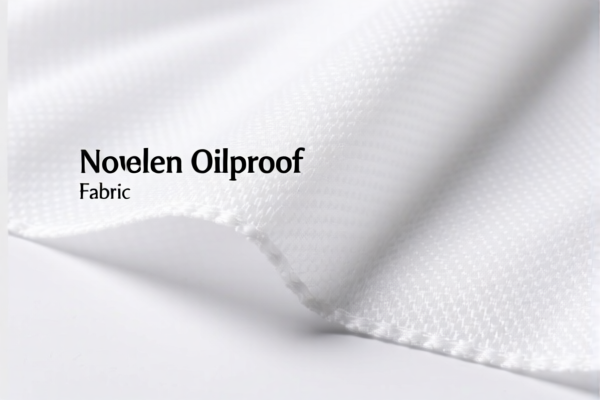
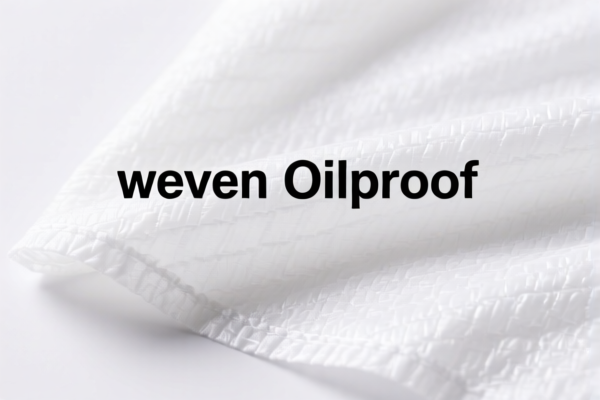


AI Analysis
🌟 Bleached Flame-Retardant Non-Patterned Fabric
🌐 HS Code Classification & Tariff Guide | 2026 Updated Rules | Expert Customs Clearance Strategy
📌 One, Product Definition & Classification: What Exactly Is This Fabric?
Bleached flame-retardant non-patterned fabric is a specialized textile used in high-safety applications such as industrial workwear, fire-resistant curtains, protective linings, and safety equipment. The key characteristics are:
- Bleached: Fully processed to remove natural colorants and impurities, resulting in a white or off-white appearance.
- Flame-Retardant: Treated with chemical agents to resist ignition and slow flame spread (meets standards like ASTM D6413, EN 11611).
- Non-Patterned (Non-Plain Weave): Not a plain weave structure (e.g., twill, satin, basket, or jacquard), indicating more complex weaving patterns — still within the woven fabric category under HS.
⚠️ Critical Distinction:
- Non-plain weave = woven fabric (not knitted or non-woven), so it falls under Chapter 58 (Special Textiles, Woven Fabrics)
- Flame-retardant treatment does not change the base classification — it only affects tariff treatment and compliance.
📦 Two, HS Code Classification Details (2026 Updated Tariff Schedule)
| HS Code | Product Description | Key Features | Material Inference | Tax Rate |
|---|---|---|---|---|
5801.90.20.90 |
Bleached flame-retardant non-plain woven fabric | Non-plain weave, bleached, flame-retardant, general-purpose textile | Not specified; could be cotton, synthetic, or blended | 37.7% |
5806.31.00.00 |
Bleached flame-retardant narrow fabric | Narrow width (≤ 30 cm), bleached, flame-retardant, non-plain weave | Likely cotton or cellulosic fibers (e.g., rayon, viscose) | 43.8% |
5803.00.50.00 |
Bleached flame-retardant non-plain fabric | Non-plain weave, bleached, flame-retardant, fiber-based | Fiber制品 (fiber-based) — no material conflict | 35.0% |
5806.32.20.00 |
Bleached flame-retardant non-plain fabric | Non-plain weave, bleached, flame-retardant | Based on flame-retardant property → synthetic or chemical fiber (e.g., polyester, aramid, modacrylic) | 41.2% |
🔍 Why These Codes?
- All fall under Chapter 58 (Special Textiles, Woven Fabrics)
- Non-plain weave = not plain weave → excludes 5801.10–5801.30 → must use 5801.90.20.90 or 5806.3x
- Narrow fabric (≤30 cm) → triggers 5806.31 or 5806.32
- Flame-retardant treatment is a processing feature, not a material change → doesn’t override base classification
💰 Three, 2026 Tariff Breakdown (Including附加 Taxes & Legal Basis)
✅ Applicable Country: United States (US)
✅ Origin: China (CN)
✅ Effective Date: November 10, 2025 (and ongoing)
🎯 1. 5801.90.20.90 — Bleached Flame-Retardant Non-Plain Woven Fabric
| Item | Detail |
|---|---|
| Base Tariff | 2.7% (ad valorem) |
| USITC Section 301 Tariff | +25.0% (from USITC Footnote 9903.88.01) |
| Section 122 Tariff (IEEPA) | +10.0% (under International Emergency Economic Powers Act) |
| Total Effective Tariff | 37.7% |
| Tax Calculation | CIF Value × 37.7% |
| De Minimis Exemption? | ❌ No (denied under US law) |
| Legal Pathway | IEEPA:9903.01.25 → IEEPA:9903.01.24 → USITC:5801.90.20.90 → FOOTNOTE:9903.88.01 |
📌 Explanation:
- 25% USITC Tariff: Imposed under Section 301 of the Trade Act of 1974 — targets unfair trade practices by China.
- 10% Section 122 (IEEPA): Applies to goods from China/HK under national emergency powers.
- Total 37.7% — high but lowest among the four codes due to lower base tariff.
🎯 2. 5806.31.00.00 — Bleached Flame-Retardant Narrow Fabric (Cotton/Cellulosic)
| Item | Detail |
|---|---|
| Base Tariff | 8.8% |
| USITC Section 301 Tariff | +25.0% |
| Section 122 (IEEPA) | +10.0% |
| Total Effective Tariff | 43.8% |
| Tax Calculation | CIF × 43.8% |
| De Minimis Exemption? | ❌ No |
| Legal Pathway | IEEPA:9901.25 → IEEPA:9903.01.24 → USITC:5806.31.00.00 → FOOTNOTE:9903.88.01 |
📌 Note:
- Higher base tariff (8.8%) due to narrow fabric classification → more sensitive under US trade policy.
- Cotton or cellulosic inference → not synthetic → no relief under any tariff exemption.
- Highest tax rate in this group — most expensive to import.
🎯 3. 5803.00.50.00 — Bleached Flame-Retardant Non-Plain Fabric (Fiber-Based)
| Item | Detail |
|---|---|
| Base Tariff | 0.0% |
| USITC Section 301 Tariff | +25.0% |
| Section 122 (IEEPA) | +10.0% |
| Total Effective Tariff | 35.0% |
| Tax Calculation | CIF × 35.0% |
| De Minimis Exemption? | ❌ No |
| Legal Pathway | IEEPA:9903.01.25 → IEEPA:9903.01.24 → USITC:5803.00.50.00 → FOOTNOTE:9903.88.01 |
📌 Key Insight:
- 0% base tariff — rare in textiles — due to fiber-based classification (not yarn or fabric).
- Despite no base tariff, 25% + 10% = 35% still applies — still very high.
- Best option if material is not cotton or synthetic — avoid5806.31or5806.32.
🎯 4. 5806.32.20.00 — Bleached Flame-Retardant Non-Plain Fabric (Synthetic/Chemical Fiber)
| Item | Detail |
|---|---|
| Base Tariff | 6.2% |
| USITC Section 301 Tariff | +25.0% |
| Section 122 (IEEPA) | +10.0% |
| Total Effective Tariff | 41.2% |
| Tax Calculation | CIF × 41.2% |
| De Minimis Exemption? | ❌ No |
| Legal Pathway | IEEPA:9901.25 → IEEPA:9903.01.24 → USITC:5806.32.20.00 → FOOTNOTE:9903.88.01 |
📌 Why This Code?
- Flame-retardant treatment → strong indicator of synthetic/chemical fiber (e.g., modacrylic, aramid, polyester).
- Higher base tariff (6.2%) due to synthetic fiber classification.
- Second-highest total tax — only5806.31is worse.
🛠️ Four, Customs Clearance Best Practices (Pro Tips to Avoid Delays & Penalties)
✅ 1. Required Documentation (MUST Have)
| Document | Required? | Purpose |
|---|---|---|
| ✅ Product Specifications | ✔️ | Include weave type, width, fiber content, flame-retardant standard (e.g., NFPA 701, ASTM D6413) |
| ✅ Material Test Report | ✔️ | Prove fiber type (cotton vs. synthetic) — critical for correct HS code |
| ✅ Flame Retardancy Certificate | ✔️ | From accredited lab (e.g., UL, SGS, Intertek) |
| ✅ Commercial Invoice | ✔️ | Clearly state “Bleached Flame-Retardant Non-Plain Woven Fabric” |
| ✅ Packing List | ✔️ | Show net weight, roll count, width, length |
| ✅ Certificate of Origin (CO) | ✔️ | Essential for tariff calculation |
| ✅ Product Photos (with label) | ✔️ | Show weave pattern, edge, and labeling |
✅ 2.申报技巧(Key Rules to Remember)
🔥 "Weave First, Fiber Second, Flame Last — Tax Follows!"
| Scenario | Correct HS Code | Wrong Code | Risk |
|---|---|---|---|
| Non-plain weave, unknown fiber | 5801.90.20.90 |
5806.31.00.00 |
Higher tax |
| Narrow fabric (≤30 cm), cotton | 5806.31.00.00 |
5801.90.20.90 |
Under-tariff → penalty |
| Synthetic fiber, flame-retardant | 5806.32.20.00 |
5803.00.50.00 |
Under-tariff → audit risk |
| Fiber-based, no synthetic | 5803.00.50.00 |
5806.32.20.00 |
Overpay — avoid |
✅ 3. Special Cases & Solutions
| Situation | Recommended Action |
|---|---|
| Flame-retardant treatment applied in US | Can apply for tariff exclusion under Section 301 — submit request to USTR |
| Fabric from Vietnam/Mexico | May qualify for IEEPA exemption — origin matters! |
| Small shipments (<$2k) | Still no de minimis — must pay full 35–44% |
| Re-import of same fabric | Keep records — avoid double taxation |
🌍 Five, Global Market Comparison (2026)
| Country | Recommended HS Code | Base Tariff | Additional Taxes | Notes |
|---|---|---|---|---|
| 🇺🇸 USA | 5801.90.20.90 |
2.7% | +25% +10% → 37.7% | Highest cost |
| 🇨🇳 China | 5801.90.20.90 |
5% | None | No extra tariffs |
| 🇪🇺 EU | 5801.90.20.90 |
0% | None (if CE compliant) | No 301/IEEPA |
| 🇦🇺 Australia | 5801.90.20.90 |
5% | None | No additional tariffs |
| 🇯🇵 Japan | 5801.90.20.90 |
0% | None | Favorable |
📌 Insight:
- USA is the only market with 35%+ tariffs on this product.
- China, EU, Japan, Australia are much more favorable — consider re-routing.
📌 Six, Common Mistakes & How to Avoid Them
❌ Mistake 1: Using 5801.90.20.90 for narrow fabric
👉 Result: Wrong code → higher tax risk → audit or penalty
❌ Mistake 2: Claiming cotton when it’s synthetic
👉 Result: Wrong HS code → under-tariff → penalties + interest
❌ Mistake 3: Not providing flame-retardant test report
👉 Result: Delayed clearance → demurrage fees
❌ Mistake 4: Using generic name like “fireproof fabric”
👉 Result: Customs rejects — rejection or seizure
✅ Correct Declaration Example:
"Bleached Flame-Retardant Non-Plain Woven Fabric, 150 cm width, 100% Modacrylic, Treated to ASTM D6413, Roll Length: 50m, Origin: China, Certificate: SGS-2025-FLR-001"
🎯 Seven, Conclusion: Accurate Classification = Cost Control
🎯 Remember the Golden Rule:
🔹 "Weave First, Fiber Second, Flame Last — Tax Follows!"
🔹 "No test report? No clearance. Wrong code? High cost. No origin? No exemption!"
📌 Pro Tip:
✅ Apply for a Pre-Clearance Ruling (Advance Ruling) with U.S. Customs before shipment — locks in HS code and tariff.
✅ Use a qualified customs broker with textile expertise — avoid costly errors.
📣 Take Action Now!
📞 Contact a US customs broker + submit product specs + request HS Code pre-ruling
🚀 Reduce risk, lower cost, and ship with confidence!
✨ Precision in Classification, Power in Compliance!
💼 Your next shipment starts with the right HS Code — don’t let tax surprises ruin your margins!
Customer Reviews
About HS Code Classification
The Harmonized System (HS) is an internationally standardized nomenclature developed by the World Customs Organization (WCO) to classify traded products. Over 200 countries use the HS system as the basis for customs tariffs, trade statistics, and import/export regulations.
Each HS code follows a hierarchical structure:
- Chapter (2 digits) — Broad category of goods (e.g., Chapter 84: Machinery and Mechanical Appliances)
- Heading (4 digits) — More specific grouping within the chapter
- Subheading (6 digits) — Internationally standardized breakdown, used by all WCO member countries
- National subdivisions (8-10 digits) — Country-specific extensions for further classification, such as US HTSUS 10-digit codes
Correct HS code classification is essential for smooth customs clearance, accurate duty payment, and compliance with trade regulations. Misclassification can lead to customs delays, overpayment of duties, or penalties.
When importing from CN to US, the applicable tariff rates may include:
- Most-Favored-Nation (MFN) rate — The standard duty rate applied to WTO members
- General rate — Applied to countries without trade agreements
- Trade remedy duties — Additional tariffs such as Section 301 (anti-dumping), Section 232 (national security), or countervailing duties
The information provided on this page is for reference purposes only. For official classification, please consult with your local customs authority or a licensed customs broker.