点火线圈
CN → US| HS Code | Tariff Rate | Origin | Destination | Doc |
|---|---|---|---|---|
| 8505907501 | 36.3% | CN | US | Official Doc |
| 8505200000 | 38.1% | CN | US | Official Doc |
| 8511300080 | 37.5% | CN | US | Official Doc |
| 8511300040 | 37.5% | CN | US | Official Doc |
Product Images
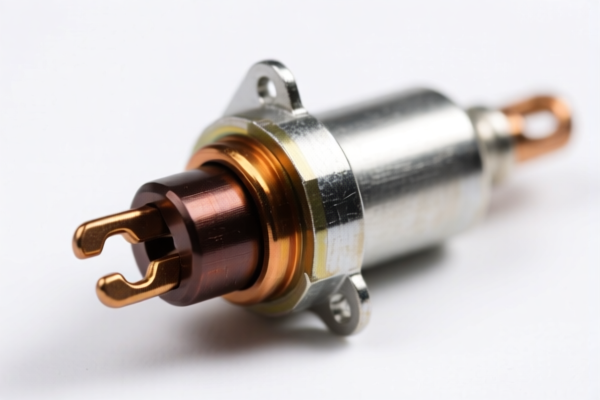
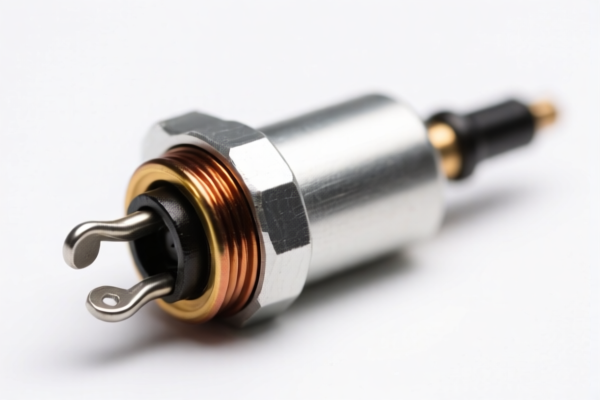
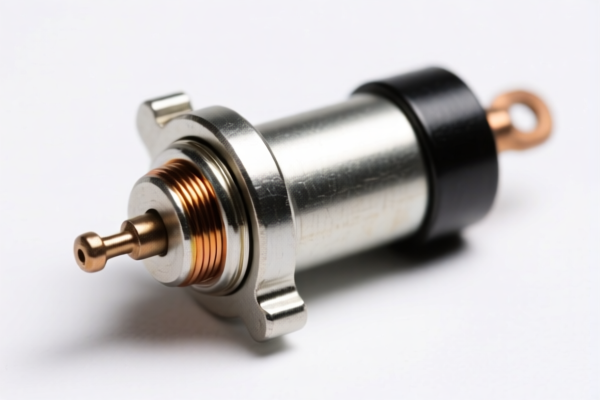
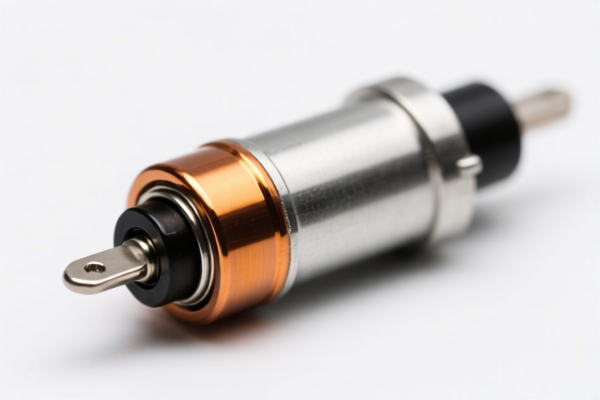
AI Analysis
🔌 Ignition Coils (Ignition Coils for Automotive/Electric Systems)
🌐 HS Code Reference & Customs Clearance Guide | 2026 Latest Tariff Analysis | Professional Clearance Strategy
📌 I. Product Definition & Classification: Do You Really Understand "Ignition Coils"?
Ignition coils are critical components in internal combustion engines and electric systems, responsible for converting low-voltage battery power into high-voltage sparks for ignition. In international trade, their classification depends heavily on the technical principle (electromagnetic vs. specific automotive electrical parts) and functional description.
According to the provided data, there are two primary classification paths, both carrying significant additional tariffs due to trade measures (Section 301 & IEEPA).
⚠️ Key Distinction:
- If the product is described as a generic "Ignition Coil" with consistent naming and usage → Classified under 8511.30.00.80.
- If the product is technically analyzed based on electromagnetic induction principles (electromagnetic elements/coils) → Classified under 8505.90.75.01.
📦 II. HS Code Classification Details (2026 Latest Tariff Authority对照)
| HS Code | Product Description | Technical Basis | Total Tax Rate |
|---|---|---|---|
8511.30.00.80 |
Ignition Coils; Purpose and Name Are Completely Consistent | Direct functional classification; standard automotive electrical part classification | 37.5% |
8505.90.75.01 |
Ignition Coils; Inferred based on Electromagnetic Induction Components & Coils | Based on core operating principle (electromagnetism); falls under "Other" electromagnetic equipment parts | 36.3% |
8505.90.75.01 |
Ignition Coils; As Electromagnetic Induction Components, Fits Category of Electromagnetic Equipment & Parts | Functional overlap with electromagnetic devices; no material conflict | 36.3% |
8505.90.75.01 |
Ignition Coils; Core Function Relies on Electromagnet Principle, No Material Conflict | Technical validation of electromagnetic nature; safe from material-based classification errors | 36.3% |
8505.90.75.01 |
Ignition Coils; Belongs to Electromagnetic Equipment & Parts, No Conflict with "Other" Category | Broad categorization under electromagnetic apparatus; "Other" subheading applies | 36.3% |
🔍 Key Reminder:
- 8511.30.00.80 is the direct functional classification for ignition coils, typically used when the product name and purpose are explicitly stated as such.
- 8505.90.75.01 is a technical/principle-based classification, useful when emphasizing the electromagnetic induction mechanism or when specific automotive electrical headings (like 8511) might face stricter scrutiny or lack specific subheadings for certain types.
- Both codes attract high tariffs due to US trade policies. The difference is only 1.2% in total tax rate, so technical justification must be strong if using 8505.
💰 III. 2026 Latest Tariff Rate Details (Including Add-ons, Policy Surcharges)
✅ Applicable Country: United States (US)
✅ Origin: China (CN)
✅ Effective Time: As per current trade regulations (Section 301 & IEEPA)
🎯 1. 8511.30.00.80 —— Ignition Coils (Direct Functional Classification)
| Item | Content |
|---|---|
| Base Tariff | 2.5% (ad valorem) |
| Section 301 Add-on Tariff | +25.0% (US Trade Act Section 301) |
| Section 122/IEEPA Add-on Tariff | +10.0% (Section 122 or IEEPA-based surcharge on Chinese goods) |
| Total Tax Rate | 37.5% |
| Tax Calculation | CIF Value × 37.5% |
| De Minimis Exemption | ❌ Not Available (deny_de_minimis) |
| Legal Basis Path | USITC:8511.30.00.80 → Footnote: Section 301 → IEEPA/Section 122 |
📌 Explanation:
- This is the most straightforward classification for ignition coils.
- The 37.5% total rate is the sum of the base duty (2.5%) plus two major surcharges (25% + 10%).
- High cost implication: Must be factored into pricing and margin analysis.
- No de minimis exemption: Small shipments still pay full tariff.
🎯 2. 8505.90.75.01 —— Ignition Coils (Electromagnetic Principle-Based Classification)
| Item | Content |
|---|---|
| Base Tariff | 1.3% (ad valorem) |
| Section 301 Add-on Tariff | +25.0% (US Trade Act Section 301) |
| Section 122/IEEPA Add-on Tariff | +10.0% (Section 122 or IEEPA-based surcharge on Chinese goods) |
| Total Tax Rate | 36.3% |
| Tax Calculation | CIF Value × 36.3% |
| De Minimis Exemption | ❌ Not Available (deny_de_minimis) |
| Legal Basis Path | USITC:8505.90.75.01 → Footnote: Section 301 → IEEPA/Section 122 |
📌 Explanation:
- This classification relies on the technical argument that ignition coils are fundamentally electromagnetic components.
- The base tariff is lower (1.3% vs. 2.5%), resulting in a 1.2% lower total rate.
- Risk: Requires strong technical documentation to justify why it’s not classified under 8511 (automotive electrical equipment). If customs disagrees, reclassification and penalties may follow.
- Applicable to: Cases where the product is marketed or described emphasizing electromagnetic induction, or when specific automotive electrical classifications are ambiguous.
🛠️ IV. Customs Clearance Practical Advice (Battle-Tested Pitfall Avoidance Guide)
✅ 1. Required Documentation List (None Can Be Skipped)
| Document | Mandatory | Description |
|---|---|---|
| ✅ Product Specification Sheet | ✔️ | Include model, voltage, resistance, induction ratio, dimensions |
| ✅ Technical Manual/Principle Description | ✔️ | Explain electromagnetic induction principle; clarify it’s an ignition coil |
| ✅ Product Photos (with Nameplate) | ✔️ | Clear view of model, brand, input/output specs |
| ✅ Third-Party Test Reports | ✔️ | CE, RoHS, UL (if applicable); confirm no hazardous materials |
| ✅ Commercial Invoice | ✔️ | Clearly state "Ignition Coil, Electromagnetic Type" or "Automotive Ignition Coil" |
| ✅ Packing List | ✔️ | Detail unit contents; avoid mixing with unrelated parts |
| ✅ Origin Certificate (CO) | ✔️ | If not China-origin, may qualify for lower rates (but data shows CN origin) |
⚠️ Critical Note:
- If using 8505.90.75.01, you must provide technical justification that the product functions primarily as an electromagnetic induction component.
- If using 8511.30.00.80, simply stating "Ignition Coil" with consistent purpose is sufficient.
✅ 2. Declaration Tips (Key Mnemonic)
🔥 “Electromagnetic Principle, Low Base Rate; Automotive Purpose, High Base Rate. Choose Wisely, Document Strongly.”
| Scenario | Correct Declaration | Wrong Action |
|---|---|---|
| Product explicitly marketed as "Automotive Ignition Coil" | 8511.30.00.80 |
Force 8505 → Risk of reclassification |
| Product described as "Electromagnetic Induction Coil" for ignition | 8505.90.75.01 |
Use 8511 → Unnecessary 2.5% base vs 1.3% |
| Mixed shipment with other electrical parts | Split HS Codes | Lump together → Customs rejection |
| Small sample shipment | Still declare properly | Assume de minimis → Fine/Seizure |
✅ 3. Special Circumstances Handling
| Situation | Handling Advice |
|---|---|
| OEM Custom Ignition Coils | Provide customer PO + technical drawings; avoid "generic" descriptions |
| Ignition Coils for Non-Automotive Use (e.g., industrial engines) | Justify under 8505 if automotive 8511 doesn’t fit; provide end-use proof |
| High-Value Shipments | Pre-apply for Advance Ruling to lock in HS code and tariff rate |
| Supply Chain Diversification | If sourcing from Vietnam/Mexico, check for IEEPA exemptions (lower rates possible) |
🌍 V. Global Market Clearance Comparison (2026 Latest)
| Country/Region | Recommended HS Code | Tariff (China Origin) | Certification Required | Notes |
|---|---|---|---|---|
| 🇺🇸 USA | 8511.30.00.80 or 8505.90.75.01 |
37.5% / 36.3% | CE/RoHS/UL (if US market) | High tariffs apply; no de minimis |
| 🇨🇳 China | 8511.30.00.80 |
~5-8% | CCC (if applicable) | Lower tariffs; domestic standard |
| 🇪🇺 EU | 8511.30.00.80 |
0-4% | CE + RoHS | No Section 301/IEEPA surcharges |
| 🇬🇧 UK | 8511.30.00.80 |
0-4% | UKCA + RoHS | Post-Brexit rules apply |
| 🇯🇵 Japan | 8511.30.00.80 |
0-3% | PSE (if applicable) | Low tariffs; strong quality standards |
📌 Conclusion:
- USA is the most challenging market for ignition coils due to 37.5%/36.3% total tariffs.
- EU/UK/Japan offer significantly lower duties, making them more attractive for cost-sensitive shipments.
- Diversify sourcing or explore free trade agreements (FTAs) to mitigate US tariff impact.
📌 VI. Common Mistakes & Pitfall Avoidance (Lessons Learned)
❌ Mistake 1: Using "Ignition Coil" without specifying technical principle → Customs may reclassify → Delay/Fine
👉 Fix: Clearly state "Electromagnetic Ignition Coil" or "Automotive Ignition Coil" in description.
❌ Mistake 2: Assuming de minimis exemption for small shipments → Seizure/Confiscation
👉 Fix: All US imports from China under Section 301/IEEPA are exempt from de minimis.
❌ Mistake 3: Mixing HS codes in one shipment without proper breakdown → Customs Audit
👉 Fix: Separate shipments by HS code; declare each line item accurately.
❌ Mistake 4: Using 8505.90.75.01 without technical justification → Reclassification to 8511.30.00.80 → Pay 37.5% instead of 36.3%
👉 Fix: Provide electromagnetic induction principle documentation if using 8505.
✅ Correct Declaration Example:
"Ignition Coil, Electromagnetic Induction Type, for Automotive Engines, Model XYZ, Voltage 12V, Resistance 0.5Ω, CE & RoHS Certified, Origin: China"
🎯 VII. Conclusion: Professional Declaration, Save Time & Cost!
🎯 Remember the Mantras:
🔹 "Base Tariff 2.5% vs 1.3%, Total 37.5% vs 36.3%. Choose based on product description!"
🔹 "No De Minimis in USA for China-Origin Goods. Pay Full Tariff!"
🔹 "Technical Justification is Key for 8505 Classification. Document Everything!"
📌 Pro Tip:
If your ignition coils are originating from Vietnam, Mexico, Thailand, or Malaysia, you may qualify for IEEPA Exemptions, reducing the total tariff to 0%~5%.
Recommendation:
1. Apply for Advance Ruling from US CBP to lock in HS code and tariff rate.
2. Keep technical datasheets and electromagnetic principle explanations ready for customs audit.
3. Diversify supply chain to non-China origins to avoid surcharges.
📣 Act Now:
📞 Contact Professional Customs Broker + Provide Product Specs + Apply for HS Code Advance Ruling
🚀 Ensure Smooth Clearance, Efficient Export, and Maximize Profit!
✨ Professional Clearance Starts with Precise Classification!
💼 Every Cent of Cost Deserves Accurate Calculation!
Customer Reviews
About HS Code Classification
The Harmonized System (HS) is an internationally standardized nomenclature developed by the World Customs Organization (WCO) to classify traded products. Over 200 countries use the HS system as the basis for customs tariffs, trade statistics, and import/export regulations.
Each HS code follows a hierarchical structure:
- Chapter (2 digits) — Broad category of goods (e.g., Chapter 84: Machinery and Mechanical Appliances)
- Heading (4 digits) — More specific grouping within the chapter
- Subheading (6 digits) — Internationally standardized breakdown, used by all WCO member countries
- National subdivisions (8-10 digits) — Country-specific extensions for further classification, such as US HTSUS 10-digit codes
Correct HS code classification is essential for smooth customs clearance, accurate duty payment, and compliance with trade regulations. Misclassification can lead to customs delays, overpayment of duties, or penalties.
When importing from CN to US, the applicable tariff rates may include:
- Most-Favored-Nation (MFN) rate — The standard duty rate applied to WTO members
- General rate — Applied to countries without trade agreements
- Trade remedy duties — Additional tariffs such as Section 301 (anti-dumping), Section 232 (national security), or countervailing duties
The information provided on this page is for reference purposes only. For official classification, please consult with your local customs authority or a licensed customs broker.