爬行动物皮革护照夹
CN → USProduct Images
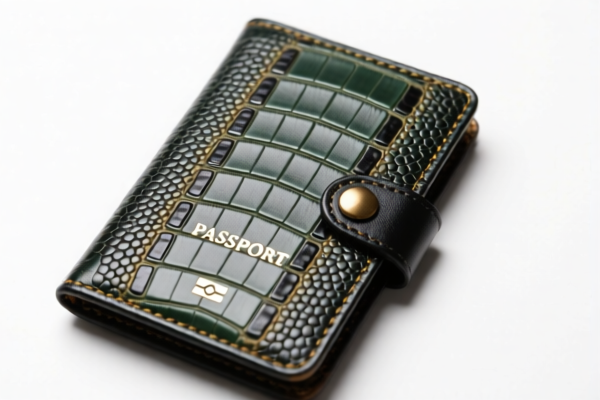
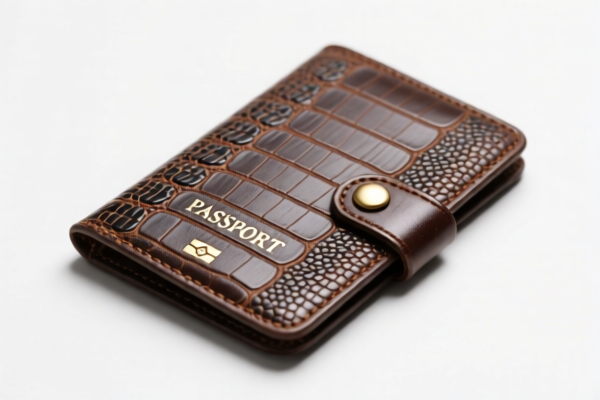
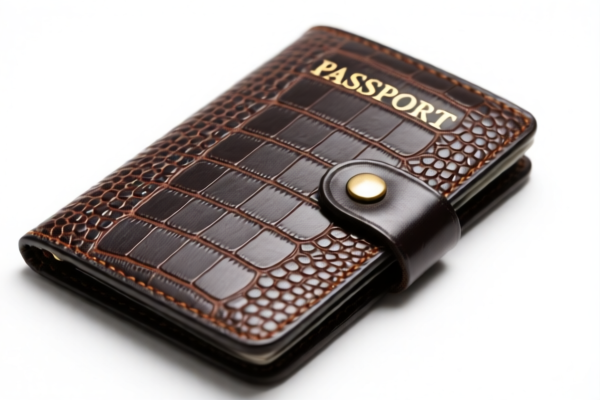
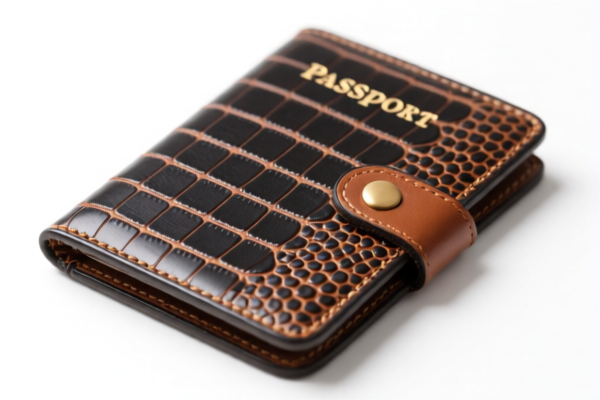
AI Analysis
🐊 Passport Holders (Reptile Leather)
🌐 HS Code Reference & Customs Clearance Guide | 2026 Latest Tariff Analysis | Professional Clearance Strategy
📌 I. Product Definition & Classification: What is "Reptile Leather" in the Eyes of Customs?
A passport holder made of reptile leather is a small leather goods item designed specifically to hold travel documents. In international trade, the classification depends heavily on the material composition and the specific function/form.
Reptile Skin (Exotic Leather): Includes snakes, crocodiles, alligators, lizards, etc. This material is often subject to stricter scrutiny due to CITES regulations (though not explicitly detailed in the tax data, it is a critical customs compliance point).
⚠️ Key Classification Distinction:
- If classified under Heading 4202 (Suitcases, bags, handbags) → It is treated as a general bag/pouch.
- If classified under Heading 4203/4205 (Clothing accessories, other articles of leather) → It is treated as a small accessory or specific leather article.
📦 II. HS Code Classification Details (2026 Latest Tariff Authority Mapping)
Based on the provided data, here are the potential HS Codes for a Reptile Leather Passport Holder:
| HS Code | Product Description (Summary from Data) | Tax Rate | Tax Composition Detail |
|---|---|---|---|
4205.00.60.00 |
Reptile leather passport holder; material and form fully match Leather Goods classification. | 39.9% | Base Tariff: 4.9% Additional Tariff: 25.0% Section 122 Tariff: 10% |
4205.00.80.00 |
Reptile leather passport holder; conforms to Leather Goods restrictions, no material conflict. | 35.0% | Base Tariff: 0.0% Additional Tariff: 25.0% Section 122 Tariff: 10% |
4203.40.60.00 |
Reptile leather passport holder; belongs to Clothing Accessories/Small Leather Goods category as "Other Accessories". | 35.0% | Base Tariff: 0.0% Additional Tariff: 25.0% Section 122 Tariff: 10% |
4203.40.30.00 |
Reptile leather passport holder; conforms to the scope of Clothing Accessories/Small Leather Goods. | 39.9% | Base Tariff: 4.9% Additional Tariff: 25.0% Section 122 Tariff: 10% |
4202.31.30.00 |
Reptile leather passport holder; belongs to Handbags/Pouches category; material and use match. | 38.7% | Base Tariff: 3.7% Additional Tariff: 25.0% Section 122 Tariff: 10% |
4202.31.60.00 |
Reptile leather passport holder; belongs to Handbags/Similar Containers as small portable items. | 43.0% | Base Tariff: 8.0% Additional Tariff: 25.0% Section 122 Tariff: 10% |
🔍 Key Observation:
- The Additional Tariff (25%) and Section 122 Tariff (10%) are constant across all options, reflecting current US trade policies on Chinese goods.
- The variance lies in the Base Tariff (0% to 8.0%), leading to a total tariff range of 35.0% – 43.0%.
💰 III. 2026 Latest Tariff Rate Details (Including Surtaxes & Policy Add-ons)
✅ Applicable Country: United States (US)
✅ Origin: China (CN)
✅ Effective Time: Current policies apply (Section 122 & 301 tariffs active)
🎯 1. 4205.00.60.00 & 4203.40.30.00 — Highest Base Tariff Tier
| Item | Content |
|---|---|
| Base Tariff | 4.9% (Ad Valorem) |
| Section 301 Surtax | +25.0% (USITC Footnote) |
| Section 122 Tariff | +10.0% (针对特定商品加征) |
| Total Tariff | 39.9% |
| Tax Calculation | CIF Value × 39.9% |
| De Minimis Eligibility | ❌ No (High-value luxury/exotic goods rarely qualify for $800 de minimis exemption if misclassified or if specific exceptions apply; verify with broker) |
| Legal Basis Path | USITC:4205.00.60.00 → Footnote:301 → Section122 |
📌 Explanation:
- These codes assume a higher base duty, possibly due to specific "Other" classifications in Chapters 42 or 43. - Total 39.9% is a significant cost factor.
🎯 2. 4205.00.80.00 & 4203.40.60.00 — Zero Base Tariff Tier
| Item | Content |
|---|---|
| Base Tariff | 0.0% |
| Section 301 Surtax | +25.0% |
| Section 122 Tariff | +10.0% |
| Total Tariff | 35.0% |
| Tax Calculation | CIF Value × 35.0% |
| De Minimis Eligibility | ❌ No |
| Legal Basis Path | USITC:4205.00.80.00 → Footnote:301 → Section122 |
📌 Note:
- This is the lowest total tariff option in the dataset. - Classifying as "Other Leather Articles" (4205) or "Other Accessories" (4203) with 0% base rate saves 4.9% compared to the highest tier.
🎯 3. 4202.31.30.00 — Mid-Range Base Tariff
| Item | Content |
|---|---|
| Base Tariff | 3.7% |
| Section 301 Surtax | +25.0% |
| Section 122 Tariff | +10.0% |
| Total Tariff | 38.7% |
| Tax Calculation | CIF Value × 38.7% |
| De Minimis Eligibility | ❌ No |
| Legal Basis Path | USITC:4202.31.30.00 → Footnote:301 → Section122 |
📌 Explanation:
- Classified under Handbags/Pouches. The base rate is slightly higher than the 0% group but lower than the 4.9% group.
🎯 4. 4202.31.60.00 — Highest Total Tariff Tier
| Item | Content |
|---|---|
| Base Tariff | 8.0% |
| Section 301 Surtax | +25.0% |
| Section 122 Tariff | +10.0% |
| Total Tariff | 43.0% |
| Tax Calculation | CIF Value × 43.0% |
| De Minimis Eligibility | ❌ No |
| Legal Basis Path | USITC:4202.31.60.00 → Footnote:301 → Section122 |
📌 Note:
- This code carries the highest burden. It likely refers to specific "Small Portable Containers" with higher base duties.
🛠️ IV. Customs Clearance Practical Advice (Battle-Tested Pitfall Guide)
✅ 1. Document Checklist (Non-Negotiable)
| Document | Mandatory | Explanation |
|---|---|---|
| ✅ Product Specification Sheet | ✔️ | Must specify Material: "Reptile Leather" (e.g., Python, Crocodile). Must specify Type: "Passport Holder". |
| ✅ Material Declaration | ✔️ | Explicitly state if it is genuine leather or synthetic. If genuine, specify species if possible (for CITES compliance, even if not in tax data). |
| ✅ Commercial Invoice | ✔️ | Value must be accurate. HS Code must be clearly listed. |
| ✅ Photos of Product | ✔️ | Show the texture to prove it is reptile leather, not standard cowhide. |
| ✅ CITES Permit (If Applicable) | ✔️ | Crucial: If the reptile is listed in CITES Appendix I or II, an import permit may be required regardless of HS code. Check species! |
✅ 2. Declaration Strategy (Key Mnemonic)
🔥 "Classify by Function, Verify Material, Avoid 4202.31.60!"
| Scenario | Correct Declaration | Incorrect Action |
|---|---|---|
| Passport Holder | 4205.00.80.00 or 4203.40.60.00 (0% Base) |
Declaring as 4202.31.60.00 (8% Base) → Waste 4.3% tax |
| Luxury Exotic Leather | Ensure "Reptile" is stated | Hiding material type → Seizure Risk |
| Set with Other Items | Declare separately if not integral | Bundling with non-leather items → Misclassification Risk |
📌 Strategy:
- Aim for4205.00.80.00or4203.40.60.00to achieve the 35.0% total tariff. - Avoid4202.31.60.00(43.0%) unless the product shape strictly mandates it (e.g., rigid container vs. flexible pouch).
✅ 3. Special Considerations
| Issue | Handling Advice |
|---|---|
| CITES Compliance | Even if not in the tax data, US Customs (CBP) works with USFWS. Ensure the reptile species is not endangered without permits. |
| Leather Treatment | Specify if it is "finished," "dyed," or "embossed." This helps justify the HS code if challenged. |
| Packaging | If sold in a retail box, declare as a "set" only if the box is integral to the sale. Otherwise, declare the passport holder alone. |
🌍 V. Global Market Comparison (2026 Snapshot)
| Market | Recommended HS Code | Est. Tariff | Notes |
|---|---|---|---|
| 🇺🇸 USA | 4205.00.80.00 |
35.0% | Best option in this dataset. Watch for Section 122. |
| 🇺🇸 USA | 4202.31.60.00 |
43.0% | Avoid if possible. |
| 🇪🇺 EU | 4202.31 or 4203.40 | ~4% + VAT | No 25% or 10% surtaxes. Much cheaper. |
| 🇨🇳 China | 4202.31 or 4203.40 | ~5-10% | Standard import duty. No Section 301. |
📌 Conclusion:
- US Tariffs are high due to political surcharges (25% + 10%). - Classification Choice matters: Selecting4205.00.80.00over4202.31.60.00saves 8 percentage points on the CIF value.
📌 VI. Common Mistakes & Pitfalls (Lessons Learned)
❌ Mistake 1: Misclassifying as "Textile Passport Holder"
👉 Result: If it's leather, it's Chapter 42. If misclassified as textile (Chapter 63), penalties apply.
❌ Mistake 2: Ignoring CITES for Reptile Leather
👉 Result: Goods held at border, fines, or destruction. Tax data doesn't cover this, but it's the #1 risk for reptile leather.
❌ Mistake 3: Using 4202.31.60.00 without justification
👉 Result: Paying 43% instead of 35%. CBP may challenge the "container" definition.
✅ Correct Approach:
"Leather Passport Holder, Exotic Reptile Skin, for Travel Document Storage, Model XYZ, Compliant with CITES (if applicable)"
🎯 VII. Conclusion: Smart Classification Saves Money!
🎯 Key Takeaway:
🔹 Target HS Code:
4205.00.80.00or4203.40.60.00
🔹 Total Tariff: 35.0%
🔹 Avoid:4202.31.60.00(43.0%)
🔹 Critical: Verify CITES status for reptile species.
📌 Pro Tip:
If your reptile leather is from a non-endangered species and correctly classified under 4205.00.80.00, you minimize both tax and compliance risk.
Apply for a Pre-Classification Ruling from CBP if the material is ambiguous.
📣 Action Required:
📞 Confirm Species with Supplier → ✅ Select HS
4205.00.80.00→ 📄 Prepare CITES Docs (if needed) → 🚀 Clear Customs Efficiently!
✨ Professional Clearance Starts with Precise Classification!
💼 Every Percent Counts in Global Trade!
Customer Reviews
About HS Code Classification
The Harmonized System (HS) is an internationally standardized nomenclature developed by the World Customs Organization (WCO) to classify traded products. Over 200 countries use the HS system as the basis for customs tariffs, trade statistics, and import/export regulations.
Each HS code follows a hierarchical structure:
- Chapter (2 digits) — Broad category of goods (e.g., Chapter 84: Machinery and Mechanical Appliances)
- Heading (4 digits) — More specific grouping within the chapter
- Subheading (6 digits) — Internationally standardized breakdown, used by all WCO member countries
- National subdivisions (8-10 digits) — Country-specific extensions for further classification, such as US HTSUS 10-digit codes
Correct HS code classification is essential for smooth customs clearance, accurate duty payment, and compliance with trade regulations. Misclassification can lead to customs delays, overpayment of duties, or penalties.
When importing from CN to US, the applicable tariff rates may include:
- Most-Favored-Nation (MFN) rate — The standard duty rate applied to WTO members
- General rate — Applied to countries without trade agreements
- Trade remedy duties — Additional tariffs such as Section 301 (anti-dumping), Section 232 (national security), or countervailing duties
The information provided on this page is for reference purposes only. For official classification, please consult with your local customs authority or a licensed customs broker.