牛底革鞋里皮
CN → US| HS Code | Tariff Rate | Origin | Destination | Doc |
|---|---|---|---|---|
| 4104411020 | 35.0% | CN | US | Official Doc |
| 4107116010 | 13.3% | CN | US | Official Doc |
| 4107111020 | 35.0% | CN | US | Official Doc |
| 4104114010 | 15.0% | CN | US | Official Doc |
| 4104111020 | 35.0% | CN | US | Official Doc |
Product Images
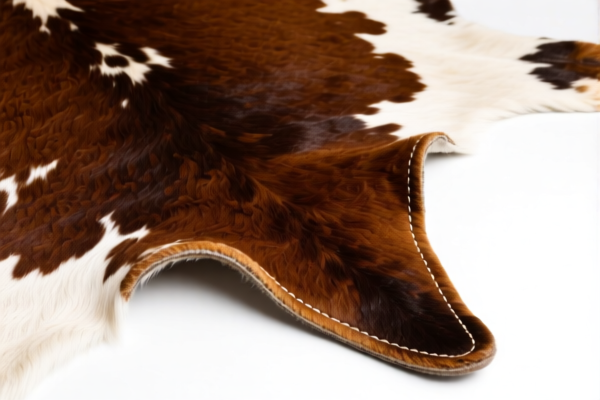
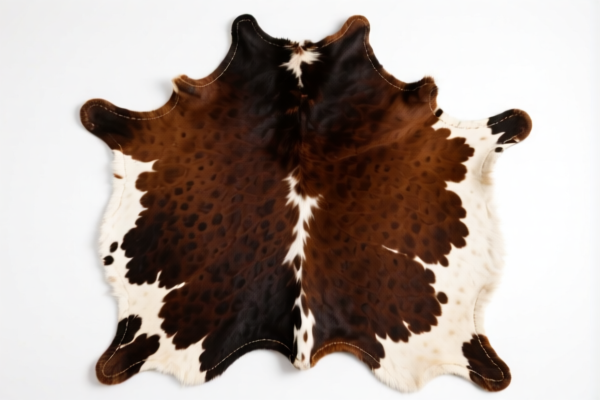
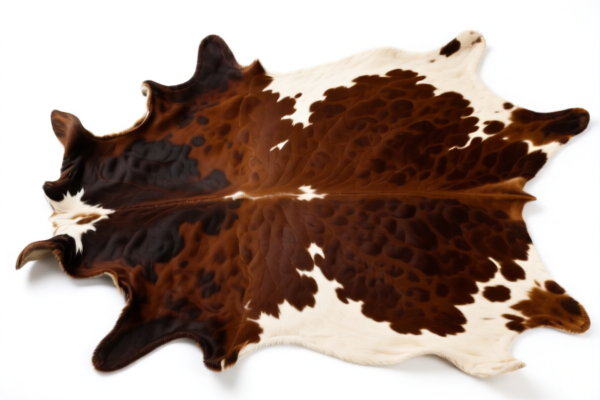
AI Analysis
👞 Cow Bottom Leather Lining (Cowhide Shoe Liner)
🌐 HS Code Reference & Customs Clearance Guide | 2026 Latest Tariff Analysis | Professional Strategy
📌 I. Product Definition & Classification: Do You Really Understand "Cow Bottom Leather Lining"?
Cow Bottom Leather Lining refers to high-quality leather processed specifically for the inner lining of shoes. It is derived from cowhide but undergoes specific tanning and finishing processes to ensure softness, breathability, and durability against foot sweat. In international trade, it is distinguished from "upper leather" (面革) by its specific usage and physical properties.
⚠️ Key Distinction:
- If the leather is processed for shoe uppers (outer shell), it generally falls under 4104.
- If the leather is processed specifically for liners/inner parts (often thinner, softer, or chrome-tanned), it often falls under 4107.
- Crucial Point: The HS code depends heavily on the tanning method (Chrome vs. Vegetable) and the specific sub-category description in the customs tariff book.
📦 II. HS Code Classification Details (2026 Latest Tariff Authority Comparison)
Based on the provided data, here are the relevant HS Codes for Cowhide Leather intended for shoe applications. Note that the distinction often lies in the specific processing and duty treatments.
| HS Code | Product Description | Key Characteristics | Total Tax Rate (US/China Origin) |
|---|---|---|---|
4104.41.10.20 |
Cowhide Leather, Form: Upper Leather | Specifically identified as Upper Leather (面革) in description, despite general category. | 35.0% |
4107.11.60.10 |
Cowhide Leather, Use: Shoe Upper Lining/Inner | Identified as Shoe Upper Skin (鞋面皮) but grouped under 4107 (Other Tanned Leather). | 13.3% |
4107.11.10.20 |
Cowhide Leather, Use: Upper Leather | Specifically identified as Upper Leather (面皮). | 35.0% |
4104.11.40.10 |
Cowhide Leather, Use: Shoe Upper Leather | Generic Shoe Upper Leather (鞋面革) under 4104. | 15.0% |
4104.11.10.20 |
Cowhide Leather, Use: Shoe Upper Lining | Specifically identified as Shoe Upper Lining (鞋用面革). | 35.0% |
🔍 Important Note:
Although the user input is "Cow Bottom Leather Lining" (牛底革鞋里皮), the provided data primarily lists codes related to Upper Leather (面革/面皮/鞋面皮). In customs practice, "Lining" (里皮) and "Upper" (面革) can sometimes be confused if the leather is not distinctly different in tanning. However, 4107 codes often cover leathers that are not strictly "Upper Leather" as defined in 4104, which may include certain linings or secondary layers.
- If the product is strictly Chrome-Tanned (铬鞣), it often falls under 4107.
- If it is Vegetable-Tanned or meets specific "Upper Leather" criteria, it may fall under 4104.
⚠️ Critical Warning: The data provided links "Lining" (里皮/面革) to both 35% and 13.3% rates depending on the exact code. You must verify if your "Lining" qualifies for the 4107 classification (13.3%) or is forced into 4104 (35%).
💰 III. 2026 Latest Tariff Rate Detail (Including Surtax & Policy Add-ons)
✅ Applicable Country: United States (US)
✅ Origin: China (CN)
✅ Effective Date: 2025 November 10 onwards (for subsequent imports)
🎯 1. 4104.41.10.20 / 4107.11.10.20 / 4104.11.10.20 —— High Duty Category (35%)
| Item | Content |
|---|---|
| Base Tariff | 0.0% (ad valorem) |
| Section 301 Surtax | +25% (USITC Footnote related to China) |
| 122 Clause Surtax | +10% (Specific Section 301 or IEEPA related surcharge) |
| Total Rate | 35.0% |
| Calculation | CIF Value × 35% |
| De Minimis Exemption | ❌ Not Applicable (High risk of seizure/audit) |
| Legal Path | USITC:4104.41.10.20 → FOOTNOTE:301 → 122 Clause |
📌 Explanation:
- The 0% base is misleading; the 25% Section 301 and 10% 122 Clause tariffs are mandatory for Chinese-origin goods.
- These codes are associated with 35% total tax. This is a high-cost category. Ensure your product description strictly matches the "Upper Leather" definition if these codes are used.
🎯 2. 4104.11.40.10 —— Medium Duty Category (15%)
| Item | Content |
|---|---|
| Base Tariff | 5.0% (ad valorem) |
| Section 301 Surtax | 0.0% (Exempt or not applicable for this specific sub-code in current data) |
| 122 Clause Surtax | +10% |
| Total Rate | 15.0% |
| Calculation | CIF Value × 15% |
| De Minimis Exemption | ❌ Not Applicable |
| Legal Path | USITC:4104.11.40.10 → 122 Clause |
📌 Explanation:
- This code offers a lower total rate of 15%.
- It includes a 5% base tariff and 10% 122 Clause tax.
- Opportunity: If your "Lining" leather can be classified under this code (likely due to specific tanning or processing differences), it saves 20% compared to the 35% codes.
🎯 3. 4107.11.60.10 —— Lowest Duty Category (13.3%)
| Item | Content |
|---|---|
| Base Tariff | 3.3% (ad valorem) |
| Section 301 Surtax | 0.0% |
| 122 Clause Surtax | +10% |
| Total Rate | 13.3% |
| Calculation | CIF Value × 13.3% |
| De Minimis Exemption | ❌ Not Applicable |
| Legal Path | USITC:4107.11.60.10 → 122 Clause |
📌 Explanation:
- This is the most favorable rate in the provided data.
- It falls under Chapter 41 (Other Tanned Leather), specifically 4107.
- Key Condition: The product must be classified as "Other Tanned Leather" rather than strictly "Upper Leather" (which is often 4104). If your lining is chrome-tanned or processed differently from standard uppers, this code may be applicable.
- Savings: Compared to 35%, this saves 21.7% in taxes.
🛠️ IV. Customs Clearance Practical Advice (Pitfall Avoidance Guide)
✅ 1. Preparation Checklist (Non-negotiable)
| Document | Required | Description |
|---|---|---|
| ✅ Product Specification | ✔️ | Must specify Tanning Method (Chrome vs. Vegetable), Thickness, Softness, and Intended Use (Lining vs. Upper). |
| ✅ Photos | ✔️ | Clear images of the leather grain, back, and cross-section. Distinguish from upper leather by texture. |
| ✅ Commercial Invoice | ✔️ | Explicitly state "Cowhide Leather for Shoe Lining" (牛底革鞋里皮) or "Shoe Upper Leather" (鞋面革) depending on the HS code chosen. |
| ✅ Process Flow | ✔️ | Brief description of tanning/finishing to justify 4107 (Other) vs. 4104 (Upper). |
| ✅ Packing List | ✔️ | Detailed weight and quantity. |
✅ 2. Classification Strategy (Key Mantra)
🔥 "Don't confuse Lining with Upper; Check 4107 for Lower Rates!"
| Scenario | Recommended HS Code | Tax Rate | Reasoning |
|---|---|---|---|
| Chrome-Tanned Lining (Softer, thinner) | 4107.11.60.10 |
13.3% | Falls under "Other Tanned Leather". Lowest tax. |
| Vegetable-Tanned "Upper-like" Lining | 4104.11.40.10 |
15.0% | Specific sub-category for shoe leather with 5% base. |
| Standard "Upper" Leather Misidentified as Lining | 4104.41.10.20 |
35.0% | High risk if not strictly "Upper". Only use if it meets 4104 definitions. |
| General Cowhide Leather (Uncertain) | Avoid | High Risk | Do not guess. Misclassification leads to penalties. |
✅ 3. Special Considerations
- 122 Clause Tax: All provided codes include a 10% 122 Clause tax. This is a specific US trade policy surcharge. Do not ignore this. It applies regardless of the base rate.
- Section 301 (25%): The 35% codes include this. The 15% and 13.3% codes do not show the 25% Section 301 tax in the provided data, likely due to specific exclusions or different base categories. Verify this with current USITC rulings.
- "Lining" vs. "Upper": Customs officers may inspect if "Lining" is actually "Upper" being misdeclared to avoid higher taxes. Ensure your product is physically suitable for lining (softer, breathable) to support the 4107 or 4104.11 classification.
🌍 V. Global Market Comparison (2026 Latest)
| Market | Recommended HS Code | Base Tariff | Surtax/Notes | Total Est. |
|---|---|---|---|---|
| 🇺🇸 USA | 4107.11.60.10 |
3.3% | 122 Clause: 10% | 13.3% |
| 🇨🇳 China | 4107.11.60.10 |
8-10% | None | ~8-10% |
| 🇪🇺 EU | 4107.11.00 |
5.7% | None | 5.7% |
| 🇯🇵 Japan | 4107.11.00 |
5.5% | None | 5.5% |
📌 Conclusion:
- The USA has the highest effective tax burden due to additional clauses.
- Target the 4107 codes (4107.11.60.10or4107.11.10.20) to minimize US duties.
- EU and Japan offer significantly lower base rates, but logistics and compliance costs must be factored in.
📌 VI. Common Errors & Pitfalls (Lessons Learned)
❌ Error 1: Declaring "Lining" as "Upper Leather" to fit a wrong code
👉 Consequence: Misclassification, seizure, and fines. If the leather is soft/thin, it may not qualify as "Upper" under 4104.
❌ Error 2: Ignoring the 122 Clause
👉 Consequence: Underpaying 10% tax. Customs will assess back taxes + interest + penalties.
❌ Error 3: Assuming all Cowhide Leather is 35%
👉 Consequence: Overpaying. By proving it falls under 4107 (Other Tanned Leather) or specific 4104 sub-codes, you can reduce tax to 13.3% or 15%.
✅ Correct Practice:
"Chrome-Tanned Cowhide Leather, Soft Finish, for Shoe Lining, Thickness: 0.8mm, Model: LIN-COW-01"
Supports classification under4107.11.60.10(13.3%)
🎯 VII. Conclusion: Professional Declaration, Cost Optimization
🎯 Remember the Mantra:
🔹 "4107 is Lower, 4104 is Higher, Check 122 Clause, Don't Ignore!"
🔹 "Lining ≠ Upper, Use 4107 for Savings, 35% is a Trap!"
📌 Pro Tip:
- Request a Binding Ruling (Pre-classification) from US Customs if unsure between
4107and4104.- Document the Tanning Process: Chrome-tanned leathers often fit better under 4107, avoiding the 25% Section 301 surcharge if applicable.
- Work with a Licensed Customs Broker: They can verify the latest 122 Clause applicability and Section 301 exclusions.
📣 Immediate Action:
📞 Contact your Customs Broker + Provide Leather Samples + Apply for Pre-classification
🚀 Reduce Your Tax Burden from 35% to 13.3% – Save 21.7% on Every Shipment!
✨ Professional Clearance Starts with Accurate Classification!
💼 Every Cent Saved is Pure Profit!
Customer Reviews
About HS Code Classification
The Harmonized System (HS) is an internationally standardized nomenclature developed by the World Customs Organization (WCO) to classify traded products. Over 200 countries use the HS system as the basis for customs tariffs, trade statistics, and import/export regulations.
Each HS code follows a hierarchical structure:
- Chapter (2 digits) — Broad category of goods (e.g., Chapter 84: Machinery and Mechanical Appliances)
- Heading (4 digits) — More specific grouping within the chapter
- Subheading (6 digits) — Internationally standardized breakdown, used by all WCO member countries
- National subdivisions (8-10 digits) — Country-specific extensions for further classification, such as US HTSUS 10-digit codes
Correct HS code classification is essential for smooth customs clearance, accurate duty payment, and compliance with trade regulations. Misclassification can lead to customs delays, overpayment of duties, or penalties.
When importing from CN to US, the applicable tariff rates may include:
- Most-Favored-Nation (MFN) rate — The standard duty rate applied to WTO members
- General rate — Applied to countries without trade agreements
- Trade remedy duties — Additional tariffs such as Section 301 (anti-dumping), Section 232 (national security), or countervailing duties
The information provided on this page is for reference purposes only. For official classification, please consult with your local customs authority or a licensed customs broker.