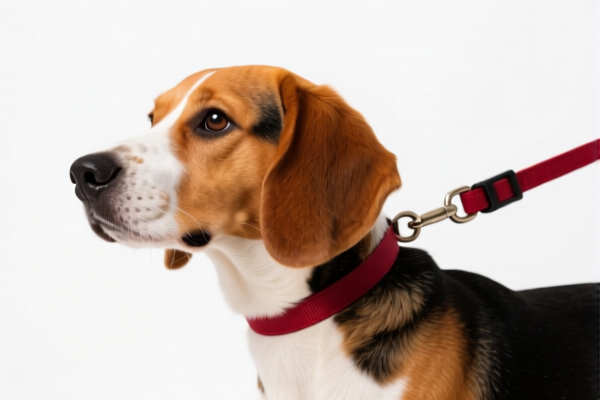
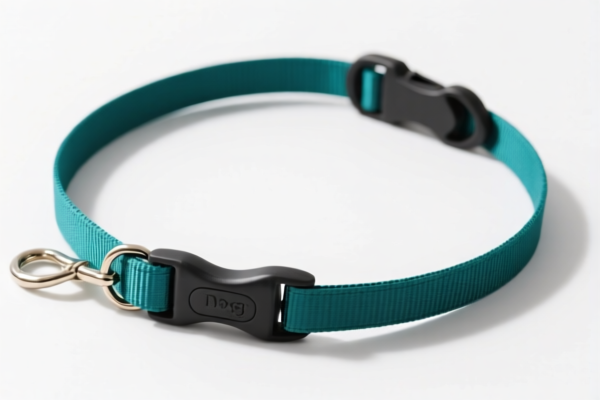
牵引绳红色
CN → US| HS Code | Tariff Rate | Origin | Destination | Doc |
|---|---|---|---|---|
| 4205004000 | 36.8% | CN | US | Official Doc |
| 4205008000 | 35.0% | CN | US | Official Doc |
| 5607493000 | 38.6% | CN | US | Official Doc |
| 5607909000 | 41.3% | CN | US | Official Doc |
| 5609003000 | 39.5% | CN | US | Official Doc |
Product Images


AI Analysis
🐕 Red Dog Leash (牵引绳红色)
🌐 HS Code Reference & Customs Clearance Guide | 2026 Latest Tariff Analysis | Professional Clearance Strategy
📌 I. Product Definition & Classification: Do You Really Understand "Red Dog Leash"?
The Red Dog Leash is a pet accessory used to restrain or guide a dog. In international trade, its classification depends heavily on material, structure, and intended use. It is often confused with general ropes or general animal supplies.
⚠️ Key Distinction Points:
- If it is a simple synthetic fiber rope/cord without specific animal-use features (like buckles, collars, or handles specifically designed for animals) → It may fall under Chapter 56 (Ropes/Cords).
- If it is specifically designed as an animal supply (e.g., includes a handle, clip, or collar attachment) and made of various materials → It falls under Chapter 42 (Articles of Animal Origin or Animal Supplies).
📦 II. HS Code Classification Details (2026 Latest Tariff Authority Comparison)
Based on the provided data, here are the five possible HS Codes for "Red Dog Leash," along with their tax implications and summaries.
| HS Code | Product Description & Summary | Material/Structure Inference | Total Tax Rate (China Origin to US) |
|---|---|---|---|
5609.00.30.00 |
Traction Rope | Material inferred as synthetic fiber. Fits the category of fine ropes/cords. | 39.5% |
5609.00.10.00 |
Rope Category (Catch-all) | No material conflict. Fits as a general rope category. | 37.9% |
4201.00.60.00 |
Animal Supply (Traction Cord) | Specifically an animal use item. No material conflict. | 12.8% |
4201.00.30.00 |
Animal Supply (General) | Matches use and form. Material inferred as any material. | 37.4% |
5607.90.90.00 |
Towing Rope (Red) | Typically polyester/nylon synthetic. Fits the catch-all rope category. | 41.3% |
🔍 Key Insight:
-4201.00.60.00is the most cost-effective option (12.8%) if the product is clearly defined as an "animal supply" with specific animal-use features.
-5607.90.90.00has the highest tax rate (41.3%) and is risky due to the "towing rope" description which might imply heavy-duty industrial use rather than pet supplies.
-5609.00.30.00and5609.00.10.00are alternative rope classifications with high taxes (39.5% and 37.9% respectively).
💰 III. 2026 Latest Tariff Rate Detailed Explanation (Including Surcharges & Policy Add-ons)
✅ Applicable Country: United States (US)
✅ Origin: China (CN)
✅ Effective Date: From November 10, 2025 (including subsequent imports)
🎯 1. 5609.00.30.00 —— Traction Rope (Synthetic Fiber)
| Item | Content |
|---|---|
| Base Tariff | 4.5% (ad valorem) |
| Section 301 Surcharge | +25.0% (USITC Footnote 9903.88.01) |
| Section 122 Surcharge | +10.0% (IEEPA Surcharge for China/HK products) |
| Total Tax Rate | 39.5% |
| Tax Calculation | CIF Value × 39.5% |
| De Minimis Exemption | ❌ Not Eligible (deny_de_minimis) |
| Legal Basis Path | IEEPA:9903.01.25 → IEEPA:9903.01.24 → USITC:5609.00.30.00 → FOOTNOTE:9903.88.01 |
📌 Explanation:
- The 25% Section 301 Surcharge is applied to most Chinese-made goods.
- The 10% Section 122 Surcharge is a specific additional tariff for Chinese imports.
- Total 39.5% is a high tariff rate, significantly impacting profit margins.
🎯 2. 5609.00.10.00 —— Rope Category (Catch-all)
| Item | Content |
|---|---|
| Base Tariff | 2.9% |
| Section 301 Surcharge | +25.0% |
| Section 122 Surcharge | +10.0% |
| Total Tax Rate | 37.9% |
| Tax Calculation | CIF Value × 37.9% |
| De Minimis Exemption | ❌ Not Eligible |
| Legal Basis Path | IEEPA:9903.01.25 → IEEPA:9903.01.24 → USITC:5609.00.10.00 → FOOTNOTE:9903.88.01 |
📌 Note:
- Slightly lower than5609.00.30.00due to a lower base tariff (2.9% vs 4.5%).
- Still subject to full surcharges.
🎯 3. 4201.00.60.00 —— Animal Supply (Traction Cord) ⚠️ RECOMMENDED FOR LOWEST TAX
| Item | Content |
|---|---|
| Base Tariff | 2.8% |
| Section 301 Surcharge | 0.0% |
| Section 122 Surcharge | +10.0% |
| Total Tax Rate | 12.8% |
| Tax Calculation | CIF Value × 12.8% |
| De Minimis Exemption | ❌ Not Eligible |
| Legal Basis Path | IEEPA:9903.01.25 → USITC:4201.00.60.00 |
📌 Critical Advantage:
- No Section 301 Surcharge (0%)! This is the key difference.
- Only subject to the 10% Section 122 Surcharge.
- Total 12.8% is significantly lower than other options.
- Condition: Must be clearly defined as an "animal supply" (e.g., includes specific pet-use features like a handle, clip, or collar attachment).
🎯 4. 4201.00.30.00 —— Animal Supply (General)
| Item | Content |
|---|---|
| Base Tariff | 2.4% |
| Section 301 Surcharge | +25.0% |
| Section 122 Surcharge | +10.0% |
| Total Tax Rate | 37.4% |
| Tax Calculation | CIF Value × 37.4% |
| De Minimis Exemption | ❌ Not Eligible |
| Legal Basis Path | IEEPA:9903.01.25 → IEEPA:9903.01.24 → USITC:4201.00.30.00 → FOOTNOTE:9903.88.01 |
📌 Note:
- Lower base tariff (2.4%) but still subject to 25% Section 301 Surcharge.
- High total tax rate (37.4%) makes this less attractive than4201.00.60.00.
🎯 5. 5607.90.90.00 —— Towing Rope (Red)
| Item | Content |
|---|---|
| Base Tariff | 6.3% |
| Section 301 Surcharge | +25.0% |
| Section 122 Surcharge | +10.0% |
| Total Tax Rate | 41.3% |
| Tax Calculation | CIF Value × 41.3% |
| De Minimis Exemption | ❌ Not Eligible |
| Legal Basis Path | IEEPA:9903.01.25 → IEEPA:9903.01.24 → USITC:5607.90.90.00 → FOOTNOTE:9903.88.01 |
📌 Warning:
- Highest Tax Rate (41.3%).
- "Towing Rope" description may trigger scrutiny for industrial use, leading to potential classification disputes.
- Not recommended for pet leashes unless no other option is viable.
🛠️ IV. Customs Clearance Practical Advice (Pitfall Avoidance Guide)
✅ 1. Preparation Checklist (Non-negotiable)
| Document | Must Provide | Description |
|---|---|---|
| ✅ Product Specification Sheet | ✔️ | Material (nylon, polyester, etc.), dimensions, weight, handle type, clip type |
| ✅ Product Photos | ✔️ | Clear images showing the entire leash, handle, clip, and any branding |
| ✅ Commercial Invoice | ✔️ | Clearly state "Dog Leash" or "Pet Traction Cord", NOT "Towing Rope" |
| ✅ Packing List | ✔️ | Confirm if accessories (collar, pouch) are included |
| ✅ Certificate of Origin | ✔️ | For potential tariff preferences (if applicable) |
| ✅ Third-Party Test Report | ✔️ | If applicable (e.g., tensile strength, material safety) |
✅ 2. Declaration Tips (Key Mantra)
🔥 “Be an Animal Supply, Not a Tow Rope!”
| Scenario | Correct Declaration | Wrong Declaration |
|---|---|---|
| Pet Leash with Handle/Clip | 4201.00.60.00 (12.8%) |
"Towing Rope" → 5607.90.90.00 (41.3%) |
| Simple Rope without Animal Features | 5609.00.30.00 (39.5%) |
"Animal Supply" → 4201.00.60.00 (Risk of misclassification) |
| Leash + Collar Set | Declare as Animal Supply | Split into Rope + Collar → Higher total tax |
| OEM Custom Leash | Provide design drawings | Generic description → Delay in clearance |
✅ 3. Special Circumstances Handling
| Situation | Handling Advice |
|---|---|
| Leash with Plastic/Metal Buckles | Clearly state as "Animal Supply" to qualify for 4201.00.60.00 |
| Leash Made of Natural Fiber (e.g., Rope Hemp) | May fall under 5609.00.10.00 (37.9%) if not clearly an animal supply |
| Red Color Specifics | Mention color in description, but it does not change HS Code |
| High-Volume Shipments | Apply for Advance Ruling to confirm 4201.00.60.00 classification |
🌍 V. Global Market Comparison (2026 Latest)
| Country/Region | Recommended HS Code | Tariff Rate | Certification | Notes |
|---|---|---|---|---|
| 🇺🇸 USA | 4201.00.60.00 |
12.8% | No specific | Lowest tax if classified correctly |
| 🇨🇳 China | 4201.00.60.00 |
5% | None | No additional surcharges |
| 🇪🇺 EU | 4201.00.60.00 |
0% (if CE) | CE + REACH | No additional surcharges |
| 🇦🇺 Australia | 4201.00.60.00 |
5% | RCM | No additional surcharges |
| 🇯🇵 Japan | 4201.00.60.00 |
0% | PSE | No additional surcharges |
📌 Conclusion:
- USA is the only market with significant additional tariffs.
- Classifying as "Animal Supply" (4201.00.60.00) saves 25% in Section 301 surcharges.
- China-origin pet leashes face high tariffs in the US if misclassified as ropes.
📌 VI. Common Mistakes & Pitfall Guide (Lessons Learned)
❌ Mistake 1: Declaring "Dog Leash" as "Towing Rope"
👉 Consequence: Tax rate jumps from 12.8% to 41.3% → Loss of profit!
❌ Mistake 2: Declaring "Simple Rope" as "Animal Supply"
👉 Consequence: Customs may reject classification → Delay + Inspection + Potential Fine
❌ Mistake 3: Not providing photos or specifications
👉 Consequence: Customs cannot determine if it's an animal supply → Higher default tariff
❌ Mistake 4: Using "Rope" in the product name
👉 Consequence: Triggers Chapter 56 classification → Higher tax (39.5%+)
✅ Correct Practice:
"Pet Dog Leash, 6ft, Nylon, with Metal Clip and Handle, Model XYZ, Made in China"
🎯 VII. Conclusion: Professional Declaration, Time-Saving, Cost-Effective!
🎯 Remember the Mantra:
🔹 “Animal Supply = 12.8%, Rope = 40%!”
🔹 “HS Code Determines Fate, Tax Rate Difference is Huge!”
📌 Tips:
- If your leash originates from Vietnam, Mexico, Thailand, or Malaysia, you may qualify for IEEPA Exemption, reducing tax to 0%~5%.
- Apply for Advance Ruling to confirm 4201.00.60.00 classification.
📣 Immediate Action:
📞 Contact a Professional Customs Broker + Provide Product Photos + Apply for HS Code Advance Ruling
🚀 Let your Pet Leash Clear Customs Smoothly, Boost Profits!
✨ Professional Clearance Starts with Accurate Classification!
💼 Every Cent of Your Cost Deserves Precise Calculation!
Customer Reviews
About HS Code Classification
The Harmonized System (HS) is an internationally standardized nomenclature developed by the World Customs Organization (WCO) to classify traded products. Over 200 countries use the HS system as the basis for customs tariffs, trade statistics, and import/export regulations.
Each HS code follows a hierarchical structure:
- Chapter (2 digits) — Broad category of goods (e.g., Chapter 84: Machinery and Mechanical Appliances)
- Heading (4 digits) — More specific grouping within the chapter
- Subheading (6 digits) — Internationally standardized breakdown, used by all WCO member countries
- National subdivisions (8-10 digits) — Country-specific extensions for further classification, such as US HTSUS 10-digit codes
Correct HS code classification is essential for smooth customs clearance, accurate duty payment, and compliance with trade regulations. Misclassification can lead to customs delays, overpayment of duties, or penalties.
When importing from CN to US, the applicable tariff rates may include:
- Most-Favored-Nation (MFN) rate — The standard duty rate applied to WTO members
- General rate — Applied to countries without trade agreements
- Trade remedy duties — Additional tariffs such as Section 301 (anti-dumping), Section 232 (national security), or countervailing duties
The information provided on this page is for reference purposes only. For official classification, please consult with your local customs authority or a licensed customs broker.