狗狗安全背带
CN → US| HS Code | Tariff Rate | Origin | Destination | Doc |
|---|---|---|---|---|
| 4201003000 | 37.4% | CN | US | Official Doc |
| 4201006000 | 12.8% | CN | US | Official Doc |
| 6117909095 | 32.1% | CN | US | Official Doc |
| 6117909090 | 32.1% | CN | US | Official Doc |
Product Images
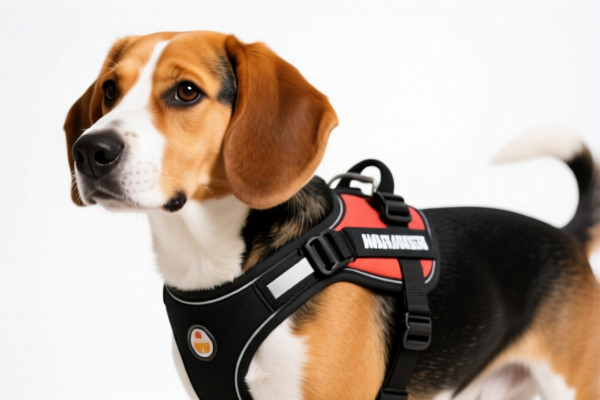
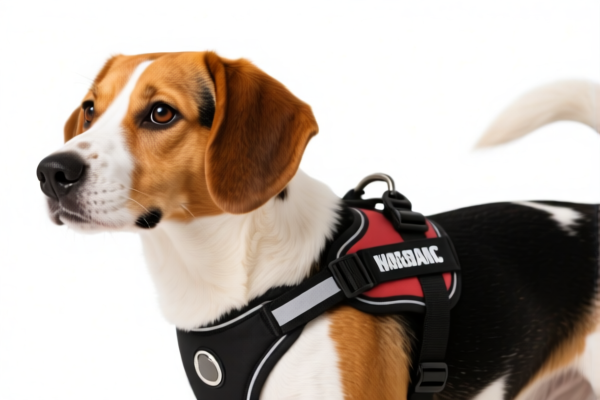
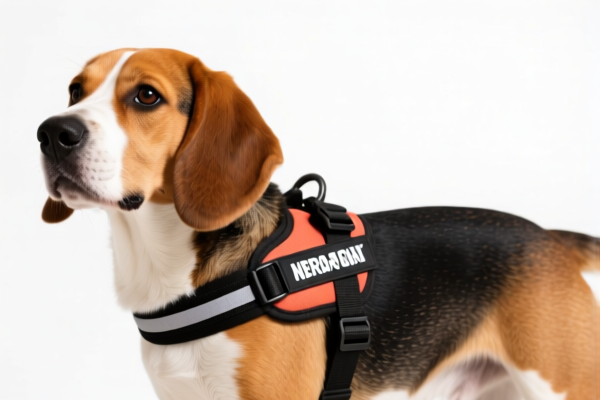
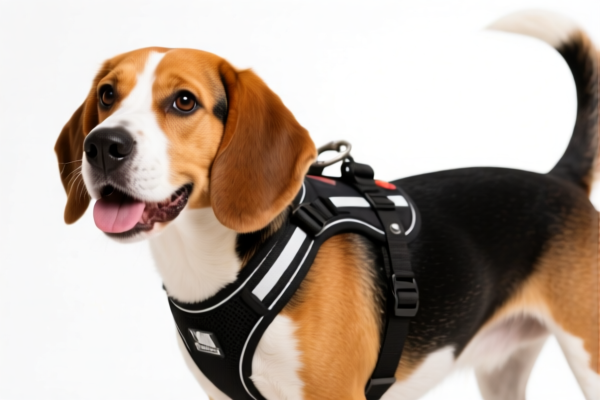
AI Analysis
🐶 Dog Safety Harnesses & Leash Accessories: HS Code Classification & 2026 Customs Clearance Guide
🌐 HS Code Reference & Clearance Strategy | 2026 Latest Tariff Analysis | Professional-Level Compliance
📌 I. Product Definition & Classification: Do You Really Know What a "Dog Safety Harness" Is?
A dog safety harness is a wearable accessory designed for canine security during walks, training, or travel. It typically consists of straps, buckles, and D-rings, often made from nylon, polyester, or fabric. In international trade, these items are ambiguous: they can be classified as clothing accessories, animal tack, or plastic/composite goods, depending on their primary material and function.
⚠️ Key Distinction Point:
- If primarily used as a pet accessory with fabric/nylon construction → Consider Chapter 62 (Clothing Accessories) or Chapter 42 (Animal Tack).
- If primarily a plastic buckle/clip assembly → Consider Chapter 39 (Plastic Articles).
- Misclassification Risk: Declaring a fabric harness as "plastic parts" or vice versa leads to significant duty discrepancies (e.g., 22.8% vs. 37.8%).
📦 II. HS Code Classification Matrix (2026 Latest Tariff Authority Reference)
Based on the provided data, here are the five potential HS Code classifications for Dog Safety Harnesses, ranked by commonality and tax implication:
| HS Code | Product Description | Applicability / Material Inference | Total Tax Rate (US Import from CN) |
|---|---|---|---|
| 6217.10.85.00 | Other Made-Up Clothing Accessories | Best Fit for Fabric/Nylon Harnesses. Classified as "other clothing accessories." Material inferred as fabric or nylon. | 24.6% |
| 4201.00.60.00 | Saddlery and Harness for Animals | Fit for Animal Tack. Matches the use of pet reins/harnesses. Form: strap. Material: fabric or nylon. | 37.8% |
| 6117.90.90.95 | Other Made-Up Clothing Accessories (Knitted/Crocheted) | Fit for Knitted/Fabric Accessories. Belongs to "clothing accessories and parts." Material: fabric/nylon. | 32.1% |
| 3926.90.99.89 | Other Articles of Plastics | Fit for Plastic-Heavy Harnesses. If the harness is mostly plastic buckles/clips with minimal fabric. | 22.8% |
| 6117.90.90.90 | Other Made-Up Clothing Accessories (Synthetic Fibers) | Fit for Synthetic Fiber Harnesses. Form: clothing parts/accessories. Material: Nylon or Polyester. | 32.1% |
🔍 Critical Observation:
- The lowest tax rate (22.8%) applies if classified as Plastic Articles (3926.90.99.89), but this is risky if the product is predominantly fabric.
- The most common correct classification for standard fabric harnesses is 6217.10.85.00 (24.6%), as it aligns with "Other Clothing Accessories."
- Classifying as Animal Tack (4201.00.60.00) incurs the highest tax (37.8%) due to high Section 301 add-on duties.
💰 III. 2026 Latest Tariff Rate Breakdown (Detailed Duty Structure)
✅ Applicable Country: United States (US)
✅ Origin: China (CN)
✅ Effective Date: Post-November 10, 2025 (including subsequent imports)
🎯 1. 6217.10.85.00 —— Best Balance: Other Made-Up Clothing Accessories
| Item | Content |
|---|---|
| Base Tariff | 14.6% (Ad Valorem) |
| Section 301 Add-On | 0.0% (Note: This HS code appears to be exempt or lower tier from the top 25% list) |
| IEEPA Section 122 Tariff | +10% (Specific surcharge for Chinese-origin goods) |
| Total Tax Rate | 24.6% |
| Tax Calculation | CIF Value × 24.6% |
| De Minimis Eligibility | ❌ No (De minimis threshold does not apply to Section 122/301 goods from China) |
| Legal Basis Path | Base: 6217.10.85.00 → Add-on: None (0%) → IEEPA: 122 Clause 10% |
📌 Explanation:
- This is the most favorable classification for fabric/nylon harnesses.
- The 0% Section 301 rate is a significant advantage over other textile codes.
- The 10% IEEPA tariff still applies, making the total 24.6%.
🎯 2. 4201.00.60.00 —— Animal Tack (Highest Duty)
| Item | Content |
|---|---|
| Base Tariff | 2.8% |
| Section 301 Add-On | +25.0% (High surcharge for animal products/tack) |
| IEEPA Section 122 Tariff | +10% |
| Total Tax Rate | 37.8% |
| Tax Calculation | CIF Value × 37.8% |
| De Minimis Eligibility | ❌ No |
| Legal Basis Path | Base: 4201.00.60.00 → Add-on: 25% (Section 301) → IEEPA: 122 Clause 10% |
📌 Warning:
- Although the base tariff is low (2.8%), the 25% Section 301 duty makes this the most expensive option.
- Avoid this classification unless the harness is specialized equestrian gear or clearly not "clothing-like."
🎯 3. 6117.90.90.95 & 6117.90.90.90 —— Knitted/Synthetic Clothing Accessories
| Item | Content |
|---|---|
| Base Tariff | 14.6% |
| Section 301 Add-On | +7.5% (Moderate surcharge) |
| IEEPA Section 122 Tariff | +10% |
| Total Tax Rate | 32.1% |
| Tax Calculation | CIF Value × 32.1% |
| De Minimis Eligibility | ❌ No |
📌 Note:
- These codes are for knitted or synthetic fiber accessories.
- If your harness is made of polyester or nylon mesh, this might apply, but it is higher than6217.10.85.00.
🎯 4. 3926.90.99.89 —— Plastic Articles (Lowest Duty, High Risk)
| Item | Content |
|---|---|
| Base Tariff | 5.3% |
| Section 301 Add-On | +7.5% |
| IEEPA Section 122 Tariff | +10% |
| Total Tax Rate | 22.8% |
| Tax Calculation | CIF Value × 22.8% |
| De Minimis Eligibility | ❌ No |
📌 Caution:
- This is the lowest tax rate (22.8%), but only if the product is primarily plastic (e.g., plastic buckles, clips, and minimal webbing).
- If customs inspectors determine the harness is primarily fabric, they may reclassify it, leading to back taxes + penalties.
- Use only if the product is >50% plastic components.
🛠️ IV. Customs Clearance Practical Advice (Avoiding Pitfalls)
✅ 1. Required Documentation Checklist
| Document | Required | Explanation |
|---|---|---|
| ✅ Product Specification Sheet | ✔️ | Must detail material composition (e.g., "90% Nylon Webbing, 10% Plastic Buckles"). |
| ✅ Product Photos | ✔️ | Clear images showing the harness, buckles, and any labels. |
| ✅ Commercial Invoice | ✔️ | Description should be precise: "Nylon Dog Harness with Plastic Buckles." Avoid vague terms like "Accessory." |
| ✅ Material Declaration | ✔️ | Explicitly state the percentage of fabric vs. plastic. Crucial for distinguishing between 6217 and 3926. |
| ✅ Packing List | ✔️ | List each item clearly. Do not mix with other unrelated goods. |
✅ 2. Classification Strategy (Key Mantra)
🔥 "Material Determines Code, Function Supports Choice, Avoid Animal Tack!"
| Scenario | Recommended HS Code | Why? |
|---|---|---|
| Standard Nylon/Fabric Harness | 6217.10.85.00 |
Best balance of duty (24.6%) and accuracy. Classified as "Clothing Accessory." |
| Harness with Mostly Plastic Buckles/Clips | 3926.90.99.89 |
Lowest duty (22.8%), but only if plastic is the dominant material by weight/value. |
| Heavy-Duty/Equestrian-Like Harness | 4201.00.60.00 |
Only if clearly for animals. Avoid due to 37.8% duty. |
| Knitted/Crocheted Pet Vest | 6117.90.90.95 |
If the material is knitted, not woven. |
✅ 3. Special Cases & Risk Management
| Situation | Handling Advice |
|---|---|
| Mixed Material (Fabric + Plastic) | Declare the primary material. If >50% fabric by value, lean toward 6217. If plastic hardware is substantial, consider 3926 but be prepared for inspection. |
| "Pet Clothing" vs. "Animal Tack" | Do not use the term "Animal Tack" or "Halter" if it looks like clothing. Use "Dog Harness" or "Pet Safety Vest" to align with 6217 or 6117. |
| Customs Audit | Provide a diagram showing how the harness is worn (like a human vest) to support the "Clothing Accessory" classification. |
| De Minimis (Section 321) | ❌ Not Applicable. Imports from China under these HS codes are not eligible for the $800 de minimis exemption due to Section 301 and IEEPA tariffs. |
🌍 V. Global Market Comparison (2026 Overview)
| Country/Region | Recommended HS Code | Estimated Duty (China Origin) | Key Certification | Notes |
|---|---|---|---|---|
| 🇺🇸 USA | 6217.10.85.00 |
24.6% | None specific | Best option for fabric harnesses. Avoid 4201 (37.8%). |
| 🇺🇸 USA (Plastic Focus) | 3926.90.99.89 |
22.8% | None specific | Lower duty, but high risk of misclassification. |
| 🇪🇺 EU | 6217.10.00 |
~5-12% | CE (if electronic) | No Section 301. Simpler clearance. |
| 🇨🇳 China (Import) | 6217.10.90.90 |
~9% | CCC (if applicable) | Lower base duty for imports into China. |
| 🇬🇧 UK | 6217.10.00 |
~12% | UKCA | Post-Brexit rules apply. |
📌 Conclusion:
- The USA imposes significant tariffs due to Section 301 and IEEPA.
-6217.10.85.00is the safest and most cost-effective choice for standard fabric harnesses.
-4201.00.60.00is financially punitive and should be avoided unless absolutely necessary.
📌 VI. Common Mistakes & Pitfalls (Lessons Learned)
❌ Mistake 1: Classifying a fabric harness as 4201.00.60.00 (Animal Tack)
👉 Result: Pay 37.8% instead of 24.6%. Overpaid by 13.2% per unit!
❌ Mistake 2: Declaring a fabric harness as 3926.90.99.89 (Plastic)
👉 Result: Customs reclassifies it, applies 24.6%, and issues a penalty for misdeclaration.
❌ Mistake 3: Using vague terms like "Pet Accessory"
👉 Result: Customs assigns a fallback code with higher duties (e.g., "Other Articles" at 25%+).
✅ Correct Approach:
"Nylon Dog Harness with Plastic Buckles, Woven Fabric Construction"
→ Supports6217.10.85.00(24.6%)
🎯 VII. Conclusion: Precision Classification, Cost Savings
🎯 Remember the Mantra:
🔹 "Fabric Harness = 6217 (24.6%)
🔹 "Plastic Buckles Only = 3926 (22.8%)
🔹 "Animal Tack = 4201 (37.8%) – AVOID!
🔹 "No De Minimis for China Origin!"
📌 Pro Tip:
If your harness is exclusively plastic (e.g., harness-free leash clips), use
3926.90.99.89for the lowest duty.
For standard nylon harnesses, stick to6217.10.85.00to balance cost and compliance.
📣 Action Item:
📞 Contact your customs broker with material breakdowns.
📄 Request a Binding Ruling if unsure about6217vs.3926.
🚀 Optimize your supply chain by selecting the correct HS Code from Day 1.
✨ Professional Customs Clearance Starts with Accurate Classification!
💼 Every Percentage Point Counts in 2026!
Customer Reviews
About HS Code Classification
The Harmonized System (HS) is an internationally standardized nomenclature developed by the World Customs Organization (WCO) to classify traded products. Over 200 countries use the HS system as the basis for customs tariffs, trade statistics, and import/export regulations.
Each HS code follows a hierarchical structure:
- Chapter (2 digits) — Broad category of goods (e.g., Chapter 84: Machinery and Mechanical Appliances)
- Heading (4 digits) — More specific grouping within the chapter
- Subheading (6 digits) — Internationally standardized breakdown, used by all WCO member countries
- National subdivisions (8-10 digits) — Country-specific extensions for further classification, such as US HTSUS 10-digit codes
Correct HS code classification is essential for smooth customs clearance, accurate duty payment, and compliance with trade regulations. Misclassification can lead to customs delays, overpayment of duties, or penalties.
When importing from CN to US, the applicable tariff rates may include:
- Most-Favored-Nation (MFN) rate — The standard duty rate applied to WTO members
- General rate — Applied to countries without trade agreements
- Trade remedy duties — Additional tariffs such as Section 301 (anti-dumping), Section 232 (national security), or countervailing duties
The information provided on this page is for reference purposes only. For official classification, please consult with your local customs authority or a licensed customs broker.