玩具自行车
CN → US| HS Code | Tariff Rate | Origin | Destination | Doc |
|---|---|---|---|---|
| 9503000071 | 10.0% | CN | US | Official Doc |
| 9503000073 | 10.0% | CN | US | Official Doc |
| 9503000073 | 10.0% | CN | US | Official Doc |
| 9503000071 | 10.0% | CN | US | Official Doc |
Product Images
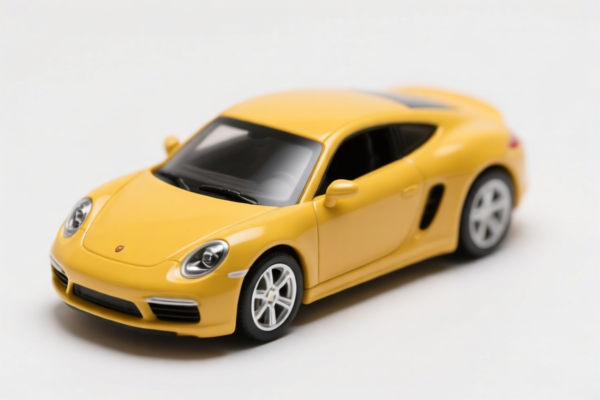
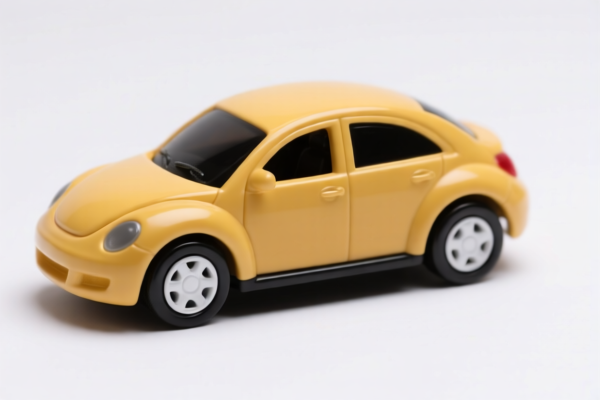
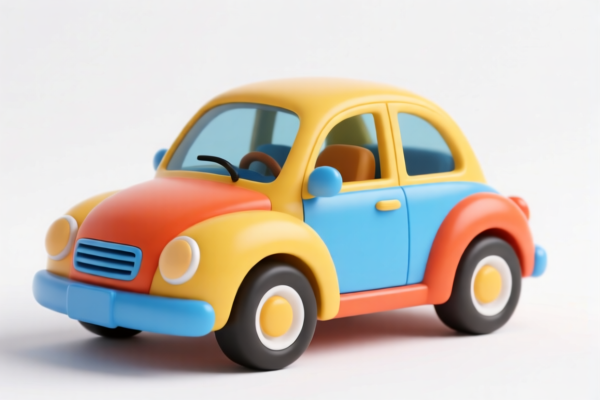
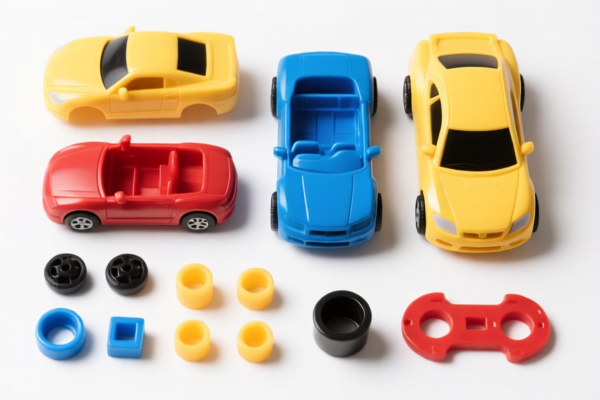
AI Analysis
🚴♂️ Toy Bicycle (Children’s Ride-On Vehicles with Wheels)
🌐 HS Code Reference & Customs Clearance Guide | 2026 Latest Tariff Breakdown | Professional Import Strategy
📌 One, Product Definition & Classification: Do You Really Know What a "Toy Bicycle" Is?
A toy bicycle is a child-sized, wheeled, ride-on vehicle designed for play, typically used by children aged 3 to 12 years. It mimics the appearance and function of a real bicycle but is not intended for adult use or transportation. In international trade, these items fall under two major categories:
- 9503.00.00.7x: Toys with bicycle-like form, including tricycles, scooters, and pedal cars — classified as "other wheeled toys".
- 8712.00.50.00 / 8712.00.48.00: Non-motorized human-powered vehicles, often classified as "non-motorized cycles", especially when they resemble real bicycles in structure and function.
⚠️ Critical Distinction: - If the item is clearly a toy, with non-functional pedals, small wheels, and child-safe design → HS Code 9503.00.00.7x - If the item functions like a real bicycle (e.g., real pedals, steering, chain drive, handlebars) but is not motorized → HS Code 8712.00.50.00 or 8712.00.48.00
📦 Two, HS Code Classification Details (2026 Latest Tariff Authority Matrix)
| HS Code | Product Description | Use Case | Key Features | Tax Status |
|---|---|---|---|---|
9503.00.00.73 |
Tricycles, scooters, pedal cars, and similar wheeled toys; toy bicycles with child-friendly design | Children’s play vehicles, indoor/outdoor use | No real propulsion system, small wheels, low speed, non-functional brakes | ✅ Toy classification |
8712.00.50.00 |
Non-motorized bicycles (e.g., pedal cycles), intended for children, not for adult use | Ride-on play vehicles, educational toys | Real pedals, chain drive, functional steering, frame similar to real bikes | ✅ Non-motorized cycle |
8712.00.48.00 |
Other non-motorized cycles (catch-all category) | Unspecified non-motorized wheeled vehicles | Used when no better fit; often applies to unique or hybrid designs | ✅ General cycle category |
9503.00.00.71 |
Tricycles, scooters, foot-powered vehicles; fits under "children’s toy" definition | Play vehicles for toddlers and young kids | Simple design, no engine, low weight, non-functional gears | ✅ Toy classification |
9503.00.00.73 |
Toy bicycle form, 3–12 year age range, ride-on with wheel-based movement | Educational and recreational play | Matches real bicycle shape, but not for actual riding | ✅ Toy classification |
🔍 Key Insight:
- "Toy" vs "Cycle" hinges on functionality, scale, and intent — not just appearance. - Even if it looks like a bike, if it lacks real drivetrain or real use, it’s a toy. - If it can be ridden like a real bike, even if for kids, it’s a cycle.
💰 Three, 2026 Latest Tariff Breakdown (Including附加 Taxes & Policy Rules)
✅ Applicable Country: United States (US)
✅ Origin: China (CN)
✅ Effective Date: November 10, 2025 (and onward)
🎯 1. 9503.00.00.73 — Toy Bicycle (Wheeled Toy, 3–12 Years)
| Item | Details |
|---|---|
| Base Duty | 0.0% (ad valorem) |
| USITC Additional Duty | +0.0% (No 301 tariff) |
| Section 122 Tariff (IEEPA) | +10.0% (from IEEPA:9903.01.25) |
| Total Duty Rate | 10.0% |
| Tax Calculation | CIF Value × 10.0% |
| De Minimis Exemption | ✅ Yes (if value ≤ $800) |
| Legal Basis Path | IEEPA:9903.01.25 → 9503.00.00.73 → FOOTNOTE:9903.88.01 |
📌 Explanation:
- This item is classified as a toy, so it does not trigger the 25% USITC 301 tariff. - Only the 10% IEEPA (International Emergency Economic Powers Act) applies. - Great for toy manufacturers — significantly lower than cycle tariffs.
🎯 2. 8712.00.50.00 — Non-Motorized Bicycle (Child’s Ride-On Cycle)
| Item | Details |
|---|---|
| Base Duty | 3.7% |
| USITC Additional Duty | +25.0% (301 Tariff, from USITC:8712.00.50.00) |
| Section 122 Tariff (IEEPA) | +10.0% (IEEPA:9903.01.25) |
| Total Duty Rate | 3.7% + 25.0% + 10.0% = 38.7% |
| Tax Calculation | CIF Value × 38.7% |
| De Minimis Exemption | ❌ No (denied) |
| Legal Basis Path | IEEPA:9903.01.25 → USITC:8712.00.50.00 → FOOTNOTE:9903.88.01 |
📌 Explanation:
- This is a non-motorized cycle, so it triggers the 25% USITC 301 tariff. - The 10% IEEPA tariff applies as a separate layer. - Total: 38.7% — extremely high for a child’s toy. - No de minimis — even small shipments face full duty.
🎯 3. 8712.00.48.00 — Other Non-Motorized Cycles (Catch-All)
| Item | Details |
|---|---|
| Base Duty | 11.0% |
| USITC Additional Duty | +25.0% |
| Section 122 Tariff (IEEPA) | +10.0% |
| Total Duty Rate | 46.0% |
| Tax Calculation | CIF Value × 46.0% |
| De Minimis Exemption | ❌ No |
| Legal Basis Path | IEEPA:9903.01.25 → USITC:8712.00.48.00 → FOOTNOTE:9903.88.01 |
📌 Explanation:
- This is the highest tariff category. - Used when the item doesn’t fit neatly into 8712.00.50.00 (e.g., unusual design, hybrid form). - 46% total duty — danger zone for importers. - Avoid this code unless absolutely necessary.
🛠️ Four, Customs Clearance Best Practices (Pro Tips to Avoid Penalties)
✅ 1. Must-Have Documentation (No Exceptions)
| Document | Required? | Why It Matters |
|---|---|---|
| ✅ Product Specification Sheet | ✔️ | Proves age range, wheel size, function |
| ✅ Technical Drawings / Photos | ✔️ | Shows real vs. toy features (e.g., real chain, pedals) |
| ✅ Commercial Invoice | ✔️ | Must state "Toy Bicycle" or "Non-Motorized Cycle" clearly |
| ✅ Certificate of Origin (CO) | ✔️ | Needed for tariff eligibility |
| ✅ Third-Party Test Reports | ✔️ | ASTM F963, CPSIA, EN71, CE, RoHS |
| ✅ Packing List | ✔️ | Shows full set (e.g., wheels, handlebars, seat) |
✅ 2.申报技巧 (Key Rules to Remember)
🔥 “Form vs. Function: Looks like a bike? But if it doesn’t ride like one, it’s a toy!”
| Scenario | Correct HS Code | Wrong Code | Risk |
|---|---|---|---|
| Child-sized bike with fake pedals, no chain | 9503.00.00.73 |
8712.00.50.00 |
38.7% → 10% → Save 28.7% |
| Real pedals, chain, steering, real wheels | 8712.00.50.00 |
9503.00.00.73 |
10% → 38.7% → Pay 28.7% extra |
| Unusual design (e.g., 4 wheels, no chain) | 8712.00.48.00 |
9503.00.00.73 |
10% → 46% → Avoid! |
✅ 3. Special Cases & Solutions
| Situation | Recommended Action |
|---|---|
| OEM/White-label toy bikes | Provide design specs + photos; claim “toy” status |
| Bikes with lights or bells | Still eligible for toy code if no real function |
| Bikes with removable pedals | Still classified as toy if not functional |
| Bikes used in schools/therapy | May qualify for “non-commercial” exemption — need proof |
| Bikes from Vietnam/Mexico | Can apply for IEEPA exemption — 0% tariff if origin is eligible |
🌍 Five, Global Market Comparison (2026)
| Country/Region | Recommended HS Code | Tariff | Certification | Notes |
|---|---|---|---|---|
| 🇺🇸 United States | 9503.00.00.73 |
10.0% | ASTM F963, CPSIA | Avoid 8712 codes! |
| 🇨🇳 China | 9503.00.00.73 |
5% | CCC, RoHS | No extra tariffs |
| 🇪🇺 EU | 9503.00.00.73 |
0% | CE, EN71 | No 301 or IEEPA |
| 🇦🇺 Australia | 9503.00.00.73 |
5% | RCM | No extra taxes |
| 🇯🇵 Japan | 9503.00.00.73 |
0% | PSE | No extra tariffs |
📌 Conclusion:
- Only the U.S. imposes high tariffs on toy bikes — and only if misclassified. - Correct classification can save up to 36.7% in duty. - Never declare a functional bike as a toy — risk of penalties and audits.
📌 Six, Common Mistakes & Warning Signs (Learn from Others’ Errors)
❌ Mistake 1: Calling a real pedal bike a "toy" in invoice
👉 Result: 38.7% duty instead of 10% → huge overpayment
❌ Mistake 2: Using 9503.00.00.73 for a bike with real chain and gears
👉 Result: Customs audit, penalties, delayed shipment
❌ Mistake 3: Not providing photos of the actual product
👉 Result: Unclear classification, random code assignment, higher risk
❌ Mistake 4: Using “bicycle” in product name but claiming “toy”
👉 Result: Misleading declaration, legal risk
✅ Best Practice:
Use clear, accurate language in invoices:
✅ “Toy Tricycle, 3–6 Years, Non-Motorized, Plastic Frame, 3 Wheels”
❌ “Children’s Bicycle with Real Pedals”
🎯 Seven, Final Verdict: Precision Beats Guesswork!
🎯 Remember the Golden Rule:
🔹 “If it rides like a bike, it’s a cycle. If it plays like a toy, it’s a toy.”
🔹 HS Code = Life or Death for Your Profit Margin
🔹 10% vs 46%? That’s $100 vs $460 on a $1,000 shipment!
📌 Pro Tip:
✅ Apply for a Pre-Ruling (Advance Ruling) from U.S. Customs before shipment — get official confirmation of your HS Code.
✅ Use a U.S.-based customs broker with experience in toys and cycles.
📣 Take Action Now!
📞 Contact a specialized customs broker + Submit product photos + Request HS Code Pre-Ruling
🚀 Avoid fines, delays, and overpayment — get your toy bikes cleared fast and cheap!
✨ Smart Classification = Smart Profit!
💼 Your next shipment could be 30% cheaper — if you get the code right!
Customer Reviews
About HS Code Classification
The Harmonized System (HS) is an internationally standardized nomenclature developed by the World Customs Organization (WCO) to classify traded products. Over 200 countries use the HS system as the basis for customs tariffs, trade statistics, and import/export regulations.
Each HS code follows a hierarchical structure:
- Chapter (2 digits) — Broad category of goods (e.g., Chapter 84: Machinery and Mechanical Appliances)
- Heading (4 digits) — More specific grouping within the chapter
- Subheading (6 digits) — Internationally standardized breakdown, used by all WCO member countries
- National subdivisions (8-10 digits) — Country-specific extensions for further classification, such as US HTSUS 10-digit codes
Correct HS code classification is essential for smooth customs clearance, accurate duty payment, and compliance with trade regulations. Misclassification can lead to customs delays, overpayment of duties, or penalties.
When importing from CN to US, the applicable tariff rates may include:
- Most-Favored-Nation (MFN) rate — The standard duty rate applied to WTO members
- General rate — Applied to countries without trade agreements
- Trade remedy duties — Additional tariffs such as Section 301 (anti-dumping), Section 232 (national security), or countervailing duties
The information provided on this page is for reference purposes only. For official classification, please consult with your local customs authority or a licensed customs broker.