现金口袋
CN → USProduct Images
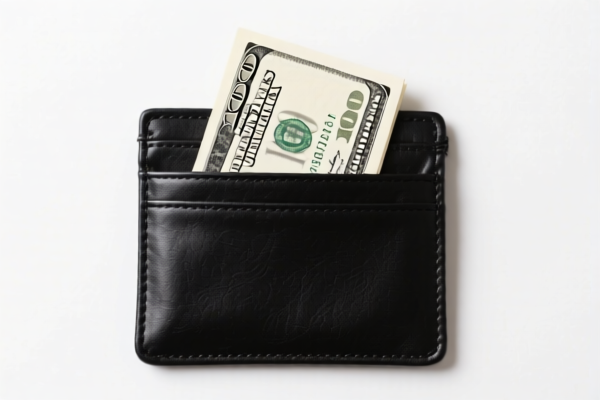
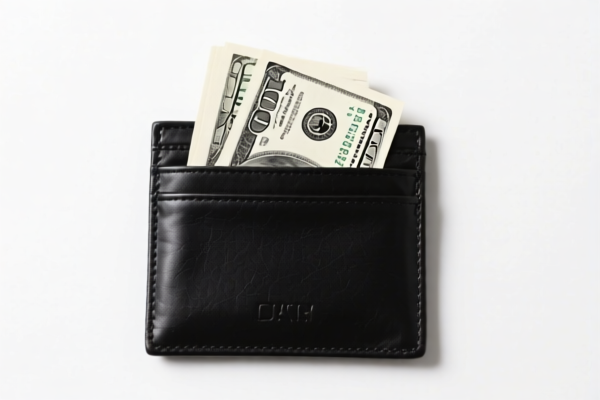
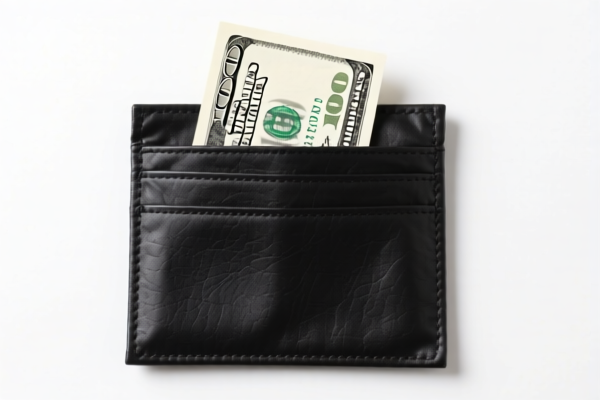
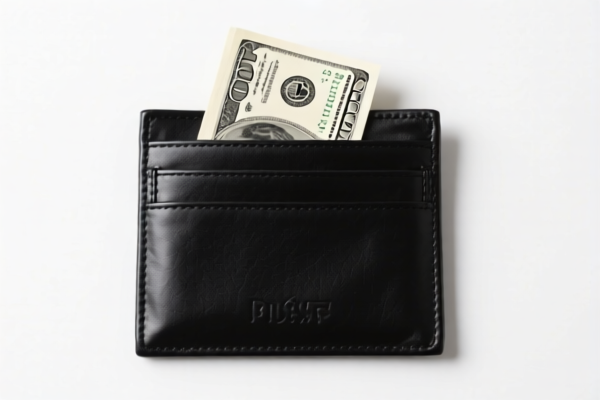
AI Analysis
👜 Cash Pouches & Wallets (Small Leather/Plastics Goods)
🌐 HS Code Reference & Customs Clearance Guide | 2026 Latest Tariff Analysis | Professional Clearance Strategy
📌 I. Product Definition & Classification: What Exactly is a "Cash Pocket"?
"Cash Pocket" (often referred to as Pouches, Wallets, Clutches, or Coin Purses) falls under the broad category of articles normally carried in the pocket or handbag. In international trade, these are not just simple bags but structured or semi-structured containers made of specific materials.
The classification depends heavily on the outer surface material: * Plastics-Coated/Laminated: If the outer surface is sheeting of plastics (e.g., PVC, PU, laminated fabric), it falls under 4202.32.10. * Textile/Other Materials: If the outer surface is textile, leather, or other non-plastics sheeting, it falls under 4202.32.99.
⚠️ Key Distinction Point:
- If the item has an outer surface of plastics (including reinforced/laminated plastics) → Classify under 4202.32.10.00
- If the item has an outer surface of textile, leather, or other materials → Classify under 4202.32.99.00
📦 II. HS Code Classification Details (2026 Latest Tariff Authoritative Comparison)
| HS Code | Product Description | Applicable Scenarios | Outer Material | Tax Rate (CN-US) |
|---|---|---|---|---|
4202.32.10.00 |
Articles carried in pocket/handbag; with outer surface of sheeting of plastics; of reinforced or laminated plastics | Plastic wallets, PVC coin purses, laminated cash pouches, plastic clutches | ✅ Plastics (Reinforced/Laminated) | 0.0% |
4202.32.99.00 |
Articles carried in pocket/handbag; with outer surface of textile materials; other | Fabric wallets, cloth coin purses, mixed-material pouches, non-plastic coated items | ❌ Textile/Other (Non-plastics sheeting) | 0.0% |
🔍 Important Reminder:
- "Cash Pocket" is a generic term. You must identify the primary outer material. - If the pouch is made of nylon with a plastic coating, it is classified as "with outer surface of sheeting of plastics" → 4202.32.10.00. - If the pouch is made of pure cotton or polyester without plastic lamination, it is classified as "other" → 4202.32.99.00. - Both codes currently carry 0% total tariff for imports from China to the US (see tax section below).
💰 III. 2026 Latest Tariff Rate Details (Including Surtaxes & Policy Additions)
✅ Applicable Country: United States (US)
✅ Country of Origin: China (CN)
✅ Effective Date: 2026 Analysis
🎯 1. 4202.32.10.00 —— Cash Pouches/Wallets with Plastic Outer Surface
| Item | Content |
|---|---|
| Basic Tariff | 0.0% (ad valorem) |
| Section 301 Surtax | 0.0% (Exempted for this specific subheading) |
| IEEPA Surtax | 0.0% |
| Total Tax Rate | 0.0% |
| Tax Calculation | CIF Value × 0% = $0 |
| De Minimis Eligibility | ✅ Yes (If value ≤ $800, generally duty-free under Section 321) |
| Legal Basis Path | HTSUS:4202.32.10.00 |
📌 Explanation:
- Unlike many other plastic goods or steel articles, small plastic articles of a kind normally carried in the pocket/handbag (Subheading 4202.32.10) are exempt from the standard 25% Section 301 surtax that applies to many other plastic packaging goods (like 3923.21.00.80). - This is a significant cost advantage for plastic-based cash pouches/wallets.
🎯 2. 4202.32.99.00 —— Cash Pouches/Wallets with Textile/Other Outer Surface
| Item | Content |
|---|---|
| Basic Tariff | 0.0% (ad valorem) |
| Section 301 Surtax | 0.0% (Exempted for this specific subheading) |
| IEEPA Surtax | 0.0% |
| Total Tax Rate | 0.0% |
| Tax Calculation | CIF Value × 0% = $0 |
| De Minimis Eligibility | ✅ Yes (If value ≤ $800) |
| Legal Basis Path | HTSUS:4202.32.99.00 |
📌 Explanation:
- Textile-based small pouches/wallets also enjoy 0% total tariff for US imports from China. - There are no additional surtaxes applied to these specific subheadings under current 2026 policies.
🛠️ IV. Customs Clearance Practical Advice (Real-World Pitfall Prevention)
✅ 1. Required Documentation Checklist (Do Not Miss Any)
| Document | Mandatory | Description |
|---|---|---|
| ✅ Product Specifications | ✔️ | Must specify outer material (e.g., "100% Polyester with no plastic lamination" vs. "PVC with reinforced lining") |
| ✅ Product Photos | ✔️ | Clear image showing the exterior material. If coated, a cross-section or close-up of the coating is helpful. |
| ✅ Commercial Invoice | ✔️ | Must clearly state: "Cash Pouches/Wallets, Article No. XYZ, Outer Material: [Plastics/Textile]" |
| ✅ Packing List | ✔️ | Weight and dimensions of each package. |
| ✅ Material Declaration | ✔️ | Explicitly declare if the outer surface is "sheeting of plastics" or "textile." |
✅ 2. Declaration Tips (Key Mantra)
🔥 "Material Determines Code, Plastic vs. Textile, 0% Tax Both Sides!"
| Scenario | Correct HS Code | Incorrect Practice | Consequence |
|---|---|---|---|
| Plastic/Laminated Pouch | 4202.32.10.00 |
Declare as "Textile Pouch" | Risk of misclassification audit; potential retroactive duties if found to be plastic. |
| Fabric/Cotton Pouch | 4202.32.99.00 |
Declare as "Plastic Pouch" | No tariff benefit lost (both are 0%), but unnecessary complexity. |
| Mixed Material Pouch | Depends on Outer Surface | Declare as "Leather Goods" | If outer is not leather, misclassification leads to penalties. |
| Plastic Packaging Bags (Non-Pouch) | 3923.21.00.80 |
Declare as "Cash Pouch" | HIGH RISK! Plastic packaging bags (3923) face 28% tariff (3% + 25%). Cash Pouches (4202) are 0%. Do not confuse! |
✅ 3. Special Case Handling
| Scenario | Handling Advice |
|---|---|
| "Cash Pocket" vs. "Shopping Bag" | Ensure the item is of a kind normally carried in pocket/handbag. If it is a large tote bag, it may fall under 4202.12/4202.22 or 4202.92, which might have different tax implications. |
| Plastic-Coated Fabric | If the fabric is coated/laminated with plastic, the outer surface is Plastics → 4202.32.10.00. |
| Gift Sets (Pouch + Coin) | If the coin is included, the pouch may be classified as a container. Ensure the primary character is the pouch. |
| Sample vs. Commercial | Under $800, use Section 321 (De Minimis) for fastest clearance. Ensure the invoice is accurate. |
🌍 V. Global Market Comparison (2026 Latest)
| Country/Region | Recommended HS Code | Tariff (China Origin) | Certification Requirements | Notes |
|---|---|---|---|---|
| 🇺🇸 USA | 4202.32.10.00 / 4202.32.99.00 |
0.0% | None (General) | Best Market: No surtax for these items. |
| 🇨🇳 China | 4202.32.10.00 / 4202.32.99.00 |
~5-7% | None | Import tariff applies. |
| 🇪🇺 EU | 4202.32.00 |
~0-2% | None | Low tariffs, standard customs procedures. |
| 🇬🇧 UK | 4202.32.00 |
~3-5% | None | Post-Brexit rules apply. |
| 🇯🇵 Japan | 4202.32.00 |
~0-3% | None | Low tariffs. |
📌 Conclusion:
- USA offers 0% tariff for both plastic and textile cash pouches/wallets (HS 4202.32.xx).
- CRITICAL: Do not confuse with Plastic Packaging Bags (3923.21.00.80), which face 28% tariff (3% base + 25% surtax).
- Ensure your product is clearly described as "Carried in Pocket/Handbag" (e.g., wallet, clutch, coin purse) to qualify for the 4202 classification.
📌 VI. Common Errors & Pitfalls (Lessons Learned)
❌ Error 1: Declaring Plastic Shopping Bags as Cash Pouches
👉 Consequence: If customs determines the item is primarily a "packaging bag" (e.g., thin, single-use, large handle), it may be reclassified under 3923.21.00.80 → 28% Tariff.
✅ Fix: Ensure the item is durable, has a zipper/button, and is designed for personal carry, not just product packaging.
❌ Error 2: Misidentifying Material
👉 Consequence: Declaring a PVC pouch as "Textile" to avoid plastic classification.
✅ Fix: Accurate material declaration. Even if 0% tax, misclassification can lead to fines.
❌ Error 3: Ignoring "Outer Surface" Rule
👉 Consequence: A nylon pouch with plastic coating was declared as textile.
✅ Fix: Coated/laminated = Plastics (4202.32.10). Uncoated = Textile (4202.32.99).
🎯 VII. Conclusion: Professional Declaration, Cost Savings, Efficiency!
🎯 Remember the Mantra:
🔹 "Small Pouch, Handbag Size, Plastic or Textile, Both Zero!"
🔹 "Don't Mix with Packaging Bags! 3923 is 28%, 4202 is 0%!"
🔹 "Material Declaration is Key, Avoid 28% Pitfall!"
📌 Pro Tip:
If your "Cash Pocket" is intended as packaging for another product (e.g., a small bag given inside a shoe box), it might be considered a packaging article and fall under 3923 or 4819, which could incur 28% tax.
✅ Solution: Design it as a standalone wallet/clutch/coin purse with functional features (zipper, card slots) to qualify for 4202.
📣 Immediate Action:
📞 Consult your customs broker with photos and material specs.
📄 Clearly state on invoice: "Cash Pouches/Wallets, for personal use, not for product packaging."
🚀 Save 28% in duties by choosing the right HS Code!
✨ Professional Clearance Starts with Accurate Classification!
💼 Your Every Cent Saved Counts!
Customer Reviews
About HS Code Classification
The Harmonized System (HS) is an internationally standardized nomenclature developed by the World Customs Organization (WCO) to classify traded products. Over 200 countries use the HS system as the basis for customs tariffs, trade statistics, and import/export regulations.
Each HS code follows a hierarchical structure:
- Chapter (2 digits) — Broad category of goods (e.g., Chapter 84: Machinery and Mechanical Appliances)
- Heading (4 digits) — More specific grouping within the chapter
- Subheading (6 digits) — Internationally standardized breakdown, used by all WCO member countries
- National subdivisions (8-10 digits) — Country-specific extensions for further classification, such as US HTSUS 10-digit codes
Correct HS code classification is essential for smooth customs clearance, accurate duty payment, and compliance with trade regulations. Misclassification can lead to customs delays, overpayment of duties, or penalties.
When importing from CN to US, the applicable tariff rates may include:
- Most-Favored-Nation (MFN) rate — The standard duty rate applied to WTO members
- General rate — Applied to countries without trade agreements
- Trade remedy duties — Additional tariffs such as Section 301 (anti-dumping), Section 232 (national security), or countervailing duties
The information provided on this page is for reference purposes only. For official classification, please consult with your local customs authority or a licensed customs broker.