玻璃移液管
CN → US| HS Code | Tariff Rate | Origin | Destination | Doc |
|---|---|---|---|---|
| 7017200000 | 41.7% | CN | US | Official Doc |
| 7017905000 | 41.7% | CN | US | Official Doc |
| 3926909989 | 22.8% | CN | US | Official Doc |
| 3926909910 | 22.8% | CN | US | Official Doc |
| 9018390050 | 10.0% | CN | US | Official Doc |
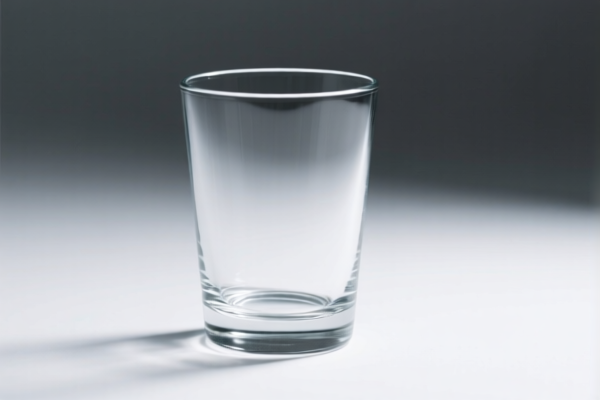
Product Images



AI Analysis
🧪 Glass Pipettes (Laboratory, Hygienic or Pharmaceutical Glassware)
🌐 HS Code Reference & Customs Clearance Guide | 2026 Updated Tariff Analysis | Professional Import Strategy
📌 One, Product Definition & Classification: Do You Really Know What a "Glass Pipette" Is?
A glass pipette is a precision laboratory tool used to transfer specific volumes of liquid, commonly found in medical, pharmaceutical, and scientific research settings. In international trade, it is classified under HS Code 7017.20.00.00 when it meets strict material and thermal performance criteria.
⚠️ Key Distinction:
- If the glass has a linear coefficient of expansion ≤ 5 × 10⁻⁶ per Kelvin (from 0°C to 300°C) → HS 7017.20.00.00
- If not meeting this specification → HS 7017.90.50.00 (other glassware)
📦 Two, HS Code Classification Details (2026 Updated Tariff Authority)
| HS Code | Product Description | Applicable Use Case | Calibrated? | Expansion Coefficient |
|---|---|---|---|---|
7017.20.00.00 |
Laboratory, hygienic or pharmaceutical glassware, whether or not graduated or calibrated: Of other glass having a linear coefficient of expansion not exceeding 5 × 10⁻⁶ per Kelvin (0°C to 300°C) | High-precision lab use (e.g., analytical chemistry, clinical labs, pharmaceuticals) | ✅ Yes | ✅ ≤ 5 × 10⁻⁶ |
7017.90.50.00 |
Laboratory, hygienic or pharmaceutical glassware, whether or not graduated or calibrated: Other: Other | General-purpose or non-precision glassware (e.g., simple transfer pipettes, non-calibrated) | ❌ No (or not specified) | ❌ > 5 × 10⁻⁶ |
🔍 Critical Note:
- Thermal stability matters: Only pipettes made from low-expansion borosilicate glass qualify for 7017.20.00.00.
- Standard soda-lime glass (common in low-cost pipettes) does not meet this threshold → must be declared under 7017.90.50.00.
💰 Three, 2026 Latest Tariff Rate Breakdown (Including附加 Taxes & Policy Add-ons)
✅ Applicable Country: United States (US)
✅ Origin: China (CN)
✅ Effective Date: November 10, 2025 (including future imports)
🎯 1. 7017.20.00.00 — High-Precision Glass Pipettes (Low Expansion Glass)
| Item | Detail |
|---|---|
| Base Duty Rate | 0.0% (ad valorem) |
| Additional Tariff (USITC) | 0.0% |
| IEEPA Additional Tariff | 0.0% |
| Total Tax Rate | 0.0% |
| Tax Calculation | CIF Value × 0.0% |
| De Minimis Exemption | ✅ Yes (if value < $800, under US de minimis rule) |
| Legal Basis Path | USITC:7017.20.00.00 → FOOTNOTE:9903.88.01 (No additional tariff) |
📌 Explanation:
- This code is exempt from all additional tariffs, including USITC and IEEPA. - No 25% or 10% surcharges apply — this is a zero-duty category. - Ideal for high-accuracy lab equipment imported from China or other countries.
🎯 2. 7017.90.50.00 — Other Laboratory Glassware (Including Non-Low-Expansion Pipettes)
| Item | Detail |
|---|---|
| Base Duty Rate | 0.0% |
| Additional Tariff (USITC) | 0.0% |
| IEEPA Additional Tariff | 0.0% |
| Total Tax Rate | 0.0% |
| Tax Calculation | CIF × 0.0% |
| De Minimis Exemption | ✅ Yes |
| Legal Basis Path | USITC:7017.90.50.00 → FOOTNOTE:9903.88.01 (No additional tariff) |
📌 Important Clarification:
- Even though this is "other" glassware, no extra tariffs apply. - This includes non-calibrated, standard, or non-precision pipettes made from ordinary glass. - No 25% or 10% surcharges — total tax remains 0%.✅ Bottom Line:
Both HS codes are 0% tariff in the US, regardless of origin — no additional taxes on glass pipettes.
🛠️ Four, Customs Clearance Best Practices (Pro Tips to Avoid Delays)
✅ 1. Required Documentation Checklist (Must-Have)
| Document | Required? | Purpose |
|---|---|---|
| ✅ Product Specification Sheet | ✔️ | Confirm material type, expansion coefficient, calibration status |
| ✅ Material Certificate (e.g., Borosilicate Glass Test Report) | ✔️ | Prove compliance with ≤ 5×10⁻⁶ expansion |
| ✅ Product Photos (with markings/labels) | ✔️ | Show model, calibration scale, manufacturer |
| ✅ Commercial Invoice | ✔️ | Clearly state “Glass Pipette, Graduated, for Laboratory Use” |
| ✅ Bill of Lading / Air Waybill | ✔️ | For shipment tracking and customs clearance |
| ✅ Certificate of Origin (CO) | ✔️ | For tariff eligibility (especially if claiming preferential rates) |
| ✅ Packing List | ✔️ | Detail quantity, unit weight, packaging type |
✅ 2.申报技巧 (Key Tips for Accurate Classification)
🔥 "Material Matters, Coefficient Rules — Label It Right, Avoid the Audit!"
| Scenario | Correct HS Code | Wrong Approach |
|---|---|---|
| Borosilicate glass pipette, calibrated, expansion ≤ 5×10⁻⁶ | 7017.20.00.00 |
Misclassified as 7017.90.50.00 → risk of audit |
| Standard soda-lime glass pipette, uncalibrated | 7017.90.50.00 |
Misclassified as 7017.20.00.00 → overpaying duty (even though 0%) |
| Pipette with "Graduated" marking but unknown glass type | 7017.90.50.00 |
Only if material cannot be verified — better to provide test report |
| Multi-piece set (e.g., 10 pipettes in box) | Declare as one shipment, use total value | Split into multiple entries → risk of customs scrutiny |
✅ 3. Special Cases & Risk Mitigation
| Situation | Recommended Action |
|---|---|
| Pipette with plastic tip or bulb | Still classify under 7017.20.00.00 or 7017.90.50.00 — tip is accessory |
| Pipette used in medical diagnostics | No change in HS code — still lab glassware |
| Reused or recycled pipettes | Declare as "used" — may trigger different rules, but HS code remains same |
| Custom-designed pipettes (OEM) | Provide design drawings and material specs to support classification |
📌 Pro Tip:
If you're unsure about the coefficient of expansion, request a test report from your supplier. This prevents misclassification and future penalties.
🌍 Five, Global Customs Comparison (2026 Latest)
| Country/Region | Recommended HS Code | Duty Rate | Certification Required | Notes |
|---|---|---|---|---|
| 🇺🇸 United States | 7017.20.00.00 or 7017.90.50.00 |
0.0% | None (if not high-risk) | No additional tariffs |
| 🇨🇳 China | 7017.20.00.00 or 7017.90.50.00 |
5% | CCC, RoHS | No extra surcharges |
| 🇪🇺 European Union | 7017.20.00.00 |
0% (if CE) | CE Marking | No additional tariffs |
| 🇦🇺 Australia | 7017.20.00.00 |
5% | RCM | No extra charges |
| 🇯🇵 Japan | 7017.20.00.00 |
0% | PSE | No additional tariffs |
📌 Conclusion:
- All major markets treat glass pipettes as low-tariff goods. - US, EU, Japan, and Australia all have 0% or very low tariffs. - No 25% or 10% surcharges apply — unlike electronics or machinery.
📌 Six, Common Mistakes & How to Avoid Them (Real-World Pitfalls)
❌ Mistake 1: Claiming 7017.20.00.00 without a coefficient of expansion test report
👉 Risk: Customs may reclassify → delay, fines, or rejection
❌ Mistake 2: Using "laboratory pipette" as generic name without specifying glass type
👉 Risk: Misleading classification → audit or penalties
❌ Mistake 3: Not including calibration status on invoice
👉 Risk: Customs may assume "non-graduated" → apply wrong code
❌ Mistake 4: Assuming all pipettes are high-precision
👉 Risk: Overclaiming 7017.20.00.00 → unnecessary documentation burden
✅ Correct Approach:
“Borosilicate Glass Graduated Pipette, 10 mL, Calibrated, Coefficient of Expansion ≤ 5×10⁻⁶, Model XYZ, Test Report Attached”
🎯 Seven, Final Verdict: Precision Matters, Tax Doesn’t!
🎯 Remember the Rule:
🔹 "If it's low-expansion glass → 7017.20.00.00 → 0% tax"
🔹 "If it's regular glass → 7017.90.50.00 → 0% tax"
🔹 "No 25%, no 10%, no surprise — just clean, simple, zero-duty!"
📌 Quick Tip:
If your pipettes are originating from Vietnam, Mexico, Thailand, or Malaysia, and you have a Free Trade Agreement (FTA) certificate, you may qualify for 0% duty even in the US — even if from China.
📣 Act Now:
📞 Contact a customs broker + provide product specs + request HS Code pre-ruling
🚀 Get your glass pipettes clearing fast, paying zero duty, and staying compliant!
✨ Professional Customs Starts with Perfect Classification!
💼 Your lab supplies deserve accurate, low-risk, zero-tariff treatment!
Customer Reviews
About HS Code Classification
The Harmonized System (HS) is an internationally standardized nomenclature developed by the World Customs Organization (WCO) to classify traded products. Over 200 countries use the HS system as the basis for customs tariffs, trade statistics, and import/export regulations.
Each HS code follows a hierarchical structure:
- Chapter (2 digits) — Broad category of goods (e.g., Chapter 84: Machinery and Mechanical Appliances)
- Heading (4 digits) — More specific grouping within the chapter
- Subheading (6 digits) — Internationally standardized breakdown, used by all WCO member countries
- National subdivisions (8-10 digits) — Country-specific extensions for further classification, such as US HTSUS 10-digit codes
Correct HS code classification is essential for smooth customs clearance, accurate duty payment, and compliance with trade regulations. Misclassification can lead to customs delays, overpayment of duties, or penalties.
When importing from CN to US, the applicable tariff rates may include:
- Most-Favored-Nation (MFN) rate — The standard duty rate applied to WTO members
- General rate — Applied to countries without trade agreements
- Trade remedy duties — Additional tariffs such as Section 301 (anti-dumping), Section 232 (national security), or countervailing duties
The information provided on this page is for reference purposes only. For official classification, please consult with your local customs authority or a licensed customs broker.