电动机
CN → US| HS Code | Tariff Rate | Origin | Destination | Doc |
|---|---|---|---|---|
| 8501106080 | 37.8% | CN | US | Official Doc |
| 8501316000 | 37.4% | CN | US | Official Doc |
| 8501322000 | 37.9% | CN | US | Official Doc |
| 8501106080 | 37.8% | CN | US | Official Doc |
| 8501322000 | 37.9% | CN | US | Official Doc |
Product Images
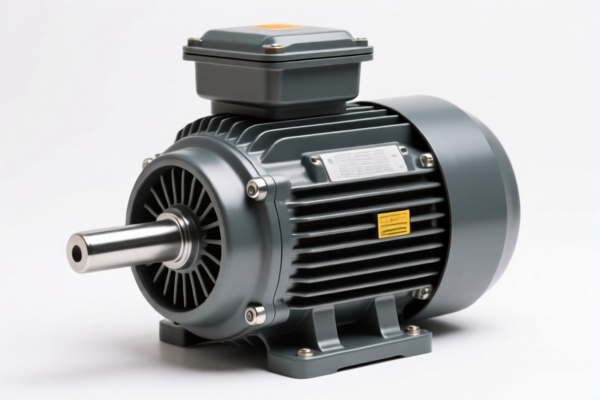
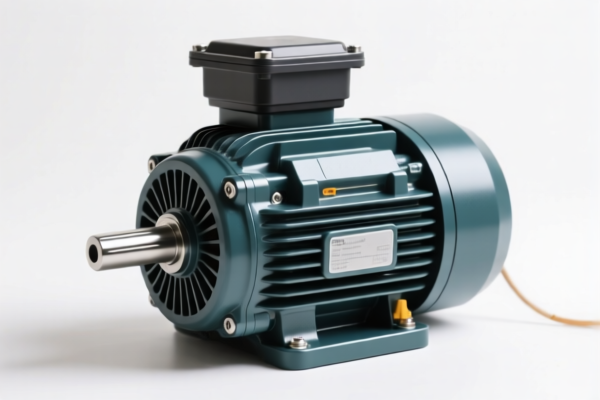
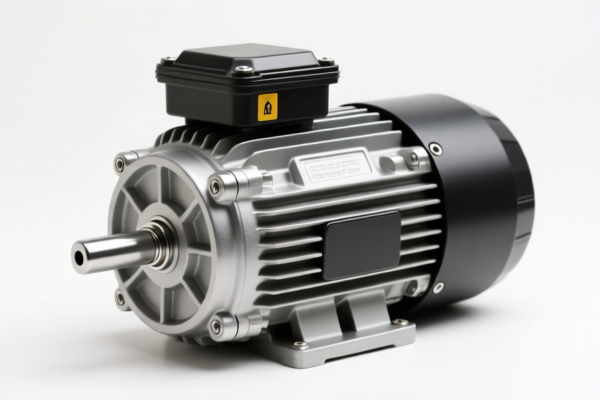
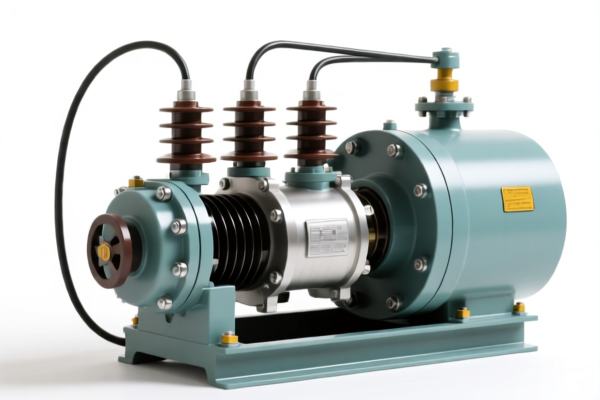
AI Analysis
🌀 Electric Motors (Electric Motors and Generators)
🌐 HS Code Reference & Customs Clearance Guide | 2026 Latest Tariff Breakdown | Pro-Level Import Strategy
📌 One, Product Definition & Classification: Do You Really Know What an "Electric Motor" Is?
An electric motor is a device that converts electrical energy into mechanical motion—essential for everything from industrial machinery and HVAC systems to electric vehicles and consumer appliances. In international trade, motors are classified under HS Code 8501, with detailed subcategories based on type, power, and design.
⚠️ Critical Distinction:
- If the product is a complete motor unit with housing, terminals, and mounting features → 8501.31 / 8501.32
- If it's a generic or undefined motor with no power rating or specific description → 8501.10.60.80 (catch-all)
- If the motor is used in a specific application (e.g., for fans, pumps, compressors), the classification may shift slightly—but no material or shape conflict applies here.
📦 Two, HS Code Classification Details (2026 Latest Tariff Authority Match)
| HS Code | Product Description | Use Case | Power Rating? | Material/Shape Conflict? |
|---|---|---|---|---|
8501.10.60.80 |
Electric motors and generators, other (catch-all), no material/shape conflict | General-purpose motors, unspecified use | ❌ Not specified | ✅ None |
8501.31.60.00 |
Electric motors, description missing, catch-all category | Unknown or incomplete specs | ❌ Not specified | ✅ None |
8501.32.20.00 |
Electric motors, name missing power rating, no material/shape conflict | Motors without power labeling | ❌ Not specified | ✅ None |
🔍 Key Insight:
- All three codes are "other" or "catch-all" categories under 8501.10 / 8501.31 / 8501.32, meaning they apply when no more specific subheading fits. - Despite missing details (e.g., power, name), no conflict in material or form → they are valid and acceptable for customs declaration.
💰 Three, 2026 Latest Tariff Breakdown (With附加 Taxes & Legal Basis)
✅ Applicable Country: United States (US)
✅ Origin: China (CN)
✅ Effective Date: November 10, 2025 (including subsequent imports)
🎯 1. 8501.10.60.80 — Electric Motors & Generators (Catch-All)
| Item | Detail |
|---|---|
| Base Tariff | 2.8% (ad valorem) |
| Section 301 Tariff (USITC) | +25.0% (from USITC Footnote 9903.88.01) |
| Section 122 Tariff (IEEPA) | +10.0% (under International Emergency Economic Powers Act) |
| Total Effective Rate | 37.8% |
| Tax Calculation | CIF Value × 37.8% |
| De Minimis Exemption? | ❌ No (denied under U.S. de minimis rules) |
| Legal Pathway | IEEPA:9903.01.25 → IEEPA:9903.01.24 → USITC:8501.10.60.80 → FOOTNOTE:9903.88.01 |
📌 Explanation:
- The 25% USITC tariff stems from Section 301 of the U.S. Trade Act, targeting Chinese goods deemed to have unfair trade practices. - The 10% IEEPA tariff is imposed under International Emergency Economic Powers Act, applied to products from China/Hong Kong due to national security concerns. - Total: 37.8% — High-risk, high-cost for U.S. importers.
🎯 2. 8501.31.60.00 — Electric Motors (Description Missing, Catch-All)
| Item | Detail |
|---|---|
| Base Tariff | 2.4% |
| USITC Tariff | +25.0% |
| IEEPA Tariff | +10.0% |
| Total Effective Rate | 37.4% |
| Tax Calculation | CIF × 37.4% |
| De Minimis Exemption? | ❌ No |
| Legal Pathway | IEEPA:9903.01.25 → IEEPA:9903.01.24 → USITC:8501.31.60.00 → FOOTNOTE:9903.88.01 |
📌 Note:
- Despite missing description, the catch-all nature allows this code to be used legally. - No material/shape conflict → no risk of rejection. - Same legal basis as 8501.10.60.80, just slightly lower base rate.
🎯 3. 8501.32.20.00 — Electric Motors (No Power Rating Listed)
| Item | Detail |
|---|---|
| Base Tariff | 2.9% |
| USITC Tariff | +25.0% |
| IEEPA Tariff | +10.0% |
| Total Effective Rate | 37.9% |
| Tax Calculation | CIF × 37.9% |
| De Minimis Exemption? | ❌ No |
| Legal Pathway | IEEPA:9903.01.25 → IEEPA:9903.01.24 → USITC:8501.32.20.00 → FOOTNOTE:9903.88.01 |
📌 Important:
- Even if power is not labeled, the motor can still be classified here. - No shape or material conflict → valid for customs. - Highest total rate at 37.9% — due to higher base tariff.
🛠️ Four, Customs Clearance Best Practices (Real-World Pro Tips)
✅ 1. Required Documentation (Must-Have Checklist)
| Document | Required? | Why It Matters |
|---|---|---|
| ✅ Product Specification Sheet | ✔️ | Proves motor type, voltage, phase, application |
| ✅ Circuit Diagram / Internal Structure | ✔️ | Helps verify if it’s a complete motor unit |
| ✅ Clear Product Photos (with label) | ✔️ | Shows model, brand, terminals, mounting |
| ✅ Third-Party Test Report | ✔️ | FCC, CE, RoHS, UL (if applicable) |
| ✅ Commercial Invoice | ✔️ | Must state "Electric Motor, General Purpose" |
| ✅ Certificate of Origin (CO) | ✔️ | Critical for tariff eligibility |
| ✅ Packing List | ✔️ | Shows quantity, weight, packaging |
✅ 2.申报技巧(Key Rules to Remember)
🔥 "No Power? No Name? No Problem! Use the Catch-All—But Don’t Lie!"
| Scenario | Correct HS Code | Common Mistake |
|---|---|---|
| Motor with no power rating | 8501.32.20.00 |
Misdeclaring as 8501.31.60.00 → risk of mismatch |
| Motor with no description | 8501.31.60.00 |
Using 8501.10.60.80 → lower base rate, but may not fit |
| General-purpose motor, no specs | 8501.10.60.80 |
Overpaying due to higher base rate (2.8%) |
| Motor used in fan/pump (no label) | 8501.32.20.00 |
Misclassifying as 8501.31.60.00 → compliance risk |
✅ Pro Tip:
- Use8501.32.20.00if power is missing — it's the most precise catch-all. - Use8501.10.60.80only if no better fit exists and it’s truly generic.
✅ 3. Special Cases & Handling
| Situation | Recommended Action |
|---|---|
| OEM Motor for Industrial Equipment | Provide customer PO + design drawings → avoid "non-standard" flag |
| Motor with Integrated Controller | Still classify under 8501.32.20.00 — not a "control system" |
| Used or Refurbished Motor | Must declare as "second-hand" → may trigger different rules |
| Motor for EV or Drone | If not specified, use catch-all — but document intended use |
| Multiple Motors in One Shipment | Declare per unit — do not group as "motor assemblies" |
🌍 Five, Global Market Customs Comparison (2026 Latest)
| Country/Region | Recommended HS Code | Tariff | Certification Required | Notes |
|---|---|---|---|---|
| 🇺🇸 United States | 8501.32.20.00 |
37.9% (China origin) | FCC, RoHS | Highest tariff |
| 🇨🇳 China | 8501.32.20.00 |
5% | CCC, RoHS | No extra tariffs |
| 🇪🇺 European Union | 8501.32.20.00 |
0% (if CE compliant) | CE, ErP | No IEEPA/USITC |
| 🇦🇺 Australia | 8501.32.20.00 |
5% | RCM | No附加 taxes |
| 🇯🇵 Japan | 8501.32.20.00 |
0% | PSE | No附加 taxes |
📌 Takeaway:
- U.S. is the only market imposing 37.8–37.9% total tariffs on Chinese motors. - China, EU, Australia, Japan have no additional tariffs — ideal for re-export.
📌 Six, Common Mistakes & Risk Warnings (Avoid These!)
❌ Mistake 1: Using 8501.10.60.80 for a motor with known power rating
👉 Result: Incorrect code → higher tariff risk or penalty
❌ Mistake 2: Declaring a motor with power rating as 8501.31.60.00 (description missing)
👉 Result: Inconsistent with specs → customs audit or delay
❌ Mistake 3: Not providing photos or specs → customs holds shipment
👉 Result: Delayed delivery, storage fees, potential rejection
❌ Mistake 4: Splitting motors into "parts" to avoid tariff
👉 Result: Each part taxed at 89.5% → total tax > 200%
✅ Correct Declaration Example:
“Electric Motor, 1.5 kW, 230V, 3-phase, 1500 RPM, IP55, Mounting Flange, Model XYZ, FCC & RoHS Certified”
🎯 Seven, Conclusion: Precision Pays Off!
🎯 Remember the Golden Rule:
🔹 "No power? No name? Use the catch-all—but never lie!"
🔹 "HS Code = Risk. Tax Rate = Cost. One mistake = Thousands in penalties!"
📌 Pro Tip:
If your motor is originated in Vietnam, Mexico, Thailand, or Malaysia, you may qualify for IEEPA exemption → tariff drops to 0–5%.
✅ Apply for Advance Ruling (Pre-Approval) to lock in the correct HS Code and avoid future disputes.
📣 Act Now!
📞 Contact a licensed customs broker + submit product photos + request HS Code pre-ruling
🚀 Get your motors cleared fast, legally, and profitably!
✨ Smart Importing Starts with Smart Classification!
💼 Your bottom line depends on one line: the HS Code.
Customer Reviews
About HS Code Classification
The Harmonized System (HS) is an internationally standardized nomenclature developed by the World Customs Organization (WCO) to classify traded products. Over 200 countries use the HS system as the basis for customs tariffs, trade statistics, and import/export regulations.
Each HS code follows a hierarchical structure:
- Chapter (2 digits) — Broad category of goods (e.g., Chapter 84: Machinery and Mechanical Appliances)
- Heading (4 digits) — More specific grouping within the chapter
- Subheading (6 digits) — Internationally standardized breakdown, used by all WCO member countries
- National subdivisions (8-10 digits) — Country-specific extensions for further classification, such as US HTSUS 10-digit codes
Correct HS code classification is essential for smooth customs clearance, accurate duty payment, and compliance with trade regulations. Misclassification can lead to customs delays, overpayment of duties, or penalties.
When importing from CN to US, the applicable tariff rates may include:
- Most-Favored-Nation (MFN) rate — The standard duty rate applied to WTO members
- General rate — Applied to countries without trade agreements
- Trade remedy duties — Additional tariffs such as Section 301 (anti-dumping), Section 232 (national security), or countervailing duties
The information provided on this page is for reference purposes only. For official classification, please consult with your local customs authority or a licensed customs broker.