电动绞盘
CN → US| HS Code | Tariff Rate | Origin | Destination | Doc |
|---|---|---|---|---|
| 8425390100 | 35.0% | CN | US | Official Doc |
| 8708998160 | 37.5% | CN | US | Official Doc |
| 8607995000 | 38.1% | CN | US | Official Doc |
| 8425310100 | 35.0% | CN | US | Official Doc |
| 8708998180 | 12.5% | CN | US | Official Doc |
Product Images
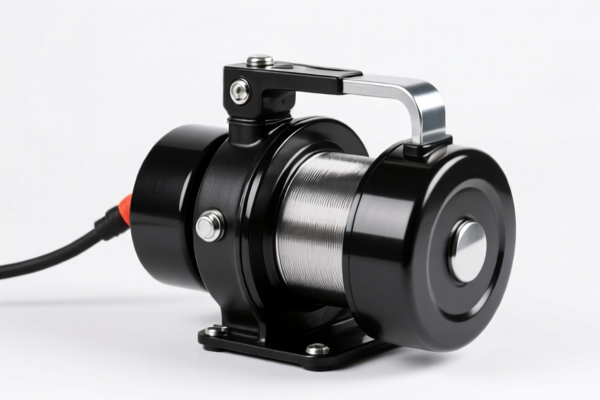
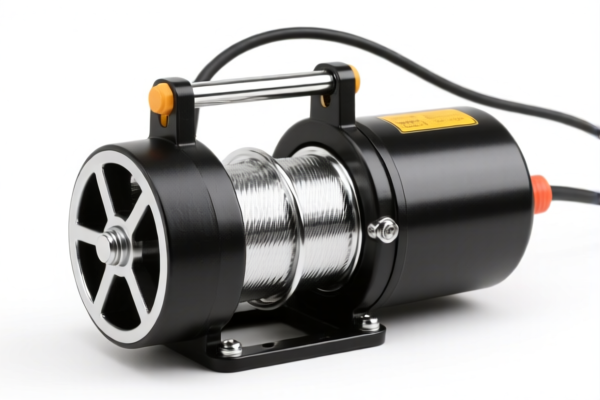
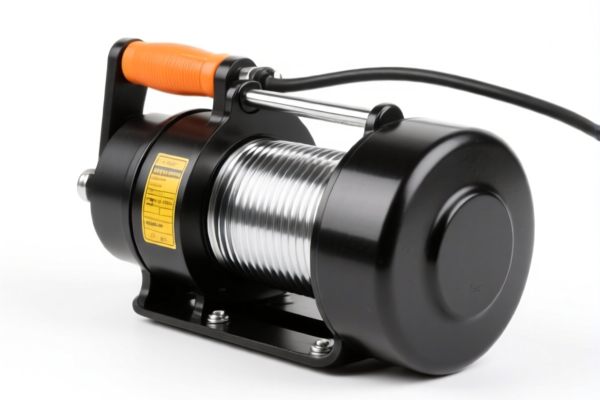
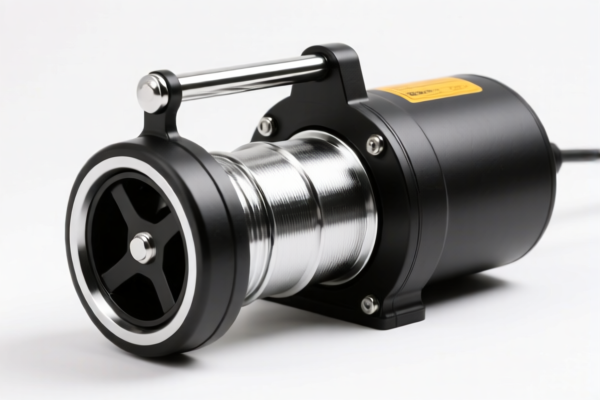
AI Analysis
🚙 电动绞盘(Electric Winches for Traction/Lifting)
🌐 HS Code Reference & Customs Clearance Guide | 2026 Latest Tariff Analysis | Professional Clearance Strategy
📌 Part 1: Product Definition & Classification: Do You Really Understand "Electric Winches"?
An Electric Winch is a mechanical device that draws in (winses) a cable or rope as it wraps its cable around its revolving drum. In international trade, classification depends heavily on the intended use (e.g., vehicle accessory vs. general machinery) and the form/structure of the product.
Key Classification Dilemmas: 1. General Purpose Machinery: If the winch is used for lifting, pulling, or hoisting in non-vehicle contexts (e.g., construction, marine, industrial), it often falls under Chapter 84. 2. Vehicle Parts/Accessories: If the winch is specifically designed as a front/rear mount for off-road vehicles, trucks, or automobiles, it is classified as a part/accessory of vehicles under Chapter 87. 3. Railway Parts: Rare, but if it’s a specific internal transmission component for railway vehicles, it falls under Chapter 86.
⚠️ Critical Distinction:
- If it is a standalone lifting/pulling machine without vehicle-specific mounting interfaces → Chapter 84 (8425).
- If it is intended for installation on a vehicle (auto/truck) → Chapter 87 (8708).
- Misclassification leads to severe tariff penalties (e.g., 35% vs. 12.5%).
📦 Part 2: HS Code Classification Details (2026 Latest Tariff Authority Comparison)
| HS Code | Product Description | Application Scenario | Key Classification Logic |
|---|---|---|---|
8425.39.01.00 |
Other winches and capstans; Electric Winch | General industrial lifting, marine, construction, standalone equipment | ✅ General Machinery: Fits "Winch/Capstan" category; no material conflict. |
8708.99.81.60 |
Parts and accessories of motor vehicles; Other | Vehicle-mounted Electric Winch: Functional cable traction device; metal/mechanical combination | ✅ Vehicle Part: Used as a vehicle accessory/part; fits "other parts" attribute. |
8607.99.50.00 |
Parts of railway locomotives or rolling stock; Other | Railway internal transmission component/structural part (Rare for standard winches) | ✅ Railway Part: Inferred as internal drive/structure for railway vehicles. |
8425.31.01.00 |
Electrically driven winches and capstans | Standard Electric Winch: Core use is "electric motor driven"; form is "winch" | ✅ Specific Electric Winch: Matches "Electric Motor Driven" + "Winch" perfectly. |
8708.99.81.80 |
Parts and accessories of motor vehicles; Other | Generic Vehicle Accessory: Auxiliary equipment; metal/mechanical combo | ✅ Vehicle Accessory: Broad "Other" category for vehicle auxiliary gear. |
🔍 Key Reminder:
- 8425 Series: Best for standalone winches (construction, marine, warehouse). Lower base duty (0-3.1%) but high USITC/IEEPA surcharges.
- 8708 Series: Best for automotive/off-road winches. Higher base duty (2.5%) but 0% USITC surcharge in one specific subheading (8708.99.81.80), leading to significant savings.
- 8607 Series: Only for railway-specific internal components. Do not use for general trucks/cars.
💰 Part 3: 2026 Latest Tariff Rate Breakdown (Including Surcharges & Policy Add-ons)
✅ Applicable Country: United States (US)
✅ Origin: China (CN)
✅ Effective Date: November 10, 2025 onwards
🎯 1. 8425.39.01.00 — Other Winches and Capstans (General Machinery)
| Item | Details |
|---|---|
| Base Duty | 0.0% |
| USITC Surcharge (Sec 301) | +25.0% |
| IEEPA Surcharge (Sec 122) | +10.0% |
| Total Rate | 35.0% |
| Calculation | CIF Value × 35% |
| De Minimis Eligible? | ❌ No (High tax rate prohibits de minimis entry) |
| Legal Basis Path | USITC:8425.39.01.00 → FOOTNOTE:9903.88.01 (301) → IEEPA:9903.01.25 (122) |
📌 Explanation:
- Base Duty 0%: General machinery often has low base rates.
- Total 35%: Driven by 25% (301) + 10% (122). This is the standard high-tax bracket for many Chinese industrial goods.
🎯 2. 8708.99.81.60 — Parts of Motor Vehicles (Vehicle-Mounted Winch)
| Item | Details |
|---|---|
| Base Duty | 2.5% |
| USITC Surcharge (Sec 301) | +25.0% |
| IEEPA Surcharge (Sec 122) | +10.0% |
| Total Rate | 37.5% |
| Calculation | CIF Value × 37.5% |
| De Minimis Eligible? | ❌ No |
| Legal Basis Path | USITC:8708.99.81.60 → FOOTNOTE:9903.88.01 (301) → IEEPA:9903.01.25 (122) |
📌 Note:
- This code treats the winch as a vehicle part.
- While the base duty is higher (2.5% vs 0%), the surcharges are the same. Total cost is higher than 8425. Avoid this code unless required by specific vehicle certification.
🎯 3. 8607.99.50.00 — Railway Vehicle Parts (Specialized/Inferred)
| Item | Details |
|---|---|
| Base Duty | 3.1% |
| USITC Surcharge (Sec 301) | +25.0% |
| IEEPA Surcharge (Sec 122) | +10.0% |
| Total Rate | 38.1% |
| Calculation | CIF Value × 38.1% |
| De Minimis Eligible? | ❌ No |
| Legal Basis Path | USITC:8607.99.50.00 → FOOTNOTE:9903.88.01 (301) → IEEPA:9903.01.25 (122) |
📌 Warning:
- This is the most expensive option.
- Only use if the product is explicitly a railway vehicle component. Using this for a truck winch is a misclassification risk.
🎯 4. 8425.31.01.00 — Electrically Driven Winches (Precise Match)
| Item | Details |
|---|---|
| Base Duty | 0.0% |
| USITC Surcharge (Sec 301) | +25.0% |
| IEEPA Surcharge (Sec 122) | +10.0% |
| Total Rate | 35.0% |
| Calculation | CIF Value × 35.0% |
| De Minimis Eligible? | ❌ No |
| Legal Basis Path | USITC:8425.31.01.00 → FOOTNOTE:9903.88.01 (301) → IEEPA:9903.01.25 (122) |
📌 Explanation:
- Matches "Electric Winch" perfectly.
- Same total rate as8425.39.01.00(35%).
- Recommendation: Use this if the winch is strictly electrically driven and not a vehicle part. It is the most accurate general machinery code.
🎯 5. 8708.99.81.80 — Other Parts and Accessories of Motor Vehicles (Strategic Choice)
| Item | Details |
|---|---|
| Base Duty | 2.5% |
| USITC Surcharge (Sec 301) | 0.0% |
| IEEPA Surcharge (Sec 122) | +10.0% |
| Total Rate | 12.5% |
| Calculation | CIF Value × 12.5% |
| De Minimis Eligible? | ❌ No (But significantly cheaper than 35-38%) |
| Legal Basis Path | USITC:8708.99.81.80 → IEEPA:9903.01.24 (122) |
📌 Critical Insight:
- This is the LOWEST TAX OPTION (12.5%).
- It avoids the 25% USITC (301) surcharge.
- Condition: Must be classified as a vehicle part/accessory (e.g., for off-road trucks, ATVs, SUVs).
- Why 0% USITC? Subheading8708.99.81.80may fall outside the specific "Section 301" list that affects8708.99.81.60or8425. Verify this exemption with a customs broker, as 301 lists are complex. If valid, this saves 22.5% on CIF value.
🛠️ Part 4: Customs Clearance Practical Advice (Pitfall Avoidance Guide)
✅ 1. Preparation Checklist (Non-negotiable)
| Document | Required | Description |
|---|---|---|
| ✅ Product Specifications | ✔️ | Voltage, Amperage, Lifting Capacity (kg/lbs), Cable Length. |
| ✅ Usage Declaration | ✔️ | Clearly state: "For vehicle mounting" OR "For industrial lifting". |
| ✅ Product Photos | ✔️ | Show mounting brackets (for 8708) OR standalone base (for 8425). |
| ✅ Commercial Invoice | ✔️ | Must match HS Code description exactly (e.g., "Electric Winch, Vehicle Type"). |
| ✅ OEM/Design Docs | ✔️ | Proof of vehicle-specific design (brackets, wiring harness) to support 8708 classification. |
✅ 2. Declaration Strategy (Key Rules)
🔥 "Use Determines Code. Vehicle Part = Lower Tax (Maybe). General Use = Higher Tax."
| Scenario | Correct HS Code | Incorrect Code | Risk |
|---|---|---|---|
| Off-road Truck Winch (with mounting plate) | 8708.99.81.80 |
8425.31.01.00 |
Pay 35% instead of 12.5% ❌ |
| Industrial Lifting Winch (standalone) | 8425.31.01.00 |
8708.99.81.80 |
Misclassification penalty; goods rejected as "Vehicle Part" ❌ |
| Marine Winch | 8425.39.01.00 |
8708.99.81.60 |
Incorrect chapter; 37.5% tax instead of 35% ❌ |
| Railway Component | 8607.99.50.00 |
8425.31.01.00 |
High tax (38.1%) + classification error ❌ |
✅ 3. Special Handling Tips
| Situation | Advice |
|---|---|
| Hybrid Use Winch | If it can be used for both vehicle and general lifting, prioritize 8708 if it has vehicle-specific hardware (brackets). Claim the 12.5% rate. |
| Kit Assembly | If sold as "Winch + Mounting Kit + Remote", declare as a complete set under the primary function (Winch). Do not split. |
| Voltage Difference | US standard is 12V/24V DC. If imported is 220V AC industrial, must use 8425. Do not misdeclare as vehicle part. |
| Brand/OEM | Ensure the invoice lists the actual manufacturer. If OEM for a brand like Warn or Superwinch, provide authorization to support "Vehicle Part" status. |
🌍 Part 5: Global Market Comparison (2026)
| Market | Recommended HS Code | Total Tax (China Origin) | Key Certification |
|---|---|---|---|
| 🇺🇸 USA | 8708.99.81.80 (if vehicle part) |
12.5% (Save 22.5%) | No specific US cert for winch, but UL for electricals is preferred. |
| 🇺🇸 USA | 8425.31.01.00 (general) |
35.0% | No specific US cert. |
| 🇪🇺 EU | 8425.39.90 (approx.) |
0-2% | CE Marking (EMC Directive) is mandatory. |
| 🇨🇳 China | 8425.31.00 |
7-10% | CCC Certification (for electrical safety). |
| 🇬🇧 UK | 8425.31.00 |
0% | UKCA Marking. |
📌 Conclusion:
- USA is the critical market for tariff optimization.
- If your winch is for off-road vehicles, aggressively pursue8708.99.81.80to save 22.5% in duties.
- If it is industrial, accept the 35% rate or explore supply chain adjustments.
📌 Part 6: Common Errors & Pitfalls (Lessons Learned)
❌ Error 1: Declaring a vehicle winch as "General Machinery" (8425)
👉 Result: You pay 35% instead of 12.5%. Wasted $22.50 per $100.
❌ Error 2: Declaring an industrial winch as a "Vehicle Part" (8708)
👉 Result: Customs rejects it for lacking vehicle-specific mounting hardware. Delays + Demurrage Fees.
❌ Error 3: Ignoring the "Electric" specification in description
👉 Result: Manual winches have different HS codes. Must specify "Electric Motor Driven" to justify 8425.31.
❌ Error 4: Splitting "Winch + Remote Control" into separate line items
👉 Result: Remote control may be classified under 8517 or 9032, triggering different tax rates and complex duty calculation. Declare as Set.
✅ Correct Declaration Example:
"Electric Winch, 12V DC, 12,000 Lbs Capacity, with Front Mounting Bracket, for Off-Road Vehicles, Model X-100"
→ HS: 8708.99.81.80 → Tax: 12.5%
🎯 Part 7: Conclusion: Precision Classification Saves Millions
🎯 Remember the Golden Rule:
🔹 "Vehicle Part? Fight for 8708.99.81.80 (12.5%)."
🔹 "General Use? Accept 8425.31.01.00 (35%)."
🔹 "Railway? Only 8607 (38.1%)."
📌 Pro Tip:
If you are importing large volumes, apply for a Binding Tariff Information (BTI) or Advance Ruling from US Customs and Border Protection (CBP) for 8708.99.81.80. This legally locks in the 12.5% rate and protects you from future audits.
📣 Immediate Action:
📞 Contact your customs broker
📄 Provide mounting bracket photos
🚀 Choose the correct HS Code now to save 22.5% in taxes!
✨ Smart Classification = Maximized Profit!
💼 Don't let tariff gaps eat your margin!
Customer Reviews
About HS Code Classification
The Harmonized System (HS) is an internationally standardized nomenclature developed by the World Customs Organization (WCO) to classify traded products. Over 200 countries use the HS system as the basis for customs tariffs, trade statistics, and import/export regulations.
Each HS code follows a hierarchical structure:
- Chapter (2 digits) — Broad category of goods (e.g., Chapter 84: Machinery and Mechanical Appliances)
- Heading (4 digits) — More specific grouping within the chapter
- Subheading (6 digits) — Internationally standardized breakdown, used by all WCO member countries
- National subdivisions (8-10 digits) — Country-specific extensions for further classification, such as US HTSUS 10-digit codes
Correct HS code classification is essential for smooth customs clearance, accurate duty payment, and compliance with trade regulations. Misclassification can lead to customs delays, overpayment of duties, or penalties.
When importing from CN to US, the applicable tariff rates may include:
- Most-Favored-Nation (MFN) rate — The standard duty rate applied to WTO members
- General rate — Applied to countries without trade agreements
- Trade remedy duties — Additional tariffs such as Section 301 (anti-dumping), Section 232 (national security), or countervailing duties
The information provided on this page is for reference purposes only. For official classification, please consult with your local customs authority or a licensed customs broker.