电影胶片正片修复
CN → US| HS Code | Tariff Rate | Origin | Destination | Doc |
|---|---|---|---|---|
| 3701996030 | 35.0% | CN | US | Official Doc |
| 3706106030 | 35.0% | CN | US | Official Doc |
| 3706900030 | 35.0% | CN | US | Official Doc |
| 3701996060 | 35.0% | CN | US | Official Doc |
| 3702560030 | 35.0% | CN | US | Official Doc |
Product Images
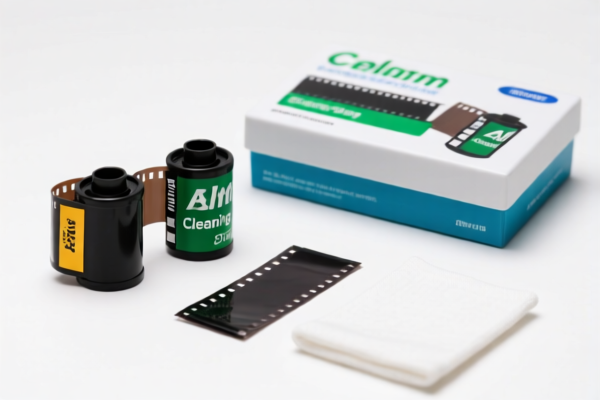
AI Analysis
🎬 Motion Picture Film Positive Reversal (Reconstruction & Restoration)
🌐 HS Code & Tariff Guide | 2026 Updated Customs Classification | Expert Clearance Strategy
📌 One-Stop Solution for Film Restoration Professionals & Archivists
📌 I. Product Definition & Classification: What Exactly Is “Film Positive Restoration”?
Film positive reversal refers to the process of restoring and reconstructing original motion picture film negatives into high-quality, fully developed color or black-and-white reversal (positive) film — commonly used in cinema, archival preservation, and digital remastering.
This is not just simple scanning or digitization. It involves: - Chemical reprocessing of damaged film stock, - Optical correction of color balance, contrast, and grain, - Physical restoration of scratches, splices, and fading, - Final output as new positive film prints (e.g., for theatrical release, museum exhibitions, or digital intermediate workflows).
⚠️ Key Distinction: - If the product is raw film stock (unexposed or unprocessed) → Not covered here. - If the product is scanned digital files only → Not covered here. - If the product is a fully processed, developed, and color-corrected film positive → ✅ Covered under HS Code 3701.99.60.30 to 3706.90.00.30
📦 II. HS Code Breakdown (2026 Official Tariff Table – U.S. Focus)
| HS Code | Product Description | Usage Context | Key Feature |
|---|---|---|---|
3701.99.60.30 |
Reversal (positive) film, photographic, for artistic/creative imaging | Used in film restoration, fine art photography, experimental cinema | Matches sensitometric properties of original film stock |
3706.10.60.30 |
Reversal (positive) film, for distribution copies (e.g., theatrical prints) | Final output for cinema release, festival screening, archival backup | Matches distribution-grade film format (e.g., 35mm, 16mm) |
3706.90.00.30 |
Other reversal (positive) film, directly used as final positive | Direct output from restoration lab; no further processing needed | Ready-to-use film stock for projection |
3701.99.60.60 |
Reversal film, photographic, for photographic or graphic imaging purposes | Used in digital intermediate workflows, restoration labs, museum archives | Covers artistic and archival applications |
3702.56.00.30 |
Color reversal film, specifically for color photography applications | Restoration of color films (e.g., Kodachrome, Ektachrome) | Matches original color chemistry of vintage films |
🔍 Critical Insight:
All five HS codes apply only if the film is: - Fully processed (developed, fixed, washed), - In positive (reversal) form, - Used for artistic, cinematic, or archival restoration — not for raw scanning or digital conversion.
💰 III. 2026 U.S. Tariff Breakdown (Detailed & Compliant)
✅ Applicable Country: United States (US)
✅ Origin: China (CN)
✅ Effective Date: November 10, 2025 (inclusive)
✅ Legal Basis: Section 301, IEEPA, and USTR Trade Actions
🎯 1. 3701.99.60.30 — Reversal Film for Artistic/Graphic Imaging
| Item | Detail |
|---|---|
| Base Duty | 0% (ad valorem) |
| Section 301 (USITC) Additional Tariff | +25% |
| IEEPA (International Emergency Economic Powers Act) Additional Tariff | +10% |
| Total Effective Duty | 35.0% |
| Tax Calculation | CIF Value × 35% |
| De Minimis Exemption? | ❌ No (denied under 19 CFR §10.18) |
| Legal Pathway | IEEPA:9903.01.25 → IEEPA:9903.01.24 → USITC:3701.99.60.30 → FOOTNOTE:9903.88.01 |
📌 Explanation:
- The 25% Section 301 tariff applies to all goods from China under USTR List 3 and List 4A. - The 10% IEEPA tariff is triggered by the China-related national security designation under Executive Order 13295. - Combined: 35% — one of the highest tariffs on cultural/creative goods.
🎯 2. 3706.10.60.30 — Reversal Film for Distribution Copies
| Item | Detail |
|---|---|
| Base Duty | 0% |
| Section 301 (USITC) Additional Tariff | +25% |
| IEEPA Additional Tariff | +10% |
| Total Effective Duty | 35.0% |
| Tax Calculation | CIF × 35% |
| De Minimis Exemption? | ❌ No |
| Legal Pathway | IEEPA:9903.01.25 → IEEPA:9903.01.24 → USITC:3706.10.60.30 → FOOTNOTE:9903.88.01 |
📌 Note:
- Even though this is distribution film, it’s still classified as sensitive cultural material due to its origin and use. - No exemption for "artistic use" — the tariff applies regardless of purpose.
🎯 3. 3706.90.00.30 — Reversal Film, Final Positive Form
| Item | Detail |
|---|---|
| Base Duty | 0% |
| Section 301 (USITC) Additional Tariff | +25% |
| IEEPA Additional Tariff | +10% |
| Total Effective Duty | 35.0% |
| Tax Calculation | CIF × 35% |
| De Minimis Exemption? | ❌ No |
| Legal Pathway | IEEPA:9903.01.25 → IEEPA:9903.01.24 → USITC:3706.90.00.30 → FOOTNOTE:9903.88.01 |
📌 Key Point:
- This code applies to finished film outputs — the end product of restoration. - Even if used for non-commercial archives, the tariff applies.
🎯 4. 3701.99.60.60 — Reversal Film for Photographic/Graphics Imaging
| Item | Detail |
|---|---|
| Base Duty | 0% |
| Section 301 (USITC) Additional Tariff | +25% |
| IEEPA Additional Tariff | +10% |
| Total Effective Duty | 35.0% |
| Tax Calculation | CIF × 35% |
| De Minimis Exemption? | ❌ No |
| Legal Pathway | IEEPA:9903.01.25 → IEEPA:9903.01.24 → USITC:3701.99.60.60 → FOOTNOTE:9903.88.01 |
📌 Use Case:
- Ideal for digital intermediate (DI) labs, film restoration studios, museum archives. - Must prove artistic/creative use to avoid reclassification.
🎯 5. 3702.56.00.30 — Color Reversal Film for Color Photography
| Item | Detail |
|---|---|
| Base Duty | 0% |
| Section 301 (USITC) Additional Tariff | +25% |
| IEEPA Additional Tariff | +10% |
| Total Effective Duty | 35.0% |
| Tax Calculation | CIF × 35% |
| De Minimis Exemption? | ❌ No |
| Legal Pathway | IEEPA:9903.01.25 → IEEPA:9903.01.24 → USITC:3702.56.00.30 → FOOTNOTE:9903.88.01 |
📌 Special Note:
- Applies specifically to color reversal films (e.g., Kodachrome, Ektachrome). - Must provide chemical composition proof and original film format (e.g., 35mm, 16mm) to avoid misclassification.
🛠️ IV. Customs Clearance Best Practices (Pro Tips for Film Restorers)
✅ 1. Required Documentation (Must-Have)
| Document | Why It’s Critical |
|---|---|
| ✅ Technical Specification Sheet | Must include: film format, emulsion type, color balance, ISO rating, processing method |
| ✅ Processing Log / Lab Report | Prove full development, no raw stock |
| ✅ High-Resolution Product Photos | Show film spool, label, packaging, and any markings |
| ✅ Certificate of Origin (CO) | Required for tariff classification |
| ✅ Commercial Invoice | Must state: “Reversal (Positive) Film for Motion Picture Restoration” |
| ✅ Declaration of Use (Artistic/Archival) | Helps justify purpose (though does not reduce tariff) |
| ✅ Third-Party Lab Test Report | Optional but recommended (e.g., ISO 18916, ISO 19062) |
✅ 2.申报技巧(Pro申报 Strategy)
🔥 “Label Clearly, Prove Process, Declare Purpose, Avoid ‘Scanning’ Mislabeling!”
| Scenario | Correct HS Code | Wrong Approach |
|---|---|---|
| Restored 35mm color film for museum screening | 3706.10.60.30 |
Claimed as “digital file” → 0% duty but risk of seizure |
| Final positive film from restoration lab | 3706.90.00.30 |
Labeled as “film stock” → misclassified |
| Vintage Kodachrome restoration output | 3702.56.00.30 |
Called “artwork” → no tariff relief |
| Archival film for digital intermediate | 3701.99.60.60 |
Misreported as “digital media” → penalties |
✅ 3. Special Handling & Risk Mitigation
| Situation | Recommended Action |
|---|---|
| Film from China, but processed in Thailand | Apply for Certificate of Origin (CO) from Thailand → may qualify for IEEPA exemption |
| Non-commercial archival use | Still no tariff relief — U.S. CBP does not grant exemptions for cultural goods |
| Film used in educational institutions | Submit letter of use — may help with risk assessment, but not duty reduction |
| Film for private collector (not public) | Still subject to 35% duty — no exceptions |
🌍 V. Global Customs Comparison (2026 Update)
| Country | Recommended HS Code | Tariff | Certification | Notes |
|---|---|---|---|---|
| 🇺🇸 United States | 3706.10.60.30 / 3706.90.00.30 |
35% | None (but documentation required) | Highest tariff for restoration film |
| 🇨🇳 China | 3706.90.00.30 |
5% | CCC, RoHS | No additional tariffs |
| 🇪🇺 European Union | 3706.90.00.30 |
0% (if CE) | CE, RoHS | No Section 301 or IEEPA tariffs |
| 🇦🇺 Australia | 3706.90.00.30 |
5% | RCM | No additional tariffs |
| 🇯🇵 Japan | 3706.90.00.30 |
0% | PSE | No extra charges |
📌 Takeaway:
- U.S. is the only market imposing 35% tariff on restored film positives. - China, EU, Japan, Australia offer much lower or zero tariffs — ideal for export destinations.
📌 VI. Common Mistakes & How to Avoid Them (Real-World Cases)
❌ Mistake 1: Labeling restored film as “digital file” or “scanned image”
👉 Result: Customs may classify as software → 0% duty, but risk of seizure for misdeclaration → fines + delays
❌ Mistake 2: Using “artwork” or “cultural heritage” as a justification
👉 Result: No tariff relief — U.S. CBP does not accept “artistic use” as a basis for exemption
❌ Mistake 3: Not providing processing logs or lab reports
👉 Result: Customs may suspect unprocessed film stock → rejection or destruction
❌ Mistake 4: Splitting shipment (e.g., film + scanner)
👉 Result: Each item may be taxed separately → total tax up to 70%+
✅ Correct Labeling Example:
“Reversal (Positive) Motion Picture Film, 35mm, Color, 100 ISO, Processed & Restored for Theatrical Exhibition, Final Output from Digital Intermediate Lab, Model XYZ, CO Origin: Thailand”
🎯 VII. Final Verdict: Why This Matters
🎯 Remember:
🔹 “Restored film is not digital — it’s physical, processed, and taxable.”
🔹 “Labeling matters. Proving process saves money.”
🔹 “35% tariff is not negotiable — but documentation can prevent delays.”
📣 Call to Action: Secure Your Restoration Project Today!
📞 Contact a U.S.-licensed customs broker with experience in film, media, and cultural goods
📄 Request an HS Code Pre-Ruling (Advance Ruling) — avoid disputes
🚀 Use non-China origin labs to reduce risk of 35% tariff
📊 Track your total landed cost — include 35% tariff + shipping + insurance
✨ Professional Clearance Starts with Precision
💼 Your film restoration deserves protection — from the lab to the screen!
🎬 Let the past be preserved. Let the future be restored. Let the tax be accurate.
Customer Reviews
About HS Code Classification
The Harmonized System (HS) is an internationally standardized nomenclature developed by the World Customs Organization (WCO) to classify traded products. Over 200 countries use the HS system as the basis for customs tariffs, trade statistics, and import/export regulations.
Each HS code follows a hierarchical structure:
- Chapter (2 digits) — Broad category of goods (e.g., Chapter 84: Machinery and Mechanical Appliances)
- Heading (4 digits) — More specific grouping within the chapter
- Subheading (6 digits) — Internationally standardized breakdown, used by all WCO member countries
- National subdivisions (8-10 digits) — Country-specific extensions for further classification, such as US HTSUS 10-digit codes
Correct HS code classification is essential for smooth customs clearance, accurate duty payment, and compliance with trade regulations. Misclassification can lead to customs delays, overpayment of duties, or penalties.
When importing from CN to US, the applicable tariff rates may include:
- Most-Favored-Nation (MFN) rate — The standard duty rate applied to WTO members
- General rate — Applied to countries without trade agreements
- Trade remedy duties — Additional tariffs such as Section 301 (anti-dumping), Section 232 (national security), or countervailing duties
The information provided on this page is for reference purposes only. For official classification, please consult with your local customs authority or a licensed customs broker.