电铃
CN → US| HS Code | Tariff Rate | Origin | Destination | Doc |
|---|---|---|---|---|
| 9505906000 | 10.0% | CN | US | Official Doc |
| 8531809041 | 17.5% | CN | US | Official Doc |
| 8531801500 | 11.3% | CN | US | Official Doc |
Product Images
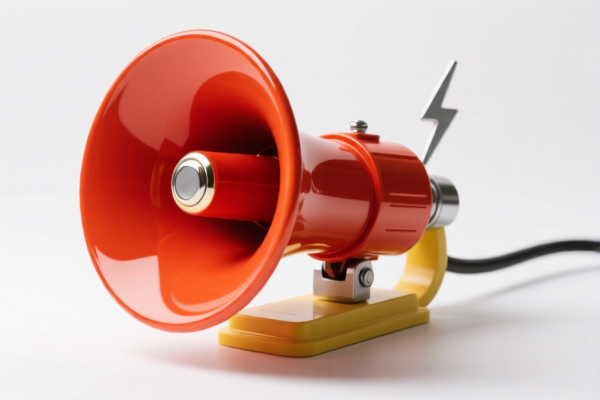
AI Analysis
🔔 Electric Bells: The Ultimate HS Code & Duty Guide (2026)
🌐 HS Code Reference & Customs Clearance Guide | 2026 Latest Tariff Analysis | Professional Strategy
📌 I. Product Definition: What is an "Electric Bell"?
An Electric Bell is an electromechanical device that converts electrical energy into acoustic signals. It serves three primary purposes in global trade: 1. Alarm/Security Systems: Signaling entry/exit, fire alerts, or door entry (e.g., doorbells). 2. Industrial/Commercial Signaling: Used in factories, schools, and offices to alert personnel. 3. Novelty/Entertainment: Decorative bells, party favors, or children's toys that produce sound via electricity.
⚠️ The Critical Classification Dilemma:
The tariff rate varies wildly (from 0% to 37.6%) depending on how you define its primary function. * Is it a Signal Device? → Lower duty, but specific rules apply. * Is it an Alarm System? → Higher duty due to "Section 301" and "122" clauses. * Is it a Toy/Novelty? → Moderate duty, but strictly defined. * Is it a General Electrical Machine? → Highest duty (potential 37.6%).
📦 II. HS Code Classification Matrix (Based on 2026 Data)
| HS Code | Summary & Logic | Tax Rate | Primary Function |
|---|---|---|---|
8531.80.15.00 |
Typical Electrical Signaling Device Matches doorbells, striking bells, buzzers, and similar devices. |
11.3% | Signal/Notification |
8531.80.90.41 |
Electrical Alarm Apparatus Driven by electricity to produce sound; fits "sound alarm" definition. |
17.5% | Security/Alarm |
9505.90.60.00 |
Entertainment/Novelty Tool Produces sound via electrical/physical signals for festive/entertainment use. |
10.0% | Toy/Novelty |
8543.70.60.00 |
Independent Electrical Device Logic: Similar to devices connected to telegraph/phone networks. |
35.0% | General Machine (High Risk) |
8543.70.98.60 |
Independent Sound Apparatus Logic: "Other machines and apparatus" with independent function. |
37.6% | General Machine (Highest Risk) |
💰 III. 2026 Tariff Rate Deep Dive (US Market / China Origin)
✅ Applicable Region: United States (US)
✅ Origin: China (CN)
⚠️ Note: Rates include Base Tariff + Section 301 (Add-on) + Section 122 (Additional 10%)
🎯 1. 8531.80.15.00 – The "Safe" Signal Code
- Description: Standard electric bells, doorbells, buzzers.
- Base Tariff: 1.3%
- Section 301 (Add-on): 0.0%
- Section 122 (122 Clause): 10.0%
- Total Duty: 11.3%
- 📝 Logic: This is the most favorable classification for standard doorbells. It treats the item strictly as a "signaling device" without triggering the higher "alarm" or "independent machine" penalties.
- 💡 Strategy: If your product is a standard doorbell or industrial buzzer, force this classification.
🎯 2. 8531.80.90.41 – The "Security" Code
- Description: Electrical alarm systems producing sound (e.g., siren-style bells, security alarms).
- Base Tariff: 0.0%
- Section 301 (Add-on): 7.5%
- Section 122 (122 Clause): 10.0%
- Total Duty: 17.5%
- 📝 Logic: If the bell is explicitly marketed as an alarm (fire, intruder, emergency), customs may shift the tariff here. The base is low, but the Section 301 add-on kicks in.
- 💡 Strategy: Use only if the product is strictly an alarm system. Do not use for simple doorbells.
🎯 3. 9505.90.60.00 – The "Toy/Festive" Code
- Description: Bells for festivals, parties, or entertainment.
- Base Tariff: 0.0%
- Section 301 (Add-on): 0.0%
- Section 122 (122 Clause): 10.0%
- Total Duty: 10.0%
- 📝 Logic: If the bell is decorative (e.g., a "happy birthday" bell, a Christmas ornament that rings when powered), this is the best rate.
- ⚠️ Risk: If the product looks like a serious security device, customs will reject this code and penalize you.
🎯 4. 8543.70.60.00 & 8543.70.98.60 – The "High Risk" General Codes
- Description: Independent electrical machines or devices not fitting into specific signal/alarm categories.
- Total Duty: 35.0% - 37.6%
- Breakdown:
- Base: 0.0% ~ 2.6%
- Section 301 (Add-on): 25.0%
- Section 122: 10.0%
- 📝 Logic: Customs officers use these as a "catch-all" when a bell is complex, has unique independent functions, or doesn't fit neatly into Chapter 85 (Signal) or Chapter 95 (Toys).
- 💡 Strategy: AVOID AT ALL COSTS unless the bell is a highly specialized industrial robot component or a custom machine. This category will destroy your profit margin.
🛠️ IV. Customs Clearance Practical Advice (Avoid the 37.6% Trap!)
✅ 1. Product Description Matters
Customs officers read the "Commercial Invoice" and "Packing List" first.
* ❌ DO NOT WRITE: "Electric Machine," "Power Tool," "Smart Device." (Triggers 8543 codes).
* ✅ DO WRITE: "Door Bell," "Auditory Signal," "Buzzer for HVAC," "Festive Decoration Bell."
✅ 2. Functional Proof (The "Why")
If asked to justify 8531.80.15.00 (11.3%) over 8543.70.98.60 (37.6%), provide:
* User Manual: Showing "Ding-Dong" signaling, not "Industrial Process Control."
* Photos: Show a standard bell shape, not a complex machine with sensors/motors.
* Marketing Materials: If you sell it as a "Home Doorbell," it belongs in Chapter 85 (Signal). If you sell it as a "Factory Warning System," it might shift to 8531.80.90.41.
✅ 3. The "Toy" Loophole
If the bell is small, colorful, and sold in a "Party Pack":
* Target 9505.90.60.00 (10.0%).
* Ensure packaging clearly states "For Party Use" or "Holiday Decoration."
* Warning: If it has a high voltage supply or heavy-duty metal casing, customs will deny this and reclassify to 8531 (11.3%) or higher.
🚨 V. Common Pitfalls & "Blood & Tears" Lessons
| ❌ Mistake | 🩸 Consequence | 🛡️ Solution |
|---|---|---|
| Generic Name: "Electric Sound Device" | Customs guesses 8543.70.98.60 → 37.6% Duty |
Use specific terms: "Doorbell," "Buzzer," "Alarm." |
| Ignoring Section 122: Thinking 10% is included in base | Surprise bill at port → Cash flow crisis | Always calculate: Base + 25% (301) + 10% (122). |
| Mis-selling Toys as Security: Selling a party bell as a "Fire Alarm" | Over-payment or audit trigger | Match marketing to the actual primary use. |
| Splitting Shipments: Sending 100 units as "parts" | Seizure or high "零件" tax rates | Ship as finished goods with clear function. |
🌍 VI. Quick Decision Tree for Your Electric Bell
mermaid graph TD A[What is your Electric Bell?] -->|Festive/Party/Toy| B(Classify as 9505.90.60.00) A -->|Standard Doorbell/Buzzer| C(Classify as 8531.80.15.00) A -->|Security/Fire Alarm| D(Classify as 8531.80.90.41) A -->|Complex/Unique Machine| E(Risk: Classify as 8543.70.98.60)
B --> F[🟢 Rate: 10.0%]
C --> G[🟡 Rate: 11.3%]
D --> H[🟠 Rate: 17.5%]
E --> I[🔴 Rate: 37.6% - AVOID!]
📌 VII. Final Verdict & Action Plan
🎯 Best Case Scenario:
Your product is a Standard Doorbell.
* Target HS Code: 8531.80.15.00
* Total Duty: 11.3%
* Action: Label as "Electrical Door Signal Device."
🎯 Second Best:
Your product is a Party Toy Bell.
* Target HS Code: 9505.90.60.00
* Total Duty: 10.0%
* Action: Label as "Novelty Party Accessory."
🚫 Worst Case:
Your product is complex, or you are vague in description.
* Result: 8543.70.98.60 (37.6% Duty)
* Action: Re-classify immediately to avoid losing 26 percentage points of profit!
🚀 Pro Tip:
Before shipping, submit a Binding Tariff Information (BTI) or Advance Ruling request with the US Customs (CBP) using your product specs. This locks in the 11.3% rate legally and protects you from surprise audits later.
Don't let a simple bell cost you 37.6% of its value! 🛑💰
✨ Precision in Classification = Profit in Pocket!
💼 Your supply chain strategy starts with the right HS Code.
Customer Reviews
About HS Code Classification
The Harmonized System (HS) is an internationally standardized nomenclature developed by the World Customs Organization (WCO) to classify traded products. Over 200 countries use the HS system as the basis for customs tariffs, trade statistics, and import/export regulations.
Each HS code follows a hierarchical structure:
- Chapter (2 digits) — Broad category of goods (e.g., Chapter 84: Machinery and Mechanical Appliances)
- Heading (4 digits) — More specific grouping within the chapter
- Subheading (6 digits) — Internationally standardized breakdown, used by all WCO member countries
- National subdivisions (8-10 digits) — Country-specific extensions for further classification, such as US HTSUS 10-digit codes
Correct HS code classification is essential for smooth customs clearance, accurate duty payment, and compliance with trade regulations. Misclassification can lead to customs delays, overpayment of duties, or penalties.
When importing from CN to US, the applicable tariff rates may include:
- Most-Favored-Nation (MFN) rate — The standard duty rate applied to WTO members
- General rate — Applied to countries without trade agreements
- Trade remedy duties — Additional tariffs such as Section 301 (anti-dumping), Section 232 (national security), or countervailing duties
The information provided on this page is for reference purposes only. For official classification, please consult with your local customs authority or a licensed customs broker.