男童V领T恤
CN → US| HS Code | Tariff Rate | Origin | Destination | Doc |
|---|---|---|---|---|
| 6109100014 | 34.0% | CN | US | Official Doc |
| 6109901009 | 49.5% | CN | US | Official Doc |
| 6205202031 | 37.2% | CN | US | Official Doc |
| 6205202061 | 37.2% | CN | US | Official Doc |
Product Images
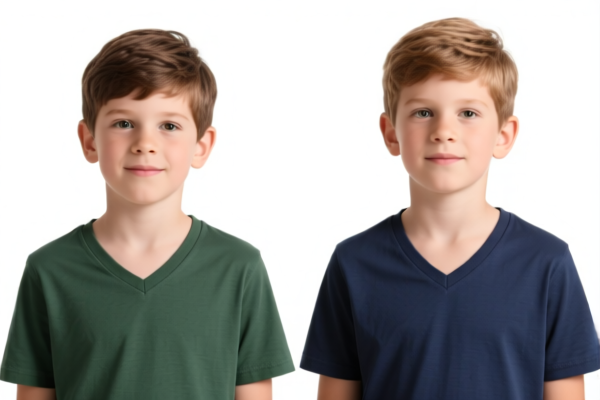
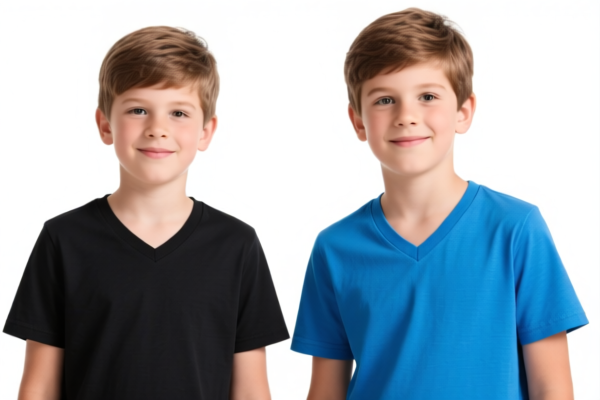
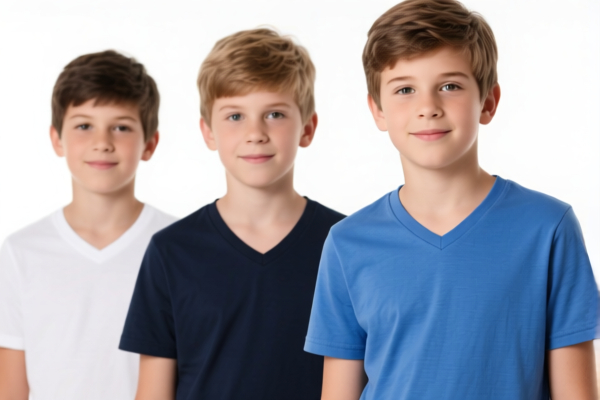

AI Analysis
👕 Boys' V-Neck T-Shirts (Apparel for Kids)
🌐 HS Code Reference & Customs Clearance Guide | 2026 Latest Tariff Analysis | Professional Entry Strategies
📌 I. Product Definition & Classification: Do You Really Know "Boys' V-Neck T-Shirts"?
Boys' V-neck T-shirts are essential casual wear for children, classified in international trade based on two critical factors: 1. Knitting Method: Knitted (Ch. 61) vs. Woven (Ch. 62). 2. Material Composition: Cotton (Ch. 61/62 subheadings for cotton) vs. Man-made Fibers (Synthetic/Acetate, etc.).
⚠️ Key Distinction Point:
- Knitted T-shirts fall under Chapter 61 (e.g.,6105,6109). Note that6105is specifically for "Men's or boys' shirts" (often used for collared or structured knits), while6109is for "T-shirts, singlets, and other vests". However, the data provided utilizes6105for specific synthetic blends and6109for cotton, reflecting specific national tariff interpretations.
- Woven T-shirts fall under Chapter 62 (e.g.,6205for shirts).
📦 II. HS Code Classification Details (2026 Latest Tariff Authority)
Based on the provided data, here are the specific classifications for Boys' V-Neck T-shirts:
| HS Code | Product Summary | Material | Knitting Type | Total Tax Rate |
|---|---|---|---|---|
6105.20.20.30 |
Boys' V-neck T-shirt | Man-made Fibers | Knitted | 49.5% |
6109.10.00.14 |
Boys' V-neck T-shirt | Cotton | Knitted | 34.0% |
6109.90.10.09 |
Boys' V-neck T-shirt | Man-made Fibers | Knitted | 49.5% |
6205.20.20.61 |
Boys' V-neck T-shirt | Cotton | Woven | 37.2% |
6105.10.00.30 |
Boys' V-neck T-shirt | Cotton | Knitted | 37.2% |
🔍 Critical Note on Data Consistency:
- The data shows two HS codes for Cotton Knitted shirts:6109.10.00.14(34.0%) and6105.10.00.30(37.2%). This likely reflects different sub-classifications (e.g., by weight, specific fiber content percentage, or specific tariff quota entries).
- Similarly, Man-made Fiber Knitted shirts use both6105.20.20.30and6109.90.10.09, both at 49.5%.
- Always verify the exact material composition (e.g., % Cotton vs. % Polyester) against the specific HS subheadings to choose the lower/correct rate.
💰 III. 2026 Latest Tariff Rate Breakdown (Including Additional Taxes)
✅ Applicable Country: United States (US)
✅ Country of Origin: China (CN)
✅ Effective Date: Current rates apply (including Section 301 and Section 122 tariffs)
🎯 1. Man-made Fiber Knitted V-Neck T-Shirts
HS Codes: 6105.20.20.30 / 6109.90.10.09
| Component | Rate | Description |
|---|---|---|
| Basic MFN Tariff | 32.0% | General Most Favored Nation rate |
| Section 301 Tariff | 7.5% | Additional duty on Chinese imports (List 4B/301 List 4) |
| Section 122 Tariff | 10% | Additional duty under 19 U.S.C. § 1477 (often related to specific trade enforcement or recent updates) |
| TOTAL TAX RATE | 49.5% | Cumulative Ad Valorem Duty |
📌 Explanation:
- Synthetic fabrics (polyester, nylon, etc.) face higher base tariffs than cotton.
- The 10% Section 122 tariff is a significant add-on for Chinese-origin goods in this category.
- Total Cost Impact: Nearly half of the CIF value goes to duties.
🎯 2. Cotton Knitted V-Neck T-Shirts (Category A)
HS Code: 6109.10.00.14
| Component | Rate | Description |
|---|---|---|
| Basic MFN Tariff | 16.5% | Lower base rate for cotton textiles |
| Section 301 Tariff | 7.5% | Additional duty on Chinese imports |
| Section 122 Tariff | 10% | Additional duty under 19 U.S.C. § 1477 |
| TOTAL TAX RATE | 34.0% | Cumulative Ad Valorem Duty |
📌 Explanation:
- Cotton is generally cheaper to import than synthetics due to lower base tariffs.
- This is the most cost-effective option among the listed HS codes for knitted goods.
🎯 3. Cotton Knitted V-Neck T-Shirts (Category B)
HS Code: 6105.10.00.30
| Component | Rate | Description |
|---|---|---|
| Basic MFN Tariff | 19.7% | Slightly higher base rate than 6109 |
| Section 301 Tariff | 7.5% | Additional duty on Chinese imports |
| Section 122 Tariff | 10% | Additional duty under 19 U.S.C. § 1477 |
| TOTAL TAX RATE | 37.2% | Cumulative Ad Valorem Duty |
📌 Explanation:
- Why is this higher than6109.10.00.14? Likely due to specific fabric weight, trim details, or classification under "Shirts" (6105) rather than "T-shirts/Vests" (6109).
- Strategy: If your product fits the definition for6109, always use that code to save 3.2% in duties.
🎯 4. Cotton Woven V-Neck T-Shirts
HS Code: 6205.20.20.61
| Component | Rate | Description |
|---|---|---|
| Basic MFN Tariff | 19.7% | Standard rate for woven cotton shirts |
| Section 301 Tariff | 7.5% | Additional duty on Chinese imports |
| Section 122 Tariff | 10% | Additional duty under 19 U.S.C. § 1477 |
| TOTAL TAX RATE | 37.2% | Cumulative Ad Valorem Duty |
📌 Explanation:
- Woven fabrics are structurally different from knits. Ensure your garment is truly woven (non-stretch fabric, seam construction) to use this code.
- Misclassifying a knit as woven can lead to severe penalties.
🛠️ IV. Customs Clearance Practical Advice (Pitfall Avoidance Guide)
✅ 1. Documentation Checklist (Must-Haves)
| Document | Required | Purpose |
|---|---|---|
| Commercial Invoice | ✅ | Clearly state "Boys' V-Neck T-Shirt", Material (% Cotton/% Poly), Knit/Woven, Country of Origin. |
| Packing List | ✅ | Accurate weight and piece count. |
| Fabric Content Label | ✅ | Photo of the care label inside the garment is crucial for verification. |
| Product Photos | ✅ | Show the V-neck cut, sleeve type, and overall structure to distinguish from "Shirts" (6105) vs "T-shirts" (6109). |
| Origin Certificate | ❌ | Not typically required for US-China trade due to tariffs, but useful for internal records. |
✅ 2. Classification Strategy (Key Mnemonic)
🔥 "Knit vs. Woven, Cotton vs. Synthetic: Get it right, save big money!"
| Scenario | Correct HS Code | Why? |
|---|---|---|
| Soft, stretchy fabric, looped construction | Ch. 61 (Knitted) | If you misclassify knit as woven (6205), customs may reclassify and penalize. |
| 100% Cotton | 6109.10.00.14 |
Lowest duty (34.0%) for knits. Ensure it's a "T-shirt/Vest" style, not a "Shirt" style. |
| Polyester Blend | 6105.20.20.30 or 6109.90.10.09 |
High duty (49.5%). No easy way to reduce unless switching material. |
| Collared, buttoned, structured | 6105 (Knitted) |
Even if knit, if it looks like a dress shirt, it goes to 6105. |
| Non-collared, pullover, simple | 6109 (Knitted) |
True T-shirt/vest definition. Lower base tariff. |
✅ 3. Special Situations
| Situation | Handling Advice |
|---|---|
| Mixed Materials | If >50% Cotton, use Cotton code. If >50% Synthetic, use Synthetic code. Always check the dominant fiber by weight. |
| Embroidery/Logos | Does not change HS Code. Ensure invoices reflect the base garment value. |
| Set Sales (e.g., 3-pack) | Declare each unit separately or as a set. If a set, the duty applies to the total value. |
| Sample vs. Bulk | Samples still incur duties unless shipped via de minimis (see below). |
🌍 V. Global Market Comparison (2026 Latest)
| Country/Region | Recommended HS Code | Base Tariff | Additional China Tariffs | Total Est. Rate | Remarks |
|---|---|---|---|---|---|
| 🇺🇸 USA | 6109.10.00.14 (Cotton Knit) |
16.5% | +17.5% (301+122) | 34.0% | High barrier for synthetics (49.5%) |
| 🇪🇺 EU | 6109.10.00 (Cotton Knit) |
12.0% | None | 12.0% | No Section 301/122 equivalent. Much cheaper! |
| 🇨🇳 China | 6109.10.00 (Cotton Knit) |
15.0% | None | 15.0% | Import tax for domestic sales |
| 🇬🇧 UK | 6109.10.00 (Cotton Knit) |
12.0% | None | 12.0% | Post-Brexit, no EU tariffs, but check UK-specific rules |
📌 Conclusion:
- The US market is the most expensive for apparel due to the combination of MFN, Section 301, and Section 122 tariffs.
- Cotton products are significantly cheaper to import than Synthetic products into the US.
📌 VI. Common Mistakes & Pitfalls (Lessons Learned)
❌ Mistake 1: Classifying all T-shirts as 6105 (Shirts)
👉 Consequence: Higher base tariff (19.7% vs 16.5% for cotton) → Unnecessary cost increase.
👉 Fix: Ensure the garment is a "Vest/T-shirt" style (no collar, pullover) to use 6109.
❌ Mistake 2: Ignoring the "Section 122" Tariff
👉 Consequence: Underpaying duties by 10%.
👉 Fix: Always add the 10% Section 122 tariff to calculations for China-origin goods.
❌ Mistake 3: Misidentifying Knit vs. Woven
👉 Consequence: Customs rejects the entry or re-classes it, causing delays and storage fees.
👉 Fix: Provide clear photos showing the fabric texture. Knits have visible loops; weaves have a criss-cross pattern.
❌ Mistake 4: Declaring "Man-made" when it's Cotton
👉 Consequence: You pay 49.5% instead of 34.0% (or vice versa if customs reclassifies and penalizes).
👉 Fix: Be 100% accurate on the material composition label.
🎯 VII. Conclusion: Smart Classification, Higher Profits!
🎯 Remember the Golden Rules:
🔹 "Cotton Knit = 34% (Best)"
🔹 "Synthetic Knit = 49.5% (Expensive)"
🔹 "Woven Cotton = 37.2% (Middle)"
🔹 "Check the Label: 100% Cotton is your best friend for US Imports."
📌 Pro Tip:
- If your volume is high, consider Supply Chain Diversification: Sourcing from Vietnam, Bangladesh, or Cambodia may avoid Section 301/122 tariffs, reducing the total tax rate to just the MFN rate (e.g., 12-16%).
- For US imports, pre-classification rulings are highly recommended if the garment sits on the boundary between 6105 (Shirt) and 6109 (T-shirt).
📣 Take Action Now:
📞 Contact a licensed customs broker
📄 Prepare detailed product specs (Fabric, Knit/Woven, Design)
🚀 Optimize your HS Code to save up to 15% in duties!
✨ Professional Clearance Starts with Precise Classification!
💼 Every percentage point saved is pure profit!
Customer Reviews
About HS Code Classification
The Harmonized System (HS) is an internationally standardized nomenclature developed by the World Customs Organization (WCO) to classify traded products. Over 200 countries use the HS system as the basis for customs tariffs, trade statistics, and import/export regulations.
Each HS code follows a hierarchical structure:
- Chapter (2 digits) — Broad category of goods (e.g., Chapter 84: Machinery and Mechanical Appliances)
- Heading (4 digits) — More specific grouping within the chapter
- Subheading (6 digits) — Internationally standardized breakdown, used by all WCO member countries
- National subdivisions (8-10 digits) — Country-specific extensions for further classification, such as US HTSUS 10-digit codes
Correct HS code classification is essential for smooth customs clearance, accurate duty payment, and compliance with trade regulations. Misclassification can lead to customs delays, overpayment of duties, or penalties.
When importing from CN to US, the applicable tariff rates may include:
- Most-Favored-Nation (MFN) rate — The standard duty rate applied to WTO members
- General rate — Applied to countries without trade agreements
- Trade remedy duties — Additional tariffs such as Section 301 (anti-dumping), Section 232 (national security), or countervailing duties
The information provided on this page is for reference purposes only. For official classification, please consult with your local customs authority or a licensed customs broker.