男童针织/钩编套装
CN → US| HS Code | Tariff Rate | Origin | Destination | Doc |
|---|---|---|---|---|
| 6103106015 | 26.9% | CN | US | Official Doc |
| 6103421040 | 33.6% | CN | US | Official Doc |
| 6111205000 | 32.4% | CN | US | Official Doc |
Product Images
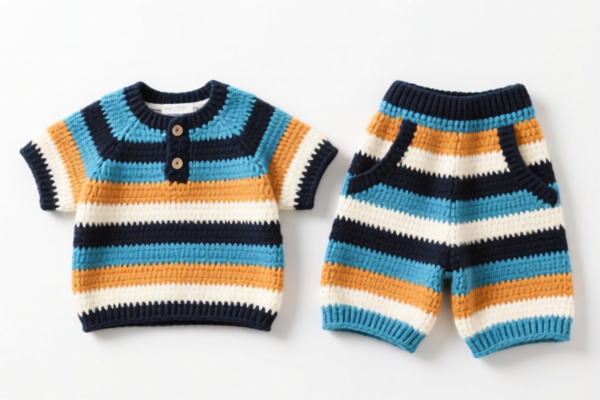
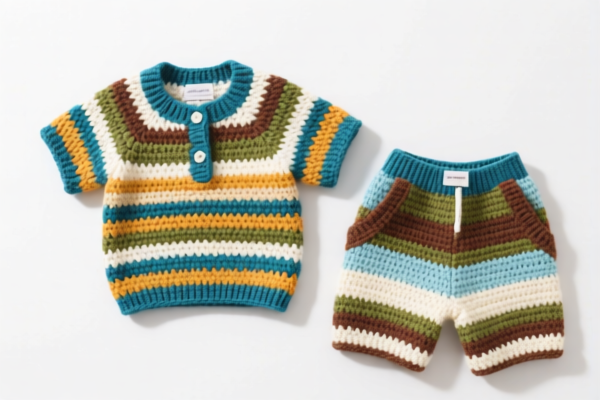


AI Analysis
👶 Kids’ Knitted/Crocheted Ensemble (Boy’s Polyester Jacket)
🌐 HS Code Reference & Customs Clearance Guide | 2026 Latest Tariff Analysis | Professional Customs Strategy
📌 1. Product Definition & Classification: Do You Really Understand "Boy's Knitted/Crocheted Ensemble" (Non-Swimwear)?
In international trade, Boy’s Knitted/Crocheted Ensemble (Polyester Jacket) is classified under Chapter 61 (Articles of Apparel and Clothing Accessories, Knitted or Crocheted). The core characteristic is that it is a knitted or crocheted garment, primarily composed of polyester fiber (synthetic fiber), specifically designed for boy’s casual wear.
⚠️ Key Distinction Point:
- If it is a complete ensemble (e.g., jacket + pants/skirt sold together) → It may fall under Ensemble codes (e.g.,6103.23,6103.33) or be classified based on the principal garment if treated separately.
- If it is a single jacket (not part of an ensemble) → It falls under Jacket codes (e.g.,6103.33,6114.30).
- Non-Swimwear: Explicitly excludes swimwear (Chapter 61, Note 3).
- Material: Polyester fiber (Synthetic) → Dictates Chapter 61, Section XI.
📦 2. HS Code Classification Details (2026 Latest Tariff Authority Comparison)
| HS Code | Product Description | Applicable Scenario | Key Classification Logic |
|---|---|---|---|
6114.30.30.44 |
Boy’s Knitted/Crocheted Ensemble (Non-Swimwear) Polyester Jacket | Single Jacket or Ensemble where Jacket is Principal Item | Principal Item Rule: If the ensemble is classified as a jacket due to its nature, use this code. Note: This code often applies to specific knitwear not elsewhere specified. |
6103.23.00.37 |
Boy’s Knitted/Crocheted Ensemble (Non-Swimwear) Polyester Jacket | Ensemble where each garment is taxed separately | Ensemble Rule (Separate Taxation): The tariff is the rate applicable to each garment in the ensemble if classified separately, +17.5%. |
6103.33.20.00 |
Boy’s Knitted/Crocheted Ensemble (Non-Swimwear) Polyester Jacket | Casual Jacket (Ensemble or Single) | Specific Subheading: For boy’s knitted jackets. High base tariff due to specific classification. |
6103.23.00.07 |
Boy’s Knitted/Crocheted Ensemble (Non-Swimwear) Polyester Jacket | Ensemble (General) | Ensemble Rule (Separate Taxation): Same as above, tariff is rate for each garment if separate +17.5%. |
🔍 Important Reminder:
- Ensemble vs. Separate: If sold as a set (e.g., jacket + pants), US Customs may classify as an Ensemble (6103.23/6103.33) or based on the principal garment.
- Jacket Only: If it’s just a jacket, it may fall under6114.30or6103.33depending on specific knitting structure and use.
- Non-Swimwear: Must clearly state "Non-Swimwear" to avoid misclassification under swimwear codes.
💰 3. 2026 Latest Tariff Rate Breakdown (Including Additional Duties & Policy Surcharges)
✅ Applicable Country: United States (US)
✅ Country of Origin: China (CN)
✅ Effective Time: 2025/2026 (Subject to current trade policies)
🎯 1. 6114.30.30.44 —— Boy’s Knitted/Crocheted Ensemble (Non-Swimwear) Polyester Jacket
| Item | Content |
|---|---|
| Base Tariff Rate | 14.9% |
| Section 301 Additional Tariff | +7.5% |
| Section 122 Tariff | +10% |
| Total Tariff Rate | 32.4% |
| Tax Calculation | CIF Value × 32.4% |
| De Minimis Eligibility | ❌ Not Eligible (High tariff rates exclude it from de minimis benefits under current rules) |
| Legal Basis Path | HTSUS:6114.30.30.44 → Section 301: Footnote 2 → Section 122: 19 U.S.C. 1677j |
📌 Explanation:
- Base Tariff 14.9%: Standard US import duty for polyester knitted outerwear for boys.
- Section 301 (+7.5%): Additional tariff on Chinese goods under Trade Action 301.
- Section 122 (+10%): Emergency action tariff under Section 122 of the Trade Act of 1974 (subject to specific conditions and potential changes).
- Total 32.4%: A significant duty burden. Proper classification is critical to avoid overpayment.
🎯 2. 6103.23.00.37 & 6103.23.00.07 —— Ensemble (Taxed Separately)
| Item | Content |
|---|---|
| Base Tariff Rate | The rate applicable to each garment in the ensemble if classified separately (Variable, typically 10-20% for polyester jackets) |
| Section 301 Additional Tariff | +7.5% |
| Section 122 Tariff | +10% |
| Total Tariff Rate | (Variable Base Rate) + 17.5% |
| Tax Calculation | (CIF Value of Jacket × Jacket Rate) + (CIF Value of Pants × Pants Rate) + 17.5% Surcharges |
| De Minimis Eligibility | ❌ Not Eligible |
| Legal Basis Path | HTSUS:6103.23.00.37/07 → Ensemble Rule (Note 3 to Section XI) → Section 301 → Section 122 |
📌 Note:
- The term "The rate applicable to each garment in the ensemble if separately" means you must calculate the duty for the jacket and pants individually based on their own HS codes, then sum them up.
- Example: If Jacket duty is 15% and Pants duty is 10%, the base is 15% + 10% = 25%. Then add 17.5% surcharges = 42.5% total.
- High Risk: Misclassifying an ensemble as a single item can lead to severe underpayment penalties.
🎯 3. 6103.33.20.00 —— Boy’s Knitted/Crocheted Ensemble (Non-Swimwear) Polyester Jacket (Casual Jacket)
| Item | Content |
|---|---|
| Base Tariff Rate | 28.2% |
| Section 301 Additional Tariff | +7.5% |
| Section 122 Tariff | +10% |
| Total Tariff Rate | 45.7% |
| Tax Calculation | CIF Value × 45.7% |
| De Minimis Eligibility | ❌ Not Eligible |
| Legal Basis Path | HTSUS:6103.33.20.00 → Section 301 → Section 122 |
📌 Warning:
- This code carries the highest base tariff (28.2%) among the listed options.
- It is often applied to specific types of boy’s jackets that do not fit standard ensemble rules.
- Total 45.7% is extremely high. Ensure this classification is necessary; consider if6103.23(Ensemble) or6114.30might apply for lower rates.
🛠️ 4. Customs Clearance Practical Advice (Real-World Pitfall Avoidance Guide)
✅ 1. Required Documentation Checklist (All Mandatory)
| Document | Must Provide | Explanation |
|---|---|---|
| ✅ Product Specification Sheet | ✔️ | Details: Material (100% Polyester), Structure (Knitted/Crocheted), Use (Boy’s Casual), Non-Swimwear |
| ✅ Ensemble Details | ✔️ | If sold as a set, list each item (Jacket, Pants) and their individual values |
| ✅ Product Photos | ✔️ | Clear images showing knit structure, labels, and any ensemble components |
| ✅ Commercial Invoice | ✔️ | Clearly state "Boy’s Knitted Polyester Jacket/Ensemble, Non-Swimwear" |
| ✅ Packing List | ✔️ | Specify if items are packed together as an ensemble |
| ✅ Origin Certificate | ✔️ | For proving Chinese origin (subject to Section 301/122) |
✅ 2. Declaration Tips (Key Mnemonics)
🔥 "Ensemble Split, Base Rate Add, Surcharges Flat, Don’t Mix Up the Hat!"
| Scenario | Correct Declaration | Wrong Practice |
|---|---|---|
| Sold as a Set (Jacket + Pants) | Classify as Ensemble (6103.23) → Tax each item separately + 17.5% |
Declare as single jacket (6103.33) → May be accepted but risks audit if ensemble nature is evident |
| Single Jacket Only | Declare as Jacket (6114.30.30.44 or 6103.33.20.00) |
Declare as ensemble → Unnecessary complexity |
| Non-Swimwear | Explicitly state "Non-Swimwear" | Omitting this → May be misclassified under swimwear codes (different duties) |
| Polyester Material | State "100% Polyester" | Vague terms like "Synthetic" → May trigger higher scrutiny |
✅ 3. Special Case Handling
| Scenario | Handling Advice |
|---|---|
| OEM Custom Sets | Provide customer order + design drawings to prove ensemble nature |
| Mixed Material | If blend, use principal material rule (e.g., >50% Polyester) |
| Small Ensembles (De Minimis) | Not Eligible due to high tariffs (Section 301/122 apply) |
| Section 122 Exemptions | Check if current Section 122 measures are active/exempt for your specific goods |
🌍 5. Global Major Market Clearance Comparison (2026 Latest)
| Country/Region | Recommended HS Code | Tariff Rate | Certification Requirements | Notes |
|---|---|---|---|---|
| 🇺🇸 USA | 6114.30.30.44 or 6103.23.00.37 |
32.4% - 45.7% | CPC (Children’s Product Certificate), CPSIA | High tariffs due to Section 301/122 |
| 🇨🇳 China | 6114.30.30.44 or 6103.23.00.37 |
10% - 20% | CCC (if applicable) | No Section 301/122 |
| 🇪🇺 EU | 6103.23.00.37 or 6114.30.30.44 |
0% - 12% | CE, REACH | No Section 122/301 |
| 🇬🇧 UK | 6103.23.00.37 or 6114.30.30.44 |
0% - 12% | UKCA, REACH | Post-Brexit rules apply |
| 🇯🇵 Japan | 6103.23.00.37 or 6114.30.30.44 |
0% - 10% | PSE (if electrical, not applicable here) | Low tariffs |
📌 Conclusion:
- USA is the most expensive market due to Section 301 (+7.5%) and Section 122 (+10%).
- EU/UK/JP offer much lower tariff burdens. Consider supply chain diversification if US market is primary.
📌 6. Common Errors & Pitfall Guide (Lessons from Blood and Tears)
❌ Error 1: Declaring an Ensemble as a single Jacket to avoid ensemble complexity
👉 Consequence: US Customs may reclassify and charge higher duties or impose penalties for misdeclaration.
❌ Error 2: Not specifying "Non-Swimwear"
👉 Consequence: Risk of misclassification under swimwear codes, leading to duty discrepancies.
❌ Error 3: Applying De Minimis exemption for high-tariff goods
👉 Consequence: Goods seized or taxed at full rate due to Section 301/122 exclusions.
❌ Error 4: Incorrectly calculating Ensemble Duties (applying single rate)
👉 Consequence: Underpayment → Back taxes + Interest + Fines.
✅ Correct Practice:
"Boy’s Knitted Polyester Jacket Ensemble, Non-Swimwear, 100% Polyester, CPC Certified, Classify as Ensemble
6103.23.00.37"
🎯 7. Conclusion: Professional Declaration, Save Time and Money!
🎯 Remember the Mnemonic:
🔹 "Ensemble Split, Base Add, Surcharges Flat, Don’t Mix Up!"
🔹 "HS Code Determines Life, Tariff Differs by 13%, One Step Wrong, Thousands Lost!"
📌 Pro Tip:
If your goods are originated from Vietnam, Mexico, Thailand, Malaysia, you may be eligible for IEEPA Exemptions or FTZ benefits, reducing tariffs to 0%-5%.
Recommend Applying for Advance Ruling (Pre-Classification) to avoid clearance risks.
📣 Immediate Action:
📞 Contact Professional Customs Broker + Provide Product Photos + Apply for HS Code Advance Ruling
🚀 Ensure Smooth Clearance, Efficient Global Trade, Profit Maximization!
✨ Professional Customs Clearance Starts with Accurate Classification!
💼 Every Penny of Your Cost Deserves Precise Calculation!
Customer Reviews
About HS Code Classification
The Harmonized System (HS) is an internationally standardized nomenclature developed by the World Customs Organization (WCO) to classify traded products. Over 200 countries use the HS system as the basis for customs tariffs, trade statistics, and import/export regulations.
Each HS code follows a hierarchical structure:
- Chapter (2 digits) — Broad category of goods (e.g., Chapter 84: Machinery and Mechanical Appliances)
- Heading (4 digits) — More specific grouping within the chapter
- Subheading (6 digits) — Internationally standardized breakdown, used by all WCO member countries
- National subdivisions (8-10 digits) — Country-specific extensions for further classification, such as US HTSUS 10-digit codes
Correct HS code classification is essential for smooth customs clearance, accurate duty payment, and compliance with trade regulations. Misclassification can lead to customs delays, overpayment of duties, or penalties.
When importing from CN to US, the applicable tariff rates may include:
- Most-Favored-Nation (MFN) rate — The standard duty rate applied to WTO members
- General rate — Applied to countries without trade agreements
- Trade remedy duties — Additional tariffs such as Section 301 (anti-dumping), Section 232 (national security), or countervailing duties
The information provided on this page is for reference purposes only. For official classification, please consult with your local customs authority or a licensed customs broker.