男童长袖睡衣
CN → US| HS Code | Tariff Rate | Origin | Destination | Doc |
|---|---|---|---|---|
| 6114303060 | 32.4% | CN | US | Official Doc |
| 6114303044 | 32.4% | CN | US | Official Doc |
| 6107220015 | 33.5% | CN | US | Official Doc |
| 6207911000 | 25.9% | CN | US | Official Doc |
| 6207997520 | 24.9% | CN | US | Official Doc |
Product Images
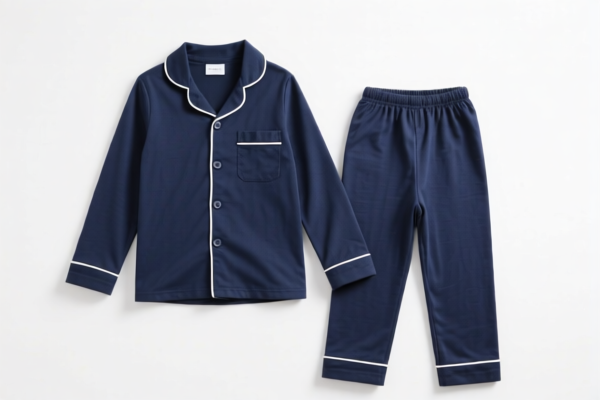
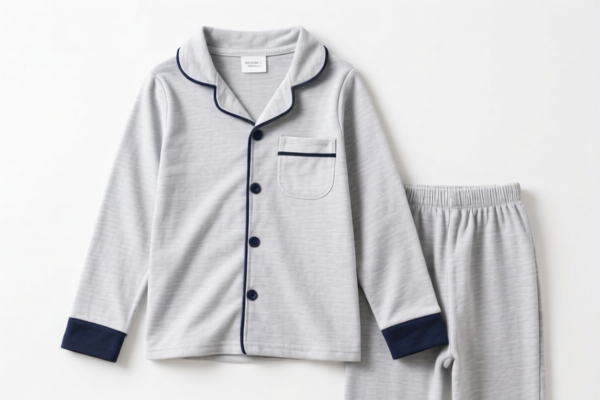
AI Analysis
👕 Boys' Long-Sleeve Pajamas (Men's/Boys' Classification)
🌐 HS Code Reference & Customs Clearance Guide | 2026 Latest Tariff Analysis | Professional Clearance Strategy
📌 1. Product Definition & Classification: What Exactly Are "Boys' Long-Sleeve Pajamas"?
Boys' long-sleeve pajamas are sleepwear garments specifically designed for male children or boys. In international trade, they are primarily classified under Chapter 61 (Articles of Apparel and Clothing Accessories, Knitted or Crocheted) or Chapter 62 (Articles of Apparel and Clothing Accessories, Not Knitted or Crocheted).
The classification depends on three critical factors: 1. Fabric Composition: Artificial fibers (synthetic) vs. Cotton/Other fibers. 2. Knitted vs. Non-Knitted: How the fabric is constructed. 3. Specific Use/Form: Sleepwear (Pajamas) vs. Other Sleepwear (Robes).
⚠️ Key Distinction Points: - If the garment is knitted and made of artificial fibers, it typically falls under 6114. - If the garment is knitted and made of cotton (or other fibers not specified as artificial), it may fall under 6107. - If the garment is a robe (wrap-style) rather than a shirt/pant set, it falls under 6207.
📦 2. HS Code Classification Details (2026 Latest Tariff Authority Comparison)
Based on the provided data, here is the detailed breakdown for Boys' Long-Sleeve Sleepwear:
| HS Code | Product Description | Applicable Scenario | Material | Total Tax Rate |
|---|---|---|---|---|
6114.30.30.60 |
Boys' Long-Sleeve Artificial Fiber Pajamas | Knitted sleepwear, boy/child classification | Artificial Fiber | 32.4% |
6114.30.30.44 |
Boys' Long-Sleeve Artificial Fiber Sleepwear | Knitted "like garments" (sleepwear form), boy/child classification | Artificial Fiber | 32.4% |
6107.22.00.15 |
Boys' Long-Sleeve Artificial Fiber Pajamas | Knitted sleepwear, specifically classified as "Boys" | Artificial Fiber | 33.5% |
6207.91.10.00 |
Boys' Bathrobes/Sleeping Robes | Non-knitted robes, boy classification | Cotton (Inferred) | 25.9% |
6207.99.75.20 |
Boys' Sleeping Robes | Non-knitted robes, boy classification | Non-Wool Artificial Fiber or Cotton | 24.9% |
🔍 Key Reminders: - Knitted Pajamas (6114/6107): Usually consist of a top and bottom set. If made of artificial fibers, the tax rate is higher (32.4%-33.5%). - Non-Knitted Robes (6207): If the item is a robe (wrap-around style) rather than a pajama set, the tax rate is lower (24.9%-25.9%), assuming non-cotton or specific cotton classifications. - Classification Nuance:
6107.22.00.15has a slightly higher base tariff (16.0%) compared to6114(14.9%), leading to a 33.5% total tax rate. Precision in material description is crucial.
💰 3. 2026 Latest Tariff Rate Details (Including Additional Taxes & Policy Add-ons)
✅ Applicable Country: United States (US)
✅ Origin: China (CN)
✅ Effective Date: Current tariffs include Section 301, Section 122, and IEEPA measures.
🎯 1. 6114.30.30.60 & 6114.30.30.44 – Knitted Artificial Fiber Pajamas/Sleepwear
| Item | Content |
|---|---|
| Basic Tariff | 14.9% (ad valorem) |
| Section 301 Tariff (Additional) | +7.5% |
| Section 122 Tariff | +10% |
| Total Tax Rate | 32.4% |
| Tax Calculation | CIF Value × 32.4% |
| De Minimis Exemption | ❌ Not Eligible (High tariff items usually excluded from Section 321) |
| Legal Basis Path | HTSUS:6114.30.30.60 → Section 301:7.5% → Section 122:10% |
📌 Explanation: - These codes cover knitted artificial fiber sleepwear for boys. - The 14.9% is the standard Most Favored Nation (MFN) duty. - 7.5% is the Section 301 additional duty for Chinese-origin goods. - 10% is the Section 122 duty (often related to specific trade remedies or national security provisions). - Total: 32.4%. This is a significant cost factor for synthetic sleepwear.
🎯 2. 6107.22.00.15 – Knitted Artificial Fiber Pajamas (Boys)
| Item | Content |
|---|---|
| Basic Tariff | 16.0% (ad valorem) |
| Section 301 Tariff (Additional) | +7.5% |
| Section 122 Tariff | +10% |
| Total Tax Rate | 33.5% |
| Tax Calculation | CIF Value × 33.5% |
| De Minimis Exemption | ❌ Not Eligible |
| Legal Basis Path | HTSUS:6107.22.00.15 → Section 301:7.5% → Section 122:10% |
📌 Note: - Slightly higher base duty (16.0%) results in a 1.1% higher total tax compared to
6114.30.30.60. - Ensure the product description clearly states "Boys" to match this specific subheading if applicable.
🎯 3. 6207.91.10.00 – Boys' Cotton Bathrobes (Non-Knitted)
| Item | Content |
|---|---|
| Basic Tariff | 8.4% (ad valorem) |
| Section 301 Tariff (Additional) | +7.5% |
| Section 122 Tariff | +10% |
| Total Tax Rate | 25.9% |
| Tax Calculation | CIF Value × 25.9% |
| De Minimis Exemption | ❌ Not Eligible |
| Legal Basis Path | HTSUS:6207.91.10.00 → Section 301:7.5% → Section 122:10% |
📌 Key Point: - If the item is a robe (not a pajama set) and made of cotton, the base duty is much lower (8.4%). - Total: 25.9%. This is 6.5% cheaper than synthetic pajamas.
🎯 4. 6207.99.75.20 – Boys' Sleeping Robes (Other Materials)
| Item | Content |
|---|---|
| Basic Tariff | 14.9% (ad valorem) |
| Section 301 Tariff (Additional) | +0.0% |
| Section 122 Tariff | +10% |
| Total Tax Rate | 24.9% |
| Tax Calculation | CIF Value × 24.9% |
| De Minimis Exemption | ❌ Not Eligible |
| Legal Basis Path | HTSUS:6207.99.75.20 → Section 301:0.0% → Section 122:10% |
📌 Strategic Advantage: - No Section 301 Tariff (0%)! - Base duty is 14.9%, plus 10% Section 122. - Total: 24.9%. This is the lowest tax rate among all options. - Caution: This code applies to non-knitted robes made of materials other than cotton (or specific non-wool artificial fibers). Verify material composition carefully. If it is cotton, it may fall under
6207.91.10.00(25.9%).
🛠️ 4. Customs Clearance Practical Advice (Real-World Pitfall Guide)
✅ 1. Preparation Checklist (No Item Missing)
| Material | Required | Description |
|---|---|---|
| ✅ Product Spec Sheet | ✔️ | Must specify: Knitted/Non-Knitted, Fabric Composition (e.g., 100% Polyester), Gender (Boys), Type (Pajama vs. Robe). |
| ✅ Fabric Swatch/Test Report | ✔️ | Essential for distinguishing between "Artificial Fiber" (Polyester, Rayon) and "Cotton." |
| ✅ Product Photos | ✔️ | Clear images showing seams, closures (buttons vs. wrap), and fit. Differentiates "Pajama Set" from "Robe." |
| ✅ Commercial Invoice | ✔️ | Must use precise terms: "Boys' Long-Sleeve Knitted Artificial Fiber Pajamas" or "Boys' Non-Knitted Cotton Robe." |
| ✅ Packing List | ✔️ | Ensure no mixing of different HS Codes in one shipment without clear separation. |
✅ 2. Declaration Tips (Key Mantra)
🔥 "Knitted vs. Non-Knitted, Robe vs. Pajama, Material Matters!"
| Scenario | Correct HS Code | Common Mistake |
|---|---|---|
| Knitted Pajama Set (Polyester) | 6114.30.30.60 or 6107.22.00.15 |
Declaring as "Clothing" generally → Risk of audit. |
| Non-Knitted Robe (Cotton) | 6207.91.10.00 |
Declaring as "Pajamas" → Wrong classification, potential penalty. |
| Non-Knitted Robe (Other Fabric) | 6207.99.75.20 |
Missing Section 301 exemption check → Overpaying 7.5%. |
| Mixed Materials | Check dominant fiber | Assuming "Synthetic" for blends → Incorrect base duty. |
✅ 3. Special Circumstances
| Situation | Handling Advice |
|---|---|
| OEM Custom Sleepwear | Provide design patterns to prove it is "sleepwear" and not "loungewear" (which may have different duties). |
| "Like Garment" Classification | If the item is not a traditional pajama but a sleep-like garment, 6114.30.30.44 may apply. Ensure it meets the legal definition of sleepwear. |
| Material Ambiguity | If fabric is a blend, determine the principal material. If artificial fiber > cotton, use 6114 or 6207.99. If cotton > artificial, use 6207.91. |
| Section 122 Applicability | Verify if Section 122 applies to your specific product line. It adds 10% regardless of Section 301 status in some codes. |
🌍 5. Global Market Clearance Comparison (2026 Latest)
| Country/Region | Recommended HS Code | Tariff Rate | Certification Requirements | Notes |
|---|---|---|---|---|
| 🇺🇸 USA | 6114.30.30.60 / 6207.99.75.20 |
24.9% - 33.5% | CPSIA, Prop 65, Flammability Standards | High tariffs due to Section 301/122. |
| 🇨🇳 China | 6114.30.30 / 6207.91 |
5% - 10% | CCC (if applicable), GB Standards | No Section 301/122. |
| 🇪🇺 EU | 6107.22 / 6207.91 |
12% - 15% | CE, REACH, Textile Fiber Names | No Section 122/301. |
| 🇬🇧 UK | 6114.30 / 6207.91 |
12% - 15% | UKCA, REACH | Post-Brexit rules apply. |
| 🇨🇦 Canada | 6114.30 / 6207.91 |
16% - 18% | CFIA, Flammability | No Section 301. |
📌 Conclusion: - USA has the highest tariff burden due to additional duties. - Robes (6207) often have lower tariffs than pajama sets (6114/6107) if classified correctly. - Material choice (Cotton vs. Artificial) significantly impacts the base duty rate.
📌 6. Common Errors & Pitfall Guide (Lessons Learned)
❌ Error 1: Classifying a Knitted Pajama Set as a Robe
👉 Consequence: Customs may reject the 6207 code, leading to reclassification to 6114 (32.4%) + penalties.
❌ Error 2: Ignoring Section 122 Tariff (10%) 👉 Consequence: Underpayment of duties. This applies to most textile imports from China under current rules.
❌ Error 3: Misidentifying Knitted vs. Non-Knitted
👉 Consequence: Knitted (61) and Non-Knitted (62) have different tariff structures. Wrong classification leads to inaccurate cost estimation.
❌ Error 4: Assuming All Artificial Fibers are the Same
👉 Consequence: 6114 (14.9% base) vs. 6107 (16.0% base). Precision in subheading saves 1.1% tax.
✅ Correct Declaration Example:
"Boys' Long-Sleeve Knitted Pajama Set, 100% Polyester Artificial Fiber, For Sleep, Model ABC, CPSIA Compliant"
🎯 7. Conclusion: Professional Declaration for Cost Optimization
🎯 Remember the Mantra:
🔹 "Robe vs. Pajama: Robe may be cheaper (24.9%) vs. Pajama (32.4%). 🔹 "Knitted vs. Non-Knitted: Check the fabric structure. 🔹 "Artificial Fiber: Watch the base duty (14.9% vs. 16.0%)."
📌 Pro Tip:
- If your product is a robe and made of non-cotton artificial fiber, consider
6207.99.75.20for the lowest tax rate (24.9%) due to 0% Section 301.- Always get a binding ruling from CBP if the product form is ambiguous (e.g., is it a pajama or a robe?).
- Verify Section 122 applicability for all textile imports from China.
📣 Immediate Action:
📞 Contact a licensed customs broker + Provide fabric composition + Request HS Code pre-classification. 🚀 Optimize your supply chain, reduce duty costs, and ensure smooth customs clearance!
✨ Professional Clearance Starts with Accurate Classification! 💼 Every Percent of Duty Saved is Pure Profit!
Customer Reviews
About HS Code Classification
The Harmonized System (HS) is an internationally standardized nomenclature developed by the World Customs Organization (WCO) to classify traded products. Over 200 countries use the HS system as the basis for customs tariffs, trade statistics, and import/export regulations.
Each HS code follows a hierarchical structure:
- Chapter (2 digits) — Broad category of goods (e.g., Chapter 84: Machinery and Mechanical Appliances)
- Heading (4 digits) — More specific grouping within the chapter
- Subheading (6 digits) — Internationally standardized breakdown, used by all WCO member countries
- National subdivisions (8-10 digits) — Country-specific extensions for further classification, such as US HTSUS 10-digit codes
Correct HS code classification is essential for smooth customs clearance, accurate duty payment, and compliance with trade regulations. Misclassification can lead to customs delays, overpayment of duties, or penalties.
When importing from CN to US, the applicable tariff rates may include:
- Most-Favored-Nation (MFN) rate — The standard duty rate applied to WTO members
- General rate — Applied to countries without trade agreements
- Trade remedy duties — Additional tariffs such as Section 301 (anti-dumping), Section 232 (national security), or countervailing duties
The information provided on this page is for reference purposes only. For official classification, please consult with your local customs authority or a licensed customs broker.