登山扣
CN → US| HS Code | Tariff Rate | Origin | Destination | Doc |
|---|---|---|---|---|
| 7326190080 | 87.9% | CN | US | Official Doc |
| 7326908688 | 87.9% | CN | US | Official Doc |
| 8308100000 | 0.0% | CN | US | Official Doc |
| 7326190080 | 87.9% | CN | US | Official Doc |
| 7326908688 | 87.9% | CN | US | Official Doc |
| 8308100000 | 0.0% | CN | US | Official Doc |
Product Images
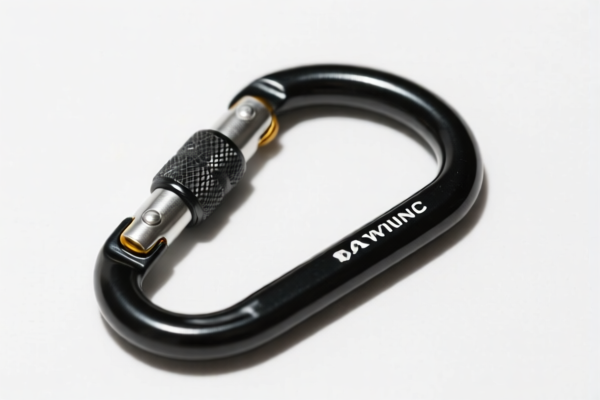
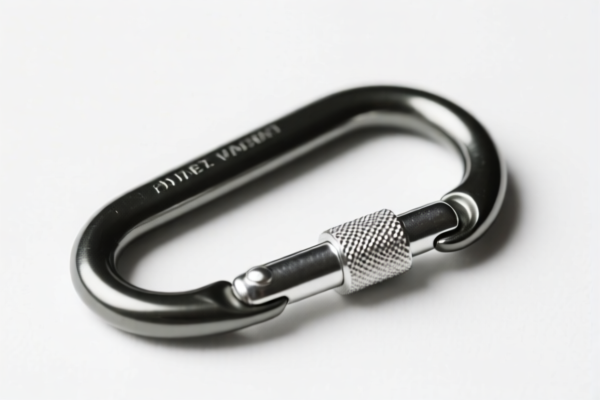
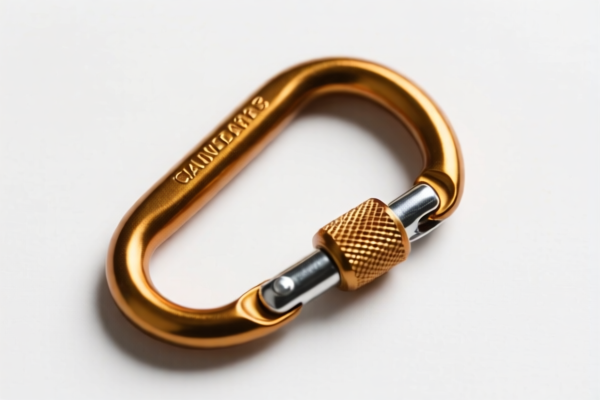
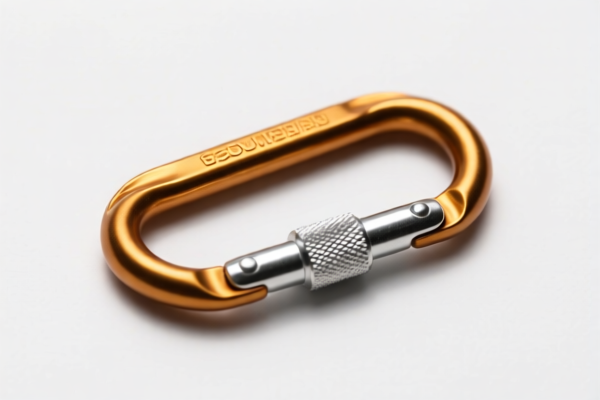
AI Analysis
🏔️ Carabiners (Climbing Clips & Hardware)
🌐 HS Code Reference & Customs Clearance Guide | 2024 Latest Tariff Analysis | Professional Clearance Strategy
📌 1. Product Definition & Classification: Do You Really Know What a "Carabiner" Is?
In international trade, Carabiners are generally classified as small metal fittings used for climbing, rigging, or industrial fastening. Their classification depends heavily on the material (Steel, Aluminum, Stainless Steel) and the specific function/category (Fastener, Hook, General Iron/Steel Article).
⚠️ Key Distinction for Classification:
- Steel/Aluminum Structural Parts: If classified under Chapter 73 (Articles of Iron or Steel), they often fall under "Other Articles of Iron or Steel."
- Small Fittings/Hooks: If classified under Chapter 83 (Implements, Tools...), they may fall under "Hooks, Eyes, and Similar Articles."
- Material Specificity: Stainless steel is often treated under the broader "Iron/Steel" categories in specific subheadings rather than "Base Metal" general articles.
📦 2. HS Code Classification Matrix (Based on Provided Data)
| HS Code | Product Description | Material / Category | Key Characteristics |
|---|---|---|---|
7326.90.86.88 |
Other Articles of Iron or Steel | Iron or Steel | Standard steel carabiners not specified elsewhere. |
8308.10.00.00 |
Hooks, Eyes, and Similar Articles | Base Metal (Non-Ferrous/General) | Classified as small hardware/fittings rather than structural steel. |
7326.19.00.80 |
Other Articles of Iron or Steel | Steel or Aluminum Alloy | Specific subheading for other iron/steel articles including aluminum alloy variants. |
7326.19.00.80 |
Stainless Steel Carabiners | Stainless Steel | Stainless steel variants fall under this "Other Iron/Steel" category. |
7326.90.86.88 |
Stainless Steel Carabiners | Stainless Steel | Also classified under "Other Iron/Steel Articles" depending on specific duty rules. |
🔍 Critical Note:
- The dataset shows significant overlap between HS codes for different materials (e.g., Stainless Steel appears under both7326.19.00.80and7326.90.86.88).
- The primary differentiator is not just material, but the specific tariff line interpretation by customs authorities, which heavily impacts the total tax rate.
💰 3. Detailed Tariff Rate Breakdown (High-Risk Analysis)
✅ Applicable Jurisdiction: United States (US)
✅ Origin: China (CN)
✅ Critical Factor: Section 301 Tariffs, Section 232 Tariffs, and IEEPA Additional Duties
🎯 1. HS Code 7326.90.86.88 & 7326.19.00.80
(Articles of Iron or Steel / Stainless Steel)
| Item | Detail |
|---|---|
| Base Duty Rate | 2.9% (Ad Valorem) |
| Section 301 Tariff (Add-on) | +25.0% |
| Section 232 Tariff (Steel/Aluminum/Copper) | +50.0% |
| IEEPA Additional Tariff (122) | +10.0% |
| TOTAL EFFECTIVE RATE | 87.9% |
| Calculation Base | CIF Value × 87.9% |
| Legal Path | Section 301 + Section 232 + IEEPA 122 |
📌 Explanation:
- This is the most common classification for steel/aluminum carabiners.
- The 50% Section 232 tariff applies because the product is made of steel (or aluminum).
- Combined with the 25% Section 301 tariff and 10% IEEPA tariff, the total burden is extremely high (87.9%).
- Stainless Steel carabiners are not exempt from the 232 steel tariff in this specific classification context.
🎯 2. HS Code 8308.10.00.00
(Hooks, Eyes, and Similar Articles of Base Metal)
| Item | Detail |
|---|---|
| Specific Duty | 1.1¢/kg (Specific Duty per Kilogram) |
| Base Ad Valorem Rate | 2.9% |
| Section 301 Tariff (Add-on) | +25.0% |
| IEEPA Additional Tariff (122) | +10.0% |
| Note on Section 232 | NOT APPLICABLE (Not classified as "Articles of Steel" under 232) |
| TOTAL EFFECTIVE RATE | ~37.9% + Specific Duty |
| Legal Path | Section 301 + IEEPA 122 |
📌 Explanation:
- This classification is significantly cheaper if the product is deemed a "small fitting" (Hook/Eye) rather than a "steel article."
- The 50% Section 232 tariff is AVOIDED, saving ~50% in duties.
- However, you must pay 1.1¢/kg in specific duties, which may be negligible for high-value, low-weight carabiners.
- Total Tax: Base 2.9% + 25% (301) + 10% (IEEPA) = 37.9% + 1.1¢/kg.
🛠️ 4. Practical Customs Clearance Advice (Avoiding Pitfalls)
✅ 1. Documentation Checklist (Mandatory)
| Document | Requirement | Purpose |
|---|---|---|
| ✅ Product Specification Sheet | ✔️ | Detail material (Stainless vs. Carbon Steel vs. Aluminum), finish, and strength rating. |
| ✅ Material Declaration | ✔️ | Explicitly state "Made of Stainless Steel" or "Aluminum Alloy" to challenge misclassification. |
| ✅ HS Code Pre-Ruling Request | ✔️ | CRITICAL: Apply for an Advance Ruling to determine if 8308.10.00.00 (37.9%) or 7326.90.86.88 (87.9%) applies. |
| ✅ Commercial Invoice | ✔️ | Clearly describe as "Carabiner, Stainless Steel, Climbing Gear" – avoid vague terms like "Metal Hook." |
| ✅ Certificate of Origin | ✔️ | Required for Section 301/IEEPA applicability. |
✅ 2. Classification Strategy (The "Save 50%" Play)
🔥 "Classify as Fitting, Not Steel Article!"
| Scenario | Recommended HS Code | Estimated Tax | Strategy |
|---|---|---|---|
| Standard Steel Carabiner | 8308.10.00.00 |
~37.9% | Argue it is a "Hook/Eye" fitting, not a structural "Article of Steel." |
| Heavy-Duty Industrial Anchor | 7326.90.86.88 |
87.9% | If it's a large structural component, it may still be 7326. |
| Small Aluminum Clip | 8308.10.00.00 |
~37.9% | Aluminum is also subject to 232, but "Base Metal" classification might bypass it if not explicitly "Steel." |
| Stainless Steel Carabiner | 8308.10.00.00 |
~37.9% | Strongest Case: Stainless steel fittings are often classified as base metal articles, avoiding the 50% steel tariff. |
⚠️ Warning:
- The US Customs and Border Protection (CBP) may still apply Section 232 (50%) to8308.10.00.00if they deem the product a "steel article."
- Proactive Ruling is Essential. Without it, CBP may default to the higher7326classification.
✅ 3. Common Errors & Pitfalls
❌ Error 1: Declaring as "Metal Hook" without specifying material.
👉 Result: CBP may assign a higher tariff code or reject the shipment for lack of detail.
❌ Error 2: Assuming Stainless Steel is exempt from Section 232.
👉 Result: In classification 7326.90.86.88, it is NOT exempt (Total Tax 87.9%). Only shifting to 8308.10.00.00 offers a potential (but risky) path to avoid the 50% tariff.
❌ Error 3: Ignoring the IEEPA 10% Tariff.
👉 Result: Even with a "better" HS code, the 10% IEEPA tariff still applies, making the product uncompetitive in the US market.
🌍 5. Global Market Comparison (2024/2025)
| Region | Recommended HS Code | Est. Duty (China Origin) | Key Considerations |
|---|---|---|---|
| 🇺🇸 USA | 8308.10.00.00 |
~37.9% + 1.1¢/kg | Best Case. Avoids 50% steel tariff if classified as fitting. |
| 🇺🇸 USA | 7326.90.86.88 |
87.9% | Worst Case. Applies if classified as steel article. |
| 🇪🇺 EU | 7326.90 |
Various (0-5%) | No Section 301/232. Standard EU NTR rates apply. |
| 🇨🇳 China | 7326.90 |
5-8% | Import duty is low; focus on domestic distribution. |
| 🇬🇧 UK | 7326.90 |
Various | Post-Brexit rules apply; check UK Global Tariff. |
📌 Conclusion:
- The US market is the most challenging due to layered tariffs (Section 301 + 232 + IEEPA).
- Classification Strategy is your primary tool for cost control.
- Stainless Steel carabiners have a stronger argument for the lower-tariff8308.10.00.00classification than carbon steel.
📌 6. Actionable Recommendations
- Apply for a Binding Ruling: Submit a request to US CBP to classify your specific carabiner model under
8308.10.00.00to avoid the 50% Section 232 tariff. - Optimize Packaging: Ensure the commercial invoice clearly states "Stainless Steel Carabiner" and highlights its function as a "hook/clip" rather than a structural steel component.
- Cost Calculation:
- If classified under
7326: Price must increase by 87.9% to maintain margin. - If classified under
8308: Price must increase by ~38% + specific duty. - Alternative Markets: Consider exporting to the EU or Southeast Asia where Section 301/232 tariffs do not apply, significantly reducing costs.
🎯 7. Final Verdict: Professional Clearance Starts with Precision
🎯 Remember the Formula:
Carabiner Tax = Base Duty + Section 301 (25%) + IEEPA (10%) + [Section 232 (50% if Steel)]
- Best Outcome:
8308.10.00.00→ ~37.9% + 1.1¢/kg - Worst Outcome:
7326.90.86.88→ 87.9%
📣 Immediate Action:
- Do not ship without a confirmed HS code ruling for the US market.
- Consult a customs broker to argue for the8308.10.00.00classification.
- Profit Protection: A 50% duty difference can make or break your US market entry.
✨ Professional Customs Clearance: From Precision to Profitability!
💼 Your Margin Depends on Your HS Code!
Customer Reviews
About HS Code Classification
The Harmonized System (HS) is an internationally standardized nomenclature developed by the World Customs Organization (WCO) to classify traded products. Over 200 countries use the HS system as the basis for customs tariffs, trade statistics, and import/export regulations.
Each HS code follows a hierarchical structure:
- Chapter (2 digits) — Broad category of goods (e.g., Chapter 84: Machinery and Mechanical Appliances)
- Heading (4 digits) — More specific grouping within the chapter
- Subheading (6 digits) — Internationally standardized breakdown, used by all WCO member countries
- National subdivisions (8-10 digits) — Country-specific extensions for further classification, such as US HTSUS 10-digit codes
Correct HS code classification is essential for smooth customs clearance, accurate duty payment, and compliance with trade regulations. Misclassification can lead to customs delays, overpayment of duties, or penalties.
When importing from CN to US, the applicable tariff rates may include:
- Most-Favored-Nation (MFN) rate — The standard duty rate applied to WTO members
- General rate — Applied to countries without trade agreements
- Trade remedy duties — Additional tariffs such as Section 301 (anti-dumping), Section 232 (national security), or countervailing duties
The information provided on this page is for reference purposes only. For official classification, please consult with your local customs authority or a licensed customs broker.