皮草手套
CN → US| HS Code | Tariff Rate | Origin | Destination | Doc |
|---|---|---|---|---|
| 6217109520 | 32.1% | CN | US | Official Doc |
| 4203293010 | 49.0% | CN | US | Official Doc |
| 4303100030 | 39.0% | CN | US | Official Doc |
| 4303100060 | 39.0% | CN | US | Official Doc |
| 4203290800 | 49.0% | CN | US | Official Doc |
Product Images
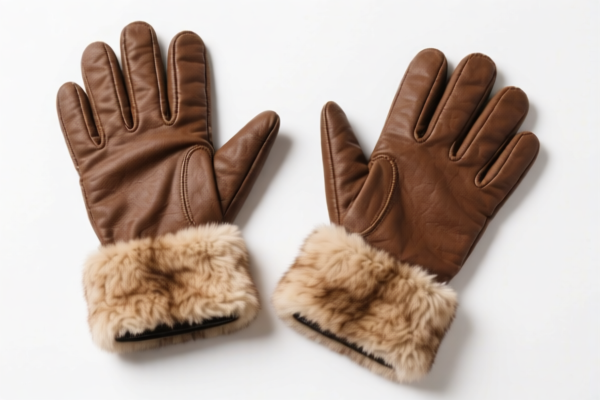
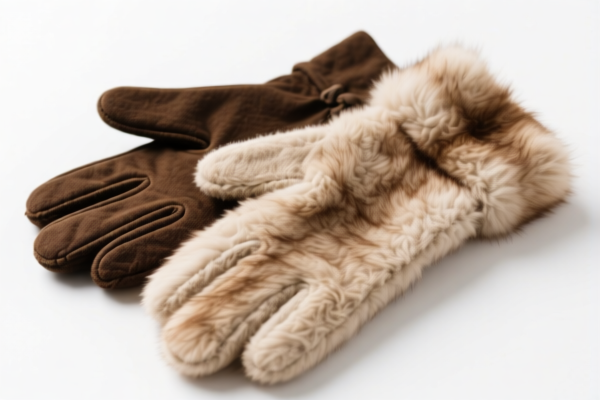
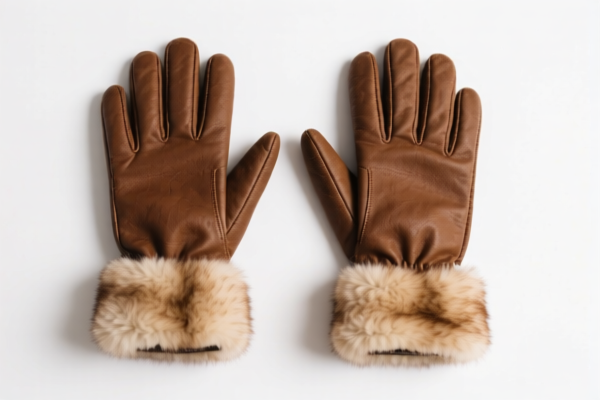
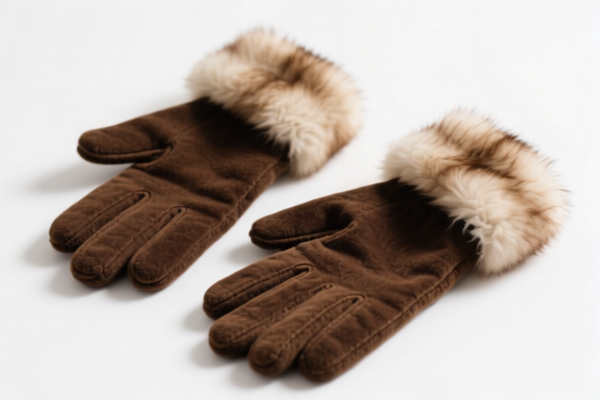
AI Analysis
🧤 Faux/Fur Gloves (Pi Cao Shou Tao)
🌐 HS Code Reference & Clearance Guide | 2026 Latest Tariff Analysis | Professional Customs Strategy
📌 I. Product Definition & Classification: What Exactly Are "Fur Gloves"?
"Fur Gloves" (皮草手套) are a broad category in international trade, often causing classification confusion because the term covers multiple material types. In customs classification, the material composition is the primary determinant for HS Code selection, not just the end-use.
Two Main Categories: 1. Real Fur Gloves (皮毛制): Made from animal skin with fur attached. Classified under Chapter 43. 2. Leather/Synthetic Leather Gloves (皮制/合成皮制): Made from processed leather (cow, horse, sheep, etc.) or synthetic materials. Classified under Chapter 42. 3. Other Accessories (成衣辅料): Sometimes classified if considered minor components of garments, though less common for standalone gloves.
⚠️ Critical Distinction:
- If the item is raw fur or tanned fur with hair on → It is Chapter 43 (Real Fur).
- If the item is processed leather (hair removed/tanned) → It is Chapter 42 (Leather Articles).
- Misclassification can lead to a tax difference of up to 10% (e.g., 39% vs 49%).
📦 II. HS Code Classification Matrix (2026 Authoritative Reference)
| HS Code | Product Description | Material Definition | Total Tax Rate |
|---|---|---|---|
4303.10.00.30 |
Real Fur Gloves | Animal skin with fur attached (excluding mink). Specifically: Other fur garments/accessories. | 39.0% |
4303.10.00.60 |
Real Fur Gloves | Other fur articles and accessories (excluding mink). Form: Gloves. | 39.0% |
6217.10.95.20 |
Garment Accessories / Other Made-Up Articles | Fine animal hair products. Classified as accessories/components rather than finished leather/fur goods. | 32.1% |
4203.29.30.10 |
Leather/Synthetic Leather Gloves | Material falls under leather/synthetic leather category. Use: Gloves. | 49.0% |
4203.29.08.00 |
Leather Gloves | Made from Horsehide or Cowhide. Specific material subset. | 49.0% |
🔍 Key Insight:
- Chapter 43 (4303.xx) is for Real Fur (hair-on skin).
- Chapter 42 (4203.xx) is for Processed Leather (hair-off/tanned).
- Chapter 62 (6217.xx) is for Other Made-Up Garment Accessories (e.g., fine animal hair not classified as fur/leather).
- Tax Gap: Real Fur (39%) is 10% cheaper than Leather Gloves (49%) in this specific dataset context.
💰 III. 2026 Detailed Tariff Structure (US Market Focus)
✅ Applicable Country: United States (US)
✅ Origin: China (CN)
✅ Impact: Section 301 & IEEPA Tariffs
🎯 1. 4303.10.00.30 & 4303.10.00.60 – Real Fur Gloves (Excluding Mink)
| Item | Content |
|---|---|
| Base Tariff | 4.0% (Ad Valorem) |
| Section 301 Add-on | +25.0% |
| IEEPA 122 Clause | +10.0% |
| Total Tax Rate | 39.0% |
| Calculation | CIF Value × 39% |
| De Minimis Exemption | ❌ No (Section 301/IEEPA goods are excluded) |
| Legal Basis | HTSUS:4303.10.00 → Section 301 Footnote → IEEPA:122 |
📌 Explanation:
- Base Rate 4.0%: Low base tariff for fur articles.
- Section 301 (+25%): Standard retaliatory tariff on Chinese manufactured goods.
- IEEPA 122 Clause (+10%): Additional surcharge for specific Chinese-origin goods.
- Total 39%: This is the most cost-effective option for real fur gloves.
🎯 2. 6217.10.95.20 – Fine Animal Hair / Garment Accessories
| Item | Content |
|---|---|
| Base Tariff | 14.6% |
| Section 301 Add-on | +7.5% |
| IEEPA 122 Clause | +10.0% |
| Total Tax Rate | 32.1% |
| Calculation | CIF Value × 32.1% |
| De Minimis Exemption | ❌ No |
| Legal Basis | HTSUS:6217.10.95.20 → Section 301 → IEEPA:122 |
📌 Explanation:
- Base Rate 14.6%: Higher base for "other made-up garment articles."
- Section 301 (+7.5%): Lower than the standard 25% for this specific subheading.
- Total 32.1%: This is the lowest tax rate in the list.
- ⚠️ Warning: Only applies if the gloves are classified as accessories/components or made of fine animal hair (not standard fur/leather). Misclassification here is risky.
🎯 3. 4203.29.30.10 & 4203.29.08.00 – Leather & Synthetic Leather Gloves
| Item | Content |
|---|---|
| Base Tariff | 14.0% |
| Section 301 Add-on | +25.0% |
| IEEPA 122 Clause | +10.0% |
| Total Tax Rate | 49.0% |
| Calculation | CIF Value × 49% |
| De Minimis Exemption | ❌ No |
| Legal Basis | HTSUS:4203.29.xx → Section 301 → IEEPA:122 |
📌 Explanation:
- Base Rate 14.0%: Standard for leather articles.
- Section 301 (+25%): Full retaliatory tariff applied.
- IEEPA 122 Clause (+10%): Additional surcharge.
- Total 49.0%: This is the highest tax rate. Applies to leather (cow, horse, sheep) and synthetic leather gloves.
🛠️ IV. Customs Clearance Practical Advice
✅ 1. Preparation Checklist (Mandatory)
| Document | Required | Note |
|---|---|---|
| ✅ Product Specification Sheet | ✔️ | Must clearly state: Material Composition (e.g., "100% Rabbit Fur," "Cowhide Leather," "Synthetic Suede"). |
| ✅ Material Test Report | ✔️ | Crucial! Third-party lab report confirming if the material is Real Fur (Chapter 43) or Processed Leather (Chapter 42). |
| ✅ Product Photos | ✔️ | Show fur direction, stitching, lining, and brand labels. |
| ✅ Commercial Invoice | ✔️ | Describe as "Fur Gloves" or "Leather Gloves" accurately. Do not use vague terms like "Fashion Accessories." |
| ✅ Packing List | ✔️ | Ensure weight and quantity match invoice. |
| ✅ CITES Certificate | ⚠️ | If made from endangered species (e.g., certain minks, exotic animals), CITES is mandatory. |
📌 Key Tip:
- Fur vs. Leather: Customs officers will physically inspect. If you declare "Leather" but it’s "Fur," you face penalties + back taxes.
- Fine Hair vs. Fur: If using6217.10.95.20, ensure the material is not standard fur/leather to avoid rejection.
✅ 2. Classification Strategy (Cost Optimization)
| Scenario | Recommended HS Code | Tax Rate | Strategy |
|---|---|---|---|
| Real Fur Gloves (Rabbit, Sheep, Fox, etc.) | 4303.10.00.30 or 4303.10.00.60 |
39.0% | Best for Fur. Lower than leather. |
| Leather Gloves (Cow, Horse, Sheep) | 4203.29.30.10 or 4203.29.08.00 |
49.0% | Unavoidable. High tax on leather. |
| Fine Animal Hair / Other Accessories | 6217.10.95.20 |
32.1% | Lowest Tax. Only if material qualifies as "fine hair" or "accessory." |
| Synthetic/Faux Fur | 6217.10.95.20 |
32.1% | Best for Faux. Declare as "Synthetic" or "Man-made fibers" under Chapter 61/62. |
📌 Golden Rule:
- Real Fur → Chapter 43 (39%)
- Leather → Chapter 42 (49%)
- Faux/Synthetic → Chapter 61/62 (32.1% if classified as6217.10.95.20)
✅ 3. Common Pitfalls & Avoidance
❌ Pitfall 1: Declaring "Leather Gloves" when material is Real Fur.
👉 Consequence: HS Code error, 10% tax increase (39% → 49%), potential fraud penalty.
❌ Pitfall 2: Declaring "Faux Fur" as "Real Fur" to avoid CITES?
👉 Consequence: None. Faux fur is not real fur. Use Chapter 61/62.
❌ Pitfall 3: Using 6217.10.95.20 for standard leather gloves.
👉 Consequence: Customs will reject the classification. Leather must go to Chapter 42.
❌ Pitfall 4: Ignoring CITES for exotic fur.
👉 Consequence: Seizure & Fine. Certain minks and foxes may require permits.
✅ Correct Declaration Example:
"Men's Rabbit Fur Gloves, 100% Real Fur, Lined with Silk, Model XYZ"
→ Use4303.10.00.30"Women's Cowhide Leather Gloves, Black, Model ABC"
→ Use4203.29.08.00"Faux Fur Gloves, 100% Polyester, Model DEF"
→ Use6217.10.95.20(or appropriate synthetic code)
🌍 V. Global Market Comparison (2026)
| Country/Region | Recommended HS Code | Tariff (China Origin) | Key Requirement |
|---|---|---|---|
| 🇺🇸 USA | 4303.10.00.30 / 4203.29.08.00 |
39% (Fur) / 49% (Leather) | Section 301 + IEEPA 122 |
| 🇨🇳 China | 4303.10.00.30 / 4203.29.08.00 |
4% (Fur) / 14% (Leather) | No Section 301 |
| 🇪🇺 EU | 4303.10.00 / 4203.29.00 |
~4-10% (Fur) / ~4-10% (Leather) | CITES for exotic fur |
| 🇯🇵 Japan | 4303.10.00 / 4203.29.00 |
~4-10% | No major add-ons |
📌 Conclusion:
- USA imposes the highest taxes due to Section 301 and IEEPA.
- Fur Gloves (39%) are cheaper than Leather Gloves (49%) in the US.
- Faux Fur (if classified correctly under Chapter 62) can achieve the lowest rate (32.1%).
📌 VI. Final Recommendations for Importers
- Material Test is Mandatory: Before shipping, get a lab report confirming if the glove is Real Fur (Chapter 43) or Leather (Chapter 42).
- Optimize for Faux/Synthetic: If possible, switch to faux fur or synthetic leather and classify under
6217.10.95.20to save 7-17% in taxes. - Avoid Misclassification: Do not label leather as "fur" or vice versa. Customs audits are frequent.
- CITES Compliance: If using real fur, verify species. Exotic animals require CITES permits.
- Pre-Ruling: For large shipments, apply for an Advance Ruling from US Customs to confirm the HS Code and tax rate.
🎯 VII. Conclusion: Precision Classification Saves Money
🎯 Remember:
🔹 Fur (Chapter 43) = 39%
🔹 Leather (Chapter 42) = 49%
🔹 Faux/Accessory (Chapter 62) = 32.1%
📌 Pro Tip:
If you can legally classify your gloves as faux fur or synthetic accessories, you save 10-17% in taxes.
Real fur is expensive in the US due to tariffs.
Leather is even more expensive.
📣 Action Item:
✅ Step 1: Test material.
✅ Step 2: Choose HS Code based on material.
✅ Step 3: Prepare CITES if real fur.
✅ Step 4: Declare accurately.
✨ Smart Customs Clearance Starts with Accurate Classification!
💼 Save Taxes, Avoid Penalties, Ensure Smooth Clearance!
Customer Reviews
About HS Code Classification
The Harmonized System (HS) is an internationally standardized nomenclature developed by the World Customs Organization (WCO) to classify traded products. Over 200 countries use the HS system as the basis for customs tariffs, trade statistics, and import/export regulations.
Each HS code follows a hierarchical structure:
- Chapter (2 digits) — Broad category of goods (e.g., Chapter 84: Machinery and Mechanical Appliances)
- Heading (4 digits) — More specific grouping within the chapter
- Subheading (6 digits) — Internationally standardized breakdown, used by all WCO member countries
- National subdivisions (8-10 digits) — Country-specific extensions for further classification, such as US HTSUS 10-digit codes
Correct HS code classification is essential for smooth customs clearance, accurate duty payment, and compliance with trade regulations. Misclassification can lead to customs delays, overpayment of duties, or penalties.
When importing from CN to US, the applicable tariff rates may include:
- Most-Favored-Nation (MFN) rate — The standard duty rate applied to WTO members
- General rate — Applied to countries without trade agreements
- Trade remedy duties — Additional tariffs such as Section 301 (anti-dumping), Section 232 (national security), or countervailing duties
The information provided on this page is for reference purposes only. For official classification, please consult with your local customs authority or a licensed customs broker.