真皮手表带
CN → US| HS Code | Tariff Rate | Origin | Destination | Doc |
|---|---|---|---|---|
| 9113908000 | 19.3% | CN | US | Official Doc |
| 4205004000 | 36.8% | CN | US | Official Doc |
| 4205008000 | 35.0% | CN | US | Official Doc |
| 4203406000 | 35.0% | CN | US | Official Doc |
| 4203300000 | 37.7% | CN | US | Official Doc |
Product Images
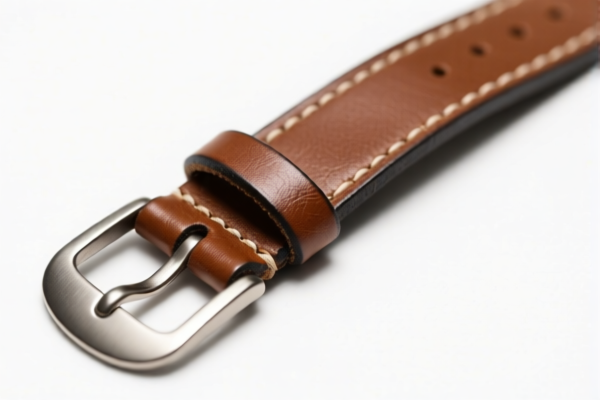
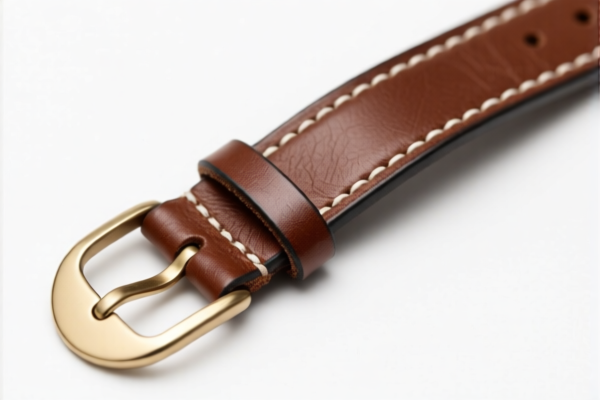
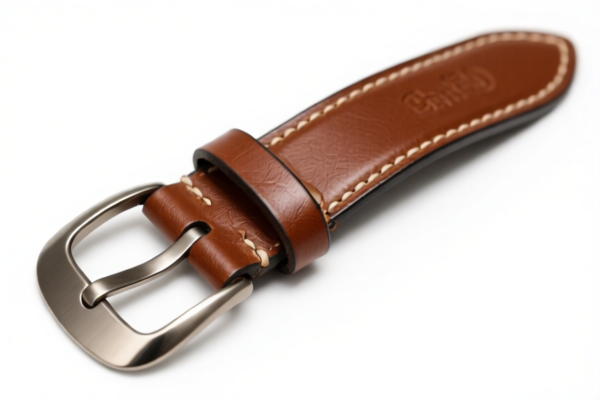

AI Analysis
⌚ Leather Watch Straps (Genuine Leather)
🌐 HS Code Reference & Customs Clearance Guide | 2026 Latest Tariff Analysis | Professional Compliance Strategy
📌 I. Product Definition: What Exactly is a "Leather Watch Strap"?
A leather watch strap, specifically made of genuine leather, is a functional accessory for timepieces. In international trade classification, it is often a subject of debate between "Parts of Watches" (Chapter 91) and "Articles of Leather" (Chapter 42).
The classification depends heavily on the legal definition of the item and the tariff structure of the importing country (specifically the US, given the "Section 301" and "Section 122" references in the data).
⚠️ Key Distinction:
- If classified as a "Part of a Watch" (Heading 91.13) → Lower Base Duty, but subject to specific trade remedies.
- If classified as an "Article of Leather" (Headings 42.03 or 42.05) → Higher Base/Additional Duties due to broader leather goods categorization.
📦 II. HS Code Classification Details (Based on Provided Data)
The following table outlines the possible HS Codes for Genuine Leather Watch Straps based on the provided dataset. Please note that these codes reflect specific interpretations used in the source data, which highlight significant tariff disparities.
| HS Code | Product Description (Summary) | Category Logic | Total Tax Rate |
|---|---|---|---|
9113.90.80.00 |
Parts of Watches: Leather straps, classified under "Other parts/accessories." | Fits the logic of "Watch Parts & Accessories" specifically for timepieces. | 19.3% |
4205.00.40.00 |
Articles of Leather: Belt-type leather strips (straps). | Classified under "Belts & Belting," treating the watch strap as a small belt strip. | 36.8% |
4205.00.80.00 |
Articles of Leather: Other leather articles. | General category for leather goods not specifically named elsewhere. | 35.0% |
4203.40.60.00 |
Articles of Clothing/Accessories: Leather garment accessories (straps). | Classified under "Other leather clothing accessories." | 35.0% |
4203.30.00.00 |
Articles of Clothing/Accessories: Leather accessories for apparel (watch straps). | Treated as a generic leather accessory item. | 37.7% |
🔍 Critical Observation:
- The lowest tax rate (19.3%) is achieved by classifying the item as a "Part of a Watch" (9113.90.80.00).
- Classifying it as "Leather Goods" (42xx series) results in significantly higher duties, ranging from 35.0% to 37.7%.
- The difference in tax burden is over 18 percentage points, making correct classification critical for cost control.
💰 III. Detailed Tariff Breakdown (2026 Analysis)
✅ Applicable Market: United States (US)
✅ Origin: China (CN) (Implied by Section 301/122 references)
✅ Key Components:
1. Base Duty (MFN): Varies by HS Code (0%–1.8%).
2. Section 301 Tariff: 7.5%–25% (Trade war surcharge).
3. Section 122 Tariff: 10% (Specific import relief provision).
🎯 1. 9113.90.80.00 — Parts of Watches (Best Case Scenario)
| Item | Content |
|---|---|
| Base Duty | 1.8% |
| Section 301 Tariff | +7.5% |
| Section 122 Tariff | +10.0% |
| Total Effective Rate | 19.3% |
| Calculation | CIF Value × 19.3% |
| De Minimis Exemption | ❌ Not Applicable (Due to Section 301/122, de minimis usually does not apply to Chinese goods under these sections). |
📌 Explanation:
- This code benefits from the lowest base duty among the options.
- While still subject to trade remedy tariffs, the 7.5% Section 301 rate is significantly lower than the 25% applied to general leather goods.
- Strategic Advantage: Minimizes total landed cost.
🎯 2. 4205.00.40.00 — Leather Belt Strips (High Cost)
| Item | Content |
|---|---|
| Base Duty | 1.8% |
| Section 301 Tariff | +25.0% |
| Section 122 Tariff | +10.0% |
| Total Effective Rate | 36.8% |
| Calculation | CIF Value × 36.8% |
| De Minimis Exemption | ❌ Not Applicable |
📌 Explanation:
- Classified as a "belt," triggering the maximum 25% Section 301 surcharge.
- This is nearly double the cost of the9113classification.
🎯 3. 4205.00.80.00 & 4203.40.60.00 — Other Leather Articles
| Item | Content |
|---|---|
| Base Duty | 0.0% |
| Section 301 Tariff | +25.0% |
| Section 122 Tariff | +10.0% |
| Total Effective Rate | 35.0% |
| Calculation | CIF Value × 35.0% |
📌 Explanation:
- Although the base duty is 0%, the 25% Section 301 tariff still applies, making this category more expensive than9113.
🎯 4. 4203.30.00.00 — Leather Accessories
| Item | Content |
|---|---|
| Base Duty | 2.7% |
| Section 301 Tariff | +25.0% |
| Section 122 Tariff | +10.0% |
| Total Effective Rate | 37.7% |
| Calculation | CIF Value × 37.7% |
📌 Explanation:
- Highest base duty (2.7%) combined with the 25% Section 301 tariff results in the highest total tax rate (37.7%). Avoid this classification if possible.
🛠️ IV. Customs Clearance Practical Advice (Avoid Pitfalls)
✅ 1. Documentation Checklist (Mandatory)
| Document | Required | Notes |
|---|---|---|
| ✅ Product Specification Sheet | ✔️ | Must explicitly state: "Genuine Leather," "Watch Strap," "Not a Belt." |
| ✅ Physical Photos | ✔️ | Show the buckle, lugs, and size ratio to prove it is for a watch (not a belt). |
| ✅ Commercial Invoice | ✔️ | Description should include: "Genuine Leather Watch Strap, Not Apparel Accessory." |
| ✅ Material Certificate | ✔️ | Proof of "Genuine Leather" vs. "Synthetic" (important for Chapter 39/40 if misclassified). |
| ✅ Origin Certificate | ✔️ | If claiming US origin (unlikely for Chinese goods), but mandatory for CN origin declaration. |
✅ 2. Declaration Strategy (Key Tips)
🔥 Golden Rule: "Define by Function, Not Just Material!"
| Scenario | Recommended Declaration | Risk |
|---|---|---|
| Standard Watch Strap | 9113.90.80.00 "Parts of watches: Leather straps" |
✅ Low Risk, Low Tax (19.3%) |
| Wide Strap (Belt-like) | 4205.00.40.00 "Leather belt strip" |
⚠️ High Tax (36.8%) |
| Generic Leather Strap | 4203.30.00.00 "Leather accessory" |
❌ Highest Tax (37.7%) |
💡 Tip:
- Emphasize that the item is specifically designed for timepieces (mention lugs, pin, width in mm compatible with watches).
- Avoid vague terms like "Leather Strap" alone; always add "for Watches" or "Watch Part."
✅ 3. Special Case Handling
| Case | Handling Advice |
|---|---|
| OEM Custom Straps | Provide the watch model compatibility list. If it fits a specific watch brand, use 9113.90.80.00. |
| Straps Sold Separately | Still qualify as 9113.90.80.00 as "accessories/parts" if intended for watches. |
| Mixed Materials | If the strap has a metal buckle, the whole item is still classified under leather (GRI 3(b) for composite goods) unless the metal defines the character (unlikely for a strap). |
| De Minimis (Section 321) | ❌ Do Not Rely on De Minimis. Under Section 301 and 122, goods from China often lose de minimis exemption. Declare formally. |
🌍 V. Global Market Comparison (2026)
| Market | Preferred HS Code | Est. Duty (CN Origin) | Notes |
|---|---|---|---|
| 🇺🇸 USA | 9113.90.80.00 |
19.3% | Best option. Avoid 42xx codes due to 25% S301. |
| 🇨🇳 China | 9113.90.80.00 |
5–10% | Standard import duty for watch parts. |
| 🇪🇺 EU | 9113.90.80.00 |
0–4% | EU typically classifies watch parts under Ch 91. No Section 301 equivalent. |
| 🇬🇧 UK | 9113.90.00.00 |
0–4% | Post-Brexit, similar to EU. |
📌 Conclusion:
- USA is the most complex market due to the punitive Section 301/122 tariffs.
- Correct Classification (9113) is the single biggest cost-saving factor.
- Misclassifying a watch strap as a "leather belt" or "apparel accessory" can increase costs by ~18%.
📌 VI. Common Errors & Pitfalls (Lessons Learned)
❌ Error 1: Calling it a "Leather Belt" for simplicity.
👉 Consequence: Tax jumps from 19.3% to 36.8%.
❌ Error 2: Using 4203.30.00.00 (General Leather Accessory).
👉 Consequence: Highest tax rate 37.7% due to 2.7% base + 25% S301.
❌ Error 3: Ignoring "Section 122" in the invoice description.
👉 Consequence: Customs may flag the shipment for missing tariff code specificity, leading to delays.
❌ Error 4: Assuming De Minimis applies.
👉 Consequence: Packages under $800 may be seized or taxed at full rates because Section 301 goods from China are often excluded.
✅ Correct Practice:
"Genuine Leather Watch Strap, 22mm, Stainless Steel Buckle, Model: XYZ, Intended for: Automatic Watches."
🎯 VII. Conclusion: Precision Saves Money!
🎯 Remember the Golden Rule:
🔹 "Watches go to Ch 91, Belts go to Ch 42. Wrong Chapter = 18% Cost Increase!"
🔹 "Use9113.90.80.00to save ~$19 per $100 of value compared to leather goods classification."
📌 Pro Tip:
If you are importing large volumes, consider applying for an Advance Ruling (Ruling Request) from US Customs and Border Protection (CBP) to lock in the
9113.90.80.00classification legally.
📣 Immediate Action:
📞 Consult your freight forwarder to ensure the commercial invoice explicitly states "Watch Part" and not just "Leather Strap."
🚀 Optimize your supply chain by choosing the correct HS Code to protect your profit margins in the US market.
✨ Professional Clearance Starts with Accurate Classification!
💼 Your Bottom Line Depends on Those Digits!
Customer Reviews
About HS Code Classification
The Harmonized System (HS) is an internationally standardized nomenclature developed by the World Customs Organization (WCO) to classify traded products. Over 200 countries use the HS system as the basis for customs tariffs, trade statistics, and import/export regulations.
Each HS code follows a hierarchical structure:
- Chapter (2 digits) — Broad category of goods (e.g., Chapter 84: Machinery and Mechanical Appliances)
- Heading (4 digits) — More specific grouping within the chapter
- Subheading (6 digits) — Internationally standardized breakdown, used by all WCO member countries
- National subdivisions (8-10 digits) — Country-specific extensions for further classification, such as US HTSUS 10-digit codes
Correct HS code classification is essential for smooth customs clearance, accurate duty payment, and compliance with trade regulations. Misclassification can lead to customs delays, overpayment of duties, or penalties.
When importing from CN to US, the applicable tariff rates may include:
- Most-Favored-Nation (MFN) rate — The standard duty rate applied to WTO members
- General rate — Applied to countries without trade agreements
- Trade remedy duties — Additional tariffs such as Section 301 (anti-dumping), Section 232 (national security), or countervailing duties
The information provided on this page is for reference purposes only. For official classification, please consult with your local customs authority or a licensed customs broker.