砂型铸造粘合剂
CN → US| HS Code | Tariff Rate | Origin | Destination | Doc |
|---|---|---|---|---|
| 3824100000 | 41.0% | CN | US | Official Doc |
| 3824999397 | 40.0% | CN | US | Official Doc |
| 3825610000 | 35.0% | CN | US | Official Doc |
| 3825690000 | 35.0% | CN | US | Official Doc |
| 3903905000 | 41.5% | CN | US | Official Doc |
Product Images

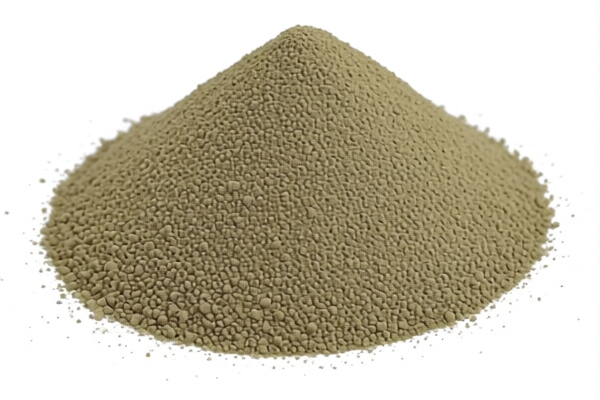
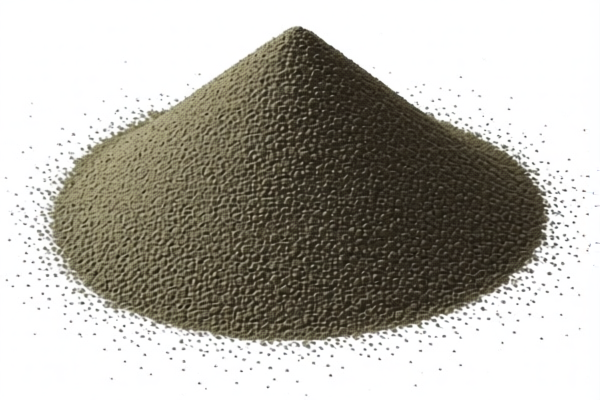
AI Analysis
🏗️ Sand Casting Binder (Sand Mould Adhesive)
🌐 HS Code Reference & Customs Clearance Guide | 2026 Tax Regime Analysis | Strategic Export Strategy
📌 Product Definition & Classification: Are You Sure About Your "Casting Binder"?
Sand Casting Binders are chemical agents used to bond sand grains together in foundry molds and cores. They determine the strength, thermal stability, and surface finish of the final cast product. In international trade, classification is highly sensitive and depends on the chemical composition, primary function, and the specific regulatory interpretation of the destination country (e.g., US Section 301, Section 122).
⚠️ Critical Classification Logic:
- Category A (Synthetic Resins/Adhesives): If the product is a specialized resin-based binder (e.g., phenolic, furan, urethane), it often falls under Heading 3824 or 3903.
- Category B (Chemical Residues/By-products): If classified as "waste," "residues," or "miscellaneous chemical products," it shifts to 3825.
- Category C (Polymeric Materials): If the primary component is a specific polymer (e.g., Styrene-based), it may fall under 3903.
📦 II. Detailed HS Code Breakdown (2026 Tax Regime)
Based on the provided data, here are the five potential classifications for Sand Casting Binders, ranging from specialized adhesives to chemical residues.
| HS Code | Product Description | Key Classification Logic | Tax Category |
|---|---|---|---|
| 3824.10.00.00 | Sand Mould Binder | Classified under "Prepared binders" for molds/cores; fits the definition of "Prepared adhesives." | 41.0% |
| 3824.99.93.97 | Sand Mould Binder | Classified as a "Chemical Preparation"; fits the "Prepared binder" category for molds/castings under residual subheadings. | 40.0% |
| 3825.61.00.00 | Sand Mould Binder | Classified as "Chemical additives/residues"; organic components align with "Chemical industrial waste/other residues." | 35.0% |
| 3825.69.00.00 | Sand Mould Binder | Classified as "Chemical residues"; organic or inorganic binder components treated as miscellaneous chemical by-products. | 35.0% |
| 3903.90.50.00 | Polymer Casting Binder | Classified under "Polymers"; specific material (Styrene polymer) fits the logic of "Primary application of polymers" for adhesives. | 41.5% |
🔍 Key Insight:
- 3824 series (40-41%) treats the product as a high-value chemical preparation or specialized adhesive. This is the most common classification for new, high-performance resins.
- 3825 series (35%) treats the product as residues or waste. This is a lower rate but risky; using this code for new, high-quality binders may trigger customs audits for misclassification.
- 3903 series (41.5%) applies if the product is explicitly a polymer resin (e.g., Styrene-based) used as a primary adhesive, rather than a mixture.
💰 III. 2026 Tariff Rate Breakdown (Detailed Tax Structure)
✅ Target Market: USA (US)
✅ Origin: China (CN)
✅ Applicable Regulations: Section 301 (Trade Act) + Section 122 (Bilateral)
🎯 1. Classification: 3824.10.00.00 (Prepared Adhesives)
The "Specialized Binder" Route
| Item | Detail |
|---|---|
| Base Tariff | 6.0% |
| Section 301 (Add-On) | +25.0% |
| Section 122 (Bilateral) | +10.0% |
| Total Tax Rate | 41.0% |
| Calculation | CIF Value × 41% |
| Legal Path | USITC:3824.10 → Section 301 → Section 122 |
📌 Explanation:
This code is for prepared adhesives specifically for foundry molds. The high tariff (41%) is due to the combination of the base rate plus the "Section 301" (25%) and "Section 122" (10%) punitive measures. This is the standard classification for high-grade synthetic resin binders.
🎯 2. Classification: 3824.99.93.97 (Other Chemical Preparations)
The "Chemical Mixture" Route
| Item | Detail |
|---|---|
| Base Tariff | 5.0% |
| Section 301 (Add-On) | +25.0% |
| Section 122 (Bilateral) | +10.0% |
| Total Tax Rate | 40.0% |
| Calculation | CIF Value × 40% |
| Legal Path | USITC:3824.99 → Section 301 → Section 122 |
📌 Explanation:
Slightly lower than the previous code because the base tariff is 5% instead of 6%. However, the add-on taxes (35%) remain the same. This is a fallback for binders that don't fit the strict "adhesive" definition of 3824.10 but are still "prepared chemical preparations."
🎯 3. Classification: 3825.61.00.00 & 3825.69.00.00 (Residues/Waste)
The "Chemical Residue" Route (Lower Base, Same Add-ons)
| Item | Detail |
|---|---|
| Base Tariff | 0.0% |
| Section 301 (Add-On) | +25.0% |
| Section 122 (Bilateral) | +10.0% |
| Total Tax Rate | 35.0% |
| Calculation | CIF Value × 35% |
| Legal Path | USITC:3825.61/69 → Section 301 → Section 122 |
📌 Explanation:
This offers the lowest total tax (35%) because the base tariff is 0%. HOWEVER, this classification is RISKY for new products.
- Risk: If the product is a new, manufactured binder, customs may reject 3825 (which is for "waste" or "residues") and reclassify it to 3824 or 3903, leading to back taxes + penalties.
- Use Case: Only use if the product is a recovered residue or a by-product, not a standard commercial binder.
🎯 4. Classification: 3903.90.50.00 (Polymer Resins)
The "Pure Polymer" Route
| Item | Detail |
|---|---|
| Base Tariff | 6.5% |
| Section 301 (Add-On) | +25.0% |
| Section 122 (Bilateral) | +10.0% |
| Total Tax Rate | 41.5% |
| Calculation | CIF Value × 41.5% |
| Legal Path | USITC:3903.90 → Section 301 → Section 122 |
📌 Explanation:
This is the highest tariff (41.5%). It applies if the binder is primarily a polymer (e.g., Styrene-based) and is imported as a raw polymer material for casting, rather than a finished "adhesive mixture." It treats the item as a plastic raw material.
🛠️ IV. Customs Clearance Practical Advice (Strategy & Pitfalls)
✅ 1. Documentation Checklist (Non-Negotiable)
| Document | Requirement | Reason |
|---|---|---|
| Safety Data Sheet (SDS) | ✅ Mandatory | Must list chemical composition to prove it's a "Binder" vs. "Waste" (3825). |
| Technical Spec Sheet | ✅ Mandatory | Must specify: "Used for Sand Moulding/Cores" to justify 3824 classification. |
| Product Photos | ✅ Mandatory | Show packaging, label, and physical state (liquid/powder). |
| Bill of Lading | ✅ Mandatory | Consistency with HS Code description is critical. |
| Certificate of Origin | ✅ Mandatory | Required for Section 122 & 301 duty calculation. |
✅ 2. Strategic Declaration Tips (The "Do's and Don'ts")
🔥 Golden Rule: "Function over Form. Composition determines Code."
| Scenario | Recommended HS Code | Why? | Avoid |
|---|---|---|---|
| High-Performance Synthetic Resin (Phenolic, Furan) | 3824.10.00.00 |
Fits "Prepared Adhesive" definition perfectly. | Do not use 3825 (waste). |
| Standard Mixture with Binders & Additives | 3824.99.93.97 |
Broad "Chemical Preparation" category. | Do not use 3903 unless it's pure polymer. |
| Recovered/Used Casting Sand Residues | 3825.61.00.00 |
Only if the product is waste, not new binder. | Do not use for new products! |
| Pure Styrene Polymer Resin (Raw Material) | 3903.90.50.00 |
If it is a raw polymer, not a finished adhesive. | Do not use if already mixed with sand/binders. |
⚠️ Common Pitfall:
Trying to use 3825 (35%) for a new commercial binder. Customs will likely challenge this, claiming it's a "Prepared Adhesive" (3824) or "Polymer" (3903), and assess the higher duty + penalties.
✅ 3. Special Cases
| Situation | Handling Advice |
|---|---|
| OEM/Custom Blends | Provide the exact formulation. Customs needs to know if it's a "preparation" (3824) or a "residue" (3825). |
| Packaging in Bulk vs. Retail | Ensure the label says "Casting Binder," not "Industrial Waste" or "Recyclable Material" if it's new. |
| Section 122 Exemptions | Check if the product qualifies for any specific trade remedy exemptions (rare for chemicals). |
🌍 V. Global Market Comparison (2026 Outlook)
| Market | Recommended HS Code | Base Rate | Total (with 301/122) | Notes |
|---|---|---|---|---|
| 🇺🇸 USA | 3824.10.00.00 |
6.0% | 41.0% | High duty. Focus on accurate 3824 classification. |
| 🇪🇺 EU | 3824.10.00 |
~0-5% | ~5% | No Section 301/122. Lower duty. |
| 🇯🇵 Japan | 3824.10.00 |
~6.0% | 6.0% | Low duty, no punitive taxes. |
| 🇨🇦 Canada | 3824.10.00 |
~6.0% | 6.0% | No Section 301/122. |
📌 Conclusion:
USA is the most expensive market due to the layered taxes (301 + 122).
- Strategy: If possible, optimize the chemical composition to ensure it fits the lowest base rate (3824.99) or residue category (3825) only if legally defensible.
- Reality Check: For most new commercial binders, 40-41.5% is the expected duty. Factor this into your pricing.
📌 VI. Common Errors & "Don'ts" (Lessons Learned)
❌ Error 1: Calling it "Waste" to get 35% tax.
👉 Consequence: Customs audit → Reclassification to 3824 → Back taxes + 25% penalty.
✅ Fix: Be honest. If it's new, it's a "Prepared Adhesive."
❌ Error 2: Mixing "Polymer" (3903) with "Adhesive" (3824).
👉 Consequence: Wrong classification if the product is a finished mixture.
✅ Fix: If it's a finished binder mixture, use 3824. If it's raw polymer, use 3903.
❌ Error 3: Vague Description in Invoice.
👉 Consequence: "Chemical" is too vague. Customs may guess the wrong code.
✅ Fix: Use "Sand Mould Binder, Phenolic Resin, for Foundry Use."
🎯 VII. Final Verdict: Smart Export Strategy
🎯 Key Takeaway:
"Don't chase the 35% tax unless it's truly waste. For new binders, prepare for 40-41.5% under 3824 or 3903."
📌 Action Plan:
1. Analyze your SDS: Is it a "Preparation" (3824) or "Residue" (3825)?
2. Verify Composition: Is it primarily a polymer (3903)?
3. Check USITC Footnotes: Ensure you are compliant with the latest Section 301/122 rules.
4. Apply for Ruling: If unsure, apply for a Binding Ruling from US Customs (CBP) before shipping.
📣 Immediate Action:
📞 Contact your Customs Broker: Provide the full chemical formula and SDS.
🚀 Calculate Landed Cost: Include the 41% US Duty in your pricing model.
🌟 Success: Accurate classification = No delays, no fines, smooth clearance!
✨ Professional Export Starts with the Right Code!
💼 Your Product's Value Depends on Your Compliance!
Customer Reviews
About HS Code Classification
The Harmonized System (HS) is an internationally standardized nomenclature developed by the World Customs Organization (WCO) to classify traded products. Over 200 countries use the HS system as the basis for customs tariffs, trade statistics, and import/export regulations.
Each HS code follows a hierarchical structure:
- Chapter (2 digits) — Broad category of goods (e.g., Chapter 84: Machinery and Mechanical Appliances)
- Heading (4 digits) — More specific grouping within the chapter
- Subheading (6 digits) — Internationally standardized breakdown, used by all WCO member countries
- National subdivisions (8-10 digits) — Country-specific extensions for further classification, such as US HTSUS 10-digit codes
Correct HS code classification is essential for smooth customs clearance, accurate duty payment, and compliance with trade regulations. Misclassification can lead to customs delays, overpayment of duties, or penalties.
When importing from CN to US, the applicable tariff rates may include:
- Most-Favored-Nation (MFN) rate — The standard duty rate applied to WTO members
- General rate — Applied to countries without trade agreements
- Trade remedy duties — Additional tariffs such as Section 301 (anti-dumping), Section 232 (national security), or countervailing duties
The information provided on this page is for reference purposes only. For official classification, please consult with your local customs authority or a licensed customs broker.