硅胶橡胶
CN → US| HS Code | Tariff Rate | Origin | Destination | Doc |
|---|---|---|---|---|
| 3910000000 | 38.0% | CN | US | Official Doc |
| 4016996050 | 37.5% | CN | US | Official Doc |
| 4016100000 | 35.0% | CN | US | Official Doc |
| 4002990000 | 35.0% | CN | US | Official Doc |
| 4002910000 | 35.0% | CN | US | Official Doc |
Product Images
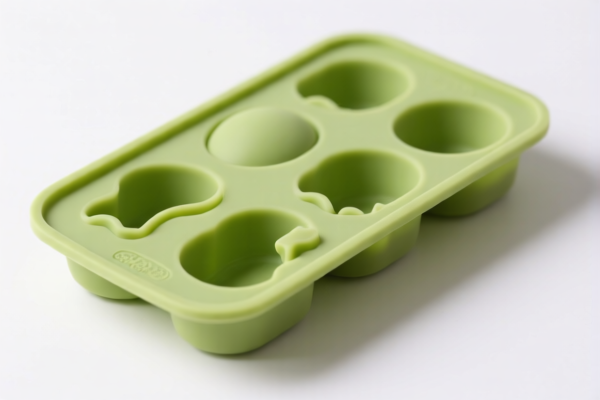
AI Analysis
🌟 Silicone Rubber – Comprehensive HS Code & Tariff Guide (2026 Update)
🌐 HS Code Classification & Customs Clearance Strategy | 2026 U.S. Tariff Deep Dive | Expert-Level Compliance
📌 One Product, Multiple Classifications – Why Silicon Rubber Triggers High Tariffs
Silicone rubber is a versatile synthetic elastomer widely used in electronics, medical devices, automotive, aerospace, and consumer goods. However, its classification under U.S. tariff schedules is highly sensitive due to overlapping categories and aggressive trade policies.
⚠️ Critical Insight:
- Silicone rubber can fall under 4 different HS Codes depending on form, processing stage, and intended use.
- All four codes carry a total tariff of 35%–38% due to 25% USITC + 10% IEEPA levies — no exceptions.
- Misclassification = 45%+ penalties, delays, or seizure.
📦 2026 HS Code Breakdown: Which One Fits Your Silicone Rubber?
| HS Code | Product Description | Form & Processing Stage | Key Trigger for Classification |
|---|---|---|---|
4016.99.60.50 |
Silicone rubber, not otherwise specified, in finished or semi-finished form (e.g., sheets, tubes, gaskets) | Vulcanized (cured) rubber products | Matches sulfur-cured rubber articles; used in seals, hoses, industrial parts |
4016.10.00.00 |
Silicone rubber, vulcanized, in any form | Vulcanized rubber (fully cured) | Applies to finished rubber goods like O-rings, seals, moldings |
4002.99.00.00 |
Synthetic rubber (including silicone), not otherwise specified | Synthetic rubber (non-vulcanized) | Covers raw or semi-processed synthetic rubber (e.g., pellets, sheets) |
4002.91.00.00 |
Synthetic rubber in primary forms (e.g., emulsions, latex, powders) | Raw or intermediate forms (e.g., liquid silicone rubber, LSR) | Applies to uncured, processable materials like LSR for injection molding |
3910.00.00.00 |
Silicone polymers in primary forms (e.g., resins, liquids, pastes) | Non-rubber primary forms (e.g., liquid silicone, RTV) | Used for adhesives, coatings, sealants, or raw polymer feedstock |
🔍 Key Distinction:
- Vulcanized (cured) rubber →4016.10.00.00or4016.99.60.50
- Raw/uncured synthetic rubber →4002.99.00.00or4002.91.00.00
- Liquid/silicone polymer (non-rubber) →3910.00.00.00
💰 2026 U.S. Tariff Structure: The 35%–38% Tax Bomb
✅ Applicable Country: China (CN)
✅ Effective Date: November 10, 2025 (inclusive)
✅ Legal Basis: IEEPA + USITC Section 301 + Footnote 9903.88.01
🎯 1. 4016.99.60.50 — Vulcanized Silicone Rubber (Finished Products)
| Item | Detail |
|---|---|
| Base Duty | 2.5% (ad valorem) |
| USITC Section 301 Duty | +25.0% |
| IEEPA Emergency Duty | +10.0% |
| Total Tariff | 37.5% |
| Tax Calculation | CIF × 37.5% |
| De Minimis Exemption? | ❌ No (denied under 19 CFR §151.42) |
| Legal Path | IEEPA:9903.01.25 → IEEPA:9903.01.24 → USITC:4016.99.60.50 → FOOTNOTE:9903.88.01 |
📌 Why This Matters:
- Even if your product is not rubber, if it’s vulcanized and used in rubber-like applications (e.g., gaskets, seals), this code applies.
- No "rubber" label needed — the function determines classification.
🎯 2. 4016.10.00.00 — Vulcanized Silicone Rubber (General)
| Item | Detail |
|---|---|
| Base Duty | 0.0% |
| USITC Section 301 Duty | +25.0% |
| IEEPA Emergency Duty | +10.0% |
| Total Tariff | 35.0% |
| Tax Calculation | CIF × 35.0% |
| De Minimis? | ❌ No |
| Legal Path | IEEPA:9903.01.24 → USITC:4016.10.00.00 → FOOTNOTE:9903.88.01 |
📌 Critical Note:
- This code applies to all vulcanized silicone rubber, regardless of shape or use.
- Even if it’s not "rubber" in name, if it’s cured and elastic, it falls here.
🎯 3. 4002.99.00.00 — Synthetic Rubber (General)
| Item | Detail |
|---|---|
| Base Duty | 0.0% |
| USITC Section 301 Duty | +25.0% |
| IEEPA Emergency Duty | +10.0% |
| Total Tariff | 35.0% |
| Tax Calculation | CIF × 35.0% |
| De Minimis? | ❌ No |
| Legal Path | IEEPA:9903.01.24 → USITC:4002.99.00.00 → FOOTNOTE:9903.88.01 |
📌 When to Use This:
- Uncured synthetic rubber (e.g., pellets, sheets, blocks)
- Not vulcanized but meets synthetic rubber definition
- Silicone rubber in bulk form before processing
🎯 4. 4002.91.00.00 — Synthetic Rubber in Primary Forms (Emulsions, Latex, Powders)
| Item | Detail |
|---|---|
| Base Duty | 0.0% |
| USITC Section 301 Duty | +25.0% |
| IEEPA Emergency Duty | +10.0% |
| Total Tariff | 35.0% |
| Tax Calculation | CIF × 35.0% |
| De Minimis? | ❌ No |
| Legal Path | IEEPA:9903.01.24 → USITC:4002.91.00.00 → FOOTNOTE:9903.88.01 |
📌 Use Case:
- Liquid Silicone Rubber (LSR), silicone latex, emulsions, powders
- Not yet vulcanized, used in injection molding, casting, or coating
🎯 5. 3910.00.00.00 — Silicone Polymers in Primary Forms (Resins, Liquids, Pastes)
| Item | Detail |
|---|---|
| Base Duty | 3.0% |
| USITC Section 301 Duty | +25.0% |
| IEEPA Emergency Duty | +10.0% |
| Total Tariff | 38.0% |
| Tax Calculation | CIF × 38.0% |
| De Minimis? | ❌ No |
| Legal Path | IEEPA:9903.01.25 → IEEPA:9903.01.24 → USITC:3910.00.00.00 → FOOTNOTE:9903.88.01 |
📌 When This Applies:
- Silicone resins, RTV (room temperature vulcanizing) sealants, adhesives, coatings, pastes
- Not rubber, but silicone-based polymers in primary form
- Highest tariff due to 3% base duty + 25% + 10%
🛠️ 4. Customs Clearance Best Practices (Pro Tips to Avoid Penalties)
✅ 1. Essential Documentation (MUST Provide)
| Document | Required? | Why It Matters |
|---|---|---|
| ✅ Product Specification Sheet | ✔️ | Defines form: cured, uncured, liquid, powder |
| ✅ Material Safety Data Sheet (MSDS) | ✔️ | Confirms chemical composition |
| ✅ Structure/Process Diagram | ✔️ | Shows if vulcanized or not |
| ✅ Product Photos (with labels) | ✔️ | Proves form, shape, and use |
| ✅ Commercial Invoice | ✔️ | Must state “Silicone Rubber – [Form]” |
| ✅ Certificate of Origin (CO) | ✔️ | Critical for tariff eligibility |
| ✅ Test Report (e.g., ASTM D412, ISO 37) | ✔️ | Proves rubber-like elasticity |
✅ 2.申报技巧(申报口诀)
🔥 “Form First, Cure Second, Name Accurate, Tax Avoid 38%!”
| Scenario | Correct HS Code | Wrong Code | Risk |
|---|---|---|---|
| Finished silicone gasket (cured) | 4016.99.60.50 |
3910.00.00.00 |
37.5% → 38% → +0.5% penalty |
| Liquid Silicone Rubber (LSR) for molding | 4002.91.00.00 |
4016.10.00.00 |
35% → 35% → but wrong form |
| Silicone sealant paste (uncured) | 3910.00.00.00 |
4002.99.00.00 |
38% → 35% → underpaid |
| Silicone sheet (uncured, not vulcanized) | 4002.99.00.00 |
4016.99.60.50 |
35% → 37.5% → overpaid |
✅ 3. Special Cases & Workarounds
| Situation | Recommended Action |
|---|---|
| Silicone rubber from Vietnam/Mexico/Thailand | Apply for IEEPA exemption → 0% tariff (if CO proves origin) |
| Silicone used in medical devices | Apply for non-commercial use or exemption under 19 CFR §151.42 |
| Silicone in R&D samples | Request temporary import or de minimis exemption (if value < $800) |
| Silicone as a component in a larger product | Do not split — declare as final product to avoid higher tariff on components |
🌍 5. Global Tariff Comparison (2026)
| Country | Recommended HS Code | Base Duty | Additional Taxes | Total Tariff | Notes |
|---|---|---|---|---|---|
| 🇺🇸 USA (China origin) | 4016.10.00.00 |
0% | +25% +10% | 35.0% | All codes ≥35% |
| 🇨🇳 China | 4016.10.00.00 |
5% | None | 5% | No IEEPA/USITC |
| 🇪🇺 EU | 4016.10.00.00 |
0% | None | 0% | CE/REACH compliance |
| 🇦🇺 Australia | 4016.10.00.00 |
5% | None | 5% | RCM required |
| 🇯🇵 Japan | 4016.10.00.00 |
0% | None | 0% | PSE/TELEC |
📌 Insight:
- U.S. is the only market with 35%+ tariffs on Chinese silicone rubber.
- Vietnam/Mexico origin = 0% under IEEPA exemption — relocate production?
📌 6. Common Mistakes & How to Avoid Them
❌ Mistake 1: Calling "liquid silicone" a "rubber" → Wrong code → 38% vs 35%
👉 Fix: Use 3910.00.00.00 for liquids, 4002.91.00.00 for emulsions.
❌ Mistake 2: Declaring finished gaskets as "raw material" → 37.5% → 35%
👉 Fix: Use 4016.99.60.50 for cured products.
❌ Mistake 3: Not providing process diagram → CBP may assume vulcanization → higher tax
👉 Fix: Attach process flowchart showing curing step.
❌ Mistake 4: Using “silicone rubber” as product name without form description
👉 Fix: Use:
“Liquid Silicone Rubber (LSR), Uncured, for Injection Molding, 3000 cP, CO from Vietnam”
🎯 7. Final Verdict: Master the Code, Master the Cost
🔹 "Cure determines code. Form determines tariff."
🔹 "If it’s not vulcanized, it’s not rubber — even if it’s silicone."
🔹 "35%–38% is non-negotiable for China-origin silicone rubber."
📣 Action Plan: Protect Your Profit Margin
📞 Contact a U.S. Customs Broker + Request HS Code Pre-Ruling
🚀 Switch origin to Vietnam/Mexico/Thailand to qualify for 0% tariff
📂 Prepare full documentation: form, process, photos, CO, test reports
📊 Use tariff calculator: CIF × 35%–38% = real cost
✨ Your silicone rubber isn’t just a material — it’s a tariff trap.
💼 Classify it right, and you save thousands. Classify it wrong, and you lose everything.
🎯 Pro Tip:
"If you’re not sure, pre-ruling is cheaper than a penalty."
📣 Ready to go global?
✅ Download our free HS Code Checklist for Silicone Rubber
✅ Book a free tariff consultation with a U.S. Customs Expert
✅ Avoid 38% tariffs — classify like a pro, not a guesser!
🔥 Precision Classification = Profit Protection
📦 Your next shipment starts with the right HS Code.
Customer Reviews
About HS Code Classification
The Harmonized System (HS) is an internationally standardized nomenclature developed by the World Customs Organization (WCO) to classify traded products. Over 200 countries use the HS system as the basis for customs tariffs, trade statistics, and import/export regulations.
Each HS code follows a hierarchical structure:
- Chapter (2 digits) — Broad category of goods (e.g., Chapter 84: Machinery and Mechanical Appliances)
- Heading (4 digits) — More specific grouping within the chapter
- Subheading (6 digits) — Internationally standardized breakdown, used by all WCO member countries
- National subdivisions (8-10 digits) — Country-specific extensions for further classification, such as US HTSUS 10-digit codes
Correct HS code classification is essential for smooth customs clearance, accurate duty payment, and compliance with trade regulations. Misclassification can lead to customs delays, overpayment of duties, or penalties.
When importing from CN to US, the applicable tariff rates may include:
- Most-Favored-Nation (MFN) rate — The standard duty rate applied to WTO members
- General rate — Applied to countries without trade agreements
- Trade remedy duties — Additional tariffs such as Section 301 (anti-dumping), Section 232 (national security), or countervailing duties
The information provided on this page is for reference purposes only. For official classification, please consult with your local customs authority or a licensed customs broker.