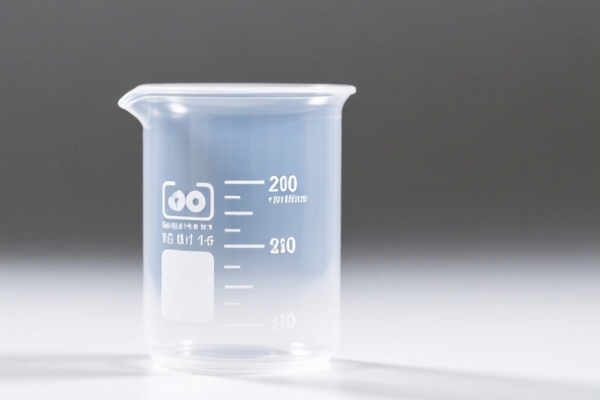
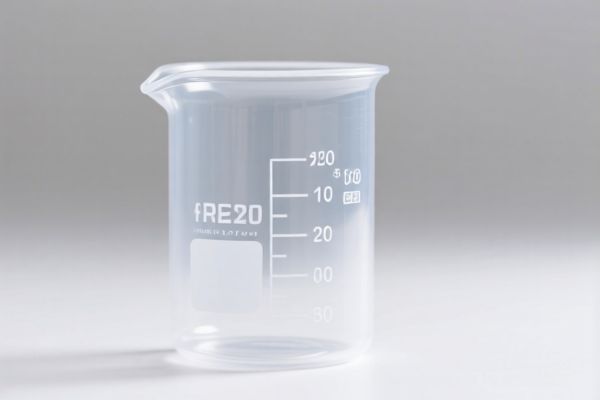
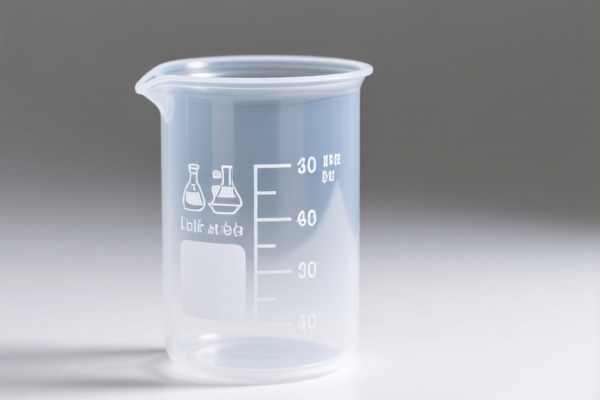
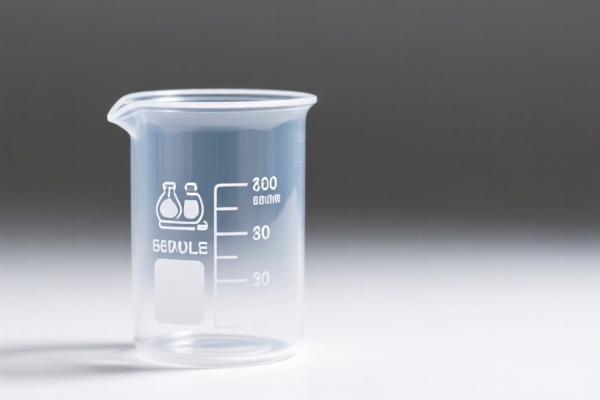
硼硅酸盐实验室烧杯
CN → US| HS Code | Tariff Rate | Origin | Destination | Doc |
|---|---|---|---|---|
| 7017200000 | 41.7% | CN | US | Official Doc |
| 7017905000 | 41.7% | CN | US | Official Doc |
| 7020006000 | 40.0% | CN | US | Official Doc |
| 7020004000 | 41.6% | CN | US | Official Doc |
Product Images
AI Analysis
🧪 Borosilicate Laboratory Beakers (Laboratory Glassware)
🌐 HS Code Reference & Clearance Guide | 2026 Latest Tariff Analysis | Professional Customs Strategy
📌 1. Product Definition and Classification: Do You Really Understand "Lab Beakers"?
Borosilicate glass beakers are the cornerstone of chemical analysis, pharmaceutical testing, and academic research. Due to their high thermal shock resistance and chemical stability, they are classified under Chapter 70 (Glass and Glassware) in the Harmonized System.
However, not all glass beakers are classified the same. The key distinction lies in the specific intent, physical characteristics (such as expansion coefficients), and market categorization.
⚠️ Key Distinction Points:
- Specific Lab Ware (7017): Beakers with strict chemical/thermal properties (e.g., Borosilicate with low expansion) explicitly for laboratory use.
- General Glass Articles (7020): Beakers treated as general glass containers or parts, potentially missing the "scientific instrument" specificity.
📦 2. HS Code Classification Details (2026 Latest Tariff Authority对照)
| HS Code | Product Description | Applicable Scenario | Expansion Coefficient |
|---|---|---|---|
7017.20.00.00 |
Borosilicate glass, linear expansion coefficient ≤ 5 x 10⁻⁶/K, for laboratory beakers | High-precision lab beakers meeting specific thermal standards | ✅ Low (≤ 5 x 10⁻⁶/K) |
7017.90.50.00 |
Borosilicate glass, for laboratory beakers, classified under glass products & lab use | Standard borosilicate lab beakers falling under residual lab categories | ✅ N/A (Residual) |
7020.00.60.00 |
Borosilicate glass, other glass articles, beakers fall under glassware category | General glass beakers, not specifically designated as precision lab instruments | ❌ No specific lab claim |
7020.00.40.00 |
Borosilicate glass, other glass articles, for vacuum flasks or other containers | Beakers classified broadly as containers or vacuum-related glassware | ❌ Broad category |
🔍 Critical Reminder:
- HS 7017 is the preferred code for dedicated laboratory ware. If your beaker is marketed specifically for labs and meets borosilicate standards, 7017.20.00.00 or 7017.90.50.00 is more accurate.
- HS 7020 is a "catch-all" for other glass articles. Using this for lab beakers may trigger customs scrutiny if the product is clearly intended for scientific use, potentially leading to reclassification.
💰 3. 2026 Latest Tariff Rate Details (Including Surtaxes, Policy Add-ons)
✅ Applicable Country: United States (US)
✅ Origin: China (CN)
✅ Effective Time: 2025/2026 (Including subsequent imports)
🎯 1. 7017.20.00.00 —— Borosilicate Glass Lab Beakers (Specific Thermal Properties)
| Item | Content |
|---|---|
| Base Tariff | 6.7% (ad valorem) |
| Section 301 Surtax | +25.0% (USITC Footnote related to Chinese origin) |
| Section 122 Tariff | +10.0% (Specific policy add-on for certain glass/lab goods) |
| Total Tariff Rate | 41.7% |
| Tax Calculation | CIF Value × 41.7% |
| De Minimis Eligibility | ❌ Not Eligible (High tariff threshold) |
| Legal Basis Path | USITC:7017.20.00.00 → Section 301: 25% → Section 122: 10% |
📌 Explanation:
- "Base 6.7%": Standard MFN rate for lab glassware.
- "Section 301 25%": The primary trade war tariff on Chinese goods.
- "Section 122 10%": A specific additional duty applied to certain glass products and lab supplies to protect domestic manufacturers.
- Total 41.7%: This is a high tariff burden. Accurate classification is crucial to avoid penalties.
🎯 2. 7017.90.50.00 —— Other Borosilicate Lab Beakers (Residual Category)
| Item | Content |
|---|---|
| Base Tariff | 6.7% |
| Section 301 Surtax | +25.0% |
| Section 122 Tariff | +10.0% |
| Total Tariff Rate | 41.7% |
| Tax Calculation | CIF Value × 41.7% |
| De Minimis Eligibility | ❌ Not Eligible |
| Legal Basis Path | USITC:7017.90.50.00 → Section 301: 25% → Section 122: 10% |
📌 Note:
- Identical tax structure to7017.20.00.00.
- Use this code if the beaker is borosilicate but does not meet the strict "≤ 5 x 10⁻⁶/K" expansion coefficient requirement, or if it falls under residual lab categories.
🎯 3. 7020.00.60.00 —— Other Glass Articles (General Classification)
| Item | Content |
|---|---|
| Base Tariff | 5.0% |
| Section 301 Surtax | +25.0% |
| Section 122 Tariff | +10.0% |
| Total Tariff Rate | 40.0% |
| Tax Calculation | CIF Value × 40.0% |
| De Minimis Eligibility | ❌ Not Eligible |
| Legal Basis Path | USITC:7020.00.60.00 → Section 301: 25% → Section 122: 10% |
📌 Note:
- Slightly lower total rate (40.0% vs 41.7%) due to a lower base tariff (5.0%).
- Risk: High risk of customs reclassification if the product is clearly "Lab Ware." Misclassification can lead to back taxes and fines.
🎯 4. 7020.00.40.00 —— Other Glass Articles (Vacuum/Container Category)
| Item | Content |
|---|---|
| Base Tariff | 6.6% |
| Section 301 Surtax | +25.0% |
| Section 122 Tariff | +10.0% |
| Total Tariff Rate | 41.6% |
| Tax Calculation | CIF Value × 41.6% |
| De Minimis Eligibility | ❌ Not Eligible |
| Legal Basis Path | USITC:7020.00.40.00 → Section 301: 25% → Section 122: 10% |
📌 Note:
- Applicable if the beaker is grouped with vacuum flasks or general containers.
- Rate is 41.6%, very close to the lab-specific codes.
🛠️ 4. Customs Clearance Practical Advice (Battle-Tested Pitfall Guide)
✅ 1. Required Documentation List (Non-negotiable)
| Document | Mandatory | Explanation |
|---|---|---|
| ✅ Product Specification Sheet | ✔️ | Must state "Borosilicate Glass," "Lab Use," and "Expansion Coefficient" if claiming 7017.20 |
| ✅ Product Photos (with labels) | ✔️ | Show branding, volume markings, and "Pyrex" or equivalent heat-resistant markings |
| ✅ Certificate of Origin (CO) | ✔️ | Essential for determining origin-based surtaxes |
| ✅ Commercial Invoice | ✔️ | Clearly describe as "Laboratory Beaker, Borosilicate Glass" |
| ✅ Packing List | ✔️ | Detail quantity and packaging to avoid weight disputes |
| ✅ Test Report (Optional but Recommended) | ✔️ | Proof of thermal shock resistance or chemical composition to support 7017 classification |
✅ 2. Declaration Strategy (Key Mantras)
🔥 "Be precise, not generic. Lab use means 7017, not 7020!"
| Scenario | Correct Declaration | Incorrect Practice |
|---|---|---|
| Dedicated Lab Beaker (Borosilicate) | 7017.20.00.00 or 7017.90.50.00 |
"Glass Container" → Risk of audit |
| General Glass Beaker (No Lab Claim) | 7020.00.60.00 |
"Lab Beaker" → Mismatch |
| Beaker + Vacuum Flask Set | 7020.00.40.00 |
Split declaration → Complication |
| Any of the above | Total Tax: ~40-41.7% | Claiming "De Minimis" → Illegal |
✅ 3. Special Handling for Edge Cases
| Situation | Handling Advice |
|---|---|
| OEM Lab Beakers | Provide customer PO and design specs. If marketed to labs, use 7017. |
| Mixed Container (Lab + Household) | Declare separately. Lab beakers to 7017, household jars to 7013. Do not mix. |
| Non-Borosilicate Glass | If it's soda-lime glass, it cannot use 7017. Use 7013 or 7020 as appropriate. |
| "Pyrex" Brand Claims | Ensure trademark rights are clear. Counterfeit branding leads to seizure. |
🌍 5. Global Market Comparison (2026 Latest)
| Country/Region | Recommended HS Code | Tariff (China Origin) | Certification | Remarks |
|---|---|---|---|---|
| 🇺🇸 USA | 7017.20.00.00 |
41.7% | FDA (if food contact), ASTM | High tariff due to Sec 301 & 122 |
| 🇨🇳 China | 7017.20.00.00 |
5.0% | CCC (if applicable) | No extra surtaxes |
| 🇪🇺 EU | 7017.20.00.00 |
4.5% | CE, REACH | No Section 301 equivalent |
| 🇬🇧 UK | 7017.20.00.00 |
4.0% | UKCA | Post-Brexit rules apply |
| 🇨🇦 Canada | 7017.20.00.00 |
5.0% | Health Canada | CUSMA benefits possible |
📌 Conclusion:
- USA has the highest landed cost for Chinese borosilicate lab beakers due to 41.7% total duty.
- EU/Canada are more competitive, but still subject to standard MFN rates.
- Strategy: Consider sourcing from Vietnam/Mexico for US entry to avoid Section 301/122 surtaxes (if rules of origin are met).
📌 6. Common Errors & Pitfall Guide (Lessons Learned)
❌ Error 1: Declaring "Lab Beaker" as "Glass Jar"
👉 Consequence: Misclassification penalty. Customs may reclassify to 7017, adding 1.7% to your tax, plus fines.
❌ Error 2: Ignoring Section 122 Tariff
👉 Consequence: Underpayment. The 10% Section 122 tariff is specific to certain glass/lab goods. Missing it leads to back taxes + interest.
❌ Error 3: Claiming De Minimis for Low-Value Shipments
👉 Consequence: Blocked shipment. Goods with >$800 value (or specific categories) are excluded. Beakers are often scrutinized.
❌ Error 4: Vague Description ("Glass Beaker")
👉 Consequence: Customs delay. They will demand test reports to prove borosilicate status and lab use.
✅ Correct Practice:
"Laboratory Beaker, Borosilicate Glass, Heat Resistant, Volume: 500ml, for Chemical Analysis, Model: LAB-500-B"
🎯 7. Conclusion: Precise Classification Saves Money!
🎯 Remember the Mantra:
🔹 "Lab Use = 7017, General = 7020. Don't guess, specify!"
🔹 "41.7% is the US Price, Plan Your Cost Now!"
🔹 "Sec 301 + Sec 122 = High Duty, No De Minimis!"
📌 Pro Tip:
If you are shipping to the USA, consider Advance Ruling (Pre-classification) with CBP. This locks in the HS Code and tariff rate, avoiding surprises at the border.
For non-US markets, ensure REACH (EU) or Health Canada compliance is documented.
📣 Immediate Action:
📞 Consult a Customs Broker + Provide Product Specs + Apply for Pre-Ruling
🚀 Clear Customs Smoothly, Boost Margins, Scale Your Labware Business!
✨ Professional Clearance Starts with Accurate Classification!
💼 Every Penny of Duty Counts – Optimize Your Supply Chain Today!
Customer Reviews
About HS Code Classification
The Harmonized System (HS) is an internationally standardized nomenclature developed by the World Customs Organization (WCO) to classify traded products. Over 200 countries use the HS system as the basis for customs tariffs, trade statistics, and import/export regulations.
Each HS code follows a hierarchical structure:
- Chapter (2 digits) — Broad category of goods (e.g., Chapter 84: Machinery and Mechanical Appliances)
- Heading (4 digits) — More specific grouping within the chapter
- Subheading (6 digits) — Internationally standardized breakdown, used by all WCO member countries
- National subdivisions (8-10 digits) — Country-specific extensions for further classification, such as US HTSUS 10-digit codes
Correct HS code classification is essential for smooth customs clearance, accurate duty payment, and compliance with trade regulations. Misclassification can lead to customs delays, overpayment of duties, or penalties.
When importing from CN to US, the applicable tariff rates may include:
- Most-Favored-Nation (MFN) rate — The standard duty rate applied to WTO members
- General rate — Applied to countries without trade agreements
- Trade remedy duties — Additional tariffs such as Section 301 (anti-dumping), Section 232 (national security), or countervailing duties
The information provided on this page is for reference purposes only. For official classification, please consult with your local customs authority or a licensed customs broker.