秋季羊毛背心
CN → US| HS Code | Tariff Rate | Origin | Destination | Doc |
|---|---|---|---|---|
| 6110110060 | 33.5% | CN | US | Official Doc |
| 6201203500 | 26.0% | CN | US | Official Doc |
| 6201201900 | 26.0% | CN | US | Official Doc |
Product Images
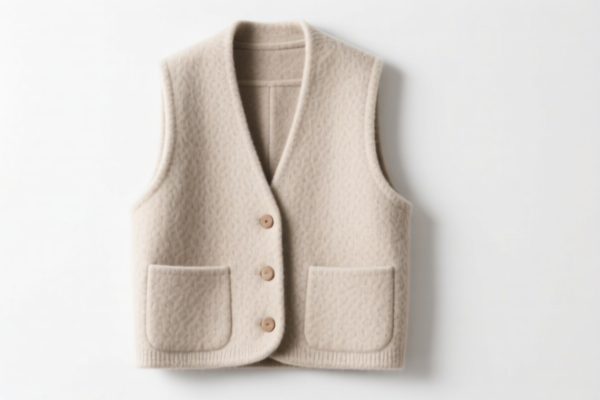

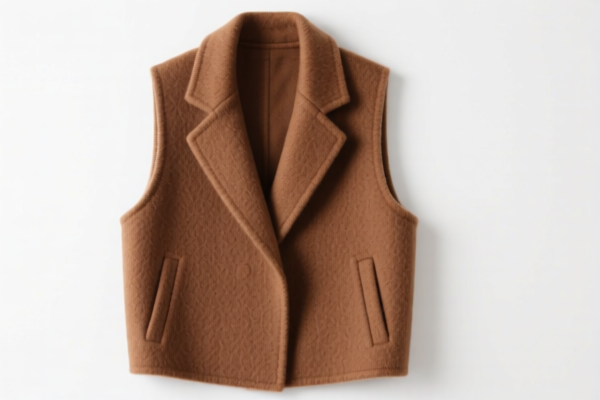

AI Analysis
{"content":[{"type":"text","text":"##🧶 Autumn Wool Vest (Sweater Vest / Sleeveless Knitted Garment)
🌐 HS Code Reference & Customs Clearance Guide | 2026 Latest Tariff Analysis | Professional Clearance Strategy
📌 I. Product Definition & Classification: Do You Really Understand the "Autumn Wool Vest"?
The Autumn Wool Vest, also known as a Sweater Vest or Sleeveless Knitted Garment, is a versatile outer or mid-layer garment primarily made from wool, wool blends, or synthetic fibers simulating wool. In international trade, its classification depends heavily on:
- Material Composition: Is it 100% wool? Wool blend? Or synthetic?
- Knitting Structure: Is it knitted (e.g., jersey, rib) or crocheted?
- Type of Wearer: Men’s, Women’s, or Children’s? (Note: HS codes often differ by gender).
- Weight/Thickness: Heavier autumn garments may fall under different subheadings than lightweight summer vests.
⚠️ Key Distinction:
- If it is 100% Wool and Knitted → Typically falls under HS 6110 (Knitted or Crocheted Pullovers, Cardigans, Vests, etc.).
- If it is Wool Blend or Synthetic (e.g., Acrylic) → Also generally falls under HS 6110, but specific sub-codes vary by fiber content.
- If it is Woven (not knitted) → It would fall under HS 6211 (Other Made-Up Clothing), but "wool vests" are overwhelmingly knitted.
📦 II. HS Code Classification Details (2026 Latest Tariff Authority Comparison)
| HS Code | Product Description | Applicable Scenario | Material Key |
|---|---|---|---|
6110.20.00.00 |
Sweaters, pullovers, cardigans, vests, and similar articles, knitted or crocheted, of wool or fine animal hair | 100% Wool Vest, Cashmere Vest, Merino Wool Vest | ✅ Wool/Fine Animal Hair |
6110.30.00.00 |
Sweaters, pullovers, cardigans, vests, and similar articles, knitted or crocheted, of synthetic fibers | Acrylic Vest, Polyester "Wool-like" Vest | ✅ Synthetic |
6110.90.00.00 |
Other knitted or crocheted sweaters, pullovers, cardigans, vests... | Vests of other textile materials (e.g., Cotton blends not specified elsewhere) | ✅ Other Textiles |
6211.39.00.00 |
Other men’s or boys’ garments, knitted or crocheted | If the vest is woven (rare for wool) or specifically cut as a woven garment | ❌ Not Knitted |
6211.42.00.00 |
Other women’s or girls’ garments, of wool or fine animal hair | If the vest is woven wool vest for women | ❌ Not Knitted |
🔍 Critical Reminder:
- Most "Wool Vests" are Knitted →归类 to 6110.
- Gender Matters: While 6110 covers both men’s and women’s, some countries’ 8-digit or 10-digit sub-codes split by gender. Check local tariff schedules.
- "Wool" Definition: In HS terms, "Wool" usually means hair from sheep or lambs. "Fine animal hair" includes cashmere, alpaca, mohair, etc.
💰 III. 2026 Latest Tariff Rate Details (Including Additional Taxes & Policy Add-ons)
✅ Applicable Country: United States (US)
✅ Country of Origin: China (CN)
✅ Effective Date: From November 10, 2025 (and subsequent imports)
🎯 1. 6110.20.00.00 —— Knitted Vests, Of Wool or Fine Animal Hair
| Item | Content |
|---|---|
| Base Rate | 17.2% (ad valorem) |
| USITC Additional Tariff | +25% (under USITC Footnote 9903.88.01 for Section 301 goods) |
| IEEPA Additional Tariff | +10% (for China/HK products, effective Nov 10, 2025) |
| Total Effective Rate | 52.2% |
| Tax Calculation | CIF Value × 52.2% |
| De Minimis Eligibility | ❌ Not Eligible (deny_de_minimis) |
| Legal Path | IEEPA:9903.01.25 → IEEPA:9903.01.24 → USITC:6110.20.00.00 → FOOTNOTE:9903.88.01 |
📌 Explanation:
- Wool garments from China face significant double taxation: 17.2% base + 25% Section 301 + 10% IEEPA.
- Total 52.2% is extremely high for apparel. This makes direct export of pure wool vests from China to the US cost-prohibitive unless value-added in another country.
🎯 2. 6110.30.00.00 —— Knitted Vests, Of Synthetic Fibers
| Item | Content |
|---|---|
| Base Rate | 17.2% |
| USITC Additional Tariff | +25% |
| IEEPA Additional Tariff | +10% |
| Total Effective Rate | 52.2% |
| Tax Calculation | CIF Value × 52.2% |
| De Minimis Eligibility | ❌ Not Eligible |
| Legal Path | Same as above |
📌 Note:
- Even "wool-like" acrylic vests face the same high tariffs if labeled/produced in China.
- Synthetic fibers do not qualify for lower rates under current China-US trade rules.
🛠️ IV. Customs Clearance Practical Advice (Combat Pitfall Guide)
✅ 1. Required Documentation Checklist (Missing Any = Delay)
| Document | Required | Notes |
|---|---|---|
| ✅ Product Composition Label | ✔️ | Must state exact fiber content (e.g., "100% Wool" vs. "80% Acrylic, 20% Wool") |
| ✅ Knitting Method Declaration | ✔️ | Confirm it is "Knitted" (not woven) to justify HS 6110 |
| ✅ Garment Photos | ✔️ | Show full vest, collar, sleeves (sleeveless), and label |
| ✅ Bill of Materials (BOM) | ✔️ | For blends, specify percentages |
| ✅ Commercial Invoice | ✔️ | Declare as "Knitted Wool Vest, Autumn Wear, Model XYZ" |
| ✅ Origin Certificate | ✔️ | If produced in Vietnam/Mexico, can claim exemption from China tariffs |
| ✅ Care Label Content | ✔️ | Often reviewed for fiber content consistency |
✅ 2. Declaration Tips (Key Mantra)
🔥 "Knitted Vests, Say '6110', Wool Content is King, Gender May Vary!"
| Scenario | Correct Declaration | Wrong Practice |
|---|---|---|
| 100% Wool Knitted Vest | 6110.20.00.00 |
Declare as "Sweater" → Same rate, but be precise |
| Acrylic "Wool" Vest | 6110.30.00.00 |
Declare as "Wool" → False Declaration, Penalties! |
| Women’s Wool Vest | 6110.20.00.00 (US) |
Do not split men/women unless required by 10-digit code |
| Woven Wool Vest (Rare) | 6211.42.00.00 |
Do not declare as 6110 → Wrong HS, Audit Risk |
✅ 3. Special Cases
| Scenario | Handling Advice |
|---|---|
| OEM Custom Vests | Provide design sheets, confirm "knitted" structure to avoid classification as woven |
| Blended Fabrics | If wool < 50%, may not qualify for "of wool" heading. Check local rules. |
| Gift Items | Still subject to 52.2% if from China. No exemption. |
| Samples | If > $800, must declare formally. If < $800, no de minimis for these HS codes. |
🌍 V. Global Market Clearance Comparison (2026 Latest)
| Country/Region | Recommended HS Code | Tariff | Certification | Notes |
|---|---|---|---|---|
| 🇺🇸 USA | 6110.20.00.00 |
52.2% (CN Origin) | FTC Labeling | Highest Risk Market |
| 🇨🇳 China | 6110.20.00.00 |
17% (MFN) | CCC (if applicable) | No extra tariffs |
| 🇪🇺 EU | 6110.20.00 |
12% (MFN) | CE (if labeled textile) | No Section 301 |
| 🇬🇧 UK | 6110.20.00 |
12% | UKCA | Post-Brexit rules apply |
| 🇯🇵 Japan | 6110.20.00 |
19.7% | FSC Mark | High base rate |
📌 Conclusion:
- USA is the most expensive market for Chinese-made wool vests due to Section 301 + IEEPA.
- EU and UK have moderate tariffs but no punitive additional taxes.
- Strategy: Consider transshipment or assembly in Vietnam/Mexico to avoid China-origin tariffs.
📌 VI. Common Errors & Pitfalls (Lessons Learned)
❌ Error 1: Declaring an Acrylic Vest as "Wool" to avoid synthetic tariffs
👉 Consequence: Customs Penalty + Fine + Cargo Hold! Fiber tests will reveal the truth.
❌ Error 2: Declaring a Knitted Vest as Woven
👉 Consequence: Wrong HS Code → Delay + Re-inspection. Vests are almost always knitted.
❌ Error 3: Ignoring Fiber Content Labeling
👉 Consequence: US Customs (CBP) strictly enforces FTC labeling rules. Incorrect label = Detention.
❌ Error 4: Assuming "De Minimis" Applies
👉 Consequence: HS 6110 is denied de minimis. Even small shipments must declare and pay 52.2%.
✅ Correct Practice:
"Knitted Wool Vest, 100% Merino Wool, Autumn Collection, Men’s Style, Model ABC, Label: Care Instructions Compliant"
🎯 VII. Conclusion: Precision Classification Saves Money!
🎯 Remember the Mantra:
🔹 "Knitted = 6110, Woven = 6211, Wool = 6110.20, Synthetic = 6110.30"
🔹 "China Origin + USA = 52.2%, Avoid Direct Shipment!"
🔹 "Label Accurately, Or Face Penalties!"
📌 Pro Tip:
If your vest is assembled in Vietnam, Bangladesh, or Mexico, it may qualify for 0%~12% tariffs in the US.
Recommend Advance Ruling from CBP for complex blends.
📣 Immediate Action:
📞 Contact a Licensed Customs Broker + Provide Fiber Content Report + Apply for Pre-Ruling
🚀 Optimize your supply chain, clear customs faster, boost profits!
✨ Professional Clearance Starts with Accurate Classification!
💼 Every Percent of Tariff Counts!"}]},"isError":false}
Customer Reviews
About HS Code Classification
The Harmonized System (HS) is an internationally standardized nomenclature developed by the World Customs Organization (WCO) to classify traded products. Over 200 countries use the HS system as the basis for customs tariffs, trade statistics, and import/export regulations.
Each HS code follows a hierarchical structure:
- Chapter (2 digits) — Broad category of goods (e.g., Chapter 84: Machinery and Mechanical Appliances)
- Heading (4 digits) — More specific grouping within the chapter
- Subheading (6 digits) — Internationally standardized breakdown, used by all WCO member countries
- National subdivisions (8-10 digits) — Country-specific extensions for further classification, such as US HTSUS 10-digit codes
Correct HS code classification is essential for smooth customs clearance, accurate duty payment, and compliance with trade regulations. Misclassification can lead to customs delays, overpayment of duties, or penalties.
When importing from CN to US, the applicable tariff rates may include:
- Most-Favored-Nation (MFN) rate — The standard duty rate applied to WTO members
- General rate — Applied to countries without trade agreements
- Trade remedy duties — Additional tariffs such as Section 301 (anti-dumping), Section 232 (national security), or countervailing duties
The information provided on this page is for reference purposes only. For official classification, please consult with your local customs authority or a licensed customs broker.