积木玩具
CN → US| HS Code | Tariff Rate | Origin | Destination | Doc |
|---|---|---|---|---|
| 3923900080 | 38.0% | CN | US | Official Doc |
| 9503000090 | 10.0% | CN | US | Official Doc |
| 3926909989 | 22.8% | CN | US | Official Doc |
| 3926904800 | 13.4% | CN | US | Official Doc |
| 3923109000 | 38.0% | CN | US | Official Doc |
Product Images
AI Analysis
🧩 LEGO-Style Building Blocks (Plastic Toys for Children)
🌐 HS Code Reference & Customs Clearance Guide | 2026 Latest Tariff Analysis | Professional Import Strategy
📌 One, Product Definition & Classification: Do You Really Know What “Building Blocks” Are?
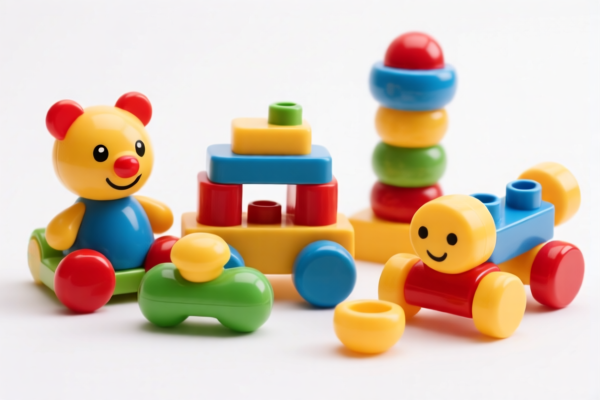
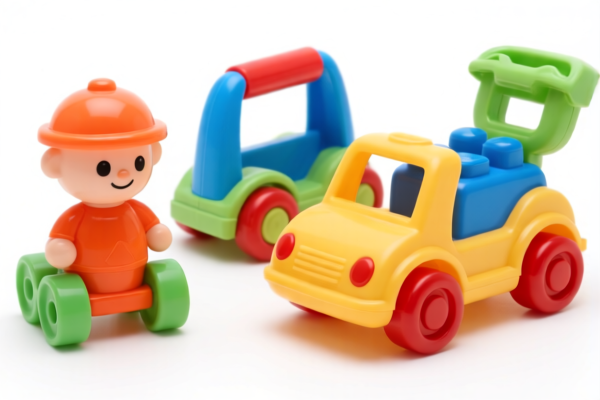
Plastic building blocks — commonly known as LEGO-style toys — are modular plastic components designed for creative assembly, stacking, and imaginative play. In international trade, they are classified based on material, form, and intended use.
⚠️ Critical Distinction:
- If the product is plastic, interlocking, and intended for children’s play → must be classified as a toy
- If the product is plastic, but used for industrial, architectural, or non-play purposes → may be classified under plastic制品 (plastic products)✅ Key Insight:
- Even if made of plastic, if the item is designed and marketed for children’s creative play, it must fall under the toy category (HS Code 9503.00.00.90) — regardless of material origin.
📦 Two, HS Code Classification Details (2026 Latest Tariff Authority Table)
| HS Code | Product Description | Applicable Use Case | Intended for Children’s Play? |
|---|---|---|---|
3923.90.00.80 |
Other plastic articles, not elsewhere specified — includes building blocks | Industrial prototypes, educational models, non-toy uses | ❌ No |
9503.00.00.90 |
Toys and games, not elsewhere specified — includes plastic building blocks | Creative play, children’s toys, gift sets | ✅ Yes |
3926.90.99.89 |
Other plastic products, not elsewhere specified — complex molded plastic parts | Non-toy industrial components, technical models | ❌ No |
3926.90.48.00 |
Other plastic products — includes molded plastic parts used in toys | Parts used in toys, but not the final toy | ❌ No |
3923.10.90.00 |
Other plastic articles — includes molded plastic building components | Generic plastic parts, not toy-specific | ❌ No |
🔍 Critical Note:
- Only9503.00.00.90applies to plastic building blocks marketed and used as toys for children
- All others are non-toy plastic products, even if they look identical
💰 Three, 2026 Latest Tariff Breakdown (Including附加 Taxes & Policy Clauses)
✅ Applicable Country: United States (US)
✅ Origin: China (CN)
✅ Effective Date: November 10, 2025 (including future imports)
🎯 1. 9503.00.00.90 — Toys, Not Elsewhere Specified (Plastic Building Blocks)
| Item | Details |
|---|---|
| Base Duty Rate | 0.0% (ad valorem) |
| USITC Section 301 Additional Duty | +0.0% (no additional tariff under Section 301) |
| IEEPA 122 Clause Tariff | +10.0% (from IEEPA: International Emergency Economic Powers Act) |
| Total Effective Tariff | 10.0% |
| Tax Calculation | CIF Value × 10% |
| De Minimis Threshold | ✅ Yes (10% de minimis applies) |
| Legal Basis Path | IEEPA:9903.01.25 → IEEPA:9903.01.24 → 9503.00.00.90 |
📌 Explanation:
- Despite being plastic, these blocks are classified as toys due to intended use and design for children
- No Section 301 (25%) tariff applies — only IEEPA 122 Clause (10%)
- 10% de minimis exemption applies → if total tariff < 10% of value, no duty paid
🎯 2. 3923.90.00.80 — Other Plastic Articles (Non-Toy Use)
| Item | Details |
|---|---|
| Base Duty Rate | 3.0% |
| USITC Section 301 Additional Duty | +25.0% |
| IEEPA 122 Clause Tariff | +10.0% |
| Total Effective Tariff | 38.0% |
| Tax Calculation | CIF Value × 38% |
| De Minimis Threshold | ❌ No (denied under de minimis rules) |
| Legal Basis Path | USITC:3923.90.00.80 → FOOTNOTE:9903.88.01 → IEEPA:9903.01.24 |
📌 Warning:
- If you misclassify a children’s toy as a plastic article, you face 38% tariff — 3.8x higher than toy rate
- No de minimis relief → even small shipments are fully taxed
🎯 3. 3926.90.99.89 — Other Plastic Products (Complex Molded Parts)
| Item | Details |
|---|---|
| Base Duty Rate | 5.3% |
| USITC Section 301 Additional Duty | +7.5% |
| IEEPA 122 Clause Tariff | +10.0% |
| Total Effective Tariff | 22.8% |
| Tax Calculation | CIF Value × 22.8% |
| De Minimis Threshold | ❌ No |
| Legal Basis Path | USITC:3926.90.99.89 → FOOTNOTE:9903.88.01 → IEEPA:9903.01.24 |
📌 Use Case:
- For non-toy industrial models, architectural mockups, or engineering prototypes
- Not for children’s play → no toy classification
🎯 4. 3926.90.48.00 — Other Plastic Products (Molded Parts)
| Item | Details |
|---|---|
| Base Duty Rate | 3.4% |
| USITC Section 301 Additional Duty | +0.0% |
| IEEPA 122 Clause Tariff | +10.0% |
| Total Effective Tariff | 13.4% |
| Tax Calculation | CIF Value × 13.4% |
| De Minimis Threshold | ❌ No |
| Legal Basis Path | USITC:3926.90.48.00 → IEEPA:9903.01.24 |
📌 When to Use:
- For plastic parts used in toys, but not the final toy (e.g., individual bricks sold in bulk for manufacturers)
- Not for retail sale as toys
🎯 5. 3923.10.90.00 — Other Plastic Articles (General Plastic Components)
| Item | Details |
|---|---|
| Base Duty Rate | 3.0% |
| USITC Section 301 Additional Duty | +25.0% |
| IEEPA 122 Clause Tariff | +10.0% |
| Total Effective Tariff | 38.0% |
| Tax Calculation | CIF Value × 38% |
| De Minimis Threshold | ❌ No |
| Legal Basis Path | USITC:3923.10.90.00 → FOOTNOTE:9903.88.01 → IEEPA:9903.01.24 |
📌 When to Use:
- For plastic building components not intended for children
- Do NOT use for children’s toys — high risk of audit and penalties
🛠️ Four, Customs Clearance Practical Tips (Pro Tips to Avoid Pitfalls)
✅ 1. Required Documentation (Must-Have Checklist)
| Document | Required | Notes |
|---|---|---|
| ✅ Product Specification Sheet | ✔️ | Include material (plastic), size, color, interlocking mechanism |
| ✅ Product Photos (with packaging & branding) | ✔️ | Show packaging, child-friendly design, age label |
| ✅ Commercial Invoice | ✔️ | Clearly state: “Plastic Building Blocks for Children, Toy Use” |
| ✅ Bill of Lading / Packing List | ✔️ | Show total quantity, unit weight, packaging type |
| ✅ Safety Certifications (CE, ASTM F963, CPSIA) | ✔️ | Mandatory for toy classification |
| ✅ Certificate of Origin (CO) | ✔️ | For tariff eligibility (e.g., China, Vietnam, Mexico) |
| ✅ Age Label & Warning Stickers | ✔️ | Must show “Not for children under 3” if applicable |
✅ 2.申报技巧 (Key Rules to Remember)
🔥 “Toy = 10%, Plastic = 38% — One word changes everything!”
| Scenario | Correct HS Code | Wrong Code | Risk |
|---|---|---|---|
| Retail toy set for kids (e.g., LEGO-style) | 9503.00.00.90 |
3923.90.00.80 |
38% vs 10% → 28% extra cost |
| Bulk plastic bricks for factory use | 3926.90.48.00 |
9503.00.00.90 |
13.4% vs 10% → overpay |
| Educational model for adults | 3926.90.99.89 |
9503.00.00.90 |
22.8% vs 10% → overpay |
| Non-toy plastic parts (e.g., for machinery) | 3926.90.48.00 |
3923.10.90.00 |
13.4% vs 38% → 38% tax! |
✅ 3. Special Cases Handling
| Situation | Recommended Action |
|---|---|
| Set sold as gift with no toy branding | Still classify as toy if intended for children → use 9503.00.00.90 |
| Bulk bricks sold to toy manufacturers | Use 3926.90.48.00 or 3926.90.99.89 — not a toy |
| Used in STEM kits for schools | If designed for children → 9503.00.00.90 |
| Exported to EU/UK/AU | Check local rules: EU may apply CE, UK may apply UKCA |
| Re-export from Mexico/Vietnam | Can qualify for IEEPA exemption if origin is non-China |
🌍 Five, Global Market Comparison (2026 Latest)
| Country/Region | Recommended HS Code | Tariff | Certification | Notes |
|---|---|---|---|---|
| 🇺🇸 United States | 9503.00.00.90 |
10% | CPSIA, ASTM F963 | 10% de minimis applies |
| 🇨🇳 China | 9503.00.00.90 |
5% | CCC, RoHS | No extra tariffs |
| 🇪🇺 European Union | 9503.00.00.90 |
0% (if CE) | CE, EN71 | No IEEPA |
| 🇦🇺 Australia | 9503.00.00.90 |
5% | RCM | No IEEPA |
| 🇯🇵 Japan | 9503.00.00.90 |
0% | PSE | No IEEPA |
📌 Conclusion:
- Only the U.S. imposes IEEPA 122 Clause (10%) on toys
- China-origin toys in U.S. face 10% tariff — much lower than 38% for misclassified plastic
- U.S. is the only market with significant risk of misclassification penalties
📌 Six, Common Mistakes & How to Avoid Them (Real-World Lessons)
❌ Mistake 1: Misclassifying a children’s toy as 3923.90.00.80
👉 Result: 38% tariff → 3.8x higher cost → audit risk
❌ Mistake 2: Using 3926.90.48.00 for a toy set sold in retail packaging
👉 Result: 13.4% tariff → overpay and risk of rejection
❌ Mistake 3: Not including safety certification (CPSIA, ASTM F963)
👉 Result: Customs delay or seizure — even if HS Code is correct
❌ Mistake 4: Using generic name like “Plastic Blocks” instead of “Toy Building Blocks”
👉 Result: Customs may assume industrial use → wrong HS Code
✅ Correct Way to Declare:
“Plastic Building Blocks, Interlocking, for Children Aged 3+, Toy Set, 500 Pieces, ASTM F963 & CPSIA Certified, Retail Packaging”
🎯 Seven, Final Verdict: Precision in Classification = Profit Protection!
🎯 Remember the Golden Rule:
🔹 “If it’s for kids and play — it’s a toy (9503.00.00.90)”
🔹 “If it’s plastic and not for play — it’s a product (3923/3926 series)”
🔹 “One word change = 28% difference in tariff!”
📌 Pro Tip:
If your blocks are produced in Vietnam, Mexico, or Thailand, you may qualify for IEEPA exemption — tariff drops to 0%
✅ Apply for Advance Ruling (Pre-Decision) to lock in HS Code and avoid future disputes
📣 Take Action Now:
📞 Contact a licensed customs broker + provide product photos + request HS Code pre-ruling
🚀 Avoid 38% penalties, save thousands, and ship with confidence!
✨ Smart Classification, Smarter Trade!
💼 Your toy’s success starts with the right HS Code.
Customer Reviews
About HS Code Classification
The Harmonized System (HS) is an internationally standardized nomenclature developed by the World Customs Organization (WCO) to classify traded products. Over 200 countries use the HS system as the basis for customs tariffs, trade statistics, and import/export regulations.
Each HS code follows a hierarchical structure:
- Chapter (2 digits) — Broad category of goods (e.g., Chapter 84: Machinery and Mechanical Appliances)
- Heading (4 digits) — More specific grouping within the chapter
- Subheading (6 digits) — Internationally standardized breakdown, used by all WCO member countries
- National subdivisions (8-10 digits) — Country-specific extensions for further classification, such as US HTSUS 10-digit codes
Correct HS code classification is essential for smooth customs clearance, accurate duty payment, and compliance with trade regulations. Misclassification can lead to customs delays, overpayment of duties, or penalties.
When importing from CN to US, the applicable tariff rates may include:
- Most-Favored-Nation (MFN) rate — The standard duty rate applied to WTO members
- General rate — Applied to countries without trade agreements
- Trade remedy duties — Additional tariffs such as Section 301 (anti-dumping), Section 232 (national security), or countervailing duties
The information provided on this page is for reference purposes only. For official classification, please consult with your local customs authority or a licensed customs broker.