移动电源
CN → US| HS Code | Tariff Rate | Origin | Destination | Doc |
|---|---|---|---|---|
| 8507808200 | 38.4% | CN | US | Official Doc |
| 8504409520 | 35.0% | CN | US | Official Doc |
| 8504409510 | 35.0% | CN | US | Official Doc |
Product Images
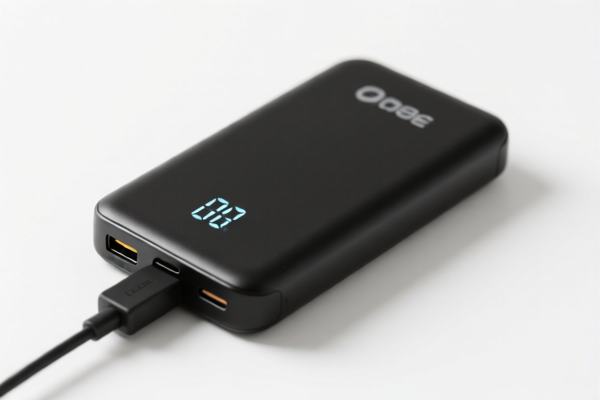
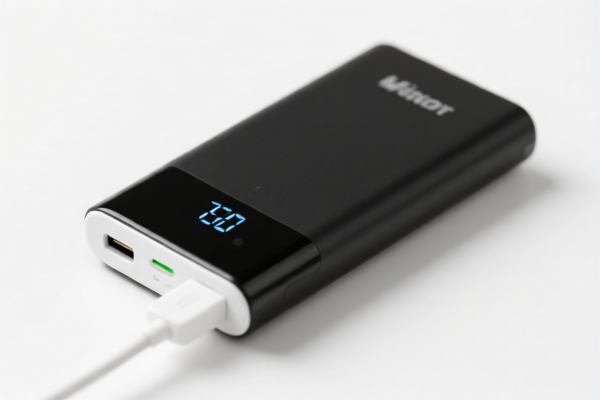
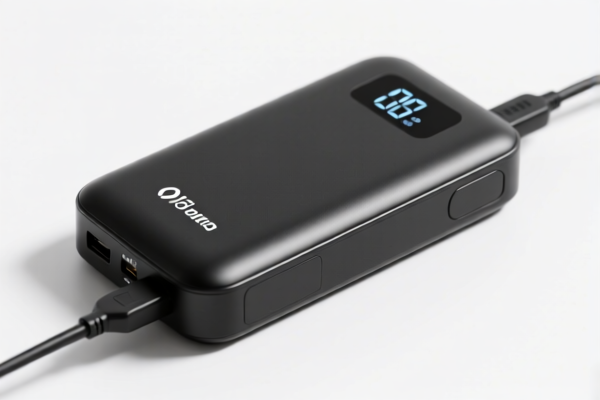
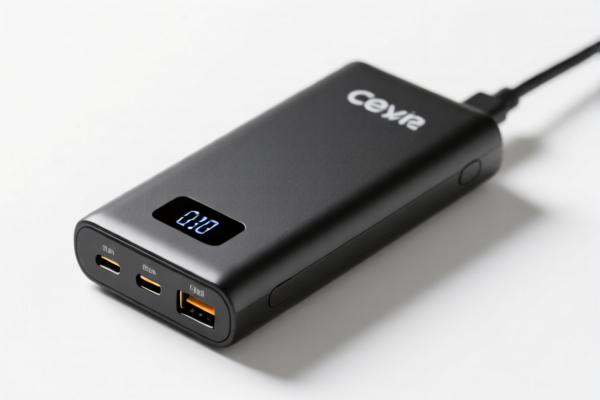
AI Analysis
Here is the comprehensive, Wiki-style guide for Portable Power Banks, strictly based on the provided data and formatted for high visual impact and clarity.
🔋 Portable Power Bank: Global Classification & Duty Strategy Guide
🚀 HS Code Masterclass | 2026 Tariff Decoded | Professional Customs Clearance
📌 Focus: Correctly Classifying Mobile Power Banks to Avoid 38.4% Pitfalls
🌐 一、Product Definition & Core Logic
What is a Portable Power Bank?
In international trade, a Portable Power Bank is a hybrid device. It is NOT just a simple battery, nor is it just a charger. It sits at the intersection of two major categories:
- Electrochemical Storage (The Heart): It relies on rechargeable electrochemical cells (batteries) as its core component.
- Power Conversion (The Brain): It acts as a "Stationary Converter" (specifically a power supply/interrupter) to convert stored energy into usable DC power for devices.
⚠️ The Classification Dilemma:
Customs authorities view power banks through two lenses: * Lens A: As a Battery (HS Code 8507.xxxxxx) → Focuses on the storage capacity. * Lens B: As a Converter/Rectifier (HS Code 8504.40.xxxx) → Focuses on the output and conversion function.Result: Depending on the specific technical parameters (especially power output), the HS Code and Total Tax Rate can vary slightly, leading to two primary classification paths in the provided dataset.
📦 二、HS Code Classification Details (Based on Provided Data)
| HS Code | Product Description | Technical Scope | Core Attribute |
|---|---|---|---|
| 8507.80.82.00 | Portable Power Bank (Battery Definition) | Classified as "Other Storage Batteries" (延伸应用). | Core Component: The electrochemical battery itself. Focuses on the storage nature. |
| 8504.40.95.20 | Portable Power Bank (Converter Definition) | Classified under "Static Converters" → "Power Supply/Rectifiers". | Core Function: Output conversion. Focuses on the supply capability. |
| 8504.40.95.10 | Portable Power Bank (Low Power Converter) | Classified under "Rectifiers & Rectifying Equipment" → "Power Supplies" (< 50W). | Core Function: Low-power output. Specifically targets units ≤ 50W. |
🔍 Critical Analysis:
Path 1 (8507.80.82.00): If the customs officer views the device primarily as a battery accessory.
Path 2 (8504.40.95.20&8504.40.95.10): If the device is viewed as a static converter/power supply. * Note: Both paths apply to the same physical product, but the classification logic changes the nuance of the description.
💰 三、2026 Tariff Rate Breakdown (The "38.4%" Reality)
Based on the provided data, the total tax burden is significantly high due to multiple layers of tariffs.
🎯 Scenario A: HS Code 8507.80.82.00
(The "Battery" Classification)
| Tax Component | Rate | Description |
|---|---|---|
| Base Duty (基础关税) | 3.4% | Standard MFN tariff for batteries. |
| Section 301 Tariff (加征关税) | 25.0% | US Section 301 retaliatory tariffs on Chinese goods. |
| Section 122 Tariff (122条款) | 10.0% | Additional "Made in China" surcharge. |
| TOTAL EFFECTIVE RATE | 38.4% | 3.4% + 25.0% + 10.0% |
💡 Formula:
Duty Payable = CIF Value × 38.4%
Verdict: This is the most expensive path, treating the power bank primarily as a battery.
🎯 Scenario B: HS Codes 8504.40.95.20 & 8504.40.95.10
(The "Converter/Power Supply" Classification)
| Tax Component | Rate | Description |
|---|---|---|
| Base Duty (基础关税) | 0.0% | Benefit: Static converters often have a 0% base rate. |
| Section 301 Tariff (加征关税) | 25.0% | Mandatory: US Section 301 applies regardless of base rate. |
| Section 122 Tariff (122条款) | 10.0% | Mandatory: Section 122 surcharge applies. |
| TOTAL EFFECTIVE RATE | 35.0% | 0.0% + 25.0% + 10.0% |
💡 Formula:
Duty Payable = CIF Value × 35.0%
Verdict: Slightly cheaper than the battery classification (3.4% savings), but STILL VERY HIGH. * Note on8504.40.95.10: This specifically mentions Power Output ≤ 50W. If your power bank is >50W, this sub-code may not apply, pushing you back to8504.40.95.20(same tax rate, different logic).
🛠️ 四、Customs Clearance Strategy & Risk Mitigation
✅ 1. Material Preparation Checklist
To justify your HS Code choice and avoid "duty reclassification," prepare the following:
| Document | Requirement | Why it Matters |
|---|---|---|
| Technical Spec Sheet | ✔️ Mandatory | Must explicitly state Output Power (W) and Battery Capacity (mAh). Crucial for distinguishing between 8504.40.95.10 (≤50W) and others. |
| Internal Circuit Diagram | ✔️ Highly Recommended | Proves the device is a "Converter" (rectifier) rather than just a "Battery." Supports 8504 classification. |
| Product Photos (Internal/External) | ✔️ Mandatory | Shows the battery cells AND the circuit board. Validates the "Hybrid" nature. |
| Declaration of Function | ✔️ Mandatory | Explicitly state: "Device functions as a Power Supply/Converter with integrated battery storage." |
✅ 2.申报技巧 (Declaration Tactics)
| Strategy | Action | Risk Reduction |
|---|---|---|
| Tactic A: Emphasize "Converter" | Declare as "Stationary Converter" or "Power Supply Unit". | Pushes for 35.0% (8504) instead of 38.4% (8507). |
| Tactic B: Highlight Power Output | If ≤50W, explicitly declare "Power Output: XX W (Under 50W)". | Qualifies for the specific sub-code 8504.40.95.10. |
| Tactic C: Avoid "Battery" First | Do NOT start description with "Rechargeable Battery." Start with "Portable Power Adapter." | Prevents immediate classification under 8507.80.82.00 (higher base duty). |
✅ 3. Critical Warning: The "Battery vs. Converter" Trap
⚠️ Scenario: You declare as
8504(Converter), but Customs inspects the unit and says, "This is just a battery pack." Consequence: 1. Re-classification: Forced to move to8507.80.82.00. 2. Tax Hit: The 3.4% Base Duty comes back + Potential penalties. 3. Delay: Cargo held for inspection while technical experts review.
Recommendation: Ensure your product is marketed and documented as a "Power Supply Device" rather than a "Battery Accessory." The inclusion of a control board and conversion circuit is your strongest defense.
🌍 五、Global Market Comparison (Context)
| Market | HS Code Preference | Base Tax | Section 301 (25%) | Section 122 (10%) | Total Tax |
|---|---|---|---|---|---|
| 🇺🇸 USA | 8507.80.82.00 (Battery) |
3.4% | ✅ Yes | ✅ Yes | 38.4% |
| 🇺🇸 USA | 8504.40.95.x (Converter) |
0.0% | ✅ Yes | ✅ Yes | 35.0% |
| 🇪🇺 EU | Varies | ~0-6% | ❌ No | ❌ No | Low (~6%) |
| 🇨🇳 China | Varies | ~0% | ❌ No | ❌ No | Low |
📌 Key Insight: The US market is the most hostile for Power Banks due to the Combined 35-38.4% Tax Burden. * Strategy: If shipping to the US, ensure the classification is
8504.40.xxxx(Converter) to save the 3.4% base duty. * Alternative: Explore third-party manufacturing in countries not subject to Section 301 (e.g., Vietnam, Malaysia) to bypass the 25% surcharge entirely.
📌 六、Common Mistakes & "Blood Lessons"
❌ Mistake 1: Declaring simply as "Battery" or "Power Bank Battery".
👉 Result: Customs defaults to 8507.80.82.00 → 38.4% Duty.
✅ Fix: Declare as "Portable Power Converter" or "DC Power Supply with Battery."
❌ Mistake 2: Ignoring the 50W threshold.
👉 Result: Missing out on specific sub-codes if the device is low power.
✅ Fix: Clearly state output wattage on the commercial invoice.
❌ Mistake 3: Assuming "Base Duty 0%" means "Free Entry".
👉 Result: NO! Even if Base Duty is 0%, the 25% + 10% = 35% tax still applies.
✅ Fix: Budget for 35% of the CIF value immediately.
🚀 Final Verdict: Action Plan
- Check Power Output: Is it ≤50W? If yes, target
8504.40.95.10. - Document the Circuit: Prove it's a "Converter" (Board + Battery) to argue for
8504. - Calculate Cost: Budget for 35.0% (Converter) or 38.4% (Battery) duties. There is NO exemption for these tariffs in the provided data.
- Communicate: Tell your customs broker: "Classify as Static Converter (8504.40.95.x) to minimize base duty, subject to Section 301 and 122."
✨ Pro Tip: If your profit margin is tight, the 35% US tariff might kill your business model. Consider drop-shipping from non-China origin warehouses or restructuring supply chains to avoid the "Made in China" surcharge entirely.
📞 Need Help?
Customs classification for Power Banks is a high-risk area. Always consult a licensed customs broker and request a Binding Tariff Ruling (PTR) before shipping!
Customer Reviews
About HS Code Classification
The Harmonized System (HS) is an internationally standardized nomenclature developed by the World Customs Organization (WCO) to classify traded products. Over 200 countries use the HS system as the basis for customs tariffs, trade statistics, and import/export regulations.
Each HS code follows a hierarchical structure:
- Chapter (2 digits) — Broad category of goods (e.g., Chapter 84: Machinery and Mechanical Appliances)
- Heading (4 digits) — More specific grouping within the chapter
- Subheading (6 digits) — Internationally standardized breakdown, used by all WCO member countries
- National subdivisions (8-10 digits) — Country-specific extensions for further classification, such as US HTSUS 10-digit codes
Correct HS code classification is essential for smooth customs clearance, accurate duty payment, and compliance with trade regulations. Misclassification can lead to customs delays, overpayment of duties, or penalties.
When importing from CN to US, the applicable tariff rates may include:
- Most-Favored-Nation (MFN) rate — The standard duty rate applied to WTO members
- General rate — Applied to countries without trade agreements
- Trade remedy duties — Additional tariffs such as Section 301 (anti-dumping), Section 232 (national security), or countervailing duties
The information provided on this page is for reference purposes only. For official classification, please consult with your local customs authority or a licensed customs broker.