空气炸锅吸油纸
CN → US| HS Code | Tariff Rate | Origin | Destination | Doc |
|---|---|---|---|---|
| 3921904010 | 39.2% | CN | US | Official Doc |
| 4818900080 | 17.5% | CN | US | Official Doc |
| 3921904090 | 39.2% | CN | US | Official Doc |
| 4823908000 | 35.0% | CN | US | Official Doc |
| 4823908680 | 35.0% | CN | US | Official Doc |
Product Images
AI Analysis
🍽️ Air Fryer Paper Towels (Oil-Absorbing Paper Sheets)
🌐 HS Code Reference & Customs Clearance Guide | 2026 Updated Tariff Analysis | Professional Import Strategy
📌 One, Product Definition & Classification: What Exactly Are Air Fryer Paper Towels?
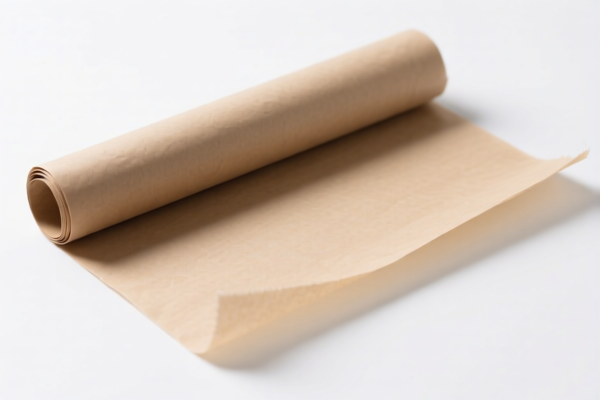
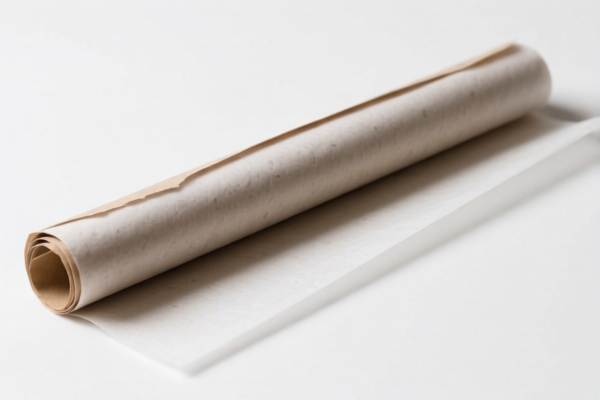
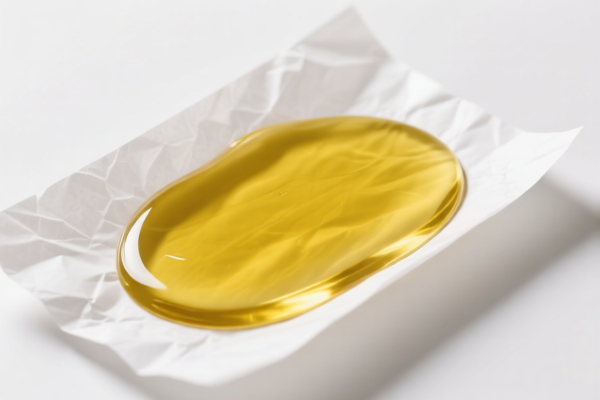
Air fryer paper towels — also known as oil-absorbing paper sheets, non-stick baking paper, or food-grade absorbent pads — are thin, disposable, paper-based or paper-coated sheets used during air frying to absorb excess oil, prevent sticking, and enhance food hygiene. These are not reusable, and are consumed during cooking.
They are not intended for general cleaning or industrial use, but specifically designed for food contact in home kitchen appliances like air fryers.
⚠️ Critical Distinction: - If the material is pure paper, thin, and used for oil absorption in food prep → 4818.90.00.80 or 4823.90.80.00 - If the paper is coated with plastic film or polymer layer (e.g., PE, PP, or silicone) → 3921.90.40.10 or 3921.90.40.90 - If it’s cut into specific shapes or sizes (e.g., circular, rectangular) → 4823.90.86.80
📦 Two, HS Code Classification Breakdown (2026 Official Tariff Comparison)
| HS Code | Product Description | Material & Form | Use Case | Key Feature |
|---|---|---|---|---|
3921.90.40.10 |
Paper reinforced with plastic film or coating; thin sheet for oil absorption | Paper + plastic film or polymer coating; flexible, thin, non-woven-like | Food prep in air fryers, baking, grilling | Paper enhanced with plastic layer → plastic content > 50% |
4818.90.00.80 |
Other paper and paperboard articles, not elsewhere specified; for hygiene/cleaning | Pure paper, non-woven, absorbent, disposable | Oil-absorbing sheets, kitchen wipes, food contact pads | No plastic coating, pure paper, hygiene-focused |
3921.90.40.90 |
Other articles of plastic film or sheet, not elsewhere specified | Plastic film or coated paper, thin, flexible, oil-resistant | Oil-absorbing pads, non-stick liners | Plastic film or coating dominates in material composition |
4823.90.80.00 |
Other paper or paperboard articles, not elsewhere specified; for functional use | Paper-based, used as pad, liner, or sealant | Absorbent pads, food contact sheets, disposable liners | Functional consumption, not decorative |
4823.90.86.80 |
Other paper or paperboard articles, cut to size/shape | Paper cut into specific dimensions (e.g., 10x10 cm, circular) | Pre-cut oil-absorbing sheets, ready-to-use pads | Shape-cut, customized, non-standard size |
🔍 Key Insight:
- No single HS code fits all — the material composition and form determine the correct classification. - Plastic-coated paper → 3921.90.40.10/90
- Pure paper, no coating → 4818.90.00.80 or 4823.90.80.00/86.80
💰 Three, 2026 Updated Tariff Breakdown (With Detailed Duty Clauses)
✅ Applicable Country: United States (US)
✅ Origin: China (CN)
✅ Effective Date: November 10, 2025 (inclusive)
✅ Applicable Tariff Regime: Section 301 + IEEPA + Section 122
🎯 1. 3921.90.40.10 — Paper Reinforced with Plastic Film (Oil-Absorbing Sheets)
| Item | Detail |
|---|---|
| Base Duty | 4.2% (ad valorem) |
| Section 301 (USITC) Additional Duty | +25.0% |
| Section 122 (IEEPA) Additional Duty | +10.0% |
| Total Effective Duty | 39.2% |
| Tax Calculation | CIF Value × 39.2% |
| De Minimis Threshold | ❌ Not applicable (denied) |
| Legal Basis Path | IEEPA:9903.01.25 → IEEPA:9903.01.24 → USITC:3921.90.40.10 → FOOTNOTE:9903.88.01 |
📌 Explanation: - Section 301 (25%): Imposed under the U.S. Trade Act of 1974 for unfair trade practices by China. - IEEPA (10%): From the International Emergency Economic Powers Act — targets Chinese-origin goods. - Combined with 4.2% base, total = 39.2% — extremely high for consumable paper products.
🎯 2. 4818.90.00.80 — Paper for Hygiene/Cleaning Use (Pure Paper Type)
| Item | Detail |
|---|---|
| Base Duty | 0.0% |
| Section 301 (USITC) Additional Duty | +7.5% |
| Section 122 (IEEPA) Additional Duty | +10.0% |
| Total Effective Duty | 17.5% |
| Tax Calculation | CIF Value × 17.5% |
| De Minimis Threshold | ❌ Not applicable |
| Legal Basis Path | IEEPA:9901.25 → IEEPA:9903.01.24 → USITC:4818.90.00.80 → FOOTNOTE:9903.88.01 |
📌 Explanation: - No base tariff, but 7.5% USITC + 10% IEEPA = 17.5% - Applies only to pure paper without plastic coating. - Still high, but significantly lower than plastic-coated versions.
🎯 3. 3921.90.40.90 — Plastic Film or Coated Paper (Plastic-Dominated)
| Item | Detail |
|---|---|
| Base Duty | 4.2% |
| Section 301 (USITC) Additional Duty | +25.0% |
| Section 122 (IEEPA) Additional Duty | +10.0% |
| Total Effective Duty | 39.2% |
| Tax Calculation | CIF Value × 39.2% |
| De Minimis Threshold | ❌ Not applicable |
| Legal Basis Path | IEEPA:9903.01.25 → IEEPA:9903.01.24 → USITC:3921.90.40.90 → FOOTNOTE:9903.88.01 |
📌 Explanation: - Same as 3921.90.40.10 — treated as plastic-based due to dominant plastic content. - Even if paper is present, if plastic coating > 50%, it’s classified under plastic category.
🎯 4. 4823.90.80.00 — Functional Paper Articles (Absorbent Pads, Liners)
| Item | Detail |
|---|---|
| Base Duty | 0.0% |
| Section 301 (USITC) Additional Duty | +25.0% |
| Section 122 (IEEPA) Additional Duty | +10.0% |
| Total Effective Duty | 35.0% |
| Tax Calculation | CIF Value × 35.0% |
| De Minimis Threshold | ❌ Not applicable |
| Legal Basis Path | IEEPA:9903.01.24 → USITC:4823.90.80.00 → FOOTNOTE:9903.88.01 |
📌 Explanation: - No base duty, but 25% + 10% = 35% — very high. - Applies to paper used as functional consumable (e.g., absorbent pads, sealing sheets).
🎯 5. 4823.90.86.80 — Cut Paper to Size/Shape
| Item | Detail |
|---|---|
| Base Duty | 0.0% |
| Section 301 (USITC) Additional Duty | +25.0% |
| Section 122 (IEEPA) Additional Duty | +10.0% |
| Total Effective Duty | 35.0% |
| Tax Calculation | CIF Value × 35.0% |
| De Minimis Threshold | ❌ Not applicable |
| Legal Basis Path | IEEPA:9903.01.24 → USITC:4823.90.86.80 → FOOTNOTE:9903.88.01 |
📌 Explanation: - Applies to pre-cut sheets (e.g., 15x15 cm, circular). - Same high rate as
4823.90.80.00— no relief for shape-cutting.
🛠️ Four, Customs Clearance Best Practices (Pro Tips to Avoid Penalties)
✅ 1. Required Documentation (Must-Have List)
| Document | Required? | Purpose |
|---|---|---|
| ✅ Product Specification Sheet | ✔️ | Material composition, thickness, coating type |
| ✅ Material Safety Data Sheet (MSDS) | ✔️ | Food contact safety, non-toxicity |
| ✅ FDA or FDA-Compliant Certification | ✔️ | Proof of food-grade material |
| ✅ Product Photos (Clear, with label) | ✔️ | Show material, texture, coating |
| ✅ Commercial Invoice | ✔️ | Accurate description: "Oil-Absorbing Paper Sheets for Air Fryers" |
| ✅ Certificate of Origin (CO) | ✔️ | To assess tariff eligibility |
| ✅ Packing List | ✔️ | Quantity, size, shape, packaging details |
✅ 2.申报技巧(Key Rules to Remember)
🔥 "Material First, Form Second — Coating Determines Code!"
| Scenario | Correct HS Code | Why? |
|---|---|---|
| Paper with PE coating | 3921.90.40.10 or 3921.90.40.90 |
Plastic layer > 50% → plastic classification |
| Pure paper, no coating | 4818.90.00.80 or 4823.90.80.00 |
Paper-only, hygiene use |
| Pre-cut sheets (10x10 cm) | 4823.90.86.80 |
Shape-cut → specific subheading |
| Reusable or washable | ❌ Not eligible — these are disposable only |
✅ 3. Special Handling Cases
| Situation | Recommended Action |
|---|---|
| Coated with silicone | Still falls under 3921.90.40.10/90 — plastic-based |
| Biodegradable or compostable | Still subject to same tariffs — eco-friendly ≠ tariff-free |
| Sold in bulk (1000 sheets) | No change in HS code — quantity doesn’t affect classification |
| Private label / OEM | Must declare brand, model, and material — avoid generic terms |
🌍 Five, Global Market Comparison (2026 Tariff Snapshot)
| Country | Recommended HS Code | Tariff Rate | Certification Required | Notes |
|---|---|---|---|---|
| 🇺🇸 USA | 3921.90.40.10/90 → 39.2% |
39.2% (high) | FDA, RoHS, Food-Grade | Highest tariffs |
| 🇨🇳 China | 4818.90.00.80 |
0% | CCC, RoHS | No extra duties |
| 🇪🇺 EU | 4818.90.00.80 |
0% (if CE) | CE, REACH | No 301/IEEPA |
| 🇦🇺 Australia | 4818.90.00.80 |
5% | RCM, Food Safety | No extra taxes |
| 🇯🇵 Japan | 4818.90.00.80 |
0% | PSE, JIS | No附加税 |
📌 Conclusion:
- U.S. is the most expensive market for air fryer paper towels. - China, EU, Australia, Japan have much lower or zero tariffs. - Consider shifting origin (e.g., Vietnam, Thailand) to avoid 39.2%.
📌 Six, Common Mistakes & How to Avoid Them (Real-World Pitfalls)
❌ Mistake 1: Calling a plastic-coated paper “paper towel” in invoice
👉 Result: Misclassified → 39.2% tariff instead of 17.5%
✅ Fix: Use “Plastic-coated paper sheet” or “Oil-absorbing liner with PE coating”
❌ Mistake 2: Not disclosing coating type in documentation
👉 Result: Customs may reclassify and impose higher duty
✅ Fix: Include material composition in specs and invoice
❌ Mistake 3: Using “paper” in description for plastic-coated product
👉 Result: Incorrect HS code, penalties, delayed release
✅ Fix: Be precise: “Paper substrate with polyethylene coating”
❌ Mistake 4: Selling in bulk without proper labeling
👉 Result: May be flagged for non-compliance or suspension
✅ Fix: Label each package: “Food-Grade Oil-Absorbing Paper Sheet, 100 pcs”
🎯 Seven, Final Verdict: Smart Importing Starts with Accurate Classification
🎯 Golden Rule:
🔹 "If it’s coated, it’s plastic. If it’s pure, it’s paper. If it’s cut, it’s 86.80."
🔹 "Don’t guess — test, document, and declare."
📌 Pro Tip:
If your product is plastic-coated, consider relocating production to Vietnam, Mexico, or Thailand — these countries are exempt from IEEPA 10% and 25% USITC duties under U.S. trade agreements.
📣 Take Action Now:
📞 Contact a licensed customs broker + provide material test report + request HS Code pre-ruling
🚀 Avoid surprise tariffs, delays, and rejection — import with confidence!
✨ Professional Clearance Starts with Precision
💼 Your product’s fate is in the HS Code — get it right, save thousands!
Customer Reviews
About HS Code Classification
The Harmonized System (HS) is an internationally standardized nomenclature developed by the World Customs Organization (WCO) to classify traded products. Over 200 countries use the HS system as the basis for customs tariffs, trade statistics, and import/export regulations.
Each HS code follows a hierarchical structure:
- Chapter (2 digits) — Broad category of goods (e.g., Chapter 84: Machinery and Mechanical Appliances)
- Heading (4 digits) — More specific grouping within the chapter
- Subheading (6 digits) — Internationally standardized breakdown, used by all WCO member countries
- National subdivisions (8-10 digits) — Country-specific extensions for further classification, such as US HTSUS 10-digit codes
Correct HS code classification is essential for smooth customs clearance, accurate duty payment, and compliance with trade regulations. Misclassification can lead to customs delays, overpayment of duties, or penalties.
When importing from CN to US, the applicable tariff rates may include:
- Most-Favored-Nation (MFN) rate — The standard duty rate applied to WTO members
- General rate — Applied to countries without trade agreements
- Trade remedy duties — Additional tariffs such as Section 301 (anti-dumping), Section 232 (national security), or countervailing duties
The information provided on this page is for reference purposes only. For official classification, please consult with your local customs authority or a licensed customs broker.