窗帘配件
CN → US| HS Code | Tariff Rate | Origin | Destination | Doc |
|---|---|---|---|---|
| 7326908688 | 87.9% | CN | US | Official Doc |
| 3926305000 | 22.8% | CN | US | Official Doc |
| 3926902500 | 24.0% | CN | US | Official Doc |
| 8302419050 | 38.5% | CN | US | Official Doc |
| 7326200090 | 88.9% | CN | US | Official Doc |
Product Images



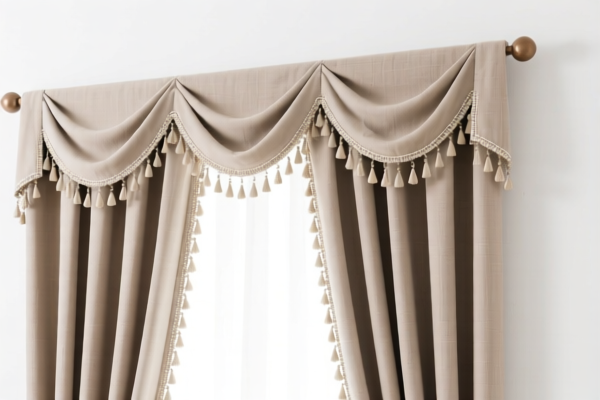
AI Analysis
🏠 Curtains & Blinds Accessories: HS Code Classification & Customs Clearance Guide (2026)
🌐 HS Code Reference & Customs Clearance Guide | Latest Tariff Analysis | Professional Entry Strategy
📌 I. Product Definition: What Are "Curtain Accessories"?
Curtain accessories are components used to hang, operate, secure, or decorate curtains, blinds, and shades. In international trade, they are not classified as a single unit but are broken down by material and function. Misclassification is the #1 cause of customs delays and excessive duty costs.
⚠️ Key Distinction:
- Metal Parts (Hangers, Tracks, Brackets): Fall under Section XV (Base Metals)
- Plastic Parts (Clips, Connectors, Holdbacks): Fall under Section XV (Plastics)
- Hardware/Fixtures (Hooks, Rings): Fall under Chapter 83 (Base Metal Accessories)
📦 II. HS Code Classification Matrix (Based on Provided Data)
| HS Code | Product Description | Material / Function | Total Tax Rate |
|---|---|---|---|
7326.90.86.88 |
Iron/Steel Other Articles | Metal components (e.g., steel tracks, rods) | 87.9% |
7326.20.00.90 |
Iron/Steel Other Articles | Metal components (e.g., steel brackets, weights) | 88.9% |
3926.30.50.00 |
Plastic Fasteners/Connectors | Plastic connectors, clips, ties | 22.8% |
3926.90.25.00 |
Other Plastic Articles | Plastic decorative or functional parts (non-fasteners) | 24.0% |
8302.41.90.50 |
Base Metal Fittings/Accessories | Metal hooks, rings, hangers, brackets | 38.5% |
🔍 Critical Note:
- Metal accessories face extremely high tariffs (87.9%–88.9%) due to Section 232 (Steel/Aluminum) and Section 301 tariffs.
- Plastic accessories face moderate tariffs (22.8%–24.0%) with Section 301 but no Section 232 steel/aluminum surcharge.
- Chapter 83 hardware (e.g., hooks/rings) has a lower total tax (38.5%) than raw steel articles (7326), making it a more favorable classification if applicable.
💰 III. Detailed Tariff Breakdown (2026 US Import from China)
✅ Applicable Country: United States (US)
✅ Origin: China (CN)
✅ Effective Date: Current (Post-2025 Policy Updates)
🎯 1. Metal Accessories: 7326.90.86.88 & 7326.20.00.90
| Component | Rate | Source / Clause |
|---|---|---|
| Base Duty | 2.9% – 3.9% | Harmonized Tariff Schedule (HTSUS) Base |
| Section 301 Surcharge | +25.0% | US Trade Act of 1974, Sec. 301 (China-specific) |
| Section 232 Surcharge | +50.0% | IEEPA, Sec. 232 (Steel, Aluminum, Copper) |
| Total Effective Rate | 87.9% – 88.9% | Sum of all applicable duties |
📌 Explanation:
- These codes classify "Other Articles of Iron or Steel".
- If the accessory contains steel, aluminum, or copper, the 50% Section 232 tariff applies on top of the 25% Section 301 tariff.
- This results in a penalty-level tax rate that can erase profit margins.
🎯 2. Plastic Accessories: 3926.30.50.00 & 3926.90.25.00
| Component | Rate | Source / Clause |
|---|---|---|
| Base Duty | 5.3% – 6.5% | HTSUS Base |
| Section 301 Surcharge | +7.5% | US Trade Act of 1974, Sec. 301 (List 3/4) |
| Section 232 Surcharge | N/A | Not applicable (Plastic is not steel/aluminum) |
| Total Effective Rate | 22.8% – 24.0% | Lower risk profile |
📌 Explanation:
- These codes cover plastic fasteners (3926.30) and other plastic articles (3926.90).
- No Section 232 tariff applies.
- The 7.5% Section 301 surcharge is significantly lower than the 25% base + 50% metal surcharge.
🎯 3. Metal Hardware/Fittings: 8302.41.90.50
| Component | Rate | Source / Clause |
|---|---|---|
| Base Duty | 3.5% | HTSUS Base |
| Section 301 Surcharge | +25.0% | US Trade Act of 1974, Sec. 301 |
| Section 232 Surcharge | N/A* | Note: This code is for "Fittings and Accessories," which may be exempt from Section 232 depending on interpretation. Data shows 38.5% total. |
| Total Effective Rate | 38.5% | Moderate tariff |
📌 Explanation:
- This code covers hooks, rings, and hangers.
- The total tax (38.5%) is less than half of the7326metal article codes.
- Strategy: If your product is a hook or ring, ensure it is classified here, not as a generic "steel article."
🛠️ IV. Customs Clearance Recommendations (Actionable Advice)
✅ 1. Material Declaration is Critical
| Scenario | Recommended HS Code | Reason |
|---|---|---|
| Steel Rods, Tracks, Brackets | 7326.90.86.88 or 7326.20.00.90 |
High tax, but correct for raw steel parts. |
| Plastic Clips, Connectors, Tie-Backs | 3926.30.50.00 |
Best option for plastic fasteners (22.8%). |
| Plastic Decorative Rings/Bevels | 3926.90.25.00 |
For non-fastener plastic parts (24.0%). |
| Metal Hooks, Rings, Hangers | 8302.41.90.50 |
Lower tax than generic steel articles (38.5%). |
🔥 Golden Rule:
"Plastic is cheap, Metal is expensive. Hooks are smarter than Rods."
- Always prioritize Plastic (3926) or Hardware (8302) if your product functionally allows it.
- Avoid7326unless the product is undeniably a raw steel article (e.g., a steel track bar).
✅ 2. Documentation Requirements
| Document | Requirement | Purpose |
|---|---|---|
| Commercial Invoice | Clearly state Material (e.g., "100% Plastic Connector") | Prevents customs from guessing "Steel" by default. |
| Product Photos | High-res images showing function (e.g., clip, hook) | Proves classification under 3926 or 8302. |
| BOM (Bill of Materials) | List material composition by weight | Supports plastic vs. metal classification. |
| HS Code Pre-Ruling | Request from CBP | Locks in classification and avoids retroactive audits. |
✅ 3. Risk Mitigation Strategies
| Risk | Mitigation |
|---|---|
| Misclassification of Plastic as Steel | Ensure invoices say "Plastic" not "Accessory." Provide material certs. |
| Section 232 Audit | If using 7326, verify if the item is truly "steel" or if it can be reclassified under 8302 (fittings). |
| De Minimis Exemption | ❌ Not Available for these HS codes. All shipments are subject to full duties. |
🌍 V. Global Market Comparison (2026)
| Country | Best HS Code | Estimated Tax | Notes |
|---|---|---|---|
| 🇺🇸 USA | 3926.30.50.00 |
22.8% | Lowest risk. Avoid 7326 unless necessary. |
| 🇨🇳 China | 7326.90.86.88 |
~2.9% | No Section 301/232. Low duty, but high export complexity. |
| 🇪🇺 EU | 7326.90.89 |
~5.3% | No Section 301. Standard MFN rate applies. |
| 🇨🇦 Canada | 7326.90.98 |
~5.5% | No Section 301. CUSMA may apply for some plastics. |
📌 Conclusion:
- USA is the most challenging market due to Section 301 + 232.
- Plastic accessories (3926) are the safest classification for the US market.
- Metal hooks (8302) offer a middle ground (38.5%) compared to raw steel articles (88%+).
📌 VI. Common Errors & Pitfalls
❌ Error 1: Classifying plastic clips as "Steel Accessories"
👉 Result: Tax jumps from 22.8% to 87.9%.
✅ Fix: Use HS Code 3926.30.50.00 and specify "Plastic" in description.
❌ Error 2: Classifying metal hooks as "Steel Articles (7326)"
👉 Result: Tax jumps from 38.5% to 87.9%.
✅ Fix: Use HS Code 8302.41.90.50 for hooks/rings/hangers.
❌ Error 3: Vague Description ("Curtain Parts")
👉 Result: Customs assigns default high-duty classification.
✅ Fix: Use specific terms: "Plastic Tie-Back Clip," "Steel Curtain Rod Bracket," "Metal Curtain Ring."
🎯 VII. Conclusion: Smart Classification Saves Money
🔹 "Plastic over Steel. Hooks over Rods. Specifics over Vague."
🔹 "HS Code Choice = Profit Margin Decision."
📌 Final Tip:
- If your product is 100% Plastic, always use 3926.
- If your product is Metal, check if it fits 8302 (hooks/rings) first. If not, it will fall under 7326 (high tax).
- Always request a CBP Pre-Ruling for high-value shipments to avoid surprise bills.
📣 Immediate Action:
📞 Contact your freight forwarder to confirm HS code based on material composition.
📄 Update invoices to specify "Plastic" or "Metal Hook" explicitly.
🚀 Optimize your supply chain by sourcing plastic accessories to reduce US duty costs by ~65% compared to steel alternatives.
✨ Professional Customs Clearance Starts with Accurate Classification!
💼 Your Duty Rate is Not Fixed – It’s Classified!
Customer Reviews
About HS Code Classification
The Harmonized System (HS) is an internationally standardized nomenclature developed by the World Customs Organization (WCO) to classify traded products. Over 200 countries use the HS system as the basis for customs tariffs, trade statistics, and import/export regulations.
Each HS code follows a hierarchical structure:
- Chapter (2 digits) — Broad category of goods (e.g., Chapter 84: Machinery and Mechanical Appliances)
- Heading (4 digits) — More specific grouping within the chapter
- Subheading (6 digits) — Internationally standardized breakdown, used by all WCO member countries
- National subdivisions (8-10 digits) — Country-specific extensions for further classification, such as US HTSUS 10-digit codes
Correct HS code classification is essential for smooth customs clearance, accurate duty payment, and compliance with trade regulations. Misclassification can lead to customs delays, overpayment of duties, or penalties.
When importing from CN to US, the applicable tariff rates may include:
- Most-Favored-Nation (MFN) rate — The standard duty rate applied to WTO members
- General rate — Applied to countries without trade agreements
- Trade remedy duties — Additional tariffs such as Section 301 (anti-dumping), Section 232 (national security), or countervailing duties
The information provided on this page is for reference purposes only. For official classification, please consult with your local customs authority or a licensed customs broker.