童装配件薄款
CN → US| HS Code | Tariff Rate | Origin | Destination | Doc |
|---|---|---|---|---|
| 6117809510 | 32.1% | CN | US | Official Doc |
| 6117809570 | 32.1% | CN | US | Official Doc |
| 3926909989 | 22.8% | CN | US | Official Doc |
| 3926908500 | 24.0% | CN | US | Official Doc |
| 6217108500 | 24.6% | CN | US | Official Doc |
| 6217109550 | 32.1% | CN | US | Official Doc |
Product Images
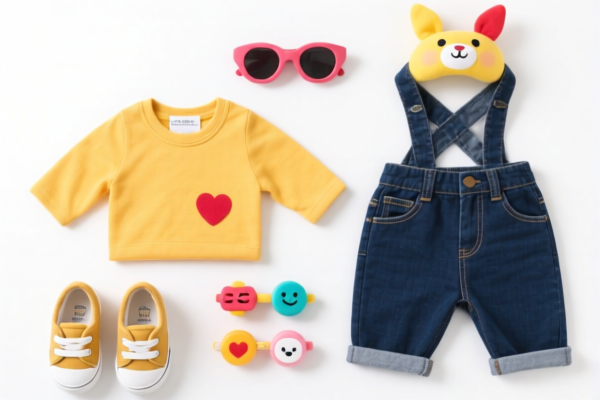
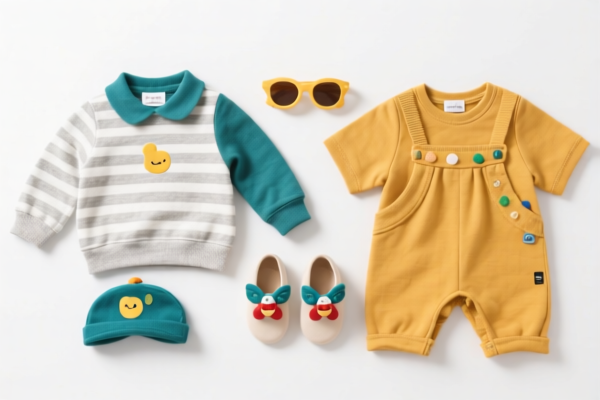
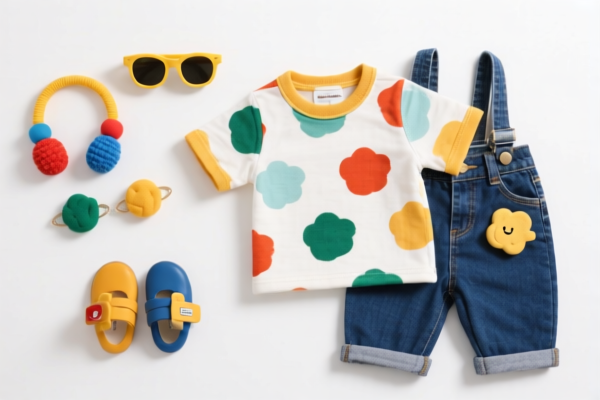
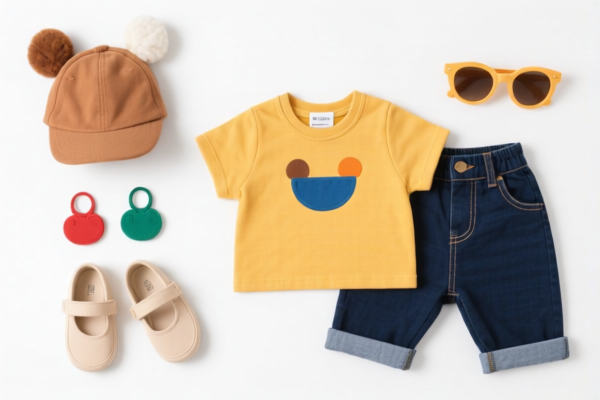
AI Analysis
🧸 Baby Clothing Accessories (Thin Style)
🌐 HS Code Reference & Customs Clearance Guide | 2026 Latest Tariff Analysis | Professional Entry Strategies
📌 I. Product Definition & Classification: What are "Thin Style Baby Clothing Accessories"?
"Baby Clothing Accessories (Thin Style)" refers to lightweight, non-insulated components or trims used in children's apparel. These items are typically made from fabrics (cotton, synthetic fibers) or plastics (buttons, plastic fasteners). The term "Thin Style" indicates they are not padded or heavily insulated, distinguishing them from winter coats or thick jackets.
⚠️ Key Distinction Point:
- Fabric/Textile Based: Belongs to Chapter 61/62 (Apparel & Accessories of Textile Materials);
- Plastic Based: Belongs to Chapter 39 (Articles of Plastics);
- Ambiguous/Mixed: Often classified under "Other Made-Up Accessories" depending on the primary material and function.
📦 II. HS Code Classification Details (2026 Latest Tariff Authority Mapping)
| HS Code | Product Description | Applicability | Material Inference | Taxation Risk |
|---|---|---|---|---|
6217.10.95.50 |
Other made-up clothing accessories (Textile-based) | Baby clothing accessories, thin style, textile nature | Cotton, Fiber, or Mixed Fabric | High (14.6% Base + Surtax) |
6117.80.95.10 |
Other made-up clothing accessories (Knitted/Crocheted) | Baby clothing accessories, matched with knitted童装 use | Cotton or Fiber (Knitted) | High (14.6% Base + Surtax) |
6117.80.95.70 |
Other made-up clothing accessories (Knitted/Crocheted) | Baby clothing accessories, non-conflicting material | Non-excluded fiber/blend | High (14.6% Base + Surtax) |
3926.90.99.89 |
Other articles of plastics | Accessories inferred as plastic parts (e.g., plastic buttons, buckles) | Plastic/Resin | Medium (5.3% Base + Surtax) |
3926.20.90.10 |
Articles of plastics for clothes | Plastic parts for clothing, specific sub-category | Plastic or Synthetic Fiber | Critical (5.0% Base + 25% Section 301) |
🔍 Key Reminder:
- Textile vs. Plastic: The primary material determines the Chapter. If it's a fabric tag, bow, or strap → Chapter 61/62. If it's a hard plastic snap button → Chapter 39.
- "Thin Style": This descriptor confirms it is not a "winter garment" (which would have different codes), but rather an accessory component.
- US Tariffs: All listed codes are subject to additional duties due to US-China trade tensions (Section 301 and Section 232/IEEPA equivalents).
💰 III. 2026 Latest Tariff Rate Breakdown (Including Surtaxes & Policy Add-ons)
✅ Applicable Country: United States (US)
✅ Country of Origin: China (CN)
✅ Effective Date: November 10, 2025 (and subsequent imports)
🎯 1. 6217.10.95.50 & 6117.80.95.10 & 6117.80.95.70 — Textile/Knitted Accessories
| Item | Content |
|---|---|
| Base Tariff | 14.6% (Ad Valorem) |
| Section 301 Surtax | +7.5% (Specific to this sub-category under USITC rules) |
| Section 232/IEEPA Add-on | +10% (Targeting Chinese goods, effective Nov 2025) |
| Total Tax Rate | 32.1% |
| Tax Calculation | CIF Value × 32.1% |
| De Minimis Exemption | ❌ Not Eligible (Denied for these HS codes) |
| Legal Basis Path | USITC:6217.10.95.50 → Section 301: 7.5% → IEEPA: 10% |
📌 Explanation:
- These codes fall under "Accessories of Clothing." The 14.6% base is standard for many textile accessories.
- The 7.5% is a specific Section 301 surcharge applied to this specific sub-heading.
- The 10% is the additional penalty tariff for Chinese origin goods under emergency powers.
- Total: 32.1%. This is a significant cost for low-margin baby products.
🎯 2. 3926.90.99.89 — Other Plastic Articles
| Item | Content |
|---|---|
| Base Tariff | 5.3% (Ad Valorem) |
| Section 301 Surtax | +7.5% |
| Section 232/IEEPA Add-on | +10% |
| Total Tax Rate | 22.8% |
| Tax Calculation | CIF Value × 22.8% |
| De Minimis Exemption | ❌ Not Eligible |
| Legal Basis Path | USITC:3926.90.99.89 → Section 301: 7.5% → IEEPA: 10% |
📌 Note:
- Plastic accessories have a lower base rate (5.3%) compared to textiles (14.6%).
- However, the surtaxes remain the same (7.5% + 10%).
- Total: 22.8%. This is more cost-effective than textile classifications.
🎯 3. 3926.20.90.10 — Plastic Articles for Clothes (Specific)
| Item | Content |
|---|---|
| Base Tariff | 5.0% (Ad Valorem) |
| Section 301 Surtax | +25.0% (Higher surtax rate for this sub-heading) |
| Section 232/IEEPA Add-on | +10% |
| Total Tax Rate | 40.0% |
| Tax Calculation | CIF Value × 40.0% |
| De Minimis Exemption | ❌ Not Eligible |
| Legal Basis Path | USITC:3926.20.90.10 → Section 301: 25% → IEEPA: 10% |
📌 Critical Warning:
- This code has a very high total rate of 40.0%.
- The 25% Section 301 surtax is significantly higher than the 7.5% applied to other plastic articles.
- Recommendation: Avoid this code if possible. Classifying as3926.90.99.89(22.8%) is much more favorable if the item can be justified as a "general plastic article" rather than specifically "for clothes" in a restricted sub-category.
🛠️ IV. Customs Clearance Practical Advice (Pitfall Avoidance Guide)
✅ 1. Documentation Checklist (Mandatory)
| Document | Required? | Explanation |
|---|---|---|
| ✅ Product Spec Sheet | ✔️ | Must specify material (e.g., "100% Cotton Ribbon" vs. "ABS Plastic Button") |
| ✅ Material Declaration | ✔️ | Clearly state % composition. Critical for Chapter 61 vs. 39 distinction. |
| ✅ Product Photos | ✔️ | Show front, back, and close-up of material texture. |
| ✅ Commercial Invoice | ✔️ | Description should be precise: "Baby Clothes Accessory, Thin, Cotton/Bow, No Packing" |
| ✅ Packing List | ✔️ | Ensure quantity matches invoice. |
| ✅ Third-Party Test Report | ✔️ | If plastic, CPC (Children's Product Certificate) may be required by CPSC, though not always customs, it helps clearance. |
✅ 2. Declaration Tips (Key Mnemonics)
🔥 "Material First, Form Second, Name Precise, Rate Drops!"
| Scenario | Correct Declaration | Wrong Practice |
|---|---|---|
| Fabric Bows/Ties | 6217.10.95.50 (Textile Accessory) |
Call it "Plastic" → Misclassification |
| Plastic Snap Buttons | 3926.90.99.89 (General Plastic) |
Call it 3926.20.90.10 → 40% Tax! |
| Knitted Headbands | 6117.80.95.10 (Knitted Accessory) |
Call it "Garment" → Different code |
| Mixed Material (Fabric+Plastic) | Analyze Principal Material | Ambiguous description → Customs Audit |
✅ 3. Special Handling
| Situation | Advice |
|---|---|
| OEM Custom Parts | Provide design drawings to prove it is an "accessory" not a "garment." |
| Sample Shipment | Still subject to taxes. Do not mark as "Gift" to avoid de minimis abuse flags. |
| Plastic vs. Fabric | If it has a plastic buckle but fabric strap, the principal material rule applies. Usually, if it's functional as an accessory, textile chapter may still apply if fabric dominates volume. |
🌍 V. Global Market Comparison (2026 Update)
| Country/Region | Recommended HS Code | Tariff (China Origin) | Certification | Notes |
|---|---|---|---|---|
| 🇺🇸 USA | 6217.10.95.50 / 3926.90.99.89 |
32.1% / 22.8% | CPC (CPSC) | High surtaxes. Avoid 3926.20.90.10. |
| 🇨🇳 China | 6217.10.95.50 |
~0-5% | N/A | Low entry barrier. |
| 🇪🇺 EU | 6217.10.95.50 |
0-12% | CE/EN71 | No Section 301. Lower overall cost. |
| 🇨🇦 Canada | 6217.10.95.50 |
0-12% | CPSIA-like | Similar to US but lower surtaxes. |
| 🇬🇧 UK | 6217.10.95.50 |
0-12% | UKCA | Post-Brexit rules apply. |
📌 Conclusion:
- USA is the most expensive market for these goods due to the cumulative 17.5% (7.5% + 10%) surtaxes.
- Plastic articles (3926.90.99.89) are cheaper to import than textile ones (6217.10.95.50).
- Avoid3926.20.90.10if you want to minimize costs, unless legally required.
📌 VI. Common Errors & Pitfalls (Lessons Learned)
❌ Error 1: Classifying plastic buttons as 3926.20.90.10
👉 Consequence: 40% tax instead of 22.8%. Loss of Profit!
❌ Error 2: Calling fabric bows "Plastic Accessories" because they have plastic pins
👉 Consequence: Misclassification, potential fines, and delays.
❌ Error 3: Ignoring the "Thin Style" descriptor
👉 Consequence: If customs suspects it's insulated, they may reclassify as a garment (higher base rate).
❌ Error 4: Using vague descriptions like "Baby Parts"
👉 Consequence: Customs will assign a general code, often leading to the highest possible duty.
✅ Correct Practice:
"Baby Clothing Accessory, Thin, 100% Cotton Bow with Elastic Band, HS 6217.10.95.50, Made in China"
🎯 VII. Conclusion: Precise Classification Saves Money!
🎯 Remember the Key Rates:
🔹 Textile Accessories: 32.1% Total (14.6% + 7.5% + 10%)
🔹 General Plastic Accessories: 22.8% Total (5.3% + 7.5% + 10%)
🔹 Specific Plastic for Clothes: 40.0% Total (5.0% + 25% + 10%) → AVOID!🔹 "Material Dictates Chapter, Surtax Dictates Cost."
🔹 "If it's plastic, go for 3926.90.99.89 to save 17.2%!"
📌 Pro Tip:
- If your product is made of both fabric and plastic, consult a customs broker to determine the principal character.
- Consider supply chain diversification (e.g., Vietnam, India) to potentially avoid China-origin surtaxes, though verify local content rules.
📣 Immediate Action:
📞 Verify Material Composition → Select HS Code → Calculate 32.1% or 22.8% Cost → Adjust FOB Price
🚀 Clear Customs Smoothly, Protect Your Margins!
✨ Professional Customs Clearance Starts with Accurate Classification!
💼 Every 1% in tariff is a 1% hit to your profit!
Customer Reviews
About HS Code Classification
The Harmonized System (HS) is an internationally standardized nomenclature developed by the World Customs Organization (WCO) to classify traded products. Over 200 countries use the HS system as the basis for customs tariffs, trade statistics, and import/export regulations.
Each HS code follows a hierarchical structure:
- Chapter (2 digits) — Broad category of goods (e.g., Chapter 84: Machinery and Mechanical Appliances)
- Heading (4 digits) — More specific grouping within the chapter
- Subheading (6 digits) — Internationally standardized breakdown, used by all WCO member countries
- National subdivisions (8-10 digits) — Country-specific extensions for further classification, such as US HTSUS 10-digit codes
Correct HS code classification is essential for smooth customs clearance, accurate duty payment, and compliance with trade regulations. Misclassification can lead to customs delays, overpayment of duties, or penalties.
When importing from CN to US, the applicable tariff rates may include:
- Most-Favored-Nation (MFN) rate — The standard duty rate applied to WTO members
- General rate — Applied to countries without trade agreements
- Trade remedy duties — Additional tariffs such as Section 301 (anti-dumping), Section 232 (national security), or countervailing duties
The information provided on this page is for reference purposes only. For official classification, please consult with your local customs authority or a licensed customs broker.