童装配件(薄款)
CN → US| HS Code | Tariff Rate | Origin | Destination | Doc |
|---|---|---|---|---|
| 3926209010 | 40.0% | CN | US | Official Doc |
| 6117809570 | 32.1% | CN | US | Official Doc |
| 6117809510 | 32.1% | CN | US | Official Doc |
| 3926909989 | 22.8% | CN | US | Official Doc |
| 6217109550 | 32.1% | CN | US | Official Doc |
Product Images
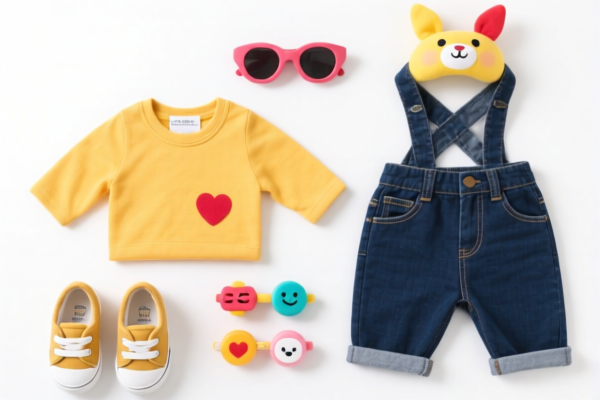
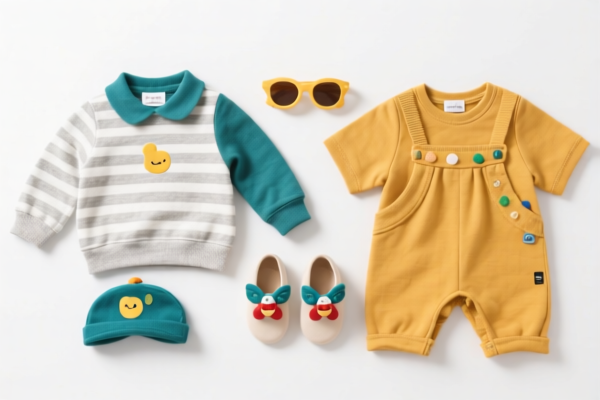
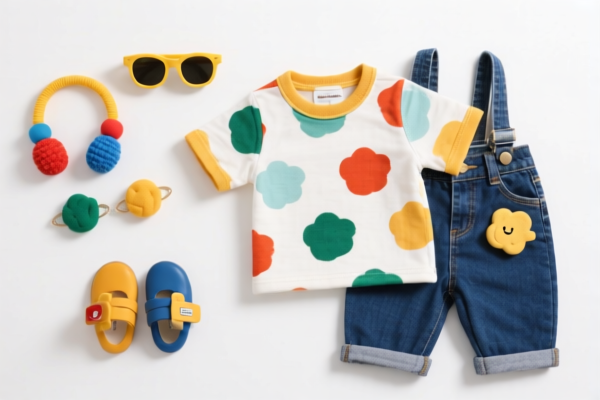
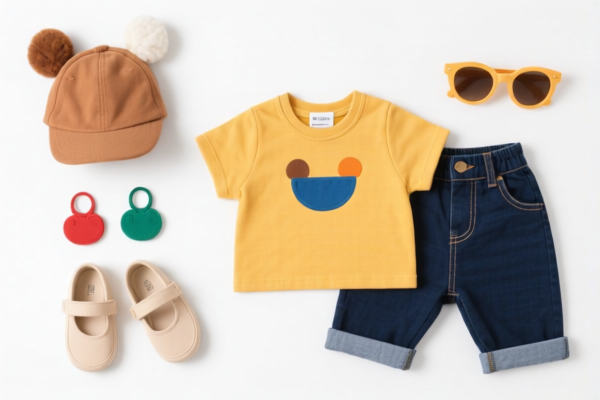
AI Analysis
🧸 童装配件(薄款) (Baby/Children's Apparel Accessories - Thin/Lightweight)
🌐 HS Code Reference & Customs Clearance Guide | 2026 Latest Tariff Analysis | Professional Strategy
📌 I. Product Definition & Classification: What Exactly Are "Thin Baby Accessories"?
"Baby/Children's Apparel Accessories (Thin)" refers to lightweight decorative or functional components used in children's clothing. These are not complete garments but rather supplementary items.
Common Examples: * Fabric-based: Ribbons, lace trims, fabric flowers, patches, tags. * Plastic/Hardware: Plastic buttons, snap fasteners, decorative buckles, plastic strips.
⚠️ Key Distinction:
- If the item is fabric/textile-based (cotton, synthetic fiber) → It falls under Chapter 61/62 (Apparel Accessories).
- If the item is plastic/synthetic resin-based (buttons, buckles) → It falls under Chapter 39 (Plastics).
- "Thin" (薄款) implies lightweight materials, reinforcing the classification as "accessories" rather than heavy-duty hardware or garments.
📦 II. HS Code Classification Details (2026 Latest Tariff Authority Comparison)
| HS Code | Product Description | Application Scenario | Material/Type Conflict Check |
|---|---|---|---|
6117.80.95.10 |
Other made-up clothing accessories, of cotton | Fabric ribbons, lace, patches; inferred as cotton/fiber based on "thin" nature | ✅ Match: Fits "accessory" form; material (cotton/fiber) does not conflict with exclusion criteria. |
6117.80.95.70 |
Other made-up clothing accessories, of man-made fibers | Synthetic fabric trims; inferred as man-made fiber | ✅ Match: Fits "accessory" form; material (man-made fiber) does not conflict with exclusions (non-cotton, non-wool). |
6217.10.95.50 |
Other made-up clothing accessories, other | General fabric accessories not specified elsewhere | ✅ Match: Fits "accessory" form; "thin" description does not conflict with "other accessories" shape. |
3926.20.90.10 |
Articles of apparel and clothing accessories, of plastics | Plastic buttons, decorative strips, plastic buckles | ✅ Match: "Accessories" use matches; inferred as plastic/synthetic fiber due to "thin" nature. |
3926.90.99.89 |
Other articles of plastics, n.e.c. | Unspecified plastic items (e.g., small plastic clips) | ✅ Match: Inferred as plastic (buttons/strps); shape is other plastic article not specifically listed. |
🔍 Key Warning:
- Fabric vs. Plastic: The biggest risk is misclassifying a plastic button as a fabric accessory or vice versa.
- "Thin" Interpretation: "Thin" usually suggests textile/ribbon or thin plastic sheets. It rarely refers to thick metal or heavy-duty hardware.
- Chapter 61 vs. 62: Chapter 61 is for knitted/crocheted items; Chapter 62 is for non-knitted. If material is unknown,6117.80.95or6217.10are common fallbacks depending on manufacturing process.
💰 III. 2026 Latest Tariff Rate Breakdown (Including Surtaxes & Policy Add-ons)
✅ Applicable Country: United States (US)
✅ Origin: China (CN)
✅ Effective Time: 2025 November 10 onwards (for subsequent imports)
🎯 1. 6117.80.95.10 & 6117.80.95.70 —— Textile-Based Accessories
| Item | Content |
|---|---|
| Base Duty Rate | 14.6% |
| Section 301 Surtax | +7.5% (Specific to this subheading) |
| Section 122 Tariff | +10% (Specific to children's apparel/accessories) |
| Total Tax Rate | 32.1% |
| Tax Calculation | CIF Value × 32.1% |
| De Minimis Exemption | ❌ Not Applicable (For goods originating from China, Section 301/122 duties apply regardless of value in most commercial contexts, though $800 de minimis may still apply for value, duties are still collected if declared correctly) |
| Legal Basis Path | USITC:6117.80.95 → 301:7.5% → 122:10% |
📌 Explanation:
- Base Rate 14.6%: Standard MFN rate for other made-up clothing accessories.
- Section 301 (+7.5%): A specific additional duty for certain textile accessories from China.
- Section 122 (+10%): A specific duty on children's apparel and accessories to protect domestic infant apparel manufacturers.
- Total 32.1%: High effective duty. Must be factored into cost pricing.
🎯 2. 6217.10.95.50 —— Non-Knitted Clothing Accessories
| Item | Content |
|---|---|
| Base Duty Rate | 14.6% |
| Section 301 Surtax | +7.5% |
| Section 122 Tariff | +10% |
| Total Tax Rate | 32.1% |
| Tax Calculation | CIF Value × 32.1% |
| De Minimis Exemption | ❌ Not Applicable |
| Legal Basis Path | USITC:6217.10.95 → 301:7.5% → 122:10% |
📌 Note:
- Same tax structure as Chapter 61 for this category.
- Applies to woven fabric accessories, ribbons, bows, etc.
🎯 3. 3926.20.90.10 —— Plastic Apparel Accessories
| Item | Content |
|---|---|
| Base Duty Rate | 5.0% |
| Section 301 Surtax | +25.0% (Higher due to plastic goods classification) |
| Section 122 Tariff | +10% |
| Total Tax Rate | 40.0% |
| Tax Calculation | CIF Value × 40.0% |
| De Minimis Exemption | ❌ Not Applicable |
| Legal Basis Path | USITC:3926.20.90 → 301:25.0% → 122:10% |
📌 Explanation:
- Base Rate 5.0%: Lower base duty for plastics.
- Section 301 (+25%): Higher surtax for plastic articles compared to textiles.
- Section 122 (+10%): Still applies because it is an "apparel accessory."
- Total 40.0%: Highest tariff rate among all options. Plastic accessories are significantly more taxed.
🎯 4. 3926.90.99.89 —— Other Plastic Articles
| Item | Content |
|---|---|
| Base Duty Rate | 5.3% |
| Section 301 Surtax | +7.5% |
| Section 122 Tariff | +10% |
| Total Tax Rate | 22.8% |
| Tax Calculation | CIF Value × 22.8% |
| De Minimis Exemption | ❌ Not Applicable |
| Legal Basis Path | USITC:3926.90.99 → 301:7.5% → 122:10% |
📌 Note:
- Applies if the plastic item is not explicitly listed as an "apparel accessory" in3926.20.
- Lower total rate (22.8%) than3926.20.90.10(40.0%) because Section 301 rate is lower (7.5% vs 25%).
- Risk: Customs may reclassify as3926.20.90.10if it clearly looks like a button or trim.
🛠️ IV. Customs Clearance Practical Advice (Battle-Tested Pitfall Avoidance)
✅ 1. Preparation Checklist (No Missing Documents)
| Document | Required | Description |
|---|---|---|
| ✅ Product Specification Sheet | ✔️ | Must specify: Material (Cotton, Polyester, Plastic), Usage (Children's clothing accessory), Type (Ribbon, Button, Lace). |
| ✅ Material Declaration | ✔️ | Critical: Is it Textile or Plastic? Misclassification here causes huge duty differences. |
| ✅ Product Photos (Clear) | ✔️ | Show texture, thickness ("thin"), and application (e.g., attached to fabric). |
| ✅ Commercial Invoice | ✔️ | Description: "Baby clothes accessories, thin, [Material], HS Code [XXXX]" |
| ✅ Packing List | ✔️ | No mixed items (e.g., don't pack plastic buttons and cotton ribbons together if they are different HS codes). |
✅ 2. Declaration Tips (Key Mantra)
🔥 "Material First, Form Second, 'Thin' Means Lightweight, Don't Mix!"
| Scenario | Correct Declaration | Wrong Approach |
|---|---|---|
| Fabric Ribbons/Lace | 6117.80.95.10 or 6217.10.95.50 |
Misdeclare as 3926.20 (Plastic) → 40% duty |
| Plastic Buttons/Strips | 3926.20.90.10 |
Misdeclare as 6117.80 (Textile) → 32.1% duty (underpaid) or reclassification penalty |
| Unspecified Plastic Parts | 3926.90.99.89 (if not clearly apparel) |
Misdeclare as 6117.80 → Penalty for false material declaration |
| Mixed Bag (Fabric + Plastic) | Split Declaration | Pack together → Customs may tax whole bag at highest rate (40%) |
✅ 3. Special Case Handling
| Situation | Handling Advice |
|---|---|
| "Thin" Plastic Buttons | Classify as 3926.20.90.10 (40% duty). Do not try to classify as 3926.90 to save tax unless you can prove they are not "apparel accessories." |
| Fabric with Plastic Backing | Classify as Plastic (3926.20) if the plastic is the essential character. High risk, high duty. |
| Embroidered Patches (Fabric) | Classify as 6117.80.95.10 or 6217.10.95.50 (32.1% duty). |
| Custom OEM Orders | Provide design drawings to prove "accessory" nature, not garment. |
🌍 V. Global Market Comparison (2026 Latest)
| Country/Region | Recommended HS Code | Total Duty (China Origin) | Certification Requirements | Notes |
|---|---|---|---|---|
| 🇺🇸 USA | 6117.80.95.10 / 3926.20.90.10 |
32.1% (Textile) / 40.0% (Plastic) | CPSIA (Children's Products) | High Duty. Section 122 + 301 apply. |
| 🇨🇳 China | 6117.80.95.10 |
8.0% (Approx.) | CCC (if applicable) | No Surtaxes. |
| 🇪🇺 EU | 6117.80.95 / 3926.20 |
0-4% (MFN) | CE (if applicable), REACH | No Surtaxes. |
| 🇦🇺 Australia | 6117.80.95 |
5% | GCSS (Children's Wear Safety) | No Surtaxes. |
📌 Conclusion:
- USA is the only market with high additional tariffs (Section 301 & 122).
- Plastic accessories (40%) are more expensive to import into the US than Fabric Accessories (32.1%).
- Children's Product Safety (CPSIA) is mandatory for US imports. Ensure your supplier provides a Children’s Product Certificate (CPC).
📌 VI. Common Errors & Pitfall Guide (Blood & Tears Lessons)
❌ Error 1: Declaring plastic buttons as "fabric accessories" to save tax
👉 Consequence: Customs reclassifies → Backpay 7.9% difference + Penalties + Delay!
❌ Error 2: Mixing "Thin" fabric and "Thin" plastic in one box
👉 Consequence: Customs may assess the entire shipment at the highest rate (40%) or demand split documentation.
❌ Error 3: Ignoring "Section 122" for children's items
👉 Consequence: Underpayment of 10% duty. Customs audits will catch this.
❌ Error 4: Missing CPSIA/CPC documentation
👉 Consequence: Goods Held at Border! Even if HS code is correct, no CPC = No Clearance.
✅ Correct Approach:
"Baby Apparel Accessories, Thin, 100% Cotton Ribbon, HS Code 6117.80.95.10, CPC Attached"
OR
"Baby Apparel Accessories, Plastic Buttons, HS Code 3926.20.90.10, CPC Attached"
🎯 VII. Conclusion: Precision Classification Saves Money!
🎯 Remember the Mantra:
🔹 "Fabric 32, Plastic 40, Section 122 Hits 10, Don't Get Caught!"
🔹 "HS Code Decides Tax, Material is Key, Declaration Must Be Clear!"
📌 Pro Tip:
If your products are textile-based, try to use 6117.80.95.10 (Cotton) or 6117.80.95.70 (Man-made) for 32.1% duty.
If they are plastic, be prepared for 40% duty unless they can be argued as "Other Plastic Articles" (3926.90.99.89) at 22.8%, but this is high-risk.
📣 Immediate Action:
📞 Contact your customs broker + Provide Material Test Report + Apply for CPSIA Compliance
🚀 Ensure your Children's Apparel Accessories clear US customs smoothly, efficiently, and profitably!
✨ Professional Clearance Starts with Accurate Classification!
💼 Your Cost is Calculated Precisely!
Customer Reviews
About HS Code Classification
The Harmonized System (HS) is an internationally standardized nomenclature developed by the World Customs Organization (WCO) to classify traded products. Over 200 countries use the HS system as the basis for customs tariffs, trade statistics, and import/export regulations.
Each HS code follows a hierarchical structure:
- Chapter (2 digits) — Broad category of goods (e.g., Chapter 84: Machinery and Mechanical Appliances)
- Heading (4 digits) — More specific grouping within the chapter
- Subheading (6 digits) — Internationally standardized breakdown, used by all WCO member countries
- National subdivisions (8-10 digits) — Country-specific extensions for further classification, such as US HTSUS 10-digit codes
Correct HS code classification is essential for smooth customs clearance, accurate duty payment, and compliance with trade regulations. Misclassification can lead to customs delays, overpayment of duties, or penalties.
When importing from CN to US, the applicable tariff rates may include:
- Most-Favored-Nation (MFN) rate — The standard duty rate applied to WTO members
- General rate — Applied to countries without trade agreements
- Trade remedy duties — Additional tariffs such as Section 301 (anti-dumping), Section 232 (national security), or countervailing duties
The information provided on this page is for reference purposes only. For official classification, please consult with your local customs authority or a licensed customs broker.