竹制钓鱼装备篮
CN → US| HS Code | Tariff Rate | Origin | Destination | Doc |
|---|---|---|---|---|
| 4602110500 | 40.0% | CN | US | Official Doc |
| 4602110700 | 35.0% | CN | US | Official Doc |
| 9507908000 | 19.0% | CN | US | Official Doc |
| 4602110900 | 45.0% | CN | US | Official Doc |
| 9403820015 | 35.0% | CN | US | Official Doc |
Product Images
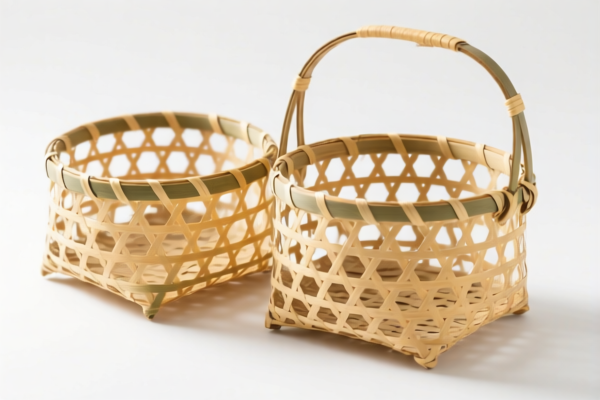
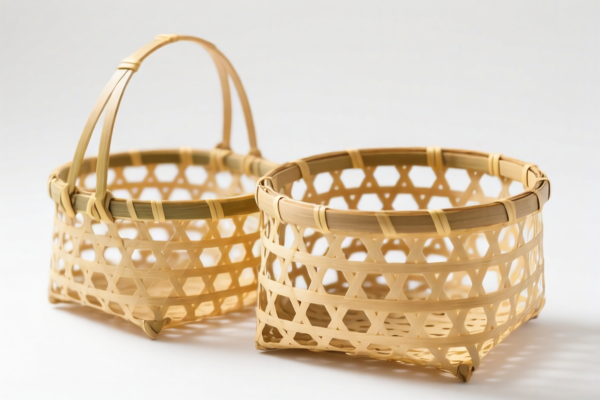
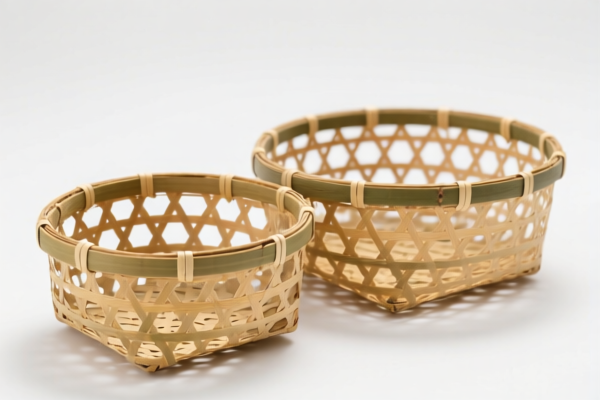
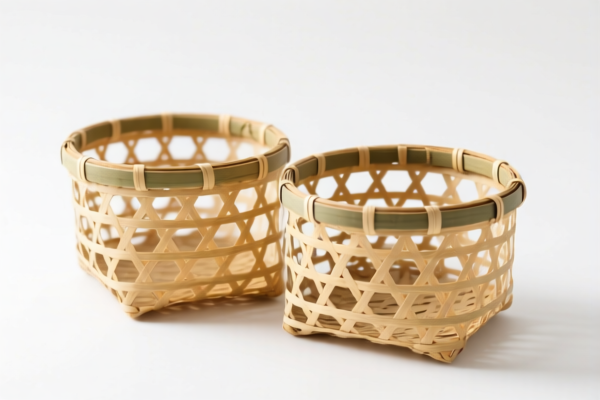
AI Analysis
🎣 Bamboo Fishing Baskets & Gear Containers
🌐 HS Code Reference & Customs Clearance Guide | 2026 Latest Tariff Analysis | Professional-Level Compliance Strategy
📌 I. Product Definition & Classification: Do You Really Understand "Bamboo Fishing Baskets"?
Bamboo fishing baskets are essential tools in traditional and recreational fishing, used for storing fish, bait, or gear. In international trade, they are categorized based on their specific function and manufacturing method:
- Fishing-Specific Baskets (
4602.11.05.00): Specifically designed for catching or holding fish (e.g., traps, creels with specific openings). - General Woven Baskets (
4602.11.07.00,4602.11.09.00): General-purpose woven containers, including trolleys, carrying baskets, or gear storage baskets not specifically shaped for fishing traps. - Woven Articles (
4601.92...): Finished or semi-finished bamboo weaving products that may be used for baskets but are classified under broader woven article categories if they don't fit specific basket subheadings.
⚠️ Key Distinction Point:
- If the basket has specialized fishing features (e.g., bait compartments, fish-holding mesh integration) → Classify under4602.11.05.00.
- If it is a general woven carrying basket used for fishing gear → Classify under4602.11.07.00or4602.11.09.00.
- If it is a woven product but not a finished basket shape → Classify under4601.92....
📦 II. HS Code Classification Details (2026 Latest Tariff Authority Comparison)
| HS Code | Product Description | Application Scenario | Fishing-Specific? |
|---|---|---|---|
4602.11.05.00 |
Bamboo fishing baskets, meeting bamboo fishing basket definition | Specialized fish traps, creels, bait holders | ✅ Yes |
4602.11.07.00 |
Bamboo woven baskets, suitable for trolleys or fishing baskets | General carrying baskets, gear storage | ❌ No (General Use) |
4602.11.09.00 |
Bamboo baskets, meeting bamboo and basket form requirements | Standard woven baskets for general storage | ❌ No (General Form) |
4601.92.20.00 |
Bamboo woven articles, suitable for carrying baskets | Semi-finished woven products, basket frames | ⚠️ Partial (Component) |
4601.92.05.00 |
Bamboo woven material products, suitable for carrying basket forms | Woven materials, mats, or partial basket structures | ❌ No (Material/Partial) |
🔍 Important Reminder:
- All specialized fishing baskets must be classified under4602.11.05.00; do not misclassify as general baskets to avoid penalties.
- If the product is a general woven basket used for fishing gear (not for catching fish), classify under4602.11.07.00or4602.11.09.00.
- If it is a woven article (e.g., a mat or frame) that will be assembled into a basket, classify under4601.92....
💰 III. 2026 Latest Tariff Rate Details (Including Additional Taxes & Policy Surcharges)
✅ Applicable Country: United States (US)
✅ Origin: China (CN)
✅ Effective Date: From November 10, 2025 (including subsequent imports)
🎯 1. 4602.11.05.00 —— Bamboo Fishing Baskets (Fishing-Specific)
| Item | Content |
|---|---|
| Base Tariff Rate | 5.0% (ad valorem) |
| Section 301 Additional Tariff | +25.0% |
| Section 122 Tariff | +10.0% |
| Total Tariff Rate | 40.0% |
| Tax Calculation | CIF Value × 40.0% |
| De Minimis Eligibility | ❌ Not Eligible (deny_de_minimis) |
| Legal Basis Path | Section 301 → Section 122 → USITC:4602.11.05.00 → FOOTNOTE:Trade Restrictions |
📌 Explanation:
- The 25% Section 301 tariff is imposed under U.S. Trade Law Section 301 on Chinese imports;
- The 10% Section 122 tariff is a national security-related surcharge;
- Total 40% is a high tariff for bamboo fishing baskets; proactive planning is essential!
🎯 2. 4602.11.07.00 —— Bamboo Woven Baskets (General Use)
| Item | Content |
|---|---|
| Base Tariff Rate | 0.0% |
| Section 301 Additional Tariff | +25.0% |
| Section 122 Tariff | +10.0% |
| Total Tariff Rate | 35.0% |
| Tax Calculation | CIF Value × 35.0% |
| De Minimis Eligibility | ❌ Not Eligible |
| Legal Basis Path | Section 301 → Section 122 → USITC:4602.11.07.00 → FOOTNOTE:Trade Restrictions |
📌 Note:
- Compared to fishing-specific baskets, the base tariff is lower (0%), but additional tariffs remain the same;
- Total 35% is still significant; however, it is 5% lower than fishing-specific baskets.
🎯 3. 4602.11.09.00 —— Bamboo Baskets (General Form)
| Item | Content |
|---|---|
| Base Tariff Rate | 10.0% |
| Section 301 Additional Tariff | +25.0% |
| Section 122 Tariff | +10.0% |
| Total Tariff Rate | 45.0% |
| Tax Calculation | CIF Value × 45.0% |
| De Minimis Eligibility | ❌ Not Eligible |
| Legal Basis Path | Section 301 → Section 122 → USITC:4602.11.09.00 → FOOTNOTE:Trade Restrictions |
📌 Note:
- This is the highest tariff category among the three basket types;
- Avoid classifying general baskets under this code if possible.
🎯 4. 4601.92.20.00 —— Bamboo Woven Articles (Carrying Basket Form)
| Item | Content |
|---|---|
| Base Tariff Rate | 6.6% |
| Section 301 Additional Tariff | +25.0% |
| Section 122 Tariff | +10.0% |
| Total Tariff Rate | 41.6% |
| Tax Calculation | CIF Value × 41.6% |
| De Minimis Eligibility | ❌ Not Eligible |
| Legal Basis Path | Section 301 → Section 122 → USITC:4601.92.20.00 → FOOTNOTE:Trade Restrictions |
📌 Note:
- For semi-finished woven products, the base tariff is 6.6%;
- Total 41.6% is higher than general baskets (4602.11.07.00) but lower than fishing-specific baskets (4602.11.05.00) in some cases.
🎯 5. 4601.92.05.00 —— Bamboo Woven Material Products (Carrying Basket Form)
| Item | Content |
|---|---|
| Base Tariff Rate | 2.7% |
| Section 301 Additional Tariff | +25.0% |
| Section 122 Tariff | +10.0% |
| Total Tariff Rate | 37.7% |
| Tax Calculation | CIF Value × 37.7% |
| De Minimis Eligibility | ❌ Not Eligible |
| Legal Basis Path | Section 301 → Section 122 → USITC:4601.92.05.00 → FOOTNOTE:Trade Restrictions |
📌 Note:
- For woven materials or partial basket structures, the base tariff is 2.7%;
- Total 37.7% is competitive but requires proof of non-finished status.
🛠️ IV. Customs Clearance Practical Advice (Field Pitfall Avoidance Guide)
✅ 1. Required Documentation Checklist (All Mandatory)
| Document | Mandatory | Description |
|---|---|---|
| ✅ Product Specification Sheet | ✔️ | Includes dimensions, material type, weaving method, intended use |
| ✅ Product Photos (with labels) | ✔️ | Clear images showing basket shape, openings, handles, and labels |
| ✅ Commercial Invoice | ✔️ | Must specify "Bamboo Fishing Basket" or "Bamboo Woven Basket" |
| ✅ Packing List | ✔️ | Details on packaging and quantity |
| ✅ Certificate of Origin (CO) | ✔️ | If not Chinese origin, apply for preferential tariffs |
| ✅ Third-Party Test Report | ✔️ | If applicable, RoHS, REACH, or safety certifications |
✅ 2. Declaration Tips (Key Mantra)
🔥 "Fishing-Specific vs. General Use, Name Precisely, Tax Rate Varies!"
| Scenario | Correct Declaration Method | Incorrect Practice |
|---|---|---|
| Fishing-specific basket (e.g., fish trap, creel) | 4602.11.05.00 |
Misclassified as general basket → 40% |
| General carrying basket for fishing gear | 4602.11.07.00 |
Misclassified as fishing basket → 35% |
| Semi-finished woven product | 4601.92.20.00 |
Misclassified as finished basket → 41.6% |
| Woven material/partial structure | 4601.92.05.00 |
Misclassified as finished basket → 37.7% |
✅ 3. Special Case Handling
| Scenario | Handling Advice |
|---|---|
| OEM Custom Baskets | Provide customer orders + design drawings to avoid "non-standard" classification |
| Baskets with Additional Features (e.g., handles, lids) | Still classified under basket codes, not accessory codes |
| Mixed Packaging (Baskets + Accessories) | Declare as a single item under the basket code; do not split |
| Bamboo Material Certification | Provide proof of bamboo origin if required for preferential tariffs |
🌍 V. Global Major Market Clearance Comparison (2026 Latest)
| Country/Region | Recommended HS Code | Tariff | Certification Requirements | Notes |
|---|---|---|---|---|
| 🇺🇸 United States | 4602.11.05.00 |
40% (Chinese Origin) | None Specific | High additional tariffs |
| 🇨🇳 China | 4602.11.05.00 |
5% | None | No additional tariffs |
| 🇪🇺 European Union | 4602.11.05.00 |
2.5% (if eligible) | CE, REACH | No additional tariffs |
| 🇦🇺 Australia | 4602.11.05.00 |
5% | None | No additional tariffs |
| 🇯🇵 Japan | 4602.11.05.00 |
0% (if eligible) | PSE (if applicable) | No additional tariffs |
📌 Conclusion:
- The United States imposes the highest tariffs on bamboo fishing baskets due to additional Section 301 and Section 122 tariffs;
- Chinese-origin bamboo products face significant cost barriers in the U.S. market; consider supply chain adjustments or origin diversification.
📌 VI. Common Errors & Pitfall Avoidance Guide (Lessons from Experience)
❌ Error 1: Classifying a fishing-specific basket as a general basket
👉 Consequence: Underpayment of tariffs → Back taxes + penalties!
❌ Error 2: Declaring a finished basket as a woven article
👉 Consequence: Overpayment of tariffs → Lost profit margin!
❌ Error 3: Not providing product photos or specifications
👉 Consequence: Customs cannot verify classification → Delay in clearance or return!
❌ Error 4: Using vague terms like "Bamboo Container" without specifying use
👉 Consequence: Customs assigns highest applicable rate → 45% instead of 35%!
✅ Correct Practice:
"Bamboo Fishing Basket, Hand-Woven, for Holding Fish, Model XYZ, Dimensions: 30x20x15cm"
🎯 VII. Conclusion: Professional Declaration, Save Time, Reduce Costs!
🎯 Remember the Mantra:
🔹 "Fishing-Specific vs. General Use, Name Precisely, Tax Rate Varies!"
🔹 "HS Code Determines Life or Death, Tariff Difference Can Cost Thousands!"
📌 Pro Tip:
If your bamboo baskets are originating from Vietnam, Mexico, Thailand, or Malaysia, you may apply for IEEPA exemptions or lower base tariffs;
Consider applying for an Advance Ruling to avoid clearance risks.
📣 Act Now:
📞 Contact professional customs brokers + Provide product images + Apply for HS Code Advance Ruling
🚀 Let your bamboo fishing baskets clear customs smoothly, boost efficiency, and double profits!
✨ Professional Clearance Starts with Accurate Classification!
💼 Every penny of your cost deserves precise calculation!
Customer Reviews
About HS Code Classification
The Harmonized System (HS) is an internationally standardized nomenclature developed by the World Customs Organization (WCO) to classify traded products. Over 200 countries use the HS system as the basis for customs tariffs, trade statistics, and import/export regulations.
Each HS code follows a hierarchical structure:
- Chapter (2 digits) — Broad category of goods (e.g., Chapter 84: Machinery and Mechanical Appliances)
- Heading (4 digits) — More specific grouping within the chapter
- Subheading (6 digits) — Internationally standardized breakdown, used by all WCO member countries
- National subdivisions (8-10 digits) — Country-specific extensions for further classification, such as US HTSUS 10-digit codes
Correct HS code classification is essential for smooth customs clearance, accurate duty payment, and compliance with trade regulations. Misclassification can lead to customs delays, overpayment of duties, or penalties.
When importing from CN to US, the applicable tariff rates may include:
- Most-Favored-Nation (MFN) rate — The standard duty rate applied to WTO members
- General rate — Applied to countries without trade agreements
- Trade remedy duties — Additional tariffs such as Section 301 (anti-dumping), Section 232 (national security), or countervailing duties
The information provided on this page is for reference purposes only. For official classification, please consult with your local customs authority or a licensed customs broker.