纸浆墙挂装饰
CN → US| HS Code | Tariff Rate | Origin | Destination | Doc |
|---|---|---|---|---|
| 4602198000 | 37.3% | CN | US | Official Doc |
| 9505906000 | 10.0% | CN | US | Official Doc |
| 9505105020 | 10.0% | CN | US | Official Doc |
| 4602900000 | 38.5% | CN | US | Official Doc |
| 4823700040 | 35.0% | CN | US | Official Doc |
Product Images
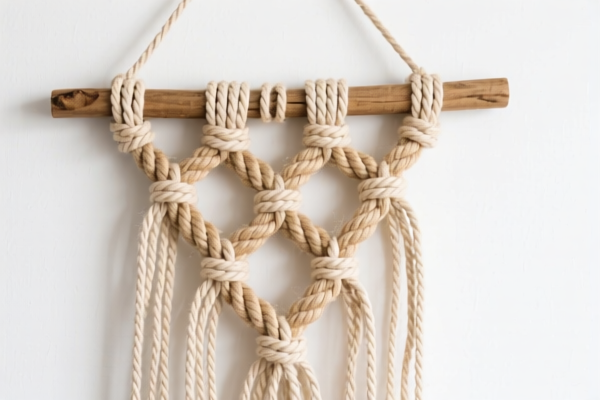



AI Analysis
🖼️ Pulp Wall Decorations (Paper Pulp Wall Hangings)
🌐 HS Code Reference & Customs Clearance Guide | 2026 Latest Tariff Analysis | Professional Strategy
📌 I. Product Definition & Classification: Are You Sure It’s Just "Wall Decor"?
Pulp wall decorations, primarily made from recycled paper pulp, molded or woven into artistic shapes, fall into a complex gray area in international trade. The classification depends heavily on material composition, manufacturing process, and intended use. In the US market, this ambiguity often leads to significant tariff differences (from 10% to 38.5%).
⚠️ Key Distinction:
- If the item is woven/plaited from vegetable fibers (like straw or pulp strips) → It is often classified under Chapter 46 (Articles of Plaiting Materials).
- If the item is molded/stamped paper pulp → It may fall under Chapter 95 (Festive/Entertainment Articles) or Chapter 48 (Paper/Paperboard Articles).
- Critical Factor: Is it considered a "general decoration" or a "festive ornament"? This distinction can slash tariffs by up to 28.5%!
📦 II. HS Code Classification Details (2026 Latest Tariff Authority Match)
Based on your input data, here are the four potential classifications for Pulp Wall Decorations, ranked by tariff impact:
| HS Code | Product Description | Key Characteristics | Total Tax Rate | Tax Breakdown |
|---|---|---|---|---|
| 9505.90.60.00 | Festive decorations, pulp material, entertainment category | Used for festivals (Halloween, Christmas, etc.), lightweight, mass-produced ornaments | 10.0% | Base: 0% Add: 0% 122 Clause: 10% |
| 9505.10.50.20 | Christmas/festival decorations, pulp, non-artificial tree material | Specifically for Christmas/Holiday seasons, artificial greenery alternatives | 10.0% | Base: 0% Add: 0% 122 Clause: 10% |
| 4823.70.00.40 | Pulp material, molded/stamped decorative articles | Pressed or molded shapes (e.g., geometric wall art), not woven | 35.0% | Base: 0% Add: 25% 122 Clause: 10% |
| 4602.19.80.00 | Pulp material, woven/plaited plant material decorations | Woven strips of pulp, basket-weave style, "plant material" classification | 37.3% | Base: 2.3% Add: 25% 122 Clause: 10% |
| 4602.90.00.00 | Pulp material, other woven/pressed decorative articles | Other woven items not specified elsewhere in Chapter 46 | 38.5% | Base: 3.5% Add: 25% 122 Clause: 10% |
🔍 Priority Insight:
- Lowest Risk & Cost: Classifying as 9505 (Festive Entertainment) saves 25-28.5% compared to Chapter 46/48.
- Risk Factor: If customs determines the item is not primarily for "festive entertainment" but for "general home decor," they may reclassify it to 4602 or 4823, triggering Section 301 tariffs (25%).
💰 III. 2026 Latest Tariff Rate Detailed Explanation
✅ Applicable Country: USA (US)
✅ Origin: China (CN)
✅ Effective Date: 2025/2026 Tariff Regime
🎯 1. 9505.90.60.00 / 9505.10.50.20 —— Festival/Entertainment Decorations (THE OPTIMAL CLASSIFICATION)
| Item | Detail |
|---|---|
| Base Rate | 0% (Most Chapter 95 items have low base rates) |
| Section 301 Add-on | 0% (Excluded from 25% additional tariff) |
| 122 Clause Tariff | +10% (Specific to certain Chinese-origin goods under recent policies) |
| Total Effective Rate | 10.0% |
| Legal Basis | 9505.90.60.00 or 9505.10.50.20 → Excluded from USITC:301Footnote for 25% |
| De Minimis | ❌ Not Applicable (Ships >$800 still face duty) |
📌 Explanation:
- These HS codes are classified under Chapter 95 (Toys, Games, Sports Equipment), specifically festive goods.
- Crucial Benefit: Many festive decorations are exempt from the 25% Section 301 tariff.
- Result: You only pay the 122 Clause 10% tariff. This is the most cost-effective strategy for pulp wall decor if marketing as "festive/holiday decor."
🎯 2. 4823.70.00.40 —— Molded/Pulp Articles (HIGH TARIFF RISK)
| Item | Detail |
|---|---|
| Base Rate | 0% |
| Section 301 Add-on | +25% (China-origin goods under Section 301) |
| 122 Clause Tariff | +10% |
| Total Effective Rate | 35.0% |
| Legal Basis | 4823.70.00.40 → Subject to USITC:301Footnote (25%) |
📌 Explanation:
- Classified under Chapter 48 (Paper/Paperboard).
- No Exemption: Unlike Chapter 95, molded paper products are not exempt from the 25% Section 301 tariff.
- Result: 35% total duty. Significant cost increase.
🎯 3. 4602.19.80.00 / 4602.90.00.00 —— Woven Plaiting Materials (HIGHEST TARIFF RISK)
| Item | Detail |
|---|---|
| Base Rate | 2.3% (4602.19) / 3.5% (4602.90) |
| Section 301 Add-on | +25% |
| 122 Clause Tariff | +10% |
| Total Effective Rate | 37.3% (4602.19) / 38.5% (4602.90) |
| Legal Basis | 4602.xxxx → Subject to USITC:301Footnote (25%) |
📌 Explanation:
- Classified under Chapter 46 (Articles of Plaiting Materials).
- High Base + 301 + 122: You pay base duty + 25% Section 301 + 10% 122 Clause.
- Result: Nearly 40% total duty. This is the worst-case scenario for pulp wall decor.
🛠️ IV. Customs Clearance Practical Advice (Battle-Tested Pitfall Avoidance)
✅ 1. Product Naming & Description Strategy
| Scenario | Recommended Description for Customs | Why? |
|---|---|---|
| Holiday Season (Oct-Dec) | "Pulp Christmas Wall Hanging, Festival Decoration, for Holiday Display" | Supports 9505 classification (Festive Use) |
| Year-Round Home Decor | "Molded Pulp Geometric Wall Art, Home Decoration, Eco-Friendly Paper Pulp" | Risks 4823 or 4602 (General Decor) |
| Woven Style | "Hand-Woven Pulp Strip Wall Hanging, Basket-Style Decor" | Risks 4602 (Plaiting Material) |
🔥 Golden Rule:
"If it’s for Christmas/Halloween, call it 'Festive Decoration'. If it’s for everyday use, call it 'Molded Paper Art'."
- Using "Festive Decoration" in the commercial invoice and product description strongly supports 9505 classification, saving 25-28.5% in duties.
✅ 2. Documentation Checklist (Mandatory for Low-Risk Classification)
| Document | Required? | Notes |
|---|---|---|
| ✅ Commercial Invoice | ✔️ | Must explicitly state: "Festival/Holiday Decoration Item" if claiming 9505 |
| ✅ Product Photos | ✔️ | Show product in festive context (e.g., near Christmas tree) if claiming 9505 |
| ✅ Material Declaration | ✔️ | Confirm 100% paper pulp (no plastic/metal parts that might change chapter) |
| ✅ Marketing Brochures | ✔️ | Prove product is marketed as "Holiday Decor" or "Entertainment" |
| ✅ Packaging Labels | ✔️ | Ensure labels don’t say "General Home Decor" if claiming 9505 |
✅ 3. Critical Customs Pitfalls & Solutions
| Pitfall | Consequence | Solution |
|---|---|---|
| ❌ Calling it "Home Decor" | Customs reclassifies to 4823/4602 → 35-38.5% tax | Change name to "Festive Wall Ornament" in all docs |
| ❌ Adding Plastic Hooks | May trigger Chapter 39/83 → Complex classification | Use paper pulp hooks or string instead |
| ❌ Mixing Festive & Non-Festive Items | Entire shipment may be audited | Separate shipments: Festive items (9505) vs. General items (4823/4602) |
| ❌ Ignoring 122 Clause | Underpayment of duties | Ensure 10% 122 Clause is applied to all HS codes |
🌍 V. Global Market Comparison (2026)
| Market | Recommended HS Code | Tax Rate | Key Requirement |
|---|---|---|---|
| 🇺🇸 USA | 9505.90.60.00 | 10.0% | Prove "Festive Use" |
| 🇪🇺 EU | 4602.19.90 / 9505.10.00 | 0-2.5% | CE Mark, FSC Certified Paper |
| 🇨🇳 China | 4602.19 / 9505.90 | 5-10% | FSC Certification |
| 🇬🇧 UK | 9505.10.00.00 | 0% | Post-Brexit Tariff Review |
📌 Conclusion:
- USA is the only market where classification dramatically impacts cost (10% vs 38.5%).
- Strategic Recommendation: Market pulp wall decorations as "Festive/Holiday Decorations" to utilize HS Code 9505 and avoid the 25% Section 301 tariff.
📌 VI. Summary & Action Plan
🎯 Best Strategy: "The Festive Classification"
- Product Naming: Use "Festive," "Holiday," "Christmas," or "Entertainment" in the product title and description.
- Marketing Materials: Show products in festive settings (e.g., hanging on a Christmas tree, around Halloween windows).
- Invoice Description: Explicitly state: "Pulp Wall Decoration for Festive Holiday Display."
- Expected Tax: 10.0% (0% Base + 0% Section 301 + 10% 122 Clause).
- Savings: 25-28.5% less than alternative classifications.
⚠️ Alternative Strategy: "General Decor"
- Product Naming: Use "Home Decor," "Wall Art," "Molded Pulp Sculpture."
- Expected Tax: 35.0% - 38.5%.
- Risk: Only use if product is not suitable for festive marketing (e.g., abstract geometric shapes for year-round office use).
🎯 VII. Final Checklist for Exporters
- [ ] Confirm Material: Is it 100% pulp? (No plastic/metal fasteners)
- [ ] Select HS Code: 9505 for festive, 4823/4602 for general.
- [ ] Update Descriptions: Align all docs with chosen HS Code narrative.
- [ ] Calculate Landed Cost: Use 10% for 9505, 35-38.5% for others.
- [ ] Pre-Advise Customs: Consider filing a Pre-Ruling if shipment volume is high.
📣 Pro Tip:
💡 "Name it Festive, Save 28%! Name it General, Pay Nearly 40%!"
💡 "Pulp Wall Decor: 9505 is your Golden Ticket to Low Duties!"
✨ Professional Customs Clearance Starts with Smart Classification!
💼 Don’t let misclassification cost you 30% of your profit!
Customer Reviews
About HS Code Classification
The Harmonized System (HS) is an internationally standardized nomenclature developed by the World Customs Organization (WCO) to classify traded products. Over 200 countries use the HS system as the basis for customs tariffs, trade statistics, and import/export regulations.
Each HS code follows a hierarchical structure:
- Chapter (2 digits) — Broad category of goods (e.g., Chapter 84: Machinery and Mechanical Appliances)
- Heading (4 digits) — More specific grouping within the chapter
- Subheading (6 digits) — Internationally standardized breakdown, used by all WCO member countries
- National subdivisions (8-10 digits) — Country-specific extensions for further classification, such as US HTSUS 10-digit codes
Correct HS code classification is essential for smooth customs clearance, accurate duty payment, and compliance with trade regulations. Misclassification can lead to customs delays, overpayment of duties, or penalties.
When importing from CN to US, the applicable tariff rates may include:
- Most-Favored-Nation (MFN) rate — The standard duty rate applied to WTO members
- General rate — Applied to countries without trade agreements
- Trade remedy duties — Additional tariffs such as Section 301 (anti-dumping), Section 232 (national security), or countervailing duties
The information provided on this page is for reference purposes only. For official classification, please consult with your local customs authority or a licensed customs broker.