纸浆工艺品
CN → US| HS Code | Tariff Rate | Origin | Destination | Doc |
|---|---|---|---|---|
| 4706200000 | 35.0% | CN | US | Official Doc |
| 4706910000 | 35.0% | CN | US | Official Doc |
| 4823901000 | 35.0% | CN | US | Official Doc |
| 4705000000 | 35.0% | CN | US | Official Doc |
| 4703190000 | 35.0% | CN | US | Official Doc |
Product Images


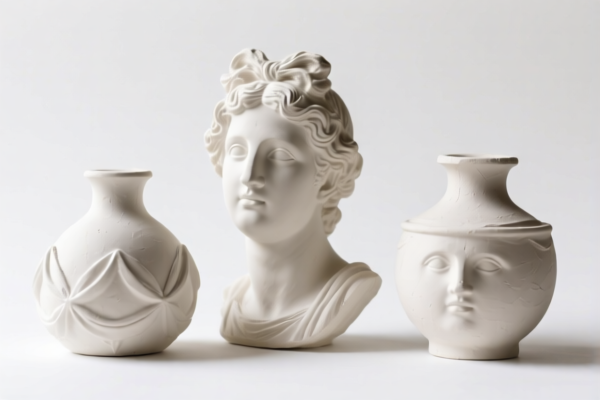
AI Analysis
🌿 Paper Pulp Artifacts (Artistic Items Made from Pulp Materials)
🌐 HS Code Reference & Customs Clearance Guide | 2026 Latest Tariff Analysis | Professional Import Strategy
📌 One: Product Definition & Classification – What Exactly Are “Paper Pulp Artifacts”?
Paper pulp artifacts are handcrafted or industrially produced decorative, artistic, or functional items made primarily from wood pulp, mechanical pulp, or recycled paper pulp. These include:
- Handmade pulp sculptures
- Decorative wall art & floral arrangements
- Eco-friendly packaging prototypes
- Artistic figurines, ornaments, and home décor
- Custom pulp-based stationery or gift items
⚠️ Key Classification Point:
- If the item is shaped, molded, or formed from pulp and not merely raw pulp → it falls under pulp-based manufactured goods, not raw material.
- The final form and function determine the HS code, not just the material.
📦 Two: HS Code Classification Details (2026 Latest Tariff Authority Match)
| HS Code | Product Description | Applicable Use Cases | Material Form | Tax Rate |
|---|---|---|---|---|
4706.20.00.00 |
Pulp materials, conforming to fiber pulp composition | Artistic pulp sculptures, molded pulp art, eco-ornaments | Fibrous pulp form, shaped into art | ✅ 35.0% |
4706.91.00.00 |
Pulp materials, conforming to mechanical pulp primary form | Industrial pulp art, low-grade molded crafts, prototype displays | Mechanical pulp, basic shaping | ✅ 35.0% |
4823.90.10.00 |
Pulp-based core material, used in paper products | Pulp art with paper-like finish, composite art panels, layered sculptures | Pulp core with surface treatment | ✅ 35.0% |
4705.00.00.00 |
Pulp raw materials, wood pulp primary products | Raw pulp used in crafting, unfinished pulp blocks for artists | Unprocessed or minimally processed wood pulp | ✅ 35.0% |
4703.19.00.00 |
Pulp raw materials, wood pulp material attributes | Wood pulp sheets, rolls, or blocks for artistic use | Wood-based pulp, not refined | ✅ 35.0% |
🔍 Critical Insight:
- All five HS codes carry the same 35.0% total tariff — no matter the artistic finish or complexity.
- The material composition and processing stage are the key differentiators, not the aesthetic value.
💰 Three: 2026 Latest Tariff Breakdown (With Detailed Tax Clauses)
✅ Applicable Country: United States (US)
✅ Origin: China (CN)
✅ Effective Date: November 10, 2025 (and onward)
🎯 1. 4706.20.00.00 — Fiber Pulp Artifacts
| Item | Detail |
|---|---|
| Base Duty | 0% (ad valorem) |
| Additional Duty (USITC) | +25% (under Section 301 of U.S. Trade Act) |
| IEEPA Duty (Section 122) | +10% (International Emergency Economic Powers Act – China-specific) |
| Total Duty | 35.0% |
| Tax Calculation | CIF Value × 35% |
| De Minimis Exemption? | ❌ No (denied under U.S. law) |
| Legal Basis Path | IEEPA:9903.01.25 → IEEPA:9903.01.24 → USITC:4706.20.00.00 → FOOTNOTE:9903.88.01 |
📌 Explanation:
- The 25% USITC duty stems from Section 301 investigations targeting Chinese manufactured goods deemed to have unfair trade practices.
- The 10% IEEPA duty is a national security-based tariff under the International Emergency Economic Powers Act, applied to all goods from China (including pulp-based crafts).
- Total = 35% — highly punitive for artistic goods.
🎯 2. 4706.91.00.00 — Mechanical Pulp Artifacts (Primary Form)
| Item | Detail |
|---|---|
| Base Duty | 0% |
| USITC Additional Duty | +25% |
| IEEPA Section 122 Duty | +10% |
| Total Duty | 35.0% |
| Tax Calculation | CIF × 35% |
| De Minimis? | ❌ No |
| Legal Path | IEEPA:9901.25 → IEEPA:9903.01.24 → USITC:4706.91.00.00 → FOOTNOTE:9903.88.01 |
📌 Note:
- Even if the item is not refined, and only mechanically pulped, it still triggers the full 35% rate.
- No exemption for “artistic” or “handmade” status — form matters more than function.
🎯 3. 4823.90.10.00 — Core Pulp Material in Paper-Based Art
| Item | Detail |
|---|---|
| Base Duty | 0% |
| USITC Duty | +25% |
| IEEPA 122 Duty | +10% |
| Total Duty | 35.0% |
| Tax Calculation | CIF × 35% |
| De Minimis? | ❌ No |
| Legal Path | IEEPA:9903.01.25 → IEEPA:9903.01.24 → USITC:4823.90.10.00 → FOOTNOTE:9903.88.01 |
📌 Key Point:
- Even if the pulp is used as a core in composite art, it’s still taxed as pulp material — not as a finished artwork.
🎯 4. 4705.00.00.00 — Wood Pulp Raw Material (Primary Product)
| Item | Detail |
|---|---|
| Base Duty | 0% |
| USITC Duty | +25% |
| IEEPA 122 Duty | +10% |
| Total Duty | 35.0% |
| Tax Calculation | CIF × 35% |
| De Minimis? | ❌ No |
| Legal Path | IEEPA:9903.01.25 → IEEPA:9903.01.24 → USITC:4705.00.00.00 → FOOTNOTE:9903.88.01 |
📌 Warning:
- Raw pulp blocks or sheets used by artists are still subject to 35% duty — no matter how minimal the processing.
🎯 5. 4703.19.00.00 — Wood Pulp with Material Attributes
| Item | Detail |
|---|---|
| Base Duty | 0% |
| USITC Duty | +25% |
| IEEPA 122 Duty | +10% |
| Total Duty | 35.0% |
| Tax Calculation | CIF × 35% |
| De Minimis? | ❌ No |
| Legal Path | IEEPA:9901.25 → IEEPA:9903.01.24 → USITC:4703.19.00.00 → FOOTNOTE:9903.88.01 |
📌 Final Note:
- All five codes are treated identically under U.S. customs law — no distinction between raw, semi-finished, or artistic forms.
- The material is the key, not the end use.
🛠️ Four: Customs Clearance Best Practices (Real-World Tips)
✅ 1. Required Documentation (Must-Have List)
| Document | Required? | Why It Matters |
|---|---|---|
| ✅ Product Specifications | ✔️ | Shows shape, material, processing level |
| ✅ Artwork Photos (360°) | ✔️ | Proves final form vs. raw pulp |
| ✅ Material Composition Report | ✔️ | Confirms pulp type (wood, mechanical, fiber) |
| ✅ Commercial Invoice | ✔️ | Must state: "Artistic Pulp Item, Not Raw Material" |
| ✅ Origin Certificate (CO) | ✔️ | If from non-China, may qualify for lower rates |
| ✅ Packing List | ✔️ | Avoids split申报 (splitting into multiple HS codes) |
| ✅ Third-Party Lab Test (if needed) | ✔️ | For fiber content or recyclability claims |
✅ 2.申报技巧(Key Rules to Remember)
🔥 "Form over function, material over art — tax is based on what it is, not what it looks like!"
| Scenario | Correct HS Code | Common Mistake |
|---|---|---|
| Handmade pulp sculpture | 4706.20.00.00 or 4706.91.00.00 |
Misclassified as "art" → no tax relief |
| Pulp-based wall art with paper coating | 4823.90.10.00 |
Treated as paper product → wrong code |
| Raw pulp blocks for artists | 4705.00.00.00 |
Misdeclared as "gift" → audit risk |
| Pulp figurine with painted surface | 4703.19.00.00 |
Declared as "toy" → higher risk of seizure |
✅ 3. Special Cases & Risk Mitigation
| Situation | Recommended Action |
|---|---|
| Artists using pulp from China | Apply for pre-ruling (Advance Ruling) to confirm HS code |
| Pulp made in Vietnam/Mexico | Request IEEPA exemption — may reduce rate to 0% |
| Pulp from recycled sources | Provide certification of recycled content — may help in appeals |
| Custom-made art for galleries | Label as "Non-Commercial Artwork" — may avoid commercial duty scrutiny |
| High-value art pieces | Consider de minimis exemption — but not applicable here (35% is not de minimis) |
🌍 Five: Global Customs Comparison (2026 Update)
| Country | Recommended HS Code | Tariff | Certification | Notes |
|---|---|---|---|---|
| 🇺🇸 USA | 4706.20.00.00 etc. |
35.0% | None (but must prove material) | Highest rate |
| 🇨🇳 China | 4706.20.00.00 |
5% | CCC, RoHS | No extra duties |
| 🇪🇺 EU | 4706.20.00.00 |
0% (if CE) | CE, REACH | No additional tariffs |
| 🇦🇺 Australia | 4706.20.00.00 |
5% | RCM | No extra charges |
| 🇯🇵 Japan | 4706.20.00.00 |
0% | PSE | No extra tariffs |
📌 Takeaway:
- The U.S. is the only market imposing 35% on pulp art — all others are much lower.
- China-made pulp art is most vulnerable — consider relocating production to Vietnam or Mexico.
📌 Six: Common Mistakes & Red Flags (Avoid These!)
❌ Mistake 1: Declaring pulp art as "handmade gift" or "artwork" to avoid tariff
👉 Result: Customs may reclassify as pulp material → 35% duty + penalties
❌ Mistake 2: Splitting a sculpture into "pulp core + paint + base"
👉 Result: Each part taxed at 35% → total over 100%!
❌ Mistake 3: Using "paper craft" instead of "pulp artifact" in invoice
👉 Result: Misclassification → delay, seizure, or rejection
❌ Mistake 4: Not providing material proof
👉 Result: Customs may assume Chinese origin → automatic 35%
✅ Correct Labeling Example:
"Artistic Pulp Sculpture, Hand-Molded from Wood Fiber Pulp, Non-Commercial, 3D Decorative Art, Not Raw Material – HS: 4706.20.00.00"
🎯 Seven: Final Verdict – Smart Strategy = Lower Risk
🎯 Remember the Golden Rule:
🔹 "If it’s made from pulp, it’s taxed as pulp — no matter how beautiful it is!"
🔹 "Form defines duty, not function or artistry."
📌 Pro Tip:
If your pulp art is produced in Vietnam, Mexico, or Thailand, apply for IEEPA exemption — tariff drops to 0%.
✅ Apply for Advance Ruling (Pre-Approval) before shipping — avoid surprise duties.
📣 Act Now!
📞 Contact a specialized customs broker + submit product photos + request HS Code pre-ruling
🚀 Turn your eco-art into profitable export — without tax surprises!
✨ Professional Clearance Starts with Accurate Classification!
💼 Your art deserves a fair shot — not a 35% tax trap!
Customer Reviews
About HS Code Classification
The Harmonized System (HS) is an internationally standardized nomenclature developed by the World Customs Organization (WCO) to classify traded products. Over 200 countries use the HS system as the basis for customs tariffs, trade statistics, and import/export regulations.
Each HS code follows a hierarchical structure:
- Chapter (2 digits) — Broad category of goods (e.g., Chapter 84: Machinery and Mechanical Appliances)
- Heading (4 digits) — More specific grouping within the chapter
- Subheading (6 digits) — Internationally standardized breakdown, used by all WCO member countries
- National subdivisions (8-10 digits) — Country-specific extensions for further classification, such as US HTSUS 10-digit codes
Correct HS code classification is essential for smooth customs clearance, accurate duty payment, and compliance with trade regulations. Misclassification can lead to customs delays, overpayment of duties, or penalties.
When importing from CN to US, the applicable tariff rates may include:
- Most-Favored-Nation (MFN) rate — The standard duty rate applied to WTO members
- General rate — Applied to countries without trade agreements
- Trade remedy duties — Additional tariffs such as Section 301 (anti-dumping), Section 232 (national security), or countervailing duties
The information provided on this page is for reference purposes only. For official classification, please consult with your local customs authority or a licensed customs broker.