纸浆支撑件(大尺寸)
CN → US| HS Code | Tariff Rate | Origin | Destination | Doc |
|---|---|---|---|---|
| 4819504060 | 35.0% | CN | US | Official Doc |
| 4415109000 | 45.7% | CN | US | Official Doc |
| 4819504020 | 35.0% | CN | US | Official Doc |
Product Images
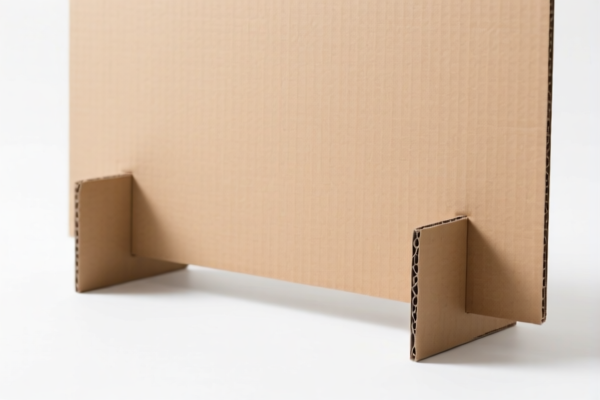


AI Analysis
🌿 Pulp Support Pads (Large Size) – HS Code Classification & Tariff Guide 2026 | Expert Customs Clearance Strategy
🌐 HS Code Reference & Customs Clearance Handbook | 2026 Updated Tariff Analysis | Pro-Level Import Planning
📦 I. Product Definition & Classification: What Exactly Are “Pulp Support Pads (Large Size)”?
Pulp support pads (large size) are large, rigid or semi-rigid structural components made from wood, fiber, or cellulose-based materials, primarily used in the pulp and paper industry to support, stabilize, and protect large rolls of paper or pulp during transport, storage, and processing.
These are not standard packaging materials like cardboard boxes or plastic wraps — they are reusable or semi-reusable structural supports that function as load-bearing elements in industrial logistics.
⚠️ Critical Distinction: - If the item is wooden or cellulose-based, rigid, and used to support heavy rolls → likely wooden packaging or fiber-based structural container. - If it’s flexible, non-load-bearing, and used only as cushioning → may be classified differently.
📊 II. HS Code Classification Breakdown (2026 Official Tariff Authority)
| HS Code | Product Description | Material | Applicable Use Case | Tax Rate |
|---|---|---|---|---|
4415.10.90.00 |
Wooden packaging, other, including large-sized support structures made from wood or cellulose fiber | Wood / Cellulose Fiber | Large pulp support pads used as structural carriers or pallet-like platforms | 45.7% |
4819.50.40.60 |
Other packaging containers made from paper, paperboard, or cellulose fiber | Cellulose Fiber | Large, rigid paper/fiber-based support pads used for roll support | 35.0% |
4819.50.40.20 |
Other packaging containers, similar containers made from paper or cellulose fiber | Fiber / Paper | Rigid fiber-based pads used as industrial supports for pulp rolls | 35.0% |
🔍 Key Insight:
-4415.10.90.00applies when the material is wood or wood-derived fiber and the structure is rigid and load-bearing (e.g., wooden pallet-like platforms).
-4819.50.40.60&4819.50.40.20apply when the material is purely cellulose fiber (paper-based) and the function is support via rigid fiber structure, not wood.
💰 III. 2026 Tariff Breakdown (US Market – China Origin)
✅ Applicable Country: United States (US)
✅ Origin: China (CN)
✅ Effective Date: November 10, 2025 (inclusive of future imports)
🎯 1. 4415.10.90.00 — Wooden Packaging (Other), Including Large-Sized Pulp Support Pads
| Item | Detail |
|---|---|
| Base Duty | 10.7% (ad valorem) |
| Section 301 (USITC) Additional Duty | +25.0% |
| Section 122 (IEEPA) Emergency Economic Power Duty | +10.0% |
| Total Effective Duty | 45.7% |
| Tax Calculation | CIF Value × 45.7% |
| De Minimis Exemption? | ❌ No (denied under 19 U.S.C. § 1304) |
| Legal Basis Path | IEEPA:9903.01.25 → IEEPA:9903.01.24 → USITC:4415.10.90.00 → FOOTNOTE:9903.88.01 |
📌 Explanation: - 10.7% Base Duty: Standard rate for wooden packaging under HTSUS. - +25% USITC (Section 301): Imposed under the U.S. Trade Representative’s action against China for unfair trade practices. - +10% IEEPA (Section 122): Based on the International Emergency Economic Powers Act, targeting goods from China and Hong Kong. - Total = 45.7% — Extremely high, especially for bulk industrial goods.
🎯 2. 4819.50.40.60 — Other Paper/Fiber-Based Packaging Containers
| Item | Detail |
|---|---|
| Base Duty | 0.0% |
| Section 301 (USITC) Additional Duty | +25.0% |
| Section 122 (IEEPA) Emergency Economic Power Duty | +10.0% |
| Total Effective Duty | 35.0% |
| Tax Calculation | CIF Value × 35.0% |
| De Minimis Exemption? | ❌ No |
| Legal Basis Path | IEEPA:9903.01.25 → IEEPA:9903.01.24 → USITC:4819.50.40.60 → FOOTNOTE:9903.88.01 |
📌 Explanation: - 0% Base Duty: Paper/fiber-based containers are duty-free under standard HTSUS. - +25% USITC: Applies to all goods from China under Section 301. - +10% IEEPA: Applies to all China-origin goods under emergency powers. - Total = 35.0% — Still very high, but 10.7% lower than wood-based version.
🎯 3. 4819.50.40.20 — Other Packaging Containers, Similar Types (Fiber-Based)
| Item | Detail |
|---|---|
| Base Duty | 0.0% |
| Section 301 (USITC) Additional Duty | +25.0% |
| Section 122 (IEEPA) Emergency Economic Power Duty | +10.0% |
| Total Effective Duty | 35.0% |
| Tax Calculation | CIF Value × 35.0% |
| De Minimis Exemption? | ❌ No |
| Legal Basis Path | IEEPA:9903.01.25 → IEEPA:9903.01.24 → USITC:4819.50.40.20 → FOOTNOTE:9903.88.01 |
📌 Note:
- This code is identical in tariff treatment to4819.50.40.60. - The difference lies in technical description:4819.50.40.20is for "similar containers", while4819.50.40.60is for "other". - No practical tax difference — both result in 35.0%.
🛠️ IV. Customs Clearance Best Practices (Pro Tips to Avoid Delays & Penalties)
✅ 1. Essential Documentation Checklist (MUST-HAVE)
| Document | Required? | Purpose |
|---|---|---|
| ✅ Product Specifications | ✔️ | Include dimensions, weight, material composition (wood/fiber), load capacity |
| ✅ Material Test Report | ✔️ | Confirm if wood-based or pure cellulose fiber |
| ✅ Structural Diagrams / Photos | ✔️ | Show rigidity, shape, and function (e.g., roll support) |
| ✅ Commercial Invoice | ✔️ | Clearly state: "Large-Sized Pulp Support Pad, Fiber-Based / Wooden, for Industrial Roll Support" |
| ✅ Certificate of Origin (CO) | ✔️ | Required for tariff eligibility; China origin triggers 301/IEEPA duties |
| ✅ Packing List | ✔️ | Show number of units, packaging type, total weight |
| ✅ Third-Party Test Report (e.g., ISO, ASTM) | ✔️ | Optional but recommended for fiber integrity |
✅ 2. 申报策略 – The Golden Rule
🔥 “Material First, Function Second – Declare Based on Composition!”
| Scenario | Correct HS Code | Why? |
|---|---|---|
| Made from wood or wood pulp, rigid, load-bearing | 4415.10.90.00 |
Falls under wooden packaging |
| Made from pure paper/fiber, rigid, roll support | 4819.50.40.60 or 4819.50.40.20 |
Classified as fiber-based container |
| Made from mixed materials (e.g., wood core + fiber wrap) | Declare as wood-based (4415.10.90.00) |
Dominant material rule applies |
🚫 Avoid This Mistake:
- Calling a wooden support pad “paper container” → Incorrect classification → Audit risk, penalties, seizure.
✅ 3. Special Cases & Solutions
| Situation | Recommended Action |
|---|---|
| Reused or recyclable pads | Declare as "reusable industrial support"; may qualify for special handling |
| Custom-designed pads | Provide engineering drawings + material specs to support classification |
| Pads used in non-US markets | Consider exporting to Vietnam/Mexico to avoid U.S. 301/IEEPA tariffs |
| Bulk shipments (e.g., 10,000 units) | Apply for a Pre-Review Ruling (Advance Ruling) to lock in HS Code & tariff |
🌍 V. Global Market Tariff Comparison (2026)
| Country/Region | Recommended HS Code | Base Duty | Additional Duties | Total Effective Duty | Notes |
|---|---|---|---|---|---|
| 🇺🇸 USA (China origin) | 4415.10.90.00 |
10.7% | +25% +10% | 45.7% | High-risk, high-cost |
| 🇨🇳 China | 4415.10.90.00 |
5% | 0% | 5% | No 301/IEEPA |
| 🇪🇺 EU | 4415.10.90.00 |
0% | 0% | 0% | No extra duties |
| 🇦🇺 Australia | 4819.50.40.60 |
5% | 0% | 5% | Fiber-based preferred |
| 🇯🇵 Japan | 4819.50.40.20 |
0% | 0% | 0% | No extra tariffs |
📌 Insight:
- USA is the only market with 301 + IEEPA tariffs on these items. - China and EU are favorable for duty-free or low-duty import.
📌 VI. Common Mistakes & How to Avoid Them (Real-World Risks)
❌ Mistake 1: Declaring wooden pulp pads as paper containers
👉 Result: Wrong HS Code → 45.7% vs 35.0% → Overpayment or penalties
❌ Mistake 2: Not providing material proof (e.g., fiber vs wood)
👉 Result: Customs withholds release until verification
❌ Mistake 3: Using generic terms like “pulp support” or “packaging pad”
👉 Result: No clear classification → delayed clearance
✅ Best Practice:
"Large-Sized Pulp Support Pad, Rigid, Made from Recycled Cellulose Fiber, for Paper Roll Transport, 1200x800x50mm, 100 pcs per pallet"
🎯 VII. Final Verdict: Optimize Your Import Strategy
🔹 If made from wood →
4415.10.90.00→ 45.7%
🔹 If made from pure fiber →4819.50.40.60or4819.50.40.20→ 35.0%
🔹 China origin → 301 + IEEPA duties apply in the USA
🔹 No de minimis exemption → No relief for small shipments
🚨 Call to Action: Secure Your Supply Chain Today!
📞 Contact a U.S.-licensed customs broker + provide material test reports + product photos
📌 Apply for an Advance Ruling (Pre-Review) to lock in the correct HS Code
🌐 Consider shifting production to Vietnam, Mexico, or Malaysia to avoid 301/IEEPA tariffs
✨ Pro Tip:
“The material tells the story — declare it right, pay less, ship faster.”
📣 Your Pulp Support Pads Are Not Just Packaging — They’re a Tariff Tragedy Waiting to Happen.
✅ Get the HS Code Right. Avoid 45.7%. Save Thousands.
💼 Precision Classification = Profit Protection
🚀 Export Smart. Import Confident.
Customer Reviews
About HS Code Classification
The Harmonized System (HS) is an internationally standardized nomenclature developed by the World Customs Organization (WCO) to classify traded products. Over 200 countries use the HS system as the basis for customs tariffs, trade statistics, and import/export regulations.
Each HS code follows a hierarchical structure:
- Chapter (2 digits) — Broad category of goods (e.g., Chapter 84: Machinery and Mechanical Appliances)
- Heading (4 digits) — More specific grouping within the chapter
- Subheading (6 digits) — Internationally standardized breakdown, used by all WCO member countries
- National subdivisions (8-10 digits) — Country-specific extensions for further classification, such as US HTSUS 10-digit codes
Correct HS code classification is essential for smooth customs clearance, accurate duty payment, and compliance with trade regulations. Misclassification can lead to customs delays, overpayment of duties, or penalties.
When importing from CN to US, the applicable tariff rates may include:
- Most-Favored-Nation (MFN) rate — The standard duty rate applied to WTO members
- General rate — Applied to countries without trade agreements
- Trade remedy duties — Additional tariffs such as Section 301 (anti-dumping), Section 232 (national security), or countervailing duties
The information provided on this page is for reference purposes only. For official classification, please consult with your local customs authority or a licensed customs broker.