纸盘
CN → US| HS Code | Tariff Rate | Origin | Destination | Doc |
|---|---|---|---|---|
| 4819502000 | 35.0% | CN | US | Official Doc |
| 4823690040 | 35.0% | CN | US | Official Doc |
| 4802201000 | 35.0% | CN | US | Official Doc |
| 4801000140 | 35.0% | CN | US | Official Doc |
| 4802541000 | 10.0% | CN | US | Official Doc |
Product Images

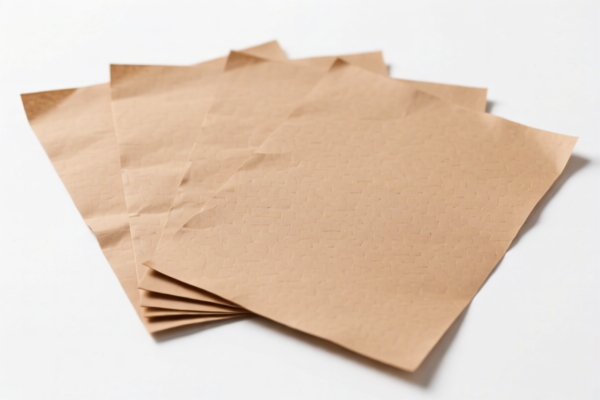
AI Analysis
🍽️ Paper Plates (Paper Dinnerware)
🌐 HS Code Reference & Customs Clearance Guide | 2026 Updated Tariff Analysis | Professional Import Strategy
📌 One, Product Definition & Classification: Do You Really Know What a "Paper Plate" Is?
Paper plates are single-use, disposable tableware made entirely or primarily from paper, designed for serving food and beverages. In international trade, they are classified based on material, form, function, and intended use—especially whether they meet food-safe packaging/container standards.
⚠️ Key Distinction:
- If the item is a flat, circular, rigid or semi-rigid dish used to hold food directly → classified as a container (e.g., plate, tray, bowl).
- If it’s just paper material without structural form → may be classified as paper or paperboard (not a container).
- If it’s coated or treated for grease/water resistance → still qualifies as a food container under classification rules.
📦 Two, HS Code Classification Details (2026 Updated Tariff Authority)
| HS Code | Product Description | Applicable Use Case | Structural Form | Food-Safe Use? |
|---|---|---|---|---|
4819.50.20.00 |
Paper dinnerware (plates), made of paper, shaped as a plate, used as food container, meets hygiene standards | Disposable tableware for restaurants, events, takeout | ✅ Rigid, plate-like | ✅ Yes |
4823.69.00.40 |
Paper plates, typical form of paper-based trays, dishes, or plates; matches classification examples | Standard disposable food serving ware | ✅ Flat, circular, rigid | ✅ Yes |
4802.20.10.00 |
Paper or paperboard, suitable for packaging and containers, matches material requirements | Raw material used to make plates | ❌ Not formed into plate | ⚠️ Indirect use |
4801.00.01.40 |
Newsprint-type paper; may be used in packaging, but only if it fits the “catch-all” category | General paper, not specifically for food contact | ❌ Not shaped as plate | ❌ No (likely not food-safe) |
4802.54.10.00 |
Uncoated paper or paperboard, used in packaging; lacks coating for food contact | Base material for plates, but not finished product | ❌ Not formed into plate | ❌ No (unless coated) |
🔍 Critical Insight:
- Only4819.50.20.00and4823.69.00.40are correct HS codes for finished paper plates intended for food service.
- The other codes apply to raw paper, not the final product.
- Misclassifying a finished plate as raw paper can lead to underpayment of duties, penalties, or seizure.
💰 Three, 2026 Updated Tariff Breakdown (With附加 Taxes & Legal Basis)
✅ Applicable Country: United States (US)
✅ Origin: China (CN)
✅ Effective Date: November 10, 2025 (and ongoing)
🎯 1. 4819.50.20.00 — Paper Plates (Food Container Type)
| Item | Detail |
|---|---|
| Base Duty Rate | 0% (ad valorem) |
| USITC Additional Duty | +25% (under Section 301 of U.S. Trade Act) |
| IEEPA Additional Duty | +10% (International Emergency Economic Powers Act, applies to goods from China/HK) |
| Total Effective Duty | 35% |
| Tax Calculation | CIF Value × 35% |
| De Minimis Threshold | ❌ Not applicable (denied due to Section 301/IEEPA) |
| Legal Basis Path | IEEPA:9903.01.25 → IEEPA:9903.01.24 → USITC:4819.50.20.00 → FOOTNOTE:9903.88.01 |
📌 Explanation:
- The 25% USITC tariff comes from Section 301 of the U.S. Trade Act, targeting Chinese goods deemed to have unfair trade practices.
- The 10% IEEPA tariff is imposed under emergency powers for national security concerns related to China.
- Combined, this results in a 35% total tariff, making paper plates from China highly costly to import into the U.S.
🎯 2. 4823.69.00.40 — Paper Plates (Typical Form of Paper Trays/Dishes)
| Item | Detail |
|---|---|
| Base Duty Rate | 0% |
| USITC Additional Duty | +25% |
| IEEPA Additional Duty | +10% |
| Total Effective Duty | 35% |
| Tax Calculation | CIF × 35% |
| De Minimis | ❌ Not allowed |
| Legal Basis Path | IEEPA:9903.01.25 → IEEPA:9903.01.24 → USITC:4823.69.00.40 → FOOTNOTE:9903.88.01 |
📌 Note:
- This code is functionally identical to4819.50.20.00in practice—both apply to finished paper plates used for food.
- The 35% total duty applies regardless of minor differences in wording.
- This is not a “lower-risk” alternative—it’s the same tariff regime.
🎯 3. 4802.20.10.00 — Paper or Paperboard (Raw Material)
| Item | Detail |
|---|---|
| Base Duty Rate | 0% |
| USITC Additional Duty | +25% |
| IEEPA Additional Duty | +10% |
| Total Effective Duty | 35% |
| Tax Calculation | CIF × 35% |
| De Minimis | ❌ Not allowed |
| Legal Basis Path | IEEPA:9903.01.25 → IEEPA:9903.01.24 → USITC:4802.20.10.00 → FOOTNOTE:9903.88.01 |
📌 Warning:
- This code applies to unformed paper, not finished plates.
- If you misdeclare a finished plate as raw paper, you risk:
- Seizure by U.S. Customs (CBP)
- Back duties + penalties
- Reputational damage & future audits
🎯 4. 4801.00.01.40 — Newsprint-Type Paper (Catch-All Category)
| Item | Detail |
|---|---|
| Base Duty Rate | 0% |
| USITC Additional Duty | +25% |
| IEEPA Additional Duty | +10% |
| Total Effective Duty | 35% |
| Tax Calculation | CIF × 35% |
| De Minimis | ❌ Not allowed |
| Legal Basis Path | IEEPA:9903.01.25 → IEEPA:9903.01.24 → USITC:4801.00.01.40 → FOOTNOTE:9903.88.01 |
📌 Important Note:
- This code is only for newsprint, not food containers.
- It’s not valid for paper plates, even if they look similar.
- Using this code for finished plates is a clear misclassification and high-risk.
🎯 5. 4802.54.10.00 — Uncoated Paper/Board (No Food Contact)
| Item | Detail |
|---|---|
| Base Duty Rate | 0% |
| USITC Additional Duty | 0% (not subject to 301) |
| IEEPA Additional Duty | +10% (still applies to China-origin goods) |
| Total Effective Duty | 10% |
| Tax Calculation | CIF × 10% |
| De Minimis | ✅ Allowed (if value < $800) |
| Legal Basis Path | IEEPA:9903.01.24 → FOOTNOTE:9903.88.01 |
📌 Key Insight:
- This code is only for uncoated, non-food-grade paper (e.g., packaging material, wrapping paper).
- If your paper plates are not coated and not intended for food, this might apply.
- But if they are used to serve food, even if uncoated, they must be classified as food containers → 35% tariff applies.
🛠️ Four, Customs Clearance Best Practices (Real-World Tips)
✅ 1. Required Documentation (Must-Have List)
| Document | Required? | Notes |
|---|---|---|
| ✅ Product Specifications | ✔️ | Include dimensions, thickness, material type, coating (if any) |
| ✅ Product Photos (with label) | ✔️ | Show shape, branding, food contact surface |
| ✅ Material Safety Certifications | ✔️ | FDA, EU Food Contact Compliance, ISO 22000, etc. |
| ✅ Commercial Invoice | ✔️ | Clearly state “Paper Plate, Food-Safe, Disposable” |
| ✅ Certificate of Origin (CO) | ✔️ | Critical for tariff eligibility |
| ✅ Packing List | ✔️ | Show quantity per carton, total weight, dimensions |
| ✅ Third-Party Test Report | ✔️ | For grease/water resistance, migration testing |
✅ 2.申报技巧 (申报口诀)
🔥 “Plate form matters, food use defines, raw paper not allowed, 35% tax if China!”
| Scenario | Correct HS Code | Wrong Code to Avoid |
|---|---|---|
| Finished paper plate for food | 4819.50.20.00 or 4823.69.00.40 |
4802.20.10.00 (raw paper) |
| Uncoated paper for wrapping | 4802.54.10.00 |
4819.50.20.00 (misclassification) |
| Plate made from newsprint | ❌ Not allowed | 4801.00.01.40 (wrong category) |
| Coated paper plate (grease-resistant) | 4819.50.20.00 |
4802.54.10.00 (too low) |
✅ 3. Special Cases & Solutions
| Situation | Recommended Action |
|---|---|
| Plates from Vietnam, Mexico, Thailand, Malaysia | Apply for IEEPA exemption → 0% additional duty (if origin is eligible) |
| Plates with biodegradable coating | Still fall under 4819.50.20.00 — 35% tariff applies |
| Plates sold in bulk, no branding | Still require accurate HS code — no exemption |
| Plates used in military or medical settings | May qualify for special use exemption — apply for Advance Ruling |
🌍 Five, Global Market Comparison (2026 Update)
| Country/Region | Recommended HS Code | Tariff Rate | Certification Required | Notes |
|---|---|---|---|---|
| 🇺🇸 USA | 4819.50.20.00 |
35% (China) | FDA, CE, RoHS | 35% due to 301 + IEEPA |
| 🇨🇳 China | 4819.50.20.00 |
5% | CCC, GB Standards | No extra tariffs |
| 🇪🇺 EU | 4819.50.20.00 |
0% (if CE compliant) | CE, REACH | No 301/IEEPA |
| 🇦🇺 Australia | 4819.50.20.00 |
5% | RCM | No extra taxes |
| 🇯🇵 Japan | 4819.50.20.00 |
0% | PSE | No additional duties |
📌 Takeaway:
- The U.S. is the only market imposing 35% tariff on paper plates from China.
- Switching origin to Vietnam/Mexico can save up to 35% in import costs.
📌 Six, Common Mistakes & Risk Warnings (Avoid These!)
❌ Mistake 1: Declaring a finished paper plate as 4802.20.10.00 (raw paper)
👉 Result: 35% duty + penalties + audit risk
❌ Mistake 2: Using 4801.00.01.40 (newsprint) for plates
👉 Result: Seizure, rejection, loss of shipment
❌ Mistake 3: Assuming uncoated = lower tariff
👉 Result: Still classified as food container → 35% applies
❌ Mistake 4: Not providing material safety proof
👉 Result: Delayed clearance, CBP holds shipment
✅ Correct Declaration Example:
"Paper Plate, 9-inch, food-safe, grease-resistant coating, disposable, for restaurant use, FDA-compliant, Made in China"
🎯 Seven, Conclusion: Precision Matters — One Wrong Code Can Cost Thousands!
🎯 Remember the Rule:
🔹 “If it’s a plate, for food, made of paper — use
4819.50.20.00or4823.69.00.40”
🔹 “If it’s raw paper — use4802.20.10.00or4802.54.10.00”
🔹 “China-origin plates = 35% tariff. Vietnam/Mexico = 0% if eligible.”
📌 Pro Tip:
✅ Apply for an Advance Ruling (Pre-Ruling) before shipping large volumes.
✅ Use a licensed customs broker with experience in food packaging.
✅ Audit your HS code annually — tariffs change!
📣 Take Action Now:
📞 Contact a U.S. Customs Broker + Submit product photos + Request HS Code Pre-Ruling
🚀 Avoid delays, penalties, and massive tax bills — get it right the first time!
✨ Professional Customs Starts with Accurate Classification!
💼 Your profit margin depends on the right HS code. Don’t gamble with it!
Customer Reviews
About HS Code Classification
The Harmonized System (HS) is an internationally standardized nomenclature developed by the World Customs Organization (WCO) to classify traded products. Over 200 countries use the HS system as the basis for customs tariffs, trade statistics, and import/export regulations.
Each HS code follows a hierarchical structure:
- Chapter (2 digits) — Broad category of goods (e.g., Chapter 84: Machinery and Mechanical Appliances)
- Heading (4 digits) — More specific grouping within the chapter
- Subheading (6 digits) — Internationally standardized breakdown, used by all WCO member countries
- National subdivisions (8-10 digits) — Country-specific extensions for further classification, such as US HTSUS 10-digit codes
Correct HS code classification is essential for smooth customs clearance, accurate duty payment, and compliance with trade regulations. Misclassification can lead to customs delays, overpayment of duties, or penalties.
When importing from CN to US, the applicable tariff rates may include:
- Most-Favored-Nation (MFN) rate — The standard duty rate applied to WTO members
- General rate — Applied to countries without trade agreements
- Trade remedy duties — Additional tariffs such as Section 301 (anti-dumping), Section 232 (national security), or countervailing duties
The information provided on this page is for reference purposes only. For official classification, please consult with your local customs authority or a licensed customs broker.