纸质礼品盒
CN → US| HS Code | Tariff Rate | Origin | Destination | Doc |
|---|---|---|---|---|
| 4819200040 | 35.0% | CN | US | Official Doc |
| 4202995000 | 42.8% | CN | US | Official Doc |
| 4202999000 | 55.0% | CN | US | Official Doc |
| 4819504060 | 35.0% | CN | US | Official Doc |
| 3923210095 | 38.0% | CN | US | Official Doc |
Product Images
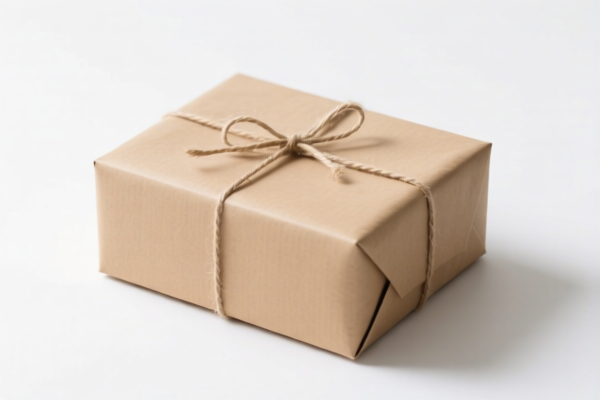
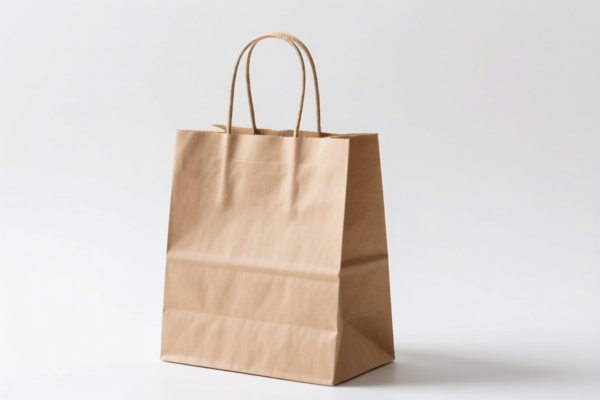
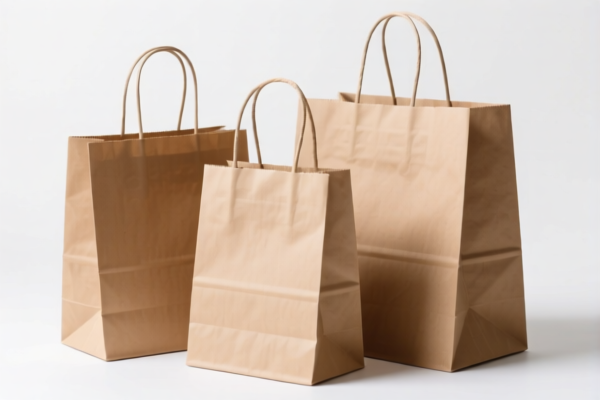
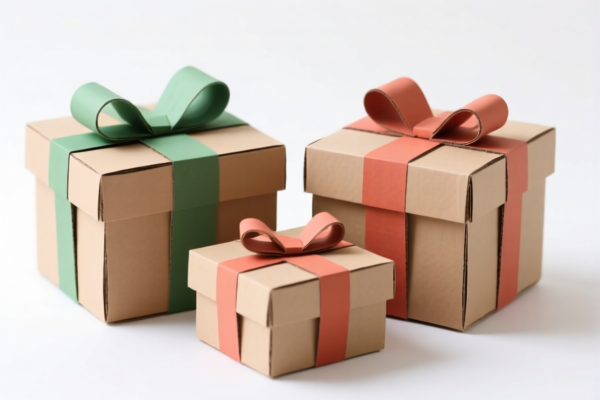
AI Analysis
🎁 Paper Gift Box (Paper or Paperboard Packaging Containers)
🌐 HS Code Reference & Customs Clearance Guide | 2026 Latest Tariff Analysis | Professional Import Strategy
📌 One: Product Definition & Classification – What Exactly Is a "Paper Gift Box"?
A paper gift box is a rigid or semi-rigid container made primarily from paper or paperboard, designed for packaging gifts, consumer goods, cosmetics, electronics, or luxury items. It often features:
- Folding flaps or hinged lids
- Printed designs, logos, or decorative finishes
- Inner inserts (e.g., foam, tissue, or cardboard trays)
- No internal metal or plastic structural components
⚠️ Critical Distinction:
- If the box is made entirely of paper/paperboard, with no significant non-paper components, it falls under paper-based packaging.
- If it contains a substantial amount of plastic, metal, or fabric, it may be reclassified into other categories (e.g., plastic packaging or textile boxes).✅ Key Rule:
The primary material determines the HS Code. For paper gift boxes, if paper is the dominant material, HS Codes starting with 4819 or 4202 apply.
📦 Two: HS Code Classification Details (2026 Latest Tariff Authority Match)
| HS Code | Product Description | Applicable Use Case | Material Dominance |
|---|---|---|---|
4819.20.00.40 |
Packaging containers made of non-corrugated paper or paperboard, suitable for gift boxes | Standard paper gift boxes, luxury packaging, retail boxes | ✅ Paper/Paperboard |
4202.99.50.00 |
Other containers and cases, of paper or primarily covered with paper | Decorative paper boxes, gift sets, non-rigid paper boxes | ✅ Paper/Paperboard |
4202.99.90.00 |
Other containers and cases, not elsewhere specified, including packaging | Multi-layered boxes, hybrid paper-plastic boxes, bulk packaging | ✅ Paper/Paperboard |
4819.50.40.60 |
Packaging containers made of paper or paperboard, suitable for gift boxes | Recyclable boxes, eco-friendly packaging, branded boxes | ✅ Paper/Paperboard |
3923.21.00.95 |
Other articles of plastic, not elsewhere specified – non-paper alternative | Plastic gift boxes, hybrid plastic-paper boxes, non-recyclable packaging | ❌ Plastic (not paper) |
🔍 Important Note:
- All paper-based gift boxes should be classified under 4819 or 4202 if paper is the main material.
- Only plastic boxes (even if used for gifts) fall under3923.21.00.95— not recommended for paper boxes.
💰 Three: 2026 Latest Tariff Breakdown (With Add-on Taxes & Legal Basis)
✅ Applicable Country: United States (US)
✅ Origin: China (CN)
✅ Effective Date: November 10, 2025 (and onward)
🎯 1. 4819.20.00.40 – Non-Corrugated Paper Packaging Containers
| Item | Details |
|---|---|
| Base Tariff | 0% (ad valorem) |
| USITC Section 301 Tariff | +25% (from U.S. Trade Act 301) |
| IEEPA Section 122 Tariff | +10% (International Emergency Economic Powers Act, 2025) |
| Total Effective Tariff | 35.0% |
| Tax Calculation | CIF Value × 35% |
| De Minimis Exemption | ❌ Not eligible (denied under U.S. de minimis rules) |
| Legal Pathway | IEEPA:9903.01.25 → IEEPA:9903.01.24 → USITC:4819.20.00.40 → FOOTNOTE:9903.88.01 |
📌 Explanation:
- 25% USITC tariff: Imposed under Section 301 of the U.S. Trade Act for Chinese-origin goods deemed to have unfair trade practices.
- 10% IEEPA tariff: Enacted under IEEPA for national security concerns, applies to goods from China and Hong Kong.
- Total: 35% — highly punitive for paper packaging from China.
🎯 2. 4202.99.50.00 – Other Containers of Paper or Primarily Covered with Paper
| Item | Details |
|---|---|
| Base Tariff | 7.8% |
| USITC Section 301 Tariff | +25% |
| IEEPA Section 122 Tariff | +10% |
| Total Effective Tariff | 42.8% |
| Tax Calculation | CIF Value × 42.8% |
| De Minimis Exemption | ❌ Not eligible |
| Legal Pathway | IEEPA:9903.01.25 → IEEPA:9903.01.24 → USITC:4202.99.50.00 → FOOTNOTE:9903.88.01 |
📌 Explanation:
- Higher base tariff (7.8%) due to broader classification under "other containers" — often applies to decorative, non-standard, or multi-material boxes.
- Despite being paper-based, the classification as "other" increases the base rate.
- Total: 42.8% — one of the highest tariffs for gift packaging.
🎯 3. 4202.99.90.00 – Other Containers & Cases (Not Elsewhere Specified)
| Item | Details |
|---|---|
| Base Tariff | 20.0% |
| USITC Section 301 Tariff | +25% |
| IEEPA Section 122 Tariff | +10% |
| Total Effective Tariff | 55.0% |
| Tax Calculation | CIF Value × 55% |
| De Minimis Exemption | ❌ Not eligible |
| Legal Pathway | IEEPA:9903.01.25 → IEEPA:9903.01.24 → USITC:4202.99.90.00 → FOOTNOTE:9903.88.01 |
📌 Explanation:
- Highest base tariff (20%) — applies to non-specific, generic, or hybrid containers.
- This code is most punitive and should be avoided if your product qualifies under a more specific code (e.g.,4819.20.00.40).
- Total: 55% — extremely high; could make export unprofitable.
🎯 4. 4819.50.40.60 – Paper or Paperboard Packaging Containers (Gift Box Specific)
| Item | Details |
|---|---|
| Base Tariff | 0% |
| USITC Section 301 Tariff | +25% |
| IEEPA Section 122 Tariff | +10% |
| Total Effective Tariff | 35.0% |
| Tax Calculation | CIF Value × 35% |
| De Minimis Exemption | ❌ Not eligible |
| Legal Pathway | IEEPA:9903.01.25 → IEEPA:9903.01.24 → USITC:4819.50.40.60 → FOOTNOTE:9903.88.01 |
📌 Explanation:
- Most favorable paper-based code — 0% base tariff and same 35% total as4819.20.00.40.
- Best choice for standard paper gift boxes.
- Must match product description exactly to avoid misclassification.
🎯 5. 3923.21.00.95 – Plastic Articles (Non-Paper Alternative)
| Item | Details |
|---|---|
| Base Tariff | 3.0% |
| USITC Section 301 Tariff | +25% |
| IEEPA Section 122 Tariff | +10% |
| Total Effective Tariff | 38.0% |
| Tax Calculation | CIF Value × 38% |
| De Minimis Exemption | ❌ Not eligible |
| Legal Pathway | IEEPA:9903.01.25 → IEEPA:9903.01.24 → USITC:3923.21.00.95 → FOOTNOTE:9903.88.01 |
📌 Important Warning:
- This code only applies if the box is primarily plastic, even if it has a paper label.
- Do NOT use this code for paper boxes — it will result in misclassification, penalties, and delayed clearance.
- 38% total is still high, but lower than 42.8% or 55% — only if the product is truly plastic.
🛠️ Four: Customs Clearance Best Practices (Pro Tips to Avoid Penalties)
✅ 1. Required Documentation (Must-Have Checklist)
| Document | Required? | Purpose |
|---|---|---|
| ✅ Product Specifications | ✔️ | Material composition, dimensions, weight, design |
| ✅ Product Photos (360°) | ✔️ | Show material, structure, printing, hinges |
| ✅ Commercial Invoice | ✔️ | Clearly state "Paper Gift Box, 100% Paperboard, No Plastic" |
| ✅ Packing List | ✔️ | Quantity, unit weight, packaging type |
| ✅ Certificate of Origin (CO) | ✔️ | Prove origin (China, Vietnam, etc.) |
| ✅ Test Reports (if applicable) | ✔️ | Fire resistance, recyclability, non-toxicity |
| ✅ Customs Broker’s Pre-Review | ✔️ | Prevent misclassification |
✅ 2.申报技巧(Key Rules for Accurate Classification)
🔥 “Paper is King – Declare It Right, Pay Less, Avoid Fines!”
| Scenario | Correct HS Code | Wrong Code | Risk |
|---|---|---|---|
| Pure paper gift box with no plastic | 4819.20.00.40 or 4819.50.40.60 |
4202.99.90.00 |
55% → 35% |
| Box with paper outer + plastic insert | 4202.99.50.00 |
4819.20.00.40 |
42.8% → 35% |
| Plastic box labeled "paper look" | 3923.21.00.95 |
4819.20.00.40 |
Fines + seizure |
| Box with metal hinge or lock | 4202.99.50.00 |
4819.20.00.40 |
42.8% vs 35% |
✅ Pro Tip:
- Use4819.50.40.60if your box is specifically for gift packaging and 100% paperboard.
- Avoid4202.99.90.00unless absolutely necessary — it's the most punitive.
✅ 3. Special Cases & Solutions
| Situation | Recommended Action |
|---|---|
| Hybrid box (paper + plastic insert) | Declare under 4202.99.50.00 — 42.8% is acceptable |
| Box with printed logo, no inner structure | Use 4819.20.00.40 — 35% |
| Box from Vietnam/Mexico | Apply for IEEPA exemption — 0% tariff possible |
| High-value luxury box | Consider pre-ruling (Advance Ruling) to lock in HS Code |
| Recyclable/eco-friendly box | Highlight in invoice — may qualify for green import incentives |
🌍 Five: Global Market Comparison (2026 Update)
| Country | Recommended HS Code | Tariff | Certification | Notes |
|---|---|---|---|---|
| 🇺🇸 USA | 4819.50.40.60 |
35% (China) | None | High risk if misclassified |
| 🇨🇳 China | 4819.50.40.60 |
5% | CCC | No extra tariffs |
| 🇪🇺 EU | 4819.20.00.40 |
0% | CE | No IEEPA/USITC tariffs |
| 🇦🇺 Australia | 4819.20.00.40 |
5% | RCM | No extra taxes |
| 🇯🇵 Japan | 4819.20.00.40 |
0% | PSE | No extra tariffs |
📌 Insight:
- The U.S. is the only market with 35%+ tariffs on paper gift boxes from China.
- China, EU, Japan, and Australia are much more favorable — consider shifting sourcing.
📌 Six: Common Mistakes & How to Avoid Them (Real-World Lessons)
❌ Mistake 1: Using 4202.99.90.00 for a standard paper box
👉 Result: 55% tariff instead of 35% → loss of 20% profit
❌ Mistake 2: Declaring a paper box as "plastic" to avoid scrutiny
👉 Result: Seizure, fines, blacklisting
❌ Mistake 3: Not providing photos or specs
👉 Result: Customs delay, request for clarification, higher audit risk
❌ Mistake 4: Using "gift box" as the only description
👉 Result: Misclassification — must specify material, structure, and use
✅ Correct Description Example:
"Paper Gift Box, 100% Paperboard, 200gsm, Hinged Lid, No Plastic, For Cosmetics, Model XYZ, 100 units"
🎯 Seven: Final Verdict – Smart Classification Saves Money!
🎯 Key Takeaways:
🔹 Use
4819.50.40.60for standard paper gift boxes — lowest tax at 35%
🔹 Avoid4202.99.90.00— 55% tariff is unacceptable
🔹 Never use3923.21.00.95for paper boxes — misclassification risk
🔹 Pre-apply for Advance Ruling if exporting large volumes
🔹 Source from Vietnam/Mexico to avoid 35% tariffs
📌 Pro Tip:
🌱 If your box is 100% paperboard and used for gifts,
4819.50.40.60is your golden code — save 20% in taxes vs. other options.
📣 Act Now:
📞 Contact a licensed customs broker + Submit product photos + specs
🚀 Apply for HS Code pre-ruling to lock in the best tariff
💼 Your gift box can be profitable — if you classify it right!
✨ Professional Clearance Starts with Precision
💼 Your Profit Margin Depends on the Right HS Code!
Customer Reviews
About HS Code Classification
The Harmonized System (HS) is an internationally standardized nomenclature developed by the World Customs Organization (WCO) to classify traded products. Over 200 countries use the HS system as the basis for customs tariffs, trade statistics, and import/export regulations.
Each HS code follows a hierarchical structure:
- Chapter (2 digits) — Broad category of goods (e.g., Chapter 84: Machinery and Mechanical Appliances)
- Heading (4 digits) — More specific grouping within the chapter
- Subheading (6 digits) — Internationally standardized breakdown, used by all WCO member countries
- National subdivisions (8-10 digits) — Country-specific extensions for further classification, such as US HTSUS 10-digit codes
Correct HS code classification is essential for smooth customs clearance, accurate duty payment, and compliance with trade regulations. Misclassification can lead to customs delays, overpayment of duties, or penalties.
When importing from CN to US, the applicable tariff rates may include:
- Most-Favored-Nation (MFN) rate — The standard duty rate applied to WTO members
- General rate — Applied to countries without trade agreements
- Trade remedy duties — Additional tariffs such as Section 301 (anti-dumping), Section 232 (national security), or countervailing duties
The information provided on this page is for reference purposes only. For official classification, please consult with your local customs authority or a licensed customs broker.