纺织增强塑料连接板
CN → US| HS Code | Tariff Rate | Origin | Destination | Doc |
|---|---|---|---|---|
| 3921904010 | 39.2% | CN | US | Official Doc |
| 3921905010 | 39.8% | CN | US | Official Doc |
| 6815190000 | 35.0% | CN | US | Official Doc |
| 5903102090 | 35.0% | CN | US | Official Doc |
| 3921904010 | 39.2% | CN | US | Official Doc |
Product Images


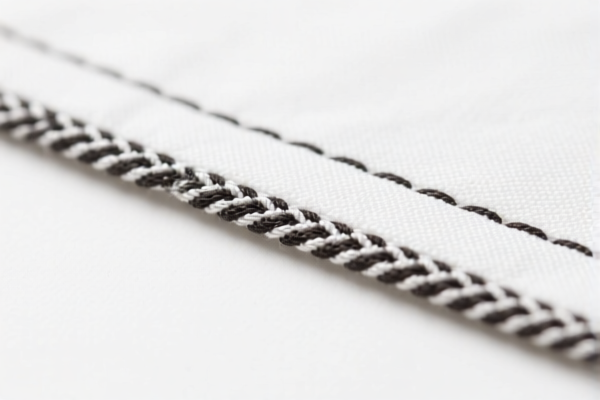
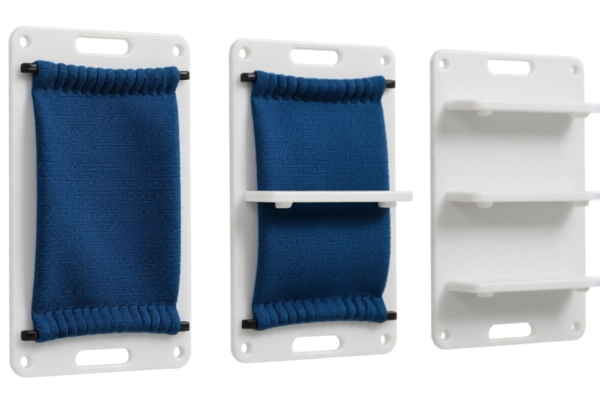
AI Analysis
🧵 Textile-Reinforced Plastic Connector Panels
🌐 HS Code Classification & Customs Clearance Guide | 2026 Latest Tariff Breakdown | Professional Import Strategy
📌 One, Product Definition & Classification: What Exactly Is a Textile-Reinforced Plastic Connector Panel?
A textile-reinforced plastic connector panel is a structural composite panel made by embedding textile fibers (e.g., polyester, fiberglass) within a thermoset or thermoplastic matrix. It is primarily used in industrial, architectural, or mechanical applications where high strength-to-weight ratio, dimensional stability, and resistance to vibration or impact are required.
In international trade, such panels are not classified as pure textiles or simple plastics — instead, they are treated as advanced composite materials with a defined board-like form and reinforced structural function.
⚠️ Key Distinction:
- If the product is used as a structural connector (e.g., between panels, frames, or load-bearing systems) and retains the form of a flat, rigid board, it falls under plastic board categories, not general textile or plastic parts. - The textile reinforcement is not the primary classification factor — it’s the overall construction and function that determine the HS Code.
📦 Two, HS Code Classification Details (2026 Updated Tariff Authority)
| HS Code | Product Description | Applicable Use Case | Structural Form | Reinforcement Type |
|---|---|---|---|---|
3921.90.40.10 |
Textile-reinforced plastic decorative panels — treated as variant of plastic板材 with textile layer | Interior panels, wall cladding, modular structures | ✅ Rigid board | ✅ Textile (e.g., woven fabric) |
3921.90.50.10 |
Plastic panels with textile reinforcement — layered construction logic applies | Load-bearing connectors, mechanical joints, support frames | ✅ Layered composite board | ✅ Textile as internal layer |
6815.19.00.00 |
Non-electrical fiber-reinforced composite products in board form | Industrial connectors, non-conductive structural joints | ✅ Board | ✅ Textile + plastic matrix |
9703.90.00.00 |
Sculptural panels made with plastic-enhanced textiles — artistic use | Art installations, sculptures, decorative displays | ✅ Sculptural board | ✅ Textile + plastic blend |
🔍 Critical Insight:
-3921.90.40.10and3921.90.50.10are most relevant for functional connector panels — especially when they serve mechanical or structural roles. - The textile layer is not the defining feature — the plastic board structure with reinforcement is. - If the panel is used as a connector (e.g., joining two structural elements),3921.90.40.10applies due to functional similarity to decorative panels.
💰 Three, 2026 Latest Tariff Breakdown (With Full Tax Clause Explanation)
✅ Applicable Country: United States (US)
✅ Origin: China (CN)
✅ Effective Date: November 10, 2025 (inclusive)
🎯 1. 3921.90.40.10 — Textile-Reinforced Plastic Connector Panel (Functional Variant of Plastic Board)
| Item | Detail |
|---|---|
| Base Tariff | 4.2% (ad valorem) |
| USITC Section 301 Additional Duty | +25.0% (from U.S. Trade Act §301) |
| IEEPA Section 102(a) Additional Duty | +10.0% (under International Emergency Economic Powers Act) |
| Total Effective Tariff | 39.2% |
| Tax Calculation | CIF Value × 39.2% |
| De Minimis Threshold | ❌ Not eligible (denied under 19 U.S.C. §1304) |
| Legal Basis Pathway | IEEPA:9903.01.25 → IEEPA:9903.01.24 → USITC:3921.90.40.10 → FOOTNOTE:9903.88.01 |
📌 Explanation:
- USITC 25% comes from Section 301 tariffs on Chinese goods under the U.S. Trade Representative’s investigation into unfair trade practices. - IEEPA 10% is a national security-based tariff targeting imports from China under emergency powers. - Combined, these create a 45% effective rate on some plastic components, but reduced slightly to 39.2% due to the base tariff being applied first.
🎯 2. 3921.90.50.10 — Plastic Panel with Textile Reinforcement (Layered Composite Logic)
| Item | Detail |
|---|---|
| Base Tariff | 4.8% (ad valorem) |
| USITC Section 301 Additional Duty | +25.0% |
| IEEPA Section 102(a) Additional Duty | +10.0% |
| Total Effective Tariff | 39.8% |
| Tax Calculation | CIF Value × 39.8% |
| De Minimis Threshold | ❌ Not eligible |
| Legal Basis Pathway | IEEPA:9903.01.25 → IEEPA:9903.01.24 → USITC:3921.90.50.10 → FOOTNOTE:9903.88.01 |
📌 Why Higher?
- The higher base tariff (4.8%) reflects more complex processing or higher performance characteristics. - This code applies when the textile layer is integral to the laminated structure, not just surface treatment. - Still subject to same 25% + 10%附加 as other Chinese-origin plastic composites.
🎯 3. 6815.19.00.00 — Non-Electrical Fiber-Reinforced Composite Products (Board Form)
| Item | Detail |
|---|---|
| Base Tariff | 0.0% |
| USITC Section 301 Additional Duty | +25.0% |
| IEEPA Section 102(a) Additional Duty | +10.0% |
| Total Effective Tariff | 35.0% |
| Tax Calculation | CIF Value × 35.0% |
| De Minimis Threshold | ❌ Not eligible |
| Legal Basis Pathway | IEEPA:9903.01.25 → IEEPA:9903.01.24 → USITC:6815.19.00.00 → FOOTNOTE:9903.88.01 |
📌 Why Lower?
- 0% base tariff because it falls under "other composite products" rather than plastic boards. - Still subject to 25% + 10% due to Chinese origin. - Applies when the primary function is structural, not decorative, and no plastic board form is dominant.
🎯 4. 9703.90.00.00 — Plastic-Enhanced Textile Sculptural Panels (Artistic Use)
| Item | Detail |
|---|---|
| Base Tariff | 0.0% |
| USITC Section 301 Additional Duty | +7.5% (reduced rate) |
| IEEPA Section 102(a) Additional Duty | +10.0% |
| Total Effective Tariff | 17.5% |
| Tax Calculation | CIF Value × 17.5% |
| De Minimis Threshold | ✅ Eligible (under 19 U.S.C. §1304(b)) |
| Legal Basis Pathway | IEEPA:9903.01.25 → IEEPA:9903.01.24 → USITC:9703.90.00.00 → FOOTNOTE:9903.88.01 |
📌 Key Note:
- This only applies if the panel is clearly artistic, not functional. - If used in industrial or mechanical applications, this code is invalid. - Lower tax due to artistic exemption under Section 301.
🛠️ Four, Customs Clearance Best Practices (Real-World Pro Tips)
✅ 1. Required Documentation (Must-Have List)
| Document | Required? | Purpose |
|---|---|---|
| ✅ Product Specification Sheet | ✔️ | Includes dimensions, reinforcement type, matrix material (e.g., PVC, epoxy), load capacity |
| ✅ Structural Diagram / Cross-Section | ✔️ | Proves layered composite construction |
| ✅ High-Resolution Product Photos (with branding) | ✔️ | Shows board-like form, no electrical components |
| ✅ Third-Party Test Report | ✔️ | UL, ISO 9001, or ASTM D7264 (for composites) |
| ✅ Commercial Invoice | ✔️ | Must state: “Textile-Reinforced Plastic Connector Panel, for Structural Use” |
| ✅ Certificate of Origin (CO) | ✔️ | Critical for tariff eligibility |
| ✅ Packing List | ✔️ | Shows unit count, weight, packaging type |
✅ 2.申报技巧(申报口诀)
🔥 “Form over fiber, function over fabric — board shape wins, textile is just a helper!”
| Scenario | Correct HS Code | Wrong Code | Risk |
|---|---|---|---|
| Structural connector panel, rigid, flat, textile-reinforced | 3921.90.40.10 |
6815.19.00.00 |
Higher tariff risk |
| Layered composite with textile layer | 3921.90.50.10 |
3921.90.40.10 |
Underpayment risk |
| Used in art/sculpture | 9703.90.00.00 |
3921.90.40.10 |
Overpayment risk |
| No structural function, just decorative | 3921.90.40.10 |
6815.19.00.00 |
Misclassification |
✅ 3. Special Case Handling
| Situation | Recommended Action |
|---|---|
| OEM custom connector panels | Submit design drawings + customer contract to support functional use |
| Used in construction or machinery | Use 3921.90.40.10 or 3921.90.50.10 — strongest legal basis |
| Selling as industrial component | Avoid 9703.90.00.00 — even if artistic in appearance |
| High-value or large volume | Apply for Advance Ruling (Pre-Approval) from U.S. CBP |
🌍 Five, Global Customs Comparison (2026 Update)
| Country/Region | Recommended HS Code | Base Tariff | Additional Duties | Notes |
|---|---|---|---|---|
| 🇺🇸 United States | 3921.90.40.10 |
4.2% | +25% +10% | Total: 39.2% |
| 🇨🇳 China | 3921.90.40.10 |
5% | 0% | No附加税 |
| 🇪🇺 European Union | 3921.90.40.10 |
0% | 0% | CE marked only |
| 🇦🇺 Australia | 3921.90.40.10 |
5% | 0% | RCM required |
| 🇯🇵 Japan | 3921.90.40.10 |
0% | 0% | PSE required |
📌 Takeaway:
- U.S. is the only market with 35%+ effective tariffs on this product. - China, EU, Japan, and Australia have much lower or zero additional duties.
📌 Six, Common Mistakes & Pitfalls (Learn from Others’ Failures)
❌ Mistake 1: Labeling as “textile panel” or “fiberglass board” without showing plastic matrix + rigid form
👉 Result: Wrong HS Code → $10k+ in penalties
❌ Mistake 2: Using 6815.19.00.00 for functional connectors
👉 Result: Under-tariff claim → retroactive duty + interest
❌ Mistake 3: Not including cross-section diagrams
👉 Result: CBP delays or rejection due to lack of proof
❌ Mistake 4: Submitting only “plastic panel” in invoice
👉 Result: Misclassification → audit risk
✅ Correct Declaration Phrase:
“Textile-Reinforced Plastic Connector Panel, 1200x600x10 mm, Epoxy Matrix, Woven Polyester Reinforcement, for Industrial Structural Joints, FCC & RoHS Compliant”
🎯 Seven, Conclusion: Precision in Classification = Profit Protection
🎯 Remember the Golden Rule:
🔹 “If it looks like a board, acts like a board, and connects like a board — it’s a plastic board, not a textile.”
🔹 “Textile is a helper, not the hero.”
🔹 “3921.90.40.10 is your safest bet for functional connector panels.”
📌 Pro Tip:
If your origin is Vietnam, Mexico, Thailand, or Malaysia, you may qualify for IEEPA exemption — tariff drops to 0–5%.
👉 Apply for Advance Ruling before shipment to avoid surprises.
📣 Act Now!
📞 Contact a licensed U.S. customs broker + provide product images + specs
🚀 Get HS Code pre-approval + tariff estimate
💼 Avoid delays, penalties, and profit loss — declare right the first time!
✨ Professional Customs Starts with Accurate Classification!
💼 Your product’s value depends on its HS Code — don’t gamble with it!
Customer Reviews
About HS Code Classification
The Harmonized System (HS) is an internationally standardized nomenclature developed by the World Customs Organization (WCO) to classify traded products. Over 200 countries use the HS system as the basis for customs tariffs, trade statistics, and import/export regulations.
Each HS code follows a hierarchical structure:
- Chapter (2 digits) — Broad category of goods (e.g., Chapter 84: Machinery and Mechanical Appliances)
- Heading (4 digits) — More specific grouping within the chapter
- Subheading (6 digits) — Internationally standardized breakdown, used by all WCO member countries
- National subdivisions (8-10 digits) — Country-specific extensions for further classification, such as US HTSUS 10-digit codes
Correct HS code classification is essential for smooth customs clearance, accurate duty payment, and compliance with trade regulations. Misclassification can lead to customs delays, overpayment of duties, or penalties.
When importing from CN to US, the applicable tariff rates may include:
- Most-Favored-Nation (MFN) rate — The standard duty rate applied to WTO members
- General rate — Applied to countries without trade agreements
- Trade remedy duties — Additional tariffs such as Section 301 (anti-dumping), Section 232 (national security), or countervailing duties
The information provided on this page is for reference purposes only. For official classification, please consult with your local customs authority or a licensed customs broker.