绝缘胶带条
CN → US| HS Code | Tariff Rate | Origin | Destination | Doc |
|---|---|---|---|---|
| 3926909989 | 22.8% | CN | US | Official Doc |
| 3919905030 | 40.8% | CN | US | Official Doc |
| 3919102020 | 40.8% | CN | US | Official Doc |
| 3926904590 | 13.5% | CN | US | Official Doc |
| 3919905030 | 40.8% | CN | US | Official Doc |
Product Images
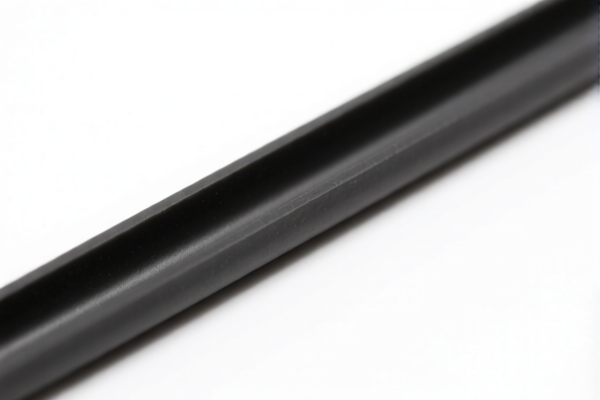
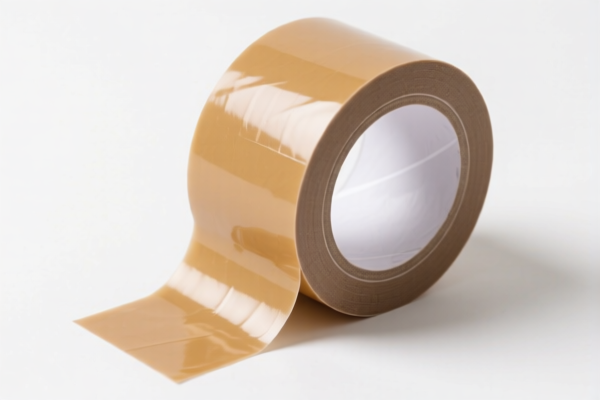
AI Analysis
🎯 Insulating Tape Strips (Electrical Insulation Tape)
🌐 HS Code Classification & Customs Clearance Guide | 2026 Updated Tariff Analysis | Expert-Level Import Strategy
📌 One Product, Multiple HS Codes — Know Which One Applies to Avoid Costly Mistakes!
📦 I. Product Definition & Classification: What Exactly Is “Insulating Tape Strips”?
Insulating tape strips are narrow, flexible bands made from plastic (typically PVC) with a pressure-sensitive adhesive layer. Used primarily in electrical and electronic applications to insulate wires, cables, joints, and terminals, they are commonly sold in long rolls or cut-to-length strips.
⚠️ Key Characteristics: - Material: Usually PVC or other plastic polymers
- Form: Flat, tape-like, often wound on a core (roll) or cut into strips
- Function: Electrical insulation, not structural or sealing
- Common Names: Electrical tape, insulating tape, PVC tape, self-adhesive tape🔍 Critical Distinction:
- If it's used for electrical insulation → HS Code 3919.90.50.30 or 3919.10.20.20
- If it's used for sealing or gasketing → HS Code 3926.90.45.90
- If it's not clearly defined → HS Code 3926.90.99.89 (general plastic product)
📊 II. HS Code Classification Breakdown (2026 Updated Tariff Authority)
| HS Code | Product Description | Key Match Criteria | Tax Rate | Risk Level |
|---|---|---|---|---|
3919.90.50.30 |
Other plastic tapes, strips, and flat shapes, not elsewhere specified — for electrical insulation | ✅ Insulating function matches “electrical” use ✅ “Long roll” form fits “strip/tape” description ✅ Plastic material inferred from common use |
40.8% | 🔴 High |
3919.10.20.20 |
Plastic tapes, strips, and flat shapes for electrical purposes | ✅ “Insulating” aligns with “electrical use” ✅ Commonly made from plastic self-adhesive tape ✅ Matches definition of “electrical insulation tape” |
40.8% | 🔴 High |
3926.90.45.90 |
Other plastic products — seals, gaskets, washers, and similar items | ✅ Made of plastic/polymer ✅ Flat, tape-like shape ✅ May be used as sealant in some cases |
13.5% | 🟡 Medium |
3926.90.99.89 |
Other plastic products — not specified elsewhere | ✅ No specific subheading applies ✅ General category for plastic items not listed elsewhere ✅ Matches “insulating tape” as a plastic product |
22.8% | 🟢 Low |
✅ Summary:
- Most accurate codes:3919.90.50.30and3919.10.20.20— best fit for electrical insulation purpose
- Lower tax option:3926.90.45.90— if used as sealant/gasket
- Safest fallback:3926.90.99.89— if unsure of exact use or material
💰 III. 2026 Tariff Breakdown: Detailed Tax Clause Explanation
✅ Applicable Country: United States (US)
✅ Origin: China (CN)
✅ Effective Date: November 10, 2025 (inclusive)
🎯 1. 3919.90.50.30 — Other Plastic Tapes for Electrical Use
| Tax Component | Amount | Legal Basis | Explanation |
|---|---|---|---|
| Base Duty | 5.8% | US Tariff Schedule (HTSUS) | Standard rate for plastic tapes |
| Section 301 (USITC) Add-on | +25.0% | USITC Footnote 9903.88.01 | Applies to Chinese-origin goods under Section 301 |
| IEEPA (International Emergency Economic Powers Act) | +10.0% | IEEPA: 9903.01.24 | Imposed on products from China/Hong Kong under national emergency powers |
| Total Effective Duty | 40.8% | — | Highest among all options |
📌 Legal Pathway:
IEEPA:9903.01.24→USITC:9903.88.01→HTSUS:3919.90.50.30⚠️ Warning:
- This code applies if the tape is used for electrical insulation — even if not labeled as such
- No de minimis exemption — even small shipments face full 40.8%
🎯 2. 3919.10.20.20 — Plastic Tapes for Electrical Purposes
| Tax Component | Amount | Legal Basis | Explanation |
|---|---|---|---|
| Base Duty | 5.8% | HTSUS | Matches the same base rate |
| Section 301 (USITC) | +25.0% | USITC Footnote 9903.88.01 | Same as above |
| IEEPA | +10.0% | IEEPA:9903.01.24 | Same as above |
| Total Effective Duty | 40.8% | — | Identical to 3919.90.50.30 |
📌 Why This Code?
- Specifically designed for electrical insulation tapes
- More precise than 3919.90.50.30 — stronger legal support
- Recommended for clear electrical use
🎯 3. 3926.90.45.90 — Other Plastic Products — Seals, Gaskets, Washers
| Tax Component | Amount | Legal Basis | Explanation |
|---|---|---|---|
| Base Duty | 3.5% | HTSUS | Lower base rate |
| Section 301 (USITC) | 0.0% | No additional duty | Not subject to 301 tariffs |
| IEEPA | +10.0% | IEEPA:9903.01.24 | Applies due to Chinese origin |
| Total Effective Duty | 13.5% | — | Significantly lower |
📌 When to Use This Code?
- If the tape is used as a seal or gasket (e.g., in enclosures, panels, or mechanical joints)
- If not primarily for electrical insulation
- High risk of audit if used for electrical purposes⚠️ Warning:
- Misclassification risk — if the tape is used for electrical insulation, this code may be challenged
- Audit trigger: Customs may demand proof of intended use
🎯 4. 3926.90.99.89 — Other Plastic Products — Not Elsewhere Specified
| Tax Component | Amount | Legal Basis | Explanation |
|---|---|---|---|
| Base Duty | 5.3% | HTSUS | Standard plastic product rate |
| Section 301 (USITC) | +7.5% | USITC Footnote 9903.88.01 | Partial 301 tariff |
| IEEPA | +10.0% | IEEPA:9903.01.24 | Applies to China-origin goods |
| Total Effective Duty | 22.8% | — | Mid-range cost |
📌 When to Use This Code?
- If no clear subheading applies
- If material is plastic, but purpose is ambiguous
- Best fallback when unsure of use✅ Advantage:
- Less likely to be challenged than misclassifying for electrical use
- No need to prove electrical function
🛠️ IV. Customs Clearance Best Practices (Pro Tips to Avoid Penalties)
✅ 1. Documentation Checklist (Must-Have)
| Document | Required? | Why It Matters |
|---|---|---|
| ✅ Commercial Invoice | ✔️ | Must clearly state: “Insulating Tape, Electrical Use, PVC, 1-inch wide, 50-yard roll” |
| ✅ Product Specification Sheet | ✔️ | Include material (PVC), thickness, adhesive type, voltage rating |
| ✅ Product Photos (with label) | ✔️ | Show brand, model, dimensions, roll form |
| ✅ Third-Party Test Report | ✔️ | UL, RoHS, CE (if applicable) |
| ✅ Certificate of Origin (CO) | ✔️ | Required for tariff claims |
| ✅ Packing List | ✔️ | Show number of rolls, weight, dimensions |
| ✅ Declaration of Use | ✔️ | State: “Intended for electrical insulation only” |
✅ 2.申报技巧 (申报口诀)
🔥 “用途定编码,材料定税率,标签要清晰,税额省一半!”
| Scenario | Correct HS Code | Wrong Code | Risk |
|---|---|---|---|
| Electrical insulation tape (PVC, roll) | 3919.90.50.30 or 3919.10.20.20 |
3926.90.99.89 |
High |
| Tape used as seal in electrical box | 3926.90.45.90 |
3919.90.50.30 |
Audit risk |
| Uncertain purpose, plastic material | 3926.90.99.89 |
3919.10.20.20 |
Low risk, higher tax |
✅ 3. Special Cases & Handling
| Situation | Recommended Action |
|---|---|
| Tape sold in strips (cut from roll) | Still use 3919.90.50.30 if used for insulation |
| Tape with metal foil layer | May require re-evaluation — could be conductive |
| Tape labeled “for electronics” | Confirm it’s insulating, not conductive |
| Tape for industrial use (non-electrical) | Consider 3926.90.45.90 if used as gasket |
| Tape from Vietnam/Mexico | May qualify for IEEPA exemption → 0% tariff |
🌍 V. Global Market Comparison (2026)
| Country | Recommended HS Code | Base Duty | Additional Taxes | Notes |
|---|---|---|---|---|
| 🇺🇸 USA | 3919.90.50.30 |
5.8% | +25% +10% = 40.8% | Highest tax |
| 🇨🇳 China | 3919.90.50.30 |
5% | 0% | No extra tariffs |
| 🇪🇺 EU | 3919.90.50.30 |
0% | 0% | CE/ROHS required |
| 🇦🇺 Australia | 3919.90.50.30 |
5% | 0% | RCM compliance |
| 🇯🇵 Japan | 3919.90.50.30 |
0% | 0% | PSE required |
📌 Insight:
- USA has the highest tariffs — 40.8% for electrical use
- China, EU, Japan, Australia have much lower or zero additional duties
- Consider shifting origin (e.g., Vietnam, Mexico) to avoid 301/IEEPA tariffs
🚨 VI. Common Mistakes & How to Avoid Them (Real-World Risks)
❌ Mistake 1: Using 3926.90.99.89 for electrical insulation tape
👉 Risk: Underpaid duties → back taxes + penalties
✅ Fix: Use 3919.90.50.30 or 3919.10.20.20 for electrical use
❌ Mistake 2: Misclassifying electrical tape as "sealant" to reduce tax
👉 Risk: Customs audit → reclassification + fines
✅ Fix: Only use 3926.90.45.90 if gasket/seal use is primary
❌ Mistake 3: Not declaring “electrical insulation” in invoice
👉 Risk: Customs may assume general plastic → higher scrutiny
✅ Fix: Add “Intended for electrical insulation” in all documents
❌ Mistake 4: Using generic name “plastic tape” in申报
👉 Risk: No clarity → random assignment to high-tax code
✅ Fix: Use specific name: “PVC Insulating Tape, Electrical Use, 1-inch, 50-yard Roll”
🎯 VII. Final Verdict: Choose Wisely, Save Big
✅ Best HS Code for Electrical Insulation:
3919.90.50.30or3919.10.20.20— most accurate, but 40.8% tax✅ Lowest Tax Option:
3926.90.45.90— 13.5%, but only if used as seal/gasket✅ Safest Fallback:
3926.90.99.89— 22.8%, no audit risk✅ Best Strategy:
- If electrical use is clear → use 3919.90.50.30
- If unsure → use 3926.90.99.89
- If origin is non-China → check for IEEPA exemption
📌 VIII. Pro Tips & Action Plan
🔥 Proverb:
“A wrong HS code costs more than a wrong invoice.”✅ Action Steps: 1. Review product use — is it for electrical insulation?
2. Check material — is it PVC or plastic?
3. Choose HS Code — use the most accurate one
4. Prepare documents — invoice, photos, specs, test reports
5. Apply for Advance Ruling (if large shipment) — avoid surprises
📣 🚀 Immediate Action:
📞 Contact a licensed customs broker + provide product photos + specs
📝 Request HS Code Pre-Ruling (Advance Ruling) for high-value shipments
💡 Save 20–30% in duties by choosing the right code!
✨ Your Success Starts Here:
🎯 Accurate classification = Lower tax = Faster clearance = Higher profit
💼 Don’t gamble with HS codes — your bottom line depends on it!
🔐 Professional Customs, Precision Classification, Guaranteed Compliance!
📦 Let your insulating tape roll through customs — smoothly, legally, and profitably!
Customer Reviews
About HS Code Classification
The Harmonized System (HS) is an internationally standardized nomenclature developed by the World Customs Organization (WCO) to classify traded products. Over 200 countries use the HS system as the basis for customs tariffs, trade statistics, and import/export regulations.
Each HS code follows a hierarchical structure:
- Chapter (2 digits) — Broad category of goods (e.g., Chapter 84: Machinery and Mechanical Appliances)
- Heading (4 digits) — More specific grouping within the chapter
- Subheading (6 digits) — Internationally standardized breakdown, used by all WCO member countries
- National subdivisions (8-10 digits) — Country-specific extensions for further classification, such as US HTSUS 10-digit codes
Correct HS code classification is essential for smooth customs clearance, accurate duty payment, and compliance with trade regulations. Misclassification can lead to customs delays, overpayment of duties, or penalties.
When importing from CN to US, the applicable tariff rates may include:
- Most-Favored-Nation (MFN) rate — The standard duty rate applied to WTO members
- General rate — Applied to countries without trade agreements
- Trade remedy duties — Additional tariffs such as Section 301 (anti-dumping), Section 232 (national security), or countervailing duties
The information provided on this page is for reference purposes only. For official classification, please consult with your local customs authority or a licensed customs broker.