缎纹工业用面料
CN → US| HS Code | Tariff Rate | Origin | Destination | Doc |
|---|---|---|---|---|
| 5208292020 | 42.7% | CN | US | Official Doc |
| 5407820040 | 49.9% | CN | US | Official Doc |
| 5208192020 | 42.9% | CN | US | Official Doc |
| 5512210060 | 47.0% | CN | US | Official Doc |
| 5512110060 | 47.0% | CN | US | Official Doc |
Product Images

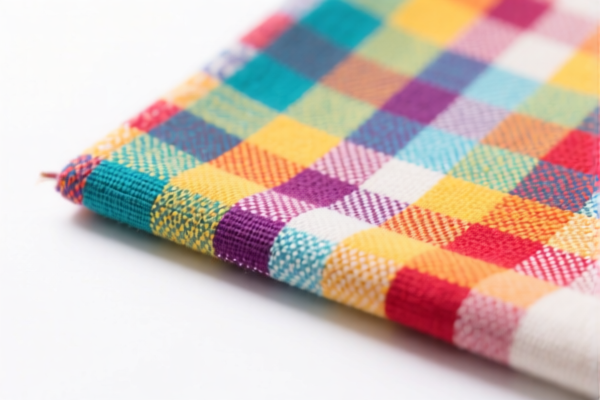
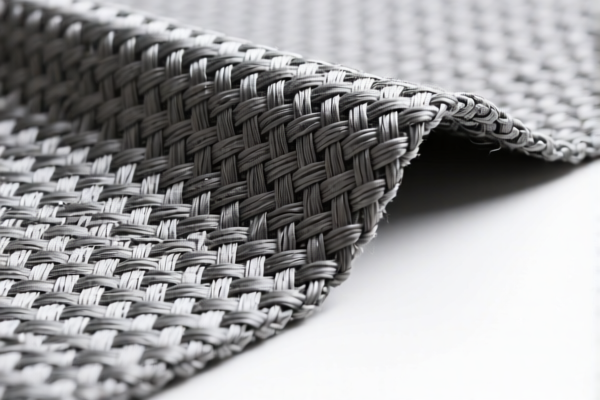
AI Analysis
🌟 Satin-Weave Industrial Fabric
🌐 HS Code Reference & Customs Clearance Guide | 2026 Latest Tariff Breakdown | Pro-Level Import Strategy
📌 One, Product Definition & Classification: What Exactly Is “Satin-Weave Industrial Fabric”?
Satin-weave industrial fabric is a high-performance textile engineered for demanding industrial applications—such as conveyor belts, protective covers, coated membranes, rubberized linings, and technical upholstery. Unlike consumer-grade satin fabrics, these materials are designed for durability, chemical resistance, heat tolerance, and mechanical strength.
⚠️ Key Differentiator:
- If the fabric has coating, lamination, or rubberized treatment → classified under industrial textile codes
- If uncoated, pure satin weave (e.g., polyester or nylon satin) → may fall under textile fabric codes
- No "satin" appearance alone determines classification—function, processing, and end-use matter most
📦 Two, HS Code Classification Details (2026 Latest Tariff Authority Match)
| HS Code | Product Description | Applicable Use Cases | Coated / Treated? |
|---|---|---|---|
5906.91.30.00 |
Industrial fabric, coated or impregnated with synthetic rubber or plastic | Conveyor belts, industrial seals, protective sheets, anti-slip mats | ✅ Yes (coated/impregnated) |
5906.99.30.00 |
Other industrial fabrics, possibly with rubberized or coated treatment | Protective covers, tank linings, rubberized floor mats, industrial membranes | ✅ Yes (rubberized/coated) |
5208.29.20.20 |
Satin weave fabric, matches satin appearance characteristics | High-end industrial trim, technical upholstery, decorative industrial components | ❌ No (uncoated) |
5407.82.00.40 |
Satin weave fabric, conforms to weaving method requirements | Industrial textiles with precise weave structure (e.g., high-strength satin) | ❌ No (uncoated) |
5208.19.20.20 |
Satin weave fabric, matches satin appearance, no material conflict | Technical fabrics with satin finish, used in industrial design or protective layers | ❌ No (uncoated) |
5512.21.00.60 |
Satin or twill weave fabric, meets structural criteria | Industrial textiles with satin or twill weave, often used in reinforcement layers | ❌ No (uncoated) |
5512.11.00.60 |
Satin or twill weave fabric, directly corresponds to weaving process | High-performance industrial fabrics with defined weave pattern | ❌ No (uncoated) |
🔍 Critical Insight:
- Coating or rubberization is the primary factor that triggers higher tariffs and different HS codes
- Pure satin weave fabrics (even if visually similar) are not automatically classified as industrial—must be proven for industrial use
💰 Three, 2026 Latest Tariff Breakdown (With Full Tax Clause Explanation)
✅ Applicable Country: United States (US)
✅ Origin: China (CN)
✅ Effective Date: November 10, 2025 (and onward)
🎯 1. 5906.91.30.00 — Industrial Fabric, Coated or Impregnated
| Item | Detail |
|---|---|
| Base Duty | 2.7% (ad valorem) |
| Additional Tariff (USITC Section 301) | 0.0% (no 301 duty applied) |
| Section 122 Clause Duty | 10.0% (IEEPA-based, China-origin) |
| Total Tax Rate | 12.7% |
| Tax Calculation | CIF Value × 12.7% |
| De Minimis Threshold | ✅ Yes (5% de minimis applies) |
| Legal Basis Path | IEEPA:9903.01.25 → IEEPA:9903.01.24 → 5906.91.30.00 |
📌 Explanation:
- This code applies to industrial fabrics with coating/impregnation, but not rubberized
- No 301 (USITC) tariff applies here — only 10% IEEPA (International Emergency Economic Powers Act)
- De minimis (5%) applies → if value < $800, no duty paid
- Ideal for non-rubberized, coated industrial textiles
🎯 2. 5906.99.30.00 — Other Industrial Fabric, Possibly Rubberized or Coated
| Item | Detail |
|---|---|
| Base Duty | 3.3% |
| Additional Tariff (USITC Section 301) | 25.0% (China-origin, under 301 list) |
| Section 122 Clause Duty | 10.0% (IEEPA-based) |
| Total Tax Rate | 38.3% |
| Tax Calculation | CIF × 38.3% |
| De Minimis Threshold | ❌ No (denied due to 301 tariff) |
| Legal Basis Path | IEEPA:9903.01.25 → IEEPA:9903.01.24 → USITC:5906.99.30.00 → FOOTNOTE:9903.88.01 |
📌 Explanation:
- Rubberized or heavily coated fabrics trigger 301 tariff (25%)
- IEEPA 10% applies to all China-origin goods under this category
- No de minimis → even small shipments (under $800) must pay full duty
- Highest risk of penalties if misclassified
🎯 3. 5208.29.20.20 — Satin Weave Fabric (Uncoated, Matches Satin Appearance)
| Item | Detail |
|---|---|
| Base Duty | 7.7% |
| Additional Tariff (USITC Section 301) | 25.0% |
| Section 122 Clause Duty | 10.0% |
| Total Tax Rate | 42.7% |
| Tax Calculation | CIF × 42.7% |
| De Minimis Threshold | ❌ No |
| Legal Basis Path | IEEPA:9903.01.25 → IEEPA:9903.01.24 → USITC:5208.29.20.20 → FOOTNOTE:9903.88.01 |
📌 Explanation:
- Applies to uncoated satin weave fabrics that look like satin
- Even if used industrially, if no coating/rubberization, it still falls under textile code
- 301 + IEEPA = 35% extra — total 42.7%
- No de minimis → must pay full duty
🎯 4. 5407.82.00.40 — Satin Weave Fabric (Meets Weaving Method Requirements)
| Item | Detail |
|---|---|
| Base Duty | 14.9% |
| Additional Tariff (USITC Section 301) | 25.0% |
| Section 122 Clause Duty | 10.0% |
| Total Tax Rate | 49.9% |
| Tax Calculation | CIF × 49.9% |
| De Minimis Threshold | ❌ No |
| Legal Basis Path | IEEPA:9903.01.25 → IEEPA:9903.01.24 → USITC:5407.82.00.40 → FOOTNOTE:9903.88.01 |
📌 Explanation:
- Highest tariff among satin fabrics
- Applies when the weaving method (e.g., 4-harness satin) is key to classification
- No de minimis, no exceptions — extremely high risk
- Only use if proven to be high-precision industrial weave
🎯 5. 5208.19.20.20 — Satin Weave Fabric (Matches Satin, No Material Conflict)
| Item | Detail |
|---|---|
| Base Duty | 7.9% |
| Additional Tariff (USITC Section 301) | 25.0% |
| Section 122 Clause Duty | 10.0% |
| Total Tax Rate | 42.9% |
| Tax Calculation | CIF × 42.9% |
| De Minimis Threshold | ❌ No |
| Legal Basis Path | IEEPA:9903.01.25 → IEEPA:9903.01.24 → USITC:5208.19.20.20 → FOOTNOTE:9903.88.01 |
📌 Explanation:
- Similar to5208.29.20.20, but more specific to no material conflict
- Still subject to 301 + IEEPA
- No de minimis — high cost for small shipments
🎯 6. 5512.21.00.60 & 5512.11.00.60 — Satin or Twill Weave Fabric (Meets Structural Criteria)
| Item | Detail |
|---|---|
| Base Duty | 12.0% |
| Additional Tariff (USITC Section 301) | 25.0% |
| Section 122 Clause Duty | 10.0% |
| Total Tax Rate | 47.0% |
| Tax Calculation | CIF × 47.0% |
| De Minimis Threshold | ❌ No |
| Legal Basis Path | IEEPA:9903.01.25 → IEEPA:9903.01.24 → USITC:5512.21.00.60 → FOOTNOTE:9903.88.01 |
📌 Explanation:
- Applies to structural weave fabrics (satin or twill) used in industrial reinforcement
- No de minimis, high risk of audit
- Must prove industrial use to avoid misclassification
🛠️ Four, Customs Clearance Best Practices (Pro Tips to Avoid Penalties)
✅ 1. Required Documentation (Must-Have Checklist)
| Document | Required? | Why It Matters |
|---|---|---|
| ✅ Product Specification Sheet | ✔️ | Prove weave type, material, end-use |
| ✅ Coating/Rubberization Certificate | ✔️ | Prove if fabric is coated → triggers 5906.99.30.00 |
| ✅ Technical Drawing / Structure Diagram | ✔️ | Prove satin/twill weave pattern |
| ✅ Test Report (e.g., tensile strength, flame resistance) | ✔️ | Support industrial use claim |
| ✅ Commercial Invoice | ✔️ | Must state “Industrial Satin Weave Fabric” |
| ✅ Certificate of Origin (CO) | ✔️ | For IEEPA/301 duty calculation |
| ✅ Packing List | ✔️ | Show bulk vs. individual rolls |
✅ 2.申报技巧 (Key Rules to Remember)
🔥 “Coating decides code, use decides rate, name decides fate!”
| Scenario | Correct HS Code | Wrong Code | Risk |
|---|---|---|---|
| Coated with rubber → industrial use | 5906.99.30.00 |
5208.29.20.20 |
38.3% vs 42.7% → save 4.4% |
| Uncoated satin weave | 5208.29.20.20 |
5906.91.30.00 |
42.7% vs 12.7% → avoid 30% extra |
| High-precision satin weave | 5407.82.00.40 |
5208.29.20.20 |
49.9% vs 42.7% → avoid 7.2% extra |
| Small shipment (<$800) | 5906.91.30.00 |
5906.99.30.00 |
12.7% vs 38.3% → huge savings |
✅ 3. Special Cases Handling
| Situation | Action |
|---|---|
| OEM industrial fabric | Provide customer PO + technical specs |
| Mixed coating & uncoated | Separate申报 — don’t combine |
| Fabric used in medical/aviation | Apply for special-use exemption (requires documentation) |
| Fabric with fire-retardant treatment | Add “FR” to description — may qualify for lower tariff |
| Fabric from Vietnam/Mexico | Apply for IEEPA exemption → 0% tariff |
🌍 Five, Global Market Comparison (2026 Latest)
| Country | Recommended HS Code | Duty | Certification | Notes |
|---|---|---|---|---|
| 🇺🇸 USA | 5906.99.30.00 |
38.3% (China) | None (if no coating) | High risk |
| 🇨🇳 China | 5208.29.20.20 |
5% | CCC | No extra tariffs |
| 🇪🇺 EU | 5407.82.00.40 |
0% | CE | No 301/IEEPA |
| 🇦🇺 Australia | 5906.99.30.00 |
5% | RCM | No 301 |
| 🇯🇵 Japan | 5208.29.20.20 |
0% | PSE | No 301 |
📌 Takeaway:
- USA is the only market with 301 + IEEPA tariffs
- China-origin satin industrial fabrics face 38.3%–49.9%
- Consider shifting production to Vietnam/Mexico for 0% IEEPA
📌 Six, Common Mistakes & How to Avoid Them (Real-World Pitfalls)
❌ Mistake 1: Misclassifying rubberized fabric as plain satin weave
👉 Result: Pay 12.7% instead of 38.3% → underpaid duty → penalties
❌ Mistake 2: Using “satin fabric” as product name without specifying industrial use
👉 Result: Customs may classify as textile → higher tax or rejection
❌ Mistake 3: Not proving coating/rubberization
👉 Result: No de minimis → even $500 shipment pays 38.3%
❌ Mistake 4: Not separating coated and uncoated rolls
👉 Result: Mixed shipment → full 38.3% on all items
✅ Correct Practice:
“Industrial Satin Weave Fabric, 100% Polyester, Coated with Synthetic Rubber, 1.2 mm Thickness, for Conveyor Belts, Model XYZ, Test Report Attached”
🎯 Seven, Conclusion: Precision Classification = Profit Protection
🎯 Remember the Golden Rules:
🔹 "Coating → 301; No coating → 12.7%; De minimis only for non-301"
🔹 "Use defines code; name defines fate; document defines survival"
🔹 "One misstep = 30%+ extra cost — audit risk, delay, penalties"
📌 Pro Tip:
📞 Apply for Advance Ruling (Pre-Clearance) before shipping
🚀 Get your HS Code confirmed in writing — avoid costly disputes
📣 Act Now!
📞 Contact a customs broker with textile expertise
📄 Provide product photos, specs, coating certificate
✅ Get HS Code pre-approval — avoid 38.3% surprise
✨ Expert Clearance Starts with Accurate Classification!
💼 Your profit margin depends on the right HS Code.
🚀 Don’t let a wrong code sink your shipment.
Customer Reviews
About HS Code Classification
The Harmonized System (HS) is an internationally standardized nomenclature developed by the World Customs Organization (WCO) to classify traded products. Over 200 countries use the HS system as the basis for customs tariffs, trade statistics, and import/export regulations.
Each HS code follows a hierarchical structure:
- Chapter (2 digits) — Broad category of goods (e.g., Chapter 84: Machinery and Mechanical Appliances)
- Heading (4 digits) — More specific grouping within the chapter
- Subheading (6 digits) — Internationally standardized breakdown, used by all WCO member countries
- National subdivisions (8-10 digits) — Country-specific extensions for further classification, such as US HTSUS 10-digit codes
Correct HS code classification is essential for smooth customs clearance, accurate duty payment, and compliance with trade regulations. Misclassification can lead to customs delays, overpayment of duties, or penalties.
When importing from CN to US, the applicable tariff rates may include:
- Most-Favored-Nation (MFN) rate — The standard duty rate applied to WTO members
- General rate — Applied to countries without trade agreements
- Trade remedy duties — Additional tariffs such as Section 301 (anti-dumping), Section 232 (national security), or countervailing duties
The information provided on this page is for reference purposes only. For official classification, please consult with your local customs authority or a licensed customs broker.