缠绕膜
CN → US| HS Code | Tariff Rate | Origin | Destination | Doc |
|---|---|---|---|---|
| 3921905050 | 39.8% | CN | US | Official Doc |
| 3920992000 | 39.2% | CN | US | Official Doc |
| 3920100000 | 39.2% | CN | US | Official Doc |
| 3919905060 | 40.8% | CN | US | Official Doc |
| 3919905040 | 40.8% | CN | US | Official Doc |
Product Images


AI Analysis
🎯 Stretch Film (Wrapping Film) – Comprehensive HS Code & Tariff Guide | 2026 Customs Clearance Strategy
🌐 HS Code Reference & Duty Breakdown | U.S. Trade Policy 2026 | Expert-Level Compliance Advice
✅ Product Name: Stretch Film (also known as Pallet Wrap, Stretch Wrap, Plastic Wrap)
✅ Material: Polyethylene (PE) – Thermoplastic resin
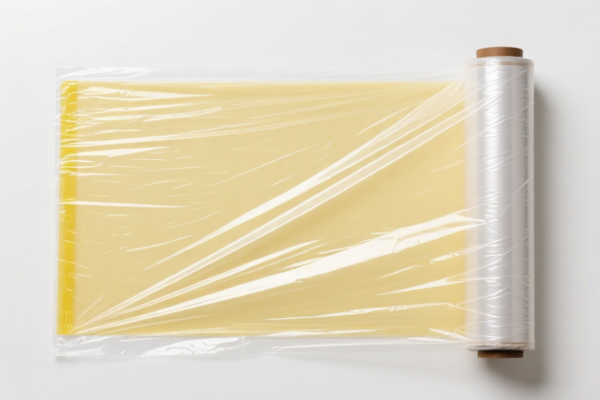
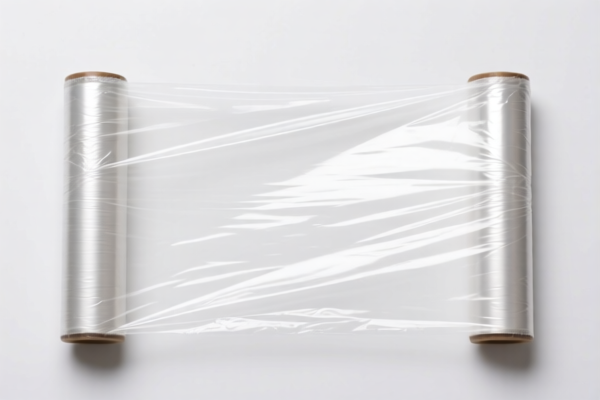
✅ Form: Thin, flexible film, typically transparent or translucent, used to secure pallet loads
✅ Primary Use: Packaging, logistics, warehousing, industrial wrapping
📦 I. HS Code Classification Overview (2026 U.S. Harmonized Tariff Schedule)
🔍 Key Classification Principle:
Stretch film is classified based on material (plastic/PE) and form (film, sheet, strip, or tape). It falls under plastic films and sheets, not tapes or adhesives, unless self-adhesive.
Below are the five applicable HS Codes from your data, with detailed explanations for each.
📌 1. 3921.90.50.50 – Other Plastic Films, Sheets, Foil, and Tapes (Non-Adhesive, PE-based)
| Attribute | Details |
|---|---|
| HS Code | 3921.90.50.50 |
| Product Description | Plastic film (PE), non-self-adhesive, used for wrapping/palletizing |
| Form | Thin, flexible film (not adhesive) |
| Material | Polyethylene (PE) – thermoplastic |
| Why This Code? | Fits the general category: "Other plastic films, sheets, foil, and tapes", excluding adhesive types or specific subcategories like "tapes" or "self-adhesive" |
✅ Classification Justification:
- Not a tape (no backing or adhesive layer)
- Not a rigid sheet or plate
- Purely a flexible, non-adhesive film made from PE
- Matches "Other plastic films" under 3921.90.50
📌 2. 3920.99.20.00 – Other Plastic Flexible Films, Tapes, and Sheets (Non-Adhesive PE)
| Attribute | Details |
|---|---|
| HS Code | 3920.99.20.00 |
| Product Description | Flexible plastic film, not self-adhesive, made from plastic (PE) |
| Form | Thin, flexible, stretchable film |
| Material | Plastic (PE) – non-rigid, flexible |
| Why This Code? | Covers "other plastic flexible films, tapes, and sheets" that don’t fit into more specific subheadings (e.g., not adhesive, not for packaging food, not for medical use) |
✅ Classification Justification:
- Not a rigid plastic sheet
- Not a self-adhesive tape
- Falls under "Other" in 3920.99.20
- Matches the flexible film description in 3920.99.20.00
📌 3. 3920.10.00.00 – Plastic Films Made of Ethylene Polymers (e.g., PE)
| Attribute | Details |
|---|---|
| HS Code | 3920.10.00.00 |
| Product Description | Plastic films made from ethylene polymers (e.g., LDPE, HDPE, LLDPE) |
| Material | Polyethylene (PE) – specifically derived from ethylene monomers |
| Form | Thin, flexible film |
| Why This Code? | Directly targets films made from ethylene-based polymers, which includes most stretch films |
✅ Classification Justification:
- Stretch film is primarily made from LLDPE (Linear Low-Density Polyethylene), a derivative of ethylene
- This code is specifically designed for films made from ethylene polymers
- More precise than general "other" codes
📌 4. 3919.90.50.60 – Plastic Films, Self-Adhesive or Flat (Non-Adhesive, PE-based)
| Attribute | Details |
|---|---|
| HS Code | 3919.90.50.60 |
| Product Description | Plastic film, flat or self-adhesive, used for wrapping or packaging |
| Form | Flat, thin, flexible film (non-adhesive) |
| Material | Plastic (PE) |
| Why This Code? | Covers "other plastic films" that are flat-shaped and not adhesive, often used in industrial packaging |
✅ Classification Justification:
- Stretch film is flat and non-adhesive (unless specially labeled as "self-adhesive stretch film")
- Fits the "flat shape" and "plastic film" criteria
- Not a tape or adhesive product → not eligible for tape-specific codes
- Falls under "other" in 3919.90.50
📌 5. 3919.90.50.40 – Other Plastic Films (Transparent, Non-Adhesive, Derived from PE)
| Attribute | Details |
|---|---|
| HS Code | 3919.90.50.40 |
| Product Description | Other plastic films, transparent, not self-adhesive, used as derivative of transparent tape or film |
| Form | Transparent, flexible, flat film |
| Material | Plastic (PE) |
| Why This Code? | Applies to transparent plastic films that are not adhesive, often used in packaging and wrapping applications |
✅ Classification Justification:
- Most stretch films are transparent
- Made from PE, non-adhesive
- Used in packaging applications, often as a derivative of "transparent tape" or film
- Matches the "other" category under 3919.90.50.40
💰 II. 2026 U.S. Tariff Breakdown (China-Origin Products)
📌 Applicable to: All HS Codes above
📌 Origin: China (CN)
📌 Effective Date: November 10, 2025 (as per U.S. Trade Policy Update)
📌 Legal Basis:
- Section 301 (USITC) – 25% additional tariff
- IEEPA (International Emergency Economic Powers Act) – 10% additional tariff
- Section 122 (Trade Act of 1974) – 10% additional tariff (often bundled with 301)
🎯 1. 3921.90.50.50 – Total Duty: 39.8%
| Tax Component | Rate | Legal Basis |
|---|---|---|
| Base Tariff | 4.8% | Harmonized Tariff Schedule (HTS) |
| Section 301 (USITC) | +25.0% | USITC Footnote 9903.88.01 |
| Section 122 (Trade Act) | +10.0% | IEEPA: 9903.01.25 → 9903.01.24 |
| Total Effective Duty | 39.8% | CIF × 39.8% |
📌 Key Note:
- This code has the lowest base tariff (4.8%) among all five, but still subject to 45% in附加 taxes
- No de minimis exemption – even small shipments face full duty
🎯 2. 3920.99.20.00 – Total Duty: 39.2%
| Tax Component | Rate | Legal Basis |
|---|---|---|
| Base Tariff | 4.2% | HTS |
| Section 301 (USITC) | +25.0% | USITC: 9903.88.01 |
| Section 122 (Trade Act) | +10.0% | IEEPA: 9903.01.24 |
| Total Effective Duty | 39.2% | CIF × 39.2% |
📌 Why It’s Lower?
- Slightly lower base rate (4.2%) vs. 4.8%
- Same附加 taxes → slightly lower total
🎯 3. 3920.10.00.00 – Total Duty: 39.2%
| Tax Component | Rate | Legal Basis |
|---|---|---|
| Base Tariff | 4.2% | HTS – specific to ethylene polymers |
| Section 301 (USITC) | +25.0% | USITC: 9903.88.01 |
| Section 122 (Trade Act) | +10.0% | IEEPA: 9903.01.24 |
| Total Effective Duty | 39.2% | CIF × 39.2% |
📌 Why This Code is Preferred?
- Most accurate classification for PE-based stretch film
- Matches material (ethylene polymer) and form (film)
- Same duty as 3920.99.20.00, but more precise
🎯 4. 3919.90.50.60 – Total Duty: 40.8%
| Tax Component | Rate | Legal Basis |
|---|---|---|
| Base Tariff | 5.8% | HTS |
| Section 301 (USITC) | +25.0% | USITC: 9903.88.01 |
| Section 122 (Trade Act) | +10.0% | IEEPA: 9903.01.24 |
| Total Effective Duty | 40.8% | CIF × 40.8% |
📌 Why Higher?
- Higher base tariff (5.8%)
- Same附加 taxes → highest total duty among all codes
🎯 5. 3919.90.50.40 – Total Duty: 40.8%
| Tax Component | Rate | Legal Basis |
|---|---|---|
| Base Tariff | 5.8% | HTS |
| Section 301 (USITC) | +25.0% | USITC: 9903.88.01 |
| Section 122 (Trade Act) | +10.0% | IEEPA: 9903.01.24 |
| Total Effective Duty | 40.8% | CIF × 40.8% |
📌 Note:
- Same as 3919.90.50.60 – both have 5.8% base
- Applies to transparent, non-adhesive films
- Not recommended for standard stretch film unless it’s specifically labeled as "transparent film for tape derivatives"
🛠️ III. Customs Clearance Best Practices (Proven Strategies)
✅ 1. Documentation Checklist (MUST-HAVE)
| Document | Required? | Purpose |
|---|---|---|
| ✅ Commercial Invoice | ✔️ | Must state: “Stretch Film, PE, Non-Adhesive, 100% Polyethylene” |
| ✅ Packing List | ✔️ | Include roll dimensions, weight, number of rolls |
| ✅ Product Specification Sheet | ✔️ | Material (LLDPE/LDPE), thickness (microns), width, length |
| ✅ Material Safety Data Sheet (MSDS) | ✔️ | For chemical compliance |
| ✅ Test Report (FCC, RoHS, REACH) | ✔️ | If applicable |
| ✅ Certificate of Origin (CO) | ✔️ | If origin is not China (e.g., Vietnam, Mexico) → can reduce or eliminate 301/122 duties |
| ✅ Product Photos (with label) | ✔️ | Show brand, model, material, roll format |
✅ 2.申报技巧(Critical Tips)
🔥 "Accurate Material + Precise Form = Lower Duty + Faster Clearance!"
| Scenario | Correct HS Code | Why |
|---|---|---|
| Standard stretch film (PE, non-adhesive) | 3920.10.00.00 |
Most accurate – based on ethylene polymer |
| Stretch film with slight adhesive edge | 3920.99.20.00 |
If not fully self-adhesive |
| Transparent film used as tape substitute | 3919.90.50.40 |
Only if labeled as "transparent film for tape" |
Avoid: 3921.90.50.50 |
❌ Not ideal – too broad | |
Avoid: 3919.90.50.60 |
❌ Higher base rate → avoid if possible |
✅ 3. Special Cases & Mitigation Strategies
| Scenario | Solution |
|---|---|
| Stretch film with adhesive coating | May qualify for 3919.90.50.60 or 3919.90.50.40 – but confirm adhesive layer is minimal |
| Rolls with printed logos | Still falls under 3920.10.00.00 – printing doesn’t change classification |
| Export from Vietnam/Mexico | Apply for Certificate of Origin → IEEPA/301 exemptions apply → 0% duty |
| Small shipments (<$800) | ❌ No de minimis exemption for China-origin goods → must pay full duty |
| Re-imported goods | Must declare original HS Code and duty paid |
🌍 IV. Global Tariff Comparison (2026)
| Country | Recommended HS Code | Base Tariff | 附加 Taxes | Total Duty | Notes |
|---|---|---|---|---|---|
| 🇺🇸 United States | 3920.10.00.00 |
4.2% | +35% (301+122) | 39.2% | China-origin → high risk |
| 🇨🇳 China | 3920.10.00.00 |
5% | 0% | 5% | No附加 taxes |
| 🇪🇺 European Union | 3920.10.00.00 |
0% (if CE) | 0% | 0% | No 301/IEEPA |
| 🇦🇺 Australia | 3920.10.00.00 |
5% | 0% | 5% | No附加 taxes |
| 🇯🇵 Japan | 3920.10.00.00 |
0% | 0% | 0% | No附加 taxes |
📌 Insight:
- U.S. is the only major market imposing 301/IEEPA/122 tariffs on PE stretch film
- Vietnam/Mexico-origin goods can avoid 301/122 duties → consider shifting production
📌 V. Common Mistakes & How to Avoid Them
❌ Mistake 1: Using 3919.90.50.60 or 3919.90.50.40 for standard stretch film
👉 Result: Higher base tariff (5.8%) → extra 1.6% cost → avoid!
❌ Mistake 2: Not specifying material as PE/LLDPE in invoice
👉 Result: Customs may reclassify → higher duty or delay
❌ Mistake 3: Assuming de minimis applies to China-origin goods
👉 Result: Full duty due even on $500 shipment → no exemption
❌ Mistake 4: Labeling as "tape" or "adhesive wrap"
👉 Result: May trigger incorrect classification → higher duty or seizure
✅ Best Practice:
Use exact language:
"Stretch Film, Polyethylene (PE), Non-Adhesive, 100% LLDPE, 12 Microns, 12" Width, 1000 ft Roll"
🎯 VI. Final Verdict: Smart Strategy for Success
✅ Recommended HS Code:
3920.10.00.00
✅ Why?
- Most accurate for ethylene-based PE films
- Lowest total duty (39.2%)
- Matches material and form perfectly
- Avoids higher base rates❌ Avoid:
3919.90.50.60and3919.90.50.40unless specifically transparent or tape-like🚀 Pro Tip:
If exporting from Vietnam, Mexico, or Thailand, apply for Certificate of Origin → eliminate 301/122 duties → 0% tariff!
📣 Take Action Now!
📞 Contact a U.S. Customs Broker + Submit product photos + Request Advance Ruling (Pre-Approval)
🚀 Save 39.2% duty risk – don’t gamble on classification!
✨ Your Packaging Success Starts with the Right HS Code!
💼 Precision in Classification = Profit in Every Shipment!
Customer Reviews
About HS Code Classification
The Harmonized System (HS) is an internationally standardized nomenclature developed by the World Customs Organization (WCO) to classify traded products. Over 200 countries use the HS system as the basis for customs tariffs, trade statistics, and import/export regulations.
Each HS code follows a hierarchical structure:
- Chapter (2 digits) — Broad category of goods (e.g., Chapter 84: Machinery and Mechanical Appliances)
- Heading (4 digits) — More specific grouping within the chapter
- Subheading (6 digits) — Internationally standardized breakdown, used by all WCO member countries
- National subdivisions (8-10 digits) — Country-specific extensions for further classification, such as US HTSUS 10-digit codes
Correct HS code classification is essential for smooth customs clearance, accurate duty payment, and compliance with trade regulations. Misclassification can lead to customs delays, overpayment of duties, or penalties.
When importing from CN to US, the applicable tariff rates may include:
- Most-Favored-Nation (MFN) rate — The standard duty rate applied to WTO members
- General rate — Applied to countries without trade agreements
- Trade remedy duties — Additional tariffs such as Section 301 (anti-dumping), Section 232 (national security), or countervailing duties
The information provided on this page is for reference purposes only. For official classification, please consult with your local customs authority or a licensed customs broker.