聚丙烯医疗级料
CN → US| HS Code | Tariff Rate | Origin | Destination | Doc |
|---|---|---|---|---|
| 3902100000 | 41.5% | CN | US | Official Doc |
| 3902300000 | 41.5% | CN | US | Official Doc |
| 3914006000 | 38.9% | CN | US | Official Doc |
| 3914002000 | 35.0% | CN | US | Official Doc |
| 39021000 | 0.0% | CN | US | Official Doc |
| 39021020 | 0.0% | CN | US | Official Doc |
Product Images
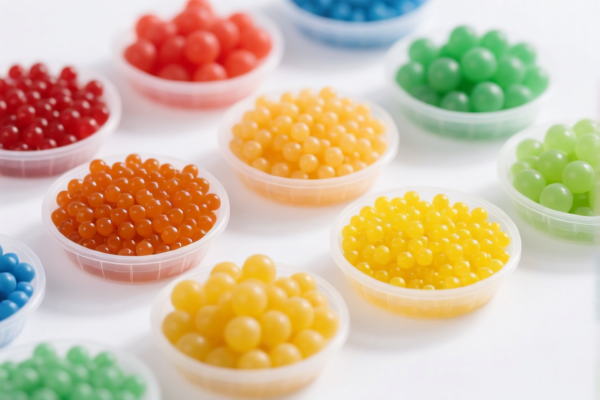

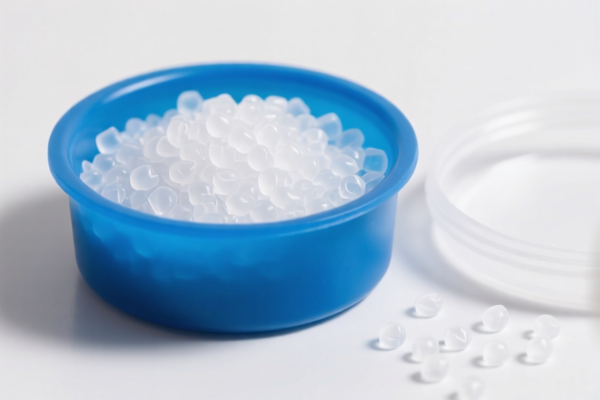
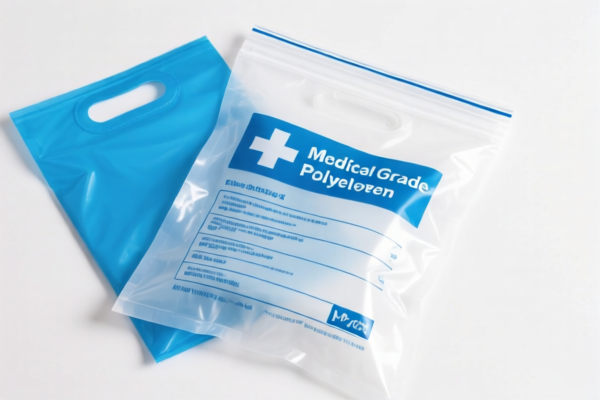
AI Analysis
🩺 Polypropylene Medical-Grade Resin
🌐 HS Code Reference & Customs Clearance Guide | 2026 Latest Tariff Breakdown | Professional Import Strategy
📌 One: Product Definition & Classification – What Exactly Is "Medical-Grade Polypropylene Resin"?
Polypropylene medical-grade resin is a high-purity, biocompatible polymer used in the manufacturing of sterile medical devices, syringes, IV bags, catheters, test tubes, and surgical packaging. It is specifically engineered to meet stringent regulatory standards such as USP Class VI, ISO 10993, and FDA 21 CFR Part 177.
⚠️ Critical Distinction:
- If the product is raw granules/pellets with no processing or shaping → classified as raw material
- If it has been extruded, molded, or formed into parts → may fall under different HS codes (e.g., 3926, 3923)
- Only raw, unshaped polymer pellets qualify under the 3902 and 3914 categories
📦 Two: HS Code Classification Details (2026 Latest Tariff Authority)
| HS Code | Product Description | Applicable Scenario | Form & Processing Status |
|---|---|---|---|
3914.00.60.00 |
Polypropylene medical-grade resin, in the form of raw pellets, meets criteria for ion-exchange resins or other polymer primary forms | Used in pharmaceutical production, medical device components | ✅ Raw pellets, unprocessed, not shaped |
3902.10.00.00 |
Polypropylene polymer in primary form (raw pellets), medical-grade, meets definition of "primary form" | Bulk shipment for downstream processing into medical devices | ✅ Primary polymer form, no additives |
3902.30.00.00 |
Propylene copolymer, in raw pellet form, medical-grade, no structural modification | Used in flexible medical packaging, tubing, and containers | ✅ Raw copolymer pellets, no shaping |
3914.00.20.00 |
Polypropylene medical-grade resin, in pellet form, fits within scope of headings 39.01–39.13 | General-purpose medical-grade polypropylene for injection molding | ✅ Raw material, unprocessed, fits within 39.01–39.13 |
🔍 Key Insight:
- All four HS codes refer to raw, unshaped polypropylene pellets used in medical applications
- The only difference lies in material composition (homopolymer vs. copolymer) and specific tariff subheadings
- No processing, no shaping, no additives → must be reported as primary form
💰 Three: 2026 Latest Tariff Breakdown (With Full附加 Tax Explanation)
✅ Applicable Country: United States (US)
✅ Origin: China (CN)
✅ Effective Date: November 10, 2025 (and onward)
🎯 1. 3914.00.60.00 — Polypropylene Medical-Grade Resin (Primary Form)
| Item | Details |
|---|---|
| Base Tariff | 3.9% (ad valorem) |
| Section 301 (USITC) Additional Duty | +25.0% (under Section 301 of the Trade Act of 1974) |
| Section 122 (IEEPA) Additional Duty | +10.0% (under the International Emergency Economic Powers Act) |
| Total Effective Duty | 38.9% |
| Tax Calculation | CIF Value × 38.9% |
| De Minimis Exemption? | ❌ No (denied under US law) |
| Legal Basis Path | IEEPA:9903.01.25 → IEEPA:9903.01.24 → USITC:3914.00.60.00 → FOOTNOTE:9903.88.01 |
📌 Explanation:
- 3.9% base tariff applies to polypropylene in the form of raw pellets
- +25% USITC 301 duty — imposed due to China’s unfair trade practices (IP theft, forced tech transfer)
- +10% IEEPA duty — triggered under national emergency powers for goods from China/HK
- Total: 38.9% — extremely high for a raw material
🎯 2. 3902.10.00.00 — Polypropylene Polymer in Primary Form (Medical-Grade)
| Item | Details |
|---|---|
| Base Tariff | 6.5% |
| USITC 301 Duty | +25.0% |
| IEEPA 122 Duty | +10.0% |
| Total Effective Duty | 41.5% |
| Tax Calculation | CIF × 41.5% |
| De Minimis Exemption? | ❌ No |
| Legal Basis Path | IEEPA:9903.01.25 → IEEPA:9903.01.24 → USITC:3902.10.00.00 → FOOTNOTE:9903.88.01 |
📌 Why Higher?
- 6.5% base tariff is higher than other polypropylene codes due to specific classification under 3902.10
- Still subject to 25% + 10%附加 taxes → 41.5% total
🎯 3. 3902.30.00.00 — Propylene Copolymer, Raw Pellets (Medical-Grade)
| Item | Details |
|---|---|
| Base Tariff | 6.5% |
| USITC 301 Duty | +25.0% |
| IEEPA 122 Duty | +10.0% |
| Total Effective Duty | 41.5% |
| Tax Calculation | CIF × 41.5% |
| De Minimis Exemption? | ❌ No |
| Legal Basis Path | IEEPA:9903.01.25 → IEEPA:9903.01.24 → USITC:3902.30.00.00 → FOOTNOTE:9903.88.01 |
📌 Note:
- Copolymer form is not exempt from additional duties
- Even though it’s a modified polymer, raw pellets still qualify for full附加 taxes
- Same rate as 3902.10.00.00 — 41.5%
🎯 4. 3914.00.20.00 — Polypropylene Resin, Raw Pellets (General Medical-Grade)
| Item | Details |
|---|---|
| Base Tariff | 0.0% |
| USITC 301 Duty | +25.0% |
| IEEPA 122 Duty | +10.0% |
| Total Effective Duty | 35.0% |
| Tax Calculation | CIF × 35.0% |
| De Minimis Exemption? | ❌ No |
| Legal Basis Path | IEEPA:9903.01.25 → IEEPA:9903.01.24 → USITC:3914.00.20.00 → FOOTNOTE:9903.88.01 |
📌 Why Lower?
- 0% base tariff — this code has no domestic tariff
- Still subject to 25% + 10%附加 taxes → 35.0% total
- Best option among all four if the product fits the description
🛠️ Four: Customs Clearance Best Practices (Pro Tips to Avoid Penalties)
✅ 1. Required Documentation (Must-Have Checklist)
| Document | Required? | Notes |
|---|---|---|
| ✅ Product Specification Sheet | ✔️ | Include molecular weight, MFI, FDA/USP compliance |
| ✅ Certificate of Analysis (CoA) | ✔️ | Prove medical-grade purity and biocompatibility |
| ✅ USP Class VI / ISO 10993 Test Reports | ✔️ | Mandatory for medical applications |
| ✅ Commercial Invoice | ✔️ | Clearly state "Polypropylene Medical-Grade Resin, Raw Pellets" |
| ✅ Bill of Lading / Air Waybill | ✔️ | Full shipment tracking |
| ✅ Certificate of Origin (CO) | ✔️ | If from China, expect full附加 taxes |
| ✅ Packing List | ✔️ | Show bulk packaging (e.g., 25kg bags) |
✅ 2.申报技巧 (Key Rules to Remember)
🔥 "Raw Pellets Only, No Shaping, No Additives — Or You’ll Pay 41.5%!"
| Scenario | Correct HS Code | Wrong Code | Risk |
|---|---|---|---|
| Raw medical-grade PP pellets | 3914.00.20.00 or 3914.00.60.00 |
3926.90.98.00 (molded parts) |
Tax jump from 35% to 41.5% |
| PP copolymer pellets | 3902.30.00.00 |
3914.00.20.00 |
Incorrect classification → penalties |
| Pellets with additives (e.g., colorants) | ❌ Not eligible for these codes | 3902.10.00.00 |
May be denied |
| Injection-molded syringe barrel | 3926.90.98.00 |
3914.00.20.00 |
Severe penalty, refund, and audit risk |
✅ 3. Special Cases & Solutions
| Situation | Recommended Action |
|---|---|
| PP pellets with colorant | Cannot use 3914/3902 codes → must use 3902.10.00.00 with 41.5% duty |
| Batch from Vietnam/Mexico | Apply for IEEPA exemption → 0% duty if eligible |
| High-volume importers | Apply for Advance Ruling (Pre-Ruling) to lock in HS code & duty |
| Medical device manufacturer | Consider "Direct Use" exemption if used in FDA-registered devices |
🌍 Five: Global Market Comparison (2026 Update)
| Country | Recommended HS Code | Tariff | Certification Required | Notes |
|---|---|---|---|---|
| 🇺🇸 USA | 3914.00.20.00 |
35.0% (China origin) | FDA, USP, ISO 10993 | Highest tax |
| 🇨🇳 China | 3902.10.00.00 |
5% | CCC, GB/T | No附加 taxes |
| 🇪🇺 EU | 3902.10.00.00 |
0% (if CE) | CE, REACH | No 301/IEEPA duties |
| 🇦🇺 Australia | 3902.10.00.00 |
5% | RCM | No附加 taxes |
| 🇯🇵 Japan | 3902.10.00.00 |
0% | PSE | No附加 taxes |
📌 Takeaway:
- The U.S. is the only market with 35–41.5%附加 duties on medical-grade PP pellets
- China-origin → 35%–41.5% total duty
- Non-China origin (e.g., Vietnam, Malaysia) → potential 0% duty under IEEPA exemption
📌 Six: Common Mistakes & How to Avoid Them (Real-World Risks)
❌ Mistake 1: Reporting colored PP pellets as 3914.00.20.00
👉 Result: Customs rejects → reclassification → 41.5% duty + penalties
❌ Mistake 2: Using 3902.10.00.00 for medical-grade copolymer without proof
👉 Result: Audit, refund, and future compliance risk
❌ Mistake 3: Not providing USP Class VI report
👉 Result: Delay or rejection at U.S. port — especially for medical devices
❌ Mistake 4: Declaring as “plastic resin” without specifying “medical-grade”
👉 Result: Misclassification → higher duty or seizure
✅ Correct Declaration Example:
"Polypropylene Medical-Grade Resin, Homopolymer, Raw Pellets, 25kg Bag, USP Class VI, ISO 10993 Certified, Origin: China"
🎯 Seven: Conclusion – Precision Matters in Medical-Grade Imports
🎯 Remember the Golden Rules:
🔹 "Raw Pellets Only, No Shaping, No Additives"
🔹 "3914.00.20.00 = Lowest Duty (35%) — If It Fits"
🔹 "3902.10.00.00 = 41.5% — Use Only for Homopolymer"
🔹 "No De Minimis in US — 1% is NOT exempt!"
📌 Pro Tip:
If your product is from Vietnam, Malaysia, Thailand, or Mexico, apply for IEEPA exemption — you could pay 0% duty instead of 35–41.5%!
📣 Act Now!
📞 Contact a customs broker with medical-grade polymer experience
🚀 Apply for HS Code Pre-Ruling before shipment
💼 Avoid costly delays, penalties, and rejections — your medical supply chain depends on it!
✨ Expert Customs, Precise Classification — Your Product, Smooth Entry, Zero Risk!
💼 Every dollar saved in duty is a dollar earned in profit!
Customer Reviews
About HS Code Classification
The Harmonized System (HS) is an internationally standardized nomenclature developed by the World Customs Organization (WCO) to classify traded products. Over 200 countries use the HS system as the basis for customs tariffs, trade statistics, and import/export regulations.
Each HS code follows a hierarchical structure:
- Chapter (2 digits) — Broad category of goods (e.g., Chapter 84: Machinery and Mechanical Appliances)
- Heading (4 digits) — More specific grouping within the chapter
- Subheading (6 digits) — Internationally standardized breakdown, used by all WCO member countries
- National subdivisions (8-10 digits) — Country-specific extensions for further classification, such as US HTSUS 10-digit codes
Correct HS code classification is essential for smooth customs clearance, accurate duty payment, and compliance with trade regulations. Misclassification can lead to customs delays, overpayment of duties, or penalties.
When importing from CN to US, the applicable tariff rates may include:
- Most-Favored-Nation (MFN) rate — The standard duty rate applied to WTO members
- General rate — Applied to countries without trade agreements
- Trade remedy duties — Additional tariffs such as Section 301 (anti-dumping), Section 232 (national security), or countervailing duties
The information provided on this page is for reference purposes only. For official classification, please consult with your local customs authority or a licensed customs broker.