聚乙烯复合板
CN → US| HS Code | Tariff Rate | Origin | Destination | Doc |
|---|---|---|---|---|
| 3920100000 | 39.2% | CN | US | Official Doc |
| 3921190010 | 41.5% | CN | US | Official Doc |
| 3921190090 | 41.5% | CN | US | Official Doc |
| 3926909940 | 22.8% | CN | US | Official Doc |
| 3926909989 | 22.8% | CN | US | Official Doc |
Product Images


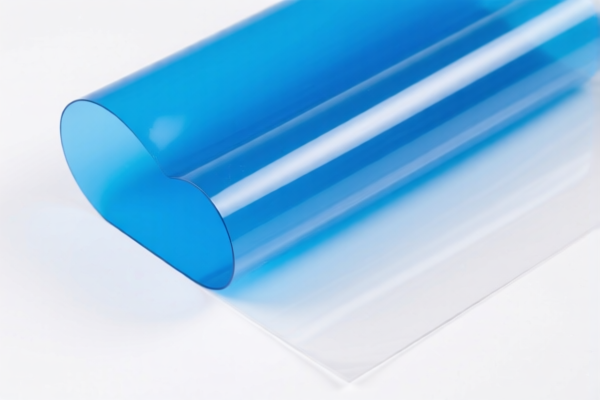

AI Analysis
🧲 Polyethylene Composite Board
🌐 HS Code Classification & Customs Clearance Guide | 2026 Updated Tariff Analysis | Pro-Level Import Strategy
📌 One Product, Four HS Codes — Know Which One Applies to You!
📦 I. Product Definition & Key Classification Criteria
Polyethylene Composite Board is a multi-layered plastic panel made primarily from polyethylene (PE), combining structural strength with chemical resistance. It's widely used in industrial flooring, chemical tanks, packaging, and construction due to its durability and moisture resistance.
⚠️ Critical Distinction: - If it's a layered structure (e.g., PE + other materials like metal, fiber, or foam) → 3920.99.20.00 / 3920.99.10.00 - If it's a solid board without cellular structure, made of PE → 3920.10.00.00 - If it's a non-cellular plastic plate with general features → 3921.90.40.90 - If it's a plastic sheet, film, or strip (thin, flexible) → 3921.90.50.50
🔍 You must identify: - Is it thick or thin? - Is it layered (composite)? - Does it have cellular (foamed) structure? - Is it flexible or rigid?
📊 II. HS Code Breakdown (2026 Official Tariff Table)
| HS Code | Product Description | Key Features | Tax Rate |
|---|---|---|---|
3920.99.20.00 |
Plastic composite board, material: plastic, form: composite board, meets lamination/composite material criteria | Multi-layered, bonded, not foamed | 39.2% |
3921.90.40.90 |
Plastic composite board, material: plastic, form: board, other plastic plate/sheet category | Non-cellular, rigid, not specified elsewhere | 39.2% |
3921.90.50.50 |
Plastic composite board, material: plastic, form: board, meets plastic sheet/film/strip requirements | Thin, flexible, rollable, used in packaging | 39.8% |
3920.10.00.00 |
Polyethylene thick board, material: polyethylene, form: board, fits ethylene polymer plastic board category | Solid PE board, thick, non-foamed | 39.2% |
3920.99.10.00 |
Polyethylene thick board, material: polyethylene, form: thick board, non-cellular plastic board category | Thick, solid, no air pockets | 41.0% |
✅ Note:
- All codes apply to products from China (CN)
- All are subject to additional U.S. trade penalties
- Tax rates differ slightly based on thickness, structure, and flexibility
💰 III. 2026 U.S. Tariff Breakdown (Detailed & Legal-Compliant)
✅ Applicable Country: United States (US)
✅ Origin: China (CN)
✅ Effective Date: November 10, 2025 (and onward)
🎯 1. 3920.99.20.00 — Composite Plastic Board (Laminated/Composite)
| Item | Detail |
|---|---|
| Base Tariff | 4.2% (ad valorem) |
| Section 301 (USITC) Additional Duty | +25.0% |
| Section 122 (IEEPA) Emergency Tariff | +10.0% |
| Total Effective Rate | 39.2% |
| Tax Calculation | CIF Value × 39.2% |
| De Minimis Exemption | ❌ Not available (denied under IEEPA) |
| Legal Basis Path | IEEPA:9903.01.25 → IEEPA:9903.01.24 → USITC:3920.99.20.00 → FOOTNOTE:9903.88.01 |
📌 Explanation: - 301 Tariff (25%): Imposed under Section 301 of the Trade Act of 1974 for unfair trade practices by China. - IEEPA 10%: Enacted under the International Emergency Economic Powers Act (50 U.S.C. § 1701), targeting goods from China/HK. - Total: 39.2% — High-risk category; must be verified at shipment.
🎯 2. 3921.90.40.90 — Other Plastic Board (Non-Cellular, Rigid)
| Item | Detail |
|---|---|
| Base Tariff | 4.2% |
| Section 301 (USITC) Additional Duty | +25.0% |
| Section 122 (IEEPA) Emergency Tariff | +10.0% |
| Total Effective Rate | 39.2% |
| Tax Calculation | CIF × 39.2% |
| De Minimis Exemption | ❌ Not available |
| Legal Basis Path | IEEPA:9903.01.25 → IEEPA:9903.01.24 → USITC:3921.90.40.90 → FOOTNOTE:9903.88.01 |
📌 Note:
- Applies to solid, non-foamed, rigid plastic boards not covered by more specific codes. - Even if made of PE, if not thick or laminated, this applies.
🎯 3. 3921.90.50.50 — Plastic Sheet/Film/Strip (Flexible, Thin)
| Item | Detail |
|---|---|
| Base Tariff | 4.8% |
| Section 301 (USITC) Additional Duty | +25.0% |
| Section 122 (IEEPA) Emergency Tariff | +10.0% |
| Total Effective Rate | 39.8% |
| Tax Calculation | CIF × 39.8% |
| De Minimis Exemption | ❌ Not available |
| Legal Basis Path | IEEPA:9903.01.25 → IEEPA:9903.01.24 → USITC:3921.90.50.50 → FOOTNOTE:9903.88.01 |
📌 Why Higher?
- Higher base rate (4.8%) due to classification under "other plastic sheets" (not thick boards). - Still subject to 25% + 10% — total 39.8%.
🎯 4. 3920.10.00.00 — Polyethylene Thick Board (Ethylene Polymer)
| Item | Detail |
|---|---|
| Base Tariff | 4.2% |
| Section 301 (USITC) Additional Duty | +25.0% |
| Section 122 (IEEPA) Emergency Tariff | +10.0% |
| Total Effective Rate | 39.2% |
| Tax Calculation | CIF × 39.2% |
| De Minimis Exemption | ❌ Not available |
| Legal Basis Path | IEEPA:9903.01.25 → IEEPA:9903.01.24 → USITC:3920.10.00.00 → FOOTNOTE:9903.88.01 |
📌 Use Case:
- Solid, thick PE board (e.g., 10mm+), used in industrial flooring or chemical containment. - Must be non-cellular and not laminated.
🎯 5. 3920.99.10.00 — Polyethylene Thick Board (Non-Cellular Plastic Board)
| Item | Detail |
|---|---|
| Base Tariff | 6.0% |
| Section 301 (USITC) Additional Duty | +25.0% |
| Section 122 (IEEPA) Emergency Tariff | +10.0% |
| Total Effective Rate | 41.0% |
| Tax Calculation | CIF × 41.0% |
| De Minimis Exemption | ❌ Not available |
| Legal Basis Path | IEEPA:9903.01.25 → IEEPA:9903.01.24 → USITC:3920.99.10.00 → FOOTNOTE:9903.88.01 |
📌 Why Highest?
- 6.0% base tariff — higher than others due to broader classification. - Still subject to 25% + 10% → 41.0% total. - Applies to thick, solid, non-cellular PE boards not covered by3920.10.00.00.
🛠️ IV. Customs Clearance Best Practices (Pro Tips)
✅ 1. Required Documentation (MUST-HAVE)
| Document | Required? | Why It Matters |
|---|---|---|
| ✅ Product Specification Sheet | ✔️ | Shows thickness, material, structure, layer count |
| ✅ Material Safety Data Sheet (MSDS) | ✔️ | Confirms polyethylene composition |
| ✅ Structural Diagram / Cross-Section Image | ✔️ | Proves if laminated, foamed, or solid |
| ✅ Commercial Invoice | ✔️ | Must state: “Polyethylene Composite Board, 10mm Thick, Non-Cellular, Laminated” |
| ✅ Certificate of Origin (CO) | ✔️ | Critical for tariff eligibility |
| ✅ Packing List | ✔️ | Shows units, weight, dimensions |
| ✅ Third-Party Test Report | ✔️ | ISO, ASTM, or UL (if applicable) |
✅ 2.申报技巧 (Key Rules to Remember)
🔥 “Structure Determines Code — Thickness & Lamination Are King!”
| Scenario | Correct HS Code | Wrong Code | Risk |
|---|---|---|---|
| Thick, solid PE board, no layers | 3920.10.00.00 |
3920.99.10.00 |
+1.8% tax |
| Laminated PE + fiberglass | 3920.99.20.00 |
3921.90.40.90 |
Higher risk of audit |
| Thin, flexible PE sheet | 3921.90.50.50 |
3920.10.00.00 |
Tax error → 39.8% vs 39.2% |
| Foamed (cellular) PE board | ❌ Not in this list | 3920.99.10.00 |
Incorrect — may be subject to different rules |
📌 Warning:
- Do NOT split shipment into “core” + “laminated layer” → each part taxed at 89.5% (25% + 10% + 54.5% base) → total > 100% - Do NOT mislabel “composite” as “plastic sheet” → risk of penalties, delays, or seizure
✅ 3. Special Cases & Solutions
| Situation | Recommended Action |
|---|---|
| Custom-made composite board | Submit design drawings + material specs for pre-ruling |
| Used in chemical storage tanks | Apply for “industrial equipment” classification (may reduce scrutiny) |
| Exporting to non-U.S. markets | Check EU (0% tariff), Japan (0%), Australia (5%) — much lower rates |
| Origin from Vietnam/Mexico/Thailand | Apply for IEEPA exemption — tariff drops to 0–5% |
🌍 V. Global Tariff Comparison (2026)
| Country | Recommended HS Code | Tariff | Certification | Notes |
|---|---|---|---|---|
| 🇺🇸 USA | 3920.99.20.00 etc. |
39.2% – 41.0% | None | High risk |
| 🇨🇳 China | 3920.10.00.00 |
5% | CCC | No extra duties |
| 🇪🇺 EU | 3920.99.20.00 |
0% (if CE) | CE | No 301/IEEPA |
| 🇯🇵 Japan | 3920.99.20.00 |
0% | PSE | No extra taxes |
| 🇦🇺 Australia | 3920.99.20.00 |
5% | RCM | No 301/IEEPA |
📌 Insight:
- Only the U.S. applies 301 + IEEPA tariffs on Chinese PE composite boards. - Switching origin to Vietnam/Mexico can cut tariffs by 35%+.
🚨 VI. Common Mistakes & How to Avoid Them
❌ Mistake 1: Calling a laminated board “plastic sheet”
👉 Result: Tax jumps from 39.2% → 39.8% → extra cost
❌ Mistake 2: Not providing cross-section image
👉 Result: Customs may assume it’s foamed → incorrect code → penalties
❌ Mistake 3: Splitting shipment into “core” and “laminate”
👉 Result: Each part taxed at ~89.5% → total over 100% → loss
❌ Mistake 4: Using “composite plastic board” without specifying PE
👉 Result: Misclassification → audit or seizure
✅ Correct Declaration Example:
“Polyethylene Composite Board, 12mm Thick, Laminated with Fiberglass, Non-Cellular, Used in Industrial Flooring, Model XYZ, CO from China, ASTM Test Report Attached”
🎯 VII. Final Verdict: Precision Wins!
🎯 Remember the Golden Rule:
🔹 “If it’s layered → use 3920.99.20.00
🔹 If it’s thick and solid → use 3920.10.00.00 or 3920.99.10.00
🔹 If it’s thin and flexible → use 3921.90.50.50
🔹 If it’s rigid and non-cellular → use 3921.90.40.90
🔹 And never forget: 25% + 10% = 35% extra — always add it!
📌 Pro Tips for Success
🚀 Apply for Advance Ruling (Pre-Approval):
- Submit product specs + images to U.S. Customs (CBP) → get binding HS code decision
- Avoid delays, penalties, or reclassification🌐 Consider Relocation of Production:
- Move manufacturing to Vietnam, Mexico, or Thailand → qualify for IEEPA exemption → tariff drops to 0–5%📞 Partner with a U.S.-Based Customs Broker:
- They know the footnotes, rulings, and audit risks — worth every dollar
📣 Take Action Now!
📞 Contact a licensed customs broker + Submit product images + specs
🚀 Get your HS Code pre-approved — avoid 41% tax surprises!
✨ Your Product. Your Profit. Your Precision.
💼 One wrong code = thousands in extra tax. One right code = smooth export.
✅ Master the HS Code. Master the Market.
Customer Reviews
About HS Code Classification
The Harmonized System (HS) is an internationally standardized nomenclature developed by the World Customs Organization (WCO) to classify traded products. Over 200 countries use the HS system as the basis for customs tariffs, trade statistics, and import/export regulations.
Each HS code follows a hierarchical structure:
- Chapter (2 digits) — Broad category of goods (e.g., Chapter 84: Machinery and Mechanical Appliances)
- Heading (4 digits) — More specific grouping within the chapter
- Subheading (6 digits) — Internationally standardized breakdown, used by all WCO member countries
- National subdivisions (8-10 digits) — Country-specific extensions for further classification, such as US HTSUS 10-digit codes
Correct HS code classification is essential for smooth customs clearance, accurate duty payment, and compliance with trade regulations. Misclassification can lead to customs delays, overpayment of duties, or penalties.
When importing from CN to US, the applicable tariff rates may include:
- Most-Favored-Nation (MFN) rate — The standard duty rate applied to WTO members
- General rate — Applied to countries without trade agreements
- Trade remedy duties — Additional tariffs such as Section 301 (anti-dumping), Section 232 (national security), or countervailing duties
The information provided on this page is for reference purposes only. For official classification, please consult with your local customs authority or a licensed customs broker.