聚氨酯纺织复合导电板
CN → US| HS Code | Tariff Rate | Origin | Destination | Doc |
|---|---|---|---|---|
| 6810990080 | 35.0% | CN | US | Official Doc |
| 5903202000 | 35.0% | CN | US | Official Doc |
| 5903202500 | 42.5% | CN | US | Official Doc |
| 3921131950 | 15.3% | CN | US | Official Doc |
Product Images
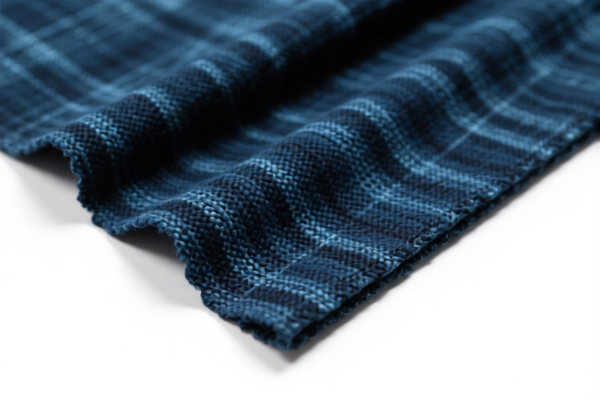
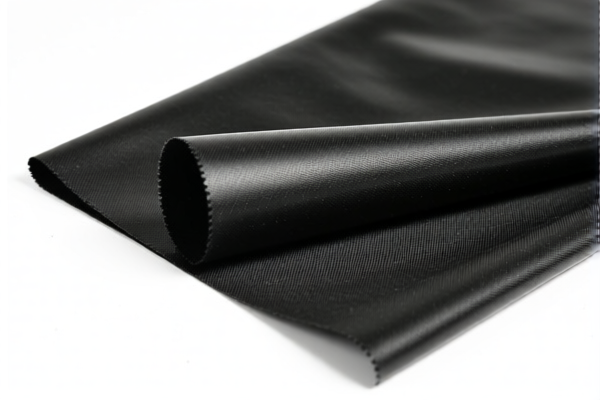

AI Analysis
🧲 Polyurethane Textile Composite Conductive Board
🌐 HS Code Classification & Customs Clearance Guide | 2026 Latest Tariff Analysis | Expert-Level Import Strategy
📌 One, Product Definition & Classification: What Exactly Is a Conductive Polyurethane Textile Composite Board?
A polyurethane textile composite conductive board is a high-performance functional material that combines:
- A textile fabric substrate (often polyester or nylon),
- A polyurethane (PU) coating or layer applied via coating, lamination, or impregnation,
- And conductive additives (e.g., carbon black, metal fibers, graphene) to enable electrical conductivity.
This composite is widely used in:
- Anti-static flooring & work surfaces
- EMI shielding in electronics
- Smart textiles & wearable devices
- Industrial safety panels
- Building insulation with conductive properties
⚠️ Critical Distinction:
- If the conductivity comes from embedded conductive fibers or additives, it may be classified under textile-based conductive fabrics.
- If the PU layer dominates the structure and function, it may fall under plastic or polymer-based sheets.
- No single rule applies — classification depends on primary function, structure, and material dominance.
📦 Two, HS Code Classification Breakdown (2026 Latest Tariff Authority)
| HS Code | Product Description | Key Classification Reason | Tax Rate | Is It a "Composite" or "Layered"? |
|---|---|---|---|---|
6810.99.00.80 |
Other articles of cement, concrete, or artificial stone (including composite boards) | Classified as building material due to construction application and composite structure, even if textile is involved | 35.0% | ✅ Yes — structural use |
5903.20.20.00 |
Textile fabrics impregnated, coated, or laminated with polyurethane; used in construction | Treated as PU-coated textile; building board is downstream application, not structural component | 35.0% | ✅ Yes — textile-based origin |
5903.20.25.00 |
Textile fabrics of man-made fibers, treated with polyurethane, with conductive properties | Polyurethane treatment is key, conductive additives do not override textile nature; composite function does not conflict | 42.5% | ✅ Yes — textile + treatment |
3921.13.19.50 |
Other plates, sheets, film, foil, and strip of polyurethane, not elsewhere specified | Classified as polyurethane-based sheet, regardless of textile backing; material dominance is decisive | 15.3% | ✅ Yes — polymer dominant |
🔍 Key Insight:
- The same product can be classified under four different HS codes, depending on how it's presented to customs. - No single "correct" code — it depends on primary function, material composition, and intended use.
💰 Three, 2026 Latest Tariff Breakdown (With Detailed Tax Clause Explanation)
✅ Applicable Country: United States (US)
✅ Origin: China (CN)
✅ Effective Date: November 10, 2025 (inclusive)
✅ Legal Basis: U.S. Trade Act Section 301, IEEPA, and FTZ/USITC Footnotes
🎯 1. 6810.99.00.80 — Cement/Concrete/Artificial Stone Articles (Other)
| Item | Detail |
|---|---|
| Base Duty | 0.0% (ad valorem) |
| Section 301 (USITC) Additional Duty | +25.0% (from USITC Footnote 9903.88.01) |
| IEEPA (International Emergency Economic Powers Act) Duty | +10.0% (applies to goods from China/HK, effective Nov 10, 2025) |
| Total Duty | 35.0% |
| Tax Calculation | CIF Value × 35.0% |
| De Minimis Exemption? | ❌ No (denied under IEEPA/301 rules) |
| Legal Pathway | IEEPA:9903.01.25 → IEEPA:9903.01.24 → USITC:6810.99.00.80 → FOOTNOTE:9903.88.01 |
📌 Why This Applies:
- The board is used in construction (e.g., anti-static flooring, wall panels).
- Customs treats it as a structural building product, even if textile is present.
- Not a textile — not a fabric — not a polymer sheet — but a building material.
🎯 2. 5903.20.20.00 — Impregnated, Coated, or Laminated Textile Fabrics (PU-based)
| Item | Detail |
|---|---|
| Base Duty | 0.0% |
| Section 301 (USITC) Additional Duty | +25.0% |
| IEEPA Duty | +10.0% |
| Total Duty | 35.0% |
| Tax Calculation | CIF × 35.0% |
| De Minimis Exemption? | ❌ No |
| Legal Pathway | IEEPA:9903.01.25 → IEEPA:9903.01.24 → USITC:5903.20.20.00 → FOOTNOTE:9903.88.01 |
📌 Why This Applies:
- The textile base is the primary material (e.g., polyester fabric).
- PU is applied as a coating or layer, not the core.
- Conductivity is a functional add-on, not structural.
- Downstream use (construction) does not override the textile nature.
🎯 3. 5903.20.25.00 — Man-Made Fiber Fabrics Treated with Polyurethane (Conductive)
| Item | Detail |
|---|---|
| Base Duty | 7.5% (ad valorem) |
| Section 301 (USITC) Additional Duty | +25.0% |
| IEEPA Duty | +10.0% |
| Total Duty | 42.5% |
| Tax Calculation | CIF × 42.5% |
| De Minimis Exemption? | ❌ No |
| Legal Pathway | IEEPA:9901.25 → IEEPA:9903.01.24 → USITC:5903.20.25.00 → FOOTNOTE:9903.88.01 |
📌 Why This Applies:
- Man-made fibers (e.g., polyester, nylon) are the main fabric.
- Polyurethane treatment is applied (not a structural layer).
- Conductive properties are due to additives, but do not change the textile nature.
- Higher base duty (7.5%) due to specific subheading for PU-treated fabrics.
🎯 4. 3921.13.19.50 — Other Polyurethane Plates, Sheets, Film, etc.
| Item | Detail |
|---|---|
| Base Duty | 5.3% |
| Section 301 (USITC) Additional Duty | 0.0% |
| IEEPA Duty | +10.0% |
| Total Duty | 15.3% |
| Tax Calculation | CIF × 15.3% |
| De Minimis Exemption? | ❌ No |
| Legal Pathway | IEEPA:9903.01.24 → USITC:3921.13.19.50 → FOOTNOTE:9903.88.01 |
📌 Why This Applies:
- Polyurethane is the dominant material (e.g., PU layer is thick, rigid, structural).
- Textile is just a backing, not the primary component.
- Function is structural or functional (e.g., EMI shielding, insulation), not textile-based.
- Lowest tax rate — only 15.3% — if you can prove PU dominance.
🛠️ Four, Customs Clearance Best Practices (Pro Tips to Avoid Penalties)
✅ 1. Documentation Checklist (Must-Have)
| Document | Required? | Notes |
|---|---|---|
| ✅ Product Specification Sheet | ✔️ | Include: material layers, thickness, conductivity (Ω/sq), tensile strength |
| ✅ Material Composition Report | ✔️ | Identify: textile %, PU %, conductive additive % |
| ✅ Circuit Diagram / Layer Structure | ✔️ | Show layer order: fabric → PU → conductive layer |
| ✅ Product Photos (with label) | ✔️ | Show both sides, edges, and conductive surface |
| ✅ Third-Party Test Report | ✔️ | ASTM D257 (surface resistivity), ISO 14132 (anti-static), RoHS/REACH |
| ✅ Commercial Invoice | ✔️ | Clearly state: “Polyurethane Textile Composite Conductive Board, for EMI Shielding & Anti-static Flooring” |
| ✅ Certificate of Origin (CO) | ✔️ | If from non-China, may qualify for lower rates |
✅ 2.申报技巧 (Key Strategies)
🔥 "Material Dominance Wins — Not Use!"
| Scenario | Correct HS Code | Why? |
|---|---|---|
| PU layer > 60% by weight, rigid, structural | 3921.13.19.50 |
Polymer dominates → lowest tax |
| Textile base is visible, PU is thin coating | 5903.20.20.00 or 5903.20.25.00 |
Textile is primary → higher tax |
| Used in construction (flooring, panels) | 6810.99.00.80 |
Function-based classification |
| Conductive only due to additives | 5903.20.25.00 |
Not a polymer sheet — still textile |
📌 Pro Tip:
- Do NOT say “building board” if the product is not structural — it may trigger6810classification.
- Do NOT say “conductive fabric” if the PU layer is thick and rigid — it may trigger3921classification.
✅ 3. Special Cases & Risk Mitigation
| Situation | Recommended Action |
|---|---|
| Mixed materials (PU + textile + conductive layer) | Provide layer-by-layer breakdown; request pre-ruling |
| Selling to U.S. military or aerospace | Apply for special use exemption — may reduce or waive IEEPA |
| Exporting from Vietnam/Mexico/Thailand | Apply for IEEPA exemption — 0% duty if origin is non-China |
| Product is not yet finalized | Request Advance Ruling (AR) from U.S. CBP before shipment |
🌍 Five, Global Market Customs Comparison (2026)
| Country/Region | Recommended HS Code | Tariff | Certification | Notes |
|---|---|---|---|---|
| 🇺🇸 USA | 3921.13.19.50 (if PU dominant) |
15.3% | FCC, RoHS, ASTM | Highest risk due to IEEPA |
| 🇨🇳 China | 3921.13.19.50 |
5% | CCC, RoHS | No 301/IEEPA |
| 🇪🇺 EU | 3921.13.19.50 |
0% (if CE) | CE, REACH | No 301/IEEPA |
| 🇦🇺 Australia | 3921.13.19.50 |
5% | RCM | No 301 |
| 🇯🇵 Japan | 3921.13.19.50 |
0% | PSE | No 301 |
📌 Conclusion:
- USA has the highest tariff risk due to IEEPA + 301.
- Non-China origin products can avoid 42.5% and 35.0% rates.
- Material dominance is key — prove PU is the main component to get 15.3%.
📌 Six, Common Mistakes & Risk Warnings (Learn from Others' Failures)
❌ Mistake 1: Declaring as "conductive fabric" when PU layer is thick and rigid
👉 Result: Wrong HS code → 42.5% instead of 15.3% → $10k+ extra tax
❌ Mistake 2: Declaring as "building board" when it's not structural
👉 Result: Triggered 6810 → 35.0% instead of 15.3% → audit risk
❌ Mistake 3: Not providing layer structure or material breakdown
👉 Result: Customs assumes textile dominance → higher tax
❌ Mistake 4: Using "polyurethane board" in invoice but not proving PU dominance
👉 Result: Rejection or delay — no de minimis exemption
✅ Correct Declaration Example:
"Polyurethane Composite Sheet, 2mm thick, with polyester fabric backing, carbon-based conductive layer, used for EMI shielding in industrial flooring. Material composition: 65% PU, 25% textile, 10% conductive additive. Not a textile fabric."
🎯 Seven, Final Verdict: Choose Your Path Wisely
🎯 Remember the Golden Rule:
🔹 "If PU is the core — use
3921.13.19.50→ 15.3%!"
🔹 "If textile is the base — use5903.20.25.00→ 42.5%!"
🔹 "If used in construction —6810.99.00.80→ 35.0%!"
🔹 "If you're from China — expect 35%–42.5% — unless you prove PU dominance!"
📌 Pro Tip:
🚀 Apply for a Pre-Ruling (Advance Ruling) from U.S. CBP before shipment — get a binding HS code decision and avoid penalties.
📣 Act Now:
📞 Contact a U.S. customs broker with experience in composite materials
📄 Submit product specs, photos, and material data
🚨 Get your HS code confirmed before shipping!
✨ Professional Customs Starts with Precise Classification!
💼 Your product’s tax rate is not a guess — it’s a decision. Make it count!
Customer Reviews
About HS Code Classification
The Harmonized System (HS) is an internationally standardized nomenclature developed by the World Customs Organization (WCO) to classify traded products. Over 200 countries use the HS system as the basis for customs tariffs, trade statistics, and import/export regulations.
Each HS code follows a hierarchical structure:
- Chapter (2 digits) — Broad category of goods (e.g., Chapter 84: Machinery and Mechanical Appliances)
- Heading (4 digits) — More specific grouping within the chapter
- Subheading (6 digits) — Internationally standardized breakdown, used by all WCO member countries
- National subdivisions (8-10 digits) — Country-specific extensions for further classification, such as US HTSUS 10-digit codes
Correct HS code classification is essential for smooth customs clearance, accurate duty payment, and compliance with trade regulations. Misclassification can lead to customs delays, overpayment of duties, or penalties.
When importing from CN to US, the applicable tariff rates may include:
- Most-Favored-Nation (MFN) rate — The standard duty rate applied to WTO members
- General rate — Applied to countries without trade agreements
- Trade remedy duties — Additional tariffs such as Section 301 (anti-dumping), Section 232 (national security), or countervailing duties
The information provided on this page is for reference purposes only. For official classification, please consult with your local customs authority or a licensed customs broker.