聚碳酸酯防静电板
CN → US| HS Code | Tariff Rate | Origin | Destination | Doc |
|---|---|---|---|---|
| 3921190090 | 41.5% | CN | US | Official Doc |
| 3920992000 | 39.2% | CN | US | Official Doc |
| 3920995000 | 40.8% | CN | US | Official Doc |
| 3921905050 | 39.8% | CN | US | Official Doc |
| 3926909989 | 22.8% | CN | US | Official Doc |
Product Images
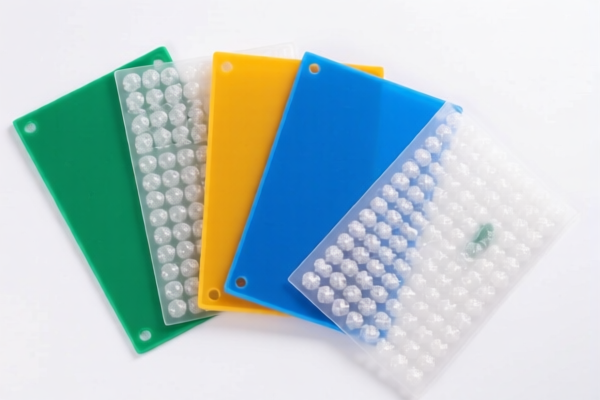
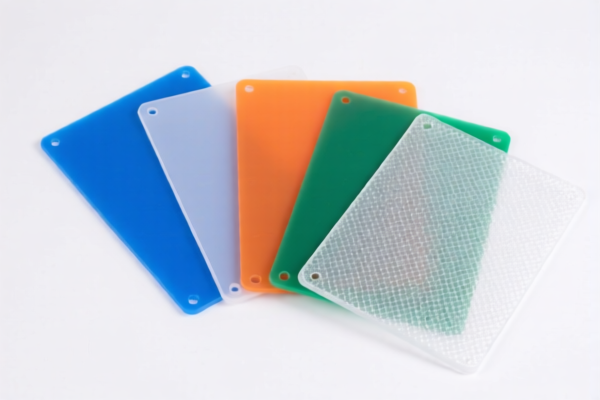
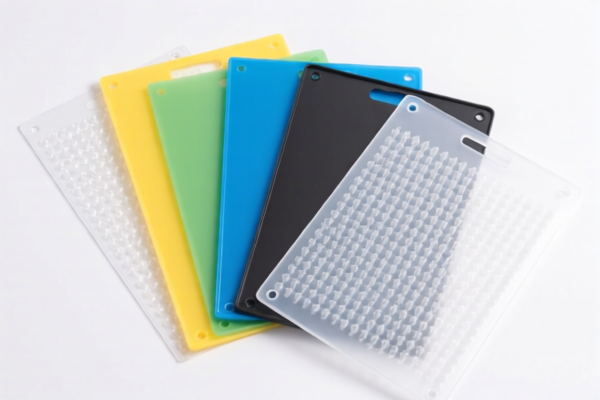
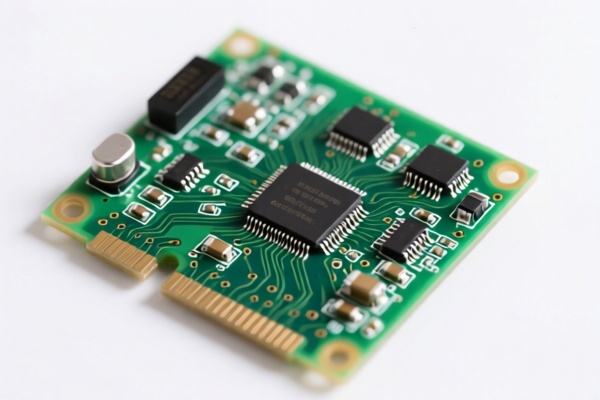
AI Analysis
🛡️ Polycarbonate Anti-Static Board
🌐 HS Code Reference & Customs Clearance Guide | 2026 Updated Tariff Analysis | Professional Import Strategy
📌 One: Product Definition & Classification – What Exactly Is a Polycarbonate Anti-Static Board?
A polycarbonate anti-static board is a rigid, flat plastic sheet made from polycarbonate (PC) resin, specially treated or formulated to dissipate static electricity. It is widely used in electronics manufacturing, cleanrooms, semiconductor handling, and precision equipment environments where electrostatic discharge (ESD) protection is critical.
⚠️ Key Classification Criteria: - Material: Polycarbonate (plastic) – not fiber, metal, or composite - Form: Solid board, sheet, or plate (not film, foil, or molded part) - Function: Anti-static (conductive or dissipative surface treatment) - No structural or functional integration with electronic components
🔍 Critical Distinction: - If it’s just a plain polycarbonate sheet → may fall under 3921.19.00.90 - If it has added conductive layers, coatings, or embedded fibers → may be considered a specialized plastic product → could shift to 3920.99.xxxx or 3926.90.99.89
📦 Two: HS Code Classification Details (2026 Official Tariff Matching)
| HS Code | Product Description | Applicable Scenarios | Material & Form Match |
|---|---|---|---|
3921.19.00.90 |
Plastic anti-static board, made of plastic, in board form; fits definition of "plastic sheets, plates, films, foils, and strips" under subheading 3921.19.00.90 | General industrial use, ESD-safe workbenches, packaging trays, cleanroom components | ✅ Yes – pure plastic board, no conflict |
3920.99.20.00 |
Other plastic boards, sheets, films, foils, and strips (not specified elsewhere); no material conflict | Custom anti-static boards not covered by more specific codes | ✅ Yes – fits "other" category |
3920.99.50.00 |
Plastic boards, sheets, films, etc., conforming to general definition; no competing materials or forms | Used in electronics, medical devices, lab equipment | ✅ Yes – clear fit |
3921.90.50.50 |
Other plastic plates, sheets, films, etc., not elsewhere specified; inferred from broader category rules | When no exact match exists but clearly plastic and board-like | ✅ Yes – inferred classification |
3926.90.99.89 |
Other plastic articles (including fiber cellulose ester anti-static board); no clear material conflict | Only if material is cellulose ester, not polycarbonate | ❌ No – Not applicable for polycarbonate |
📌 Important Note:
-3926.90.99.89applies only to fiber cellulose ester, not polycarbonate.
- Do NOT use this code for polycarbonate anti-static boards – incorrect classification → risk of penalties, delays, or seizures.
💰 Three: 2026 Updated Tariff Breakdown (With Full Tax Clause Explanation)
✅ Target Country: United States (US)
✅ Origin: China (CN)
✅ Effective Date: November 10, 2025 (inclusive of future imports)
🎯 1. 3921.19.00.90 — Plastic Anti-Static Board (Polycarbonate)
| Item | Detail |
|---|---|
| Base Duty Rate | 6.5% (ad valorem) |
| USITC Section 301 Additional Duty | +25.0% (from U.S. Trade Act 301 – China-specific tariffs) |
| IEEPA Section 122 Additional Duty | +10.0% (under International Emergency Economic Powers Act – China/HK targeted) |
| Total Effective Duty | 41.5% |
| Tax Calculation | CIF Value × 41.5% |
| De Minimis Exemption? | ❌ No (denied under 19 CFR §159.12) |
| Legal Basis Path | IEEPA:9903.01.25 → IEEPA:9903.01.24 → USITC:3921.19.00.90 → FOOTNOTE:9903.88.01 |
📌 Explanation: - USITC 25%: Imposed under Section 301 of the Trade Act of 1974 due to unfair trade practices by China. - IEEPA 10%: Enacted under International Emergency Economic Powers Act (50 U.S.C. § 1701) – targets Chinese goods deemed a national security threat. - Combined = 41.5% – extremely high for a non-electronic component.
🎯 2. 3920.99.20.00 — Other Plastic Boards (Non-Specific)
| Item | Detail |
|---|---|
| Base Duty Rate | 4.2% |
| USITC Section 301 Additional Duty | +25.0% |
| IEEPA Section 122 Additional Duty | +10.0% |
| Total Effective Duty | 39.2% |
| Tax Calculation | CIF × 39.2% |
| De Minimis Exemption? | ❌ No |
| Legal Basis Path | IEEPA:9903.01.25 → IEEPA:9903.01.24 → USITC:3920.99.20.00 → FOOTNOTE:9903.88.01 |
📌 Note:
- Slightly lower base rate than3921.19.00.90, but still subject to same 25% + 10% extra tariffs. - Used when the board doesn’t fit into more specific subheadings.
🎯 3. 3920.99.50.00 — Plastic Boards (General)
| Item | Detail |
|---|---|
| Base Duty Rate | 5.8% |
| USITC Section 301 Additional Duty | +25.0% |
| IEEPA Section 122 Additional Duty | +10.0% |
| Total Effective Duty | 40.8% |
| Tax Calculation | CIF × 40.8% |
| De Minimis Exemption? | ❌ No |
| Legal Basis Path | IEEPA:9903.01.25 → IEEPA:9903.01.24 → USITC:3920.99.50.00 → FOOTNOTE:9903.88.01 |
📌 Insight:
- Higher base rate than3920.99.20.00, but still same additional duties. - Best used when the board is not clearly defined under 3921.19.00.90.
🎯 4. 3921.90.50.50 — Other Plastic Plates (Inferred)
| Item | Detail |
|---|---|
| Base Duty Rate | 4.8% |
| USITC Section 301 Additional Duty | +25.0% |
| IEEPA Section 122 Additional Duty | +10.0% |
| Total Effective Duty | 39.8% |
| Tax Calculation | CIF × 39.8% |
| De Minimis Exemption? | ❌ No |
| Legal Basis Path | IEEPA:9903.01.25 → IEEPA:9903.01.24 → USITC:3921.90.50.50 → FOOTNOTE:9903.88.01 |
📌 Use Case:
- When the board is not clearly covered by 3921.19.00.90, but still fits the general description of plastic plates. - Often used for custom or non-standard anti-static boards.
🛠️ Four: Customs Clearance Best Practices (Pro Tips to Avoid Penalties)
✅ 1. Required Documentation (Must-Have List)
| Document | Required? | Purpose |
|---|---|---|
| ✅ Product Specification Sheet | ✔️ | Confirms material (polycarbonate), thickness, anti-static properties |
| ✅ Material Safety Data Sheet (MSDS) | ✔️ | Proves composition (e.g., polycarbonate resin) |
| ✅ Anti-Static Test Report | ✔️ | Shows surface resistivity (e.g., 10⁶–10⁹ ohms/sq) |
| ✅ Product Photos (Clear, with labels) | ✔️ | Shows form, size, surface finish |
| ✅ Commercial Invoice | ✔️ | Must state: "Polycarbonate Anti-Static Board, 3921.19.00.90" |
| ✅ Certificate of Origin (CO) | ✔️ | If from China, expect full tariff; if from Vietnam/Mexico, may qualify for relief |
| ✅ Packing List | ✔️ | Shows unit count, weight, packaging type |
✅ 2.申报技巧(Key Tips for Accurate HS Code Selection)
🔥 "Material First, Form Second, Function Last!"
| Scenario | Correct HS Code | Wrong Code | Why? |
|---|---|---|---|
| Pure polycarbonate board, anti-static treated | 3921.19.00.90 |
3920.99.20.00 |
3921 is more specific for plates/sheets |
| Board with conductive coating or layer | 3920.99.50.00 |
3921.19.00.90 |
May not qualify as "pure plastic plate" |
| Custom board with no clear fit | 3921.90.50.50 |
3926.90.99.89 |
Never use cellulose ester code for polycarbonate |
| Board made from cellulose ester | 3926.90.99.89 |
3921.19.00.90 |
Material mismatch → classification error |
✅ 3. Special Handling Scenarios
| Situation | Recommended Action |
|---|---|
| Board has embedded conductive fibers or metal mesh | Consider 3920.99.50.00 or 3921.90.50.50 – avoid 3921.19.00.90 |
| Board used in semiconductor cleanrooms | Use 3921.19.00.90 + provide ESD test report |
| Board sourced from Vietnam or Mexico | Apply for IEEPA exemption – tariff may drop to 0% |
| Board is part of a larger system (e.g., workstation) | Do not split – report as one unit; use 3921.19.00.90 for the board component |
🌍 Five: Global Market Comparison (2026 Tariff Snapshot)
| Country/Region | Recommended HS Code | Base Duty | Additional Taxes | Notes |
|---|---|---|---|---|
| 🇺🇸 USA (China origin) | 3921.19.00.90 |
6.5% | +25% (USITC) +10% (IEEPA) → 41.5% | High cost – plan ahead |
| 🇨🇳 China | 3921.19.00.90 |
5% | None | Low cost, domestic use |
| 🇪🇺 EU | 3921.19.00.90 |
0% (if CE compliant) | None | No additional tariffs |
| 🇦🇺 Australia | 3921.19.00.90 |
5% | None | No extra charges |
| 🇯🇵 Japan | 3921.19.00.90 |
0% | None | No extra duties |
📌 Insight:
- USA is the only market with multi-tiered additional tariffs. - China-origin boards face the highest effective rate (41.5%). - Vietnam/Mexico origin boards may qualify for 0% under IEEPA exemption.
📌 Six: Common Mistakes & How to Avoid Them (Real-World Pitfalls)
❌ Mistake 1: Using 3926.90.99.89 for polycarbonate anti-static board
👉 Result: Classification error → customs delay, penalties, or seizure
✅ Fix: Only use 3926.90.99.89 if material is cellulose ester.
❌ Mistake 2: Mislabeling board as “electronic component” or “circuit board”
👉 Result: Wrong HS Code → higher duty or audit risk
✅ Fix: Use “plastic anti-static board” in description.
❌ Mistake 3: Not providing anti-static test report
👉 Result: Customs may reject “anti-static” claim → higher scrutiny
✅ Fix: Always include surface resistivity test report.
❌ Mistake 4: Splitting board from packaging or workstation
👉 Result: Each part taxed separately → total duty over 89%
✅ Fix: Report as one unit if part of a system.
🎯 Seven: Conclusion – Precision Matters, Cost Matters!
🎯 Golden Rule:
🔹 "Material First, Form Second, Function Last"
🔹 "Don’t use cellulose ester code for polycarbonate!"
🔹 "41.5% is real – plan your pricing accordingly!"
📌 Pro Tip:
If your polycarbonate anti-static board is manufactured in Vietnam, Mexico, or Thailand, apply for IEEPA exemption – tariff may drop to 0%.
📣 Take Action Now:
📞 Contact a licensed customs broker + provide product specs + request HS Code pre-ruling
🚀 Avoid surprises, reduce risk, and protect your profit margin!
✨ Professional Clearance Starts with Accurate Classification!
💼 Your product’s value depends on the right HS Code – get it right the first time!
Customer Reviews
About HS Code Classification
The Harmonized System (HS) is an internationally standardized nomenclature developed by the World Customs Organization (WCO) to classify traded products. Over 200 countries use the HS system as the basis for customs tariffs, trade statistics, and import/export regulations.
Each HS code follows a hierarchical structure:
- Chapter (2 digits) — Broad category of goods (e.g., Chapter 84: Machinery and Mechanical Appliances)
- Heading (4 digits) — More specific grouping within the chapter
- Subheading (6 digits) — Internationally standardized breakdown, used by all WCO member countries
- National subdivisions (8-10 digits) — Country-specific extensions for further classification, such as US HTSUS 10-digit codes
Correct HS code classification is essential for smooth customs clearance, accurate duty payment, and compliance with trade regulations. Misclassification can lead to customs delays, overpayment of duties, or penalties.
When importing from CN to US, the applicable tariff rates may include:
- Most-Favored-Nation (MFN) rate — The standard duty rate applied to WTO members
- General rate — Applied to countries without trade agreements
- Trade remedy duties — Additional tariffs such as Section 301 (anti-dumping), Section 232 (national security), or countervailing duties
The information provided on this page is for reference purposes only. For official classification, please consult with your local customs authority or a licensed customs broker.