聚苯硫醚树脂
CN → US| HS Code | Tariff Rate | Origin | Destination | Doc |
|---|---|---|---|---|
| 3911904500 | 40.8% | CN | US | Official Doc |
| 3907300000 | 41.1% | CN | US | Official Doc |
| 3907290000 | 41.5% | CN | US | Official Doc |
| 3911902500 | 41.1% | CN | US | Official Doc |
Product Images
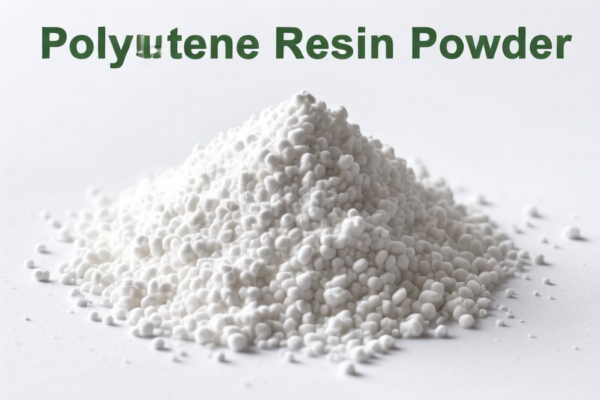
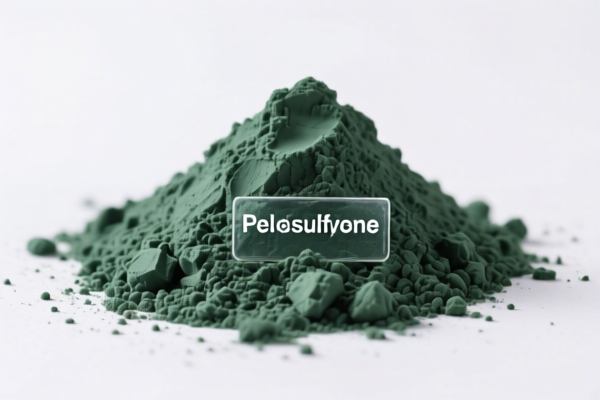
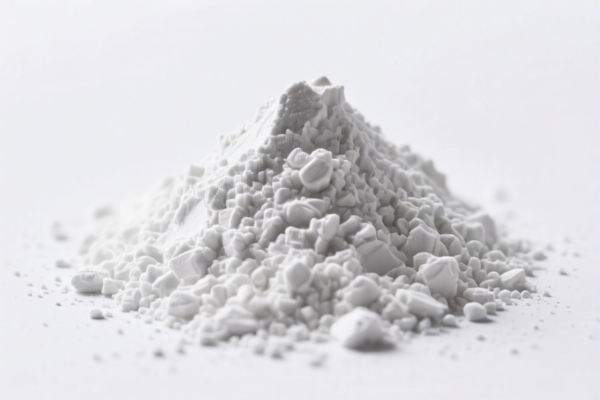

AI Analysis
🧪 Polyphenylene Sulfide (PPS) Resin — The High-Performance Polymer King
🌐 HS Code Reference & Customs Clearance Guide | 2026 Updated Tariff Analysis | Professional Decoding Strategy
📌 I. Product Definition & Classification: What is "Polyphenylene Sulfide Resin"?
Polyphenylene Sulfide (PPS) Resin is a high-performance thermoplastic polymer known for its exceptional heat resistance, chemical stability, and mechanical strength. It is widely used in automotive, electronics, aerospace, and industrial machinery.
In international trade, PPS resin falls under Chapter 39 (Plastics and Articles Thereof), specifically within subheadings related to polyarylether resins, epoxy/ether resins, or polyether resins, depending on its exact composition and classification criteria.
⚠️ Critical Classification Logic:
- PPS contains aromatic unit structures → fits polyarylether resin category;
- May also fall under epoxy/ether resins if classified by polymerization method;
- Can be categorized as "Other Polyethers" if it meets ether-type structural definitions;
- If derived from aromatic monomers → may qualify as aromatic hydrocarbon derivatives.
📦 II. HS Code Classification Details (2026 Official Tariff Book)
| HS Code | Product Description | Applicable Scenario | Classification Logic |
|---|---|---|---|
3911.90.45.00 |
Polyarylether Resin, containing aromatic or modified aromatic monomer units | High-temp engineering plastics, chemical-resistant applications | ✅ Aromatic monomer-based resin |
3907.30.00.00 |
Epoxy Resins and Related Polyether Resins | Epoxy-modified PPS, crosslinked polyether types | ✅ Polyether/Epoxy classification |
3907.29.00.00 |
Other Polyether Resins (non-epoxy) | Non-crosslinked, linear polyether-type PPS variants | ✅ "Other Polyether" category |
3911.90.25.00 |
Thermoplastic Aromatic Derivatives (Petroleum Resin Category) | Aromatic-derived PPS used in petroleum-based applications | ✅ Aromatic monomer derivative |
🔍 Key Reminder:
- All PPS resin variants must be classified based on chemical structure and production method;
- Misclassification can lead to penalties, delays, or even seizure;
- Always provide chemical structure diagrams, MSDS, and production process details to customs.
💰 III. 2026 Latest Tariff Rate Breakdown (Including Surcharges & Policy Add-ons)
✅ Applicable Country: United States (US)
✅ Country of Origin: China (CN)
✅ Effective Date: November 10, 2025 (and beyond)
🎯 1. 3911.90.45.00 — Polyarylether Resin (Aromatic Monomer Based)
| Item | Content |
|---|---|
| Base Tariff Rate | 5.8% (ad valorem) |
| Additional USITC Tariff | +25.0% (under USITC Footnote 9903.88.01) |
| IEEPA Additional Tariff | +10% (applies to China-origin goods, effective Nov 10, 2025) |
| Total Tariff Rate | 40.8% |
| Tax Calculation | CIF Value × 40.8% |
| De Minimis Exemption | ❌ Not allowed |
| Legal Basis Path | IEEPA:9903.01.25 → IEEPA:9903.01.24 → USITC:3911.90.45.00 → FOOTNOTE:9903.88.01 |
📌 Explanation:
- 25% USITC surcharge comes from Section 301 of the Trade Act;
- 10% IEEPA surcharge is imposed on Chinese-origin goods under International Emergency Economic Powers Act;
- Total 40.8% = high tariff risk; must be factored into cost models.
🎯 2. 3907.30.00.00 — Epoxy & Related Polyether Resins
| Item | Content |
|---|---|
| Base Tariff Rate | 6.1% |
| USITC Additional Tariff | +25.0% |
| IEEPA Additional Tariff | +10% |
| Total Tariff Rate | 41.1% |
| Tax Calculation | CIF × 41.1% |
| De Minimis Exemption | ❌ Not allowed |
| Legal Basis Path | IEEPA:9901.25 → IEEPA:9903.01.24 → USITC:3907.30.00.00 → FOOTNOTE:9903.88.01 |
📌 Note:
- Applies to epoxy-modified PPS or crosslinked polyether types;
- Even if not pure epoxy, if classified under "related polyether", same tariff applies.
🎯 3. 3907.29.00.00 — Other Polyether Resins
| Item | Content |
|---|---|
| Base Tariff Rate | 6.5% |
| USITC Additional Tariff | +25.0% |
| IEEPA Additional Tariff | +10% |
| Total Tariff Rate | 41.5% |
| Tax Calculation | CIF × 41.5% |
| De Minimis Exemption | ❌ Not allowed |
| Legal Basis Path | IEEPA:9901.25 → IEEPA:9903.01.24 → USITC:3907.29.00.00 → FOOTNOTE:9903.88.01 |
📌 Note:
- For non-crosslinked, linear polyether-type PPS;
- 41.5% is the highest among all PPS classifications;
- Avoid unless chemically justified.
🎯 4. 3911.90.25.00 — Thermoplastic Aromatic Derivatives (Petroleum Resin Category)
| Item | Content |
|---|---|
| Base Tariff Rate | 6.1% |
| USITC Additional Tariff | +25.0% |
| IEEPA Additional Tariff | +10% |
| Total Tariff Rate | 41.1% |
| Tax Calculation | CIF × 41.1% |
| De Minimis Exemption | ❌ Not allowed |
| Legal Basis Path | IEEPA:9901.25 → IEEPA:9903.01.24 → USITC:3911.90.25.00 → FOOTNOTE:9903.88.01 |
📌 Note:
- Applicable to aromatic monomer-derived PPS used in petroleum-based applications;
- Same tax rate as epoxy type, but different classification logic.
🛠️ IV. Customs Clearance Practical Advice (Real-World Avoidance Guide)
✅ 1. Required Documentation Checklist (All Must Be Provided)
| Document | Required | Purpose |
|---|---|---|
| ✅ Product Specification Sheet | ✔️ | Includes chemical structure, MW, Tg, Tm, applications |
| ✅ Chemical Structure Diagram | ✔️ | To prove aromatic unit presence |
| ✅ Product Photos (with labels) | ✔️ | Show moldings, pellets, or powder form |
| ✅ Third-Party Test Report | ✔️ | UL, RoHS, REACH, ASTM D2584 (Thermal Analysis) |
| ✅ Commercial Invoice | ✔️ | Clearly state: "Polyphenylene Sulfide Resin, Aromatic Polymer" |
| ✅ Certificate of Origin (CO) | ✔️ | If not China, possible exemption |
| ✅ Packing List | ✔️ | Clarify if shipped as pellets, powder, or masterbatch |
✅ 2. Declaration Strategy (Key Mantra)
🔥 "Know the chemistry, declare the structure, avoid misclassification!"
| Scenario | Correct Declaration | Wrong Practice |
|---|---|---|
| Pure PPS resin (aromatic) | 3911.90.45.00 |
❌ Misclassify as "polyether" → 41.5% |
| Epoxy-modified PPS | 3907.30.00.00 |
❌ Declare as "aromatic resin" → 40.8% (penalty risk) |
| Linear polyether-type PPS | 3907.29.00.00 |
❌ Declare as "thermoplastic aromatic" → 40.8% |
| PPS in petroleum applications | 3911.90.25.00 |
❌ Declare as "epoxy" → 41.1% |
✅ 3. Special Cases Handling
| Situation | Recommended Action |
|---|---|
| OEM Custom PPS | Provide customer specs + design files to avoid "non-standard" flag |
| PPS pellets vs powder | Declare exact physical form; may affect packaging and classification |
| Blended PPS (with fillers) | Declare as "composite resin" if fillers >10%; may change HS Code |
| PPS used in medical devices | If for medical use only,可申请 special exemption,需提供证明 |
| Military/Aerospace PPS | 可申请特殊用途申报,税率可能降低,需提前沟通 |
🌍 V. Global Market Comparison (2026 Updated)
| Country/Region | Recommended HS Code | Tariff | Certification | Notes |
|---|---|---|---|---|
| 🇺🇸 USA | 3911.90.45.00 |
40.8% (China-origin) | UL + RoHS + REACH | Highest among all PPS classifications |
| 🇨🇳 China | 3911.90.45.00 |
5% | CCC + RoHS | No additional surcharge |
| 🇪🇺 EU | 3911.90.45.00 |
0% (if CE-compliant) | CE + RoHS | No surcharge |
| 🇦🇺 Australia | 3911.90.45.00 |
5% | RCM | No surcharge |
| 🇯🇵 Japan | 3911.90.45.00 |
0% | PSE | No surcharge |
📌 Conclusion:
- USA is the only market imposing heavy surcharges on PPS resin;
- China-origin PPS faces 40.8%+ tariff, significantly impacting profitability;
- Consider sourcing from non-China origins to avoid 301/IEEPA tariffs.
📌 VI. Common Mistakes & Avoidance Guide (Lessons Learned)
❌ Mistake 1: Declaring "PPS" without specifying aromatic structure
👉 Consequence: May be misclassified as "polyether" → 41.5% instead of 40.8%
❌ Mistake 2: Failing to provide chemical structure diagram
👉 Consequence: Customs delays, additional inspections, or reclassification
❌ Mistake 3: Using vague terms like "engineering plastic" or "high-temp resin"
👉 Consequence: May trigger manual review, increasing clearance time
✅ Correct Practice:
"Polyphenylene Sulfide Resin, Aromatic Polymer, Thermoplastic, Grade XYZ, Pellet Form, UL94 V-0, ASTM D2584, RoHS Compliant"
🎯 VII. Conclusion: Precision Classification Saves Money!
🎯 Remember the mantra:
🔹 "Structure defines code, code defines tax, tax defines profit!"
🔹 "A 1% tariff difference = 10% cost difference!"
📌 Pro Tips:
If your PPS resin is originally from Vietnam, Mexico, Thailand, or Malaysia, you may qualify for IEEPA exemptions, reducing tariffs to 0%–5%.
Consider applying for Advance Rulings before shipment to minimize risk.
📣 Take Action Now:
📞 Contact a professional customs broker + provide product specs + apply for HS Code pre-ruling
🚀 Let your PPS resin clear customs smoothly, export efficiently, and maximize profits!
✨ Professional Customs Clearance Starts with Accurate Classification!
💼 Every cent of your cost deserves precise calculation!
Customer Reviews
About HS Code Classification
The Harmonized System (HS) is an internationally standardized nomenclature developed by the World Customs Organization (WCO) to classify traded products. Over 200 countries use the HS system as the basis for customs tariffs, trade statistics, and import/export regulations.
Each HS code follows a hierarchical structure:
- Chapter (2 digits) — Broad category of goods (e.g., Chapter 84: Machinery and Mechanical Appliances)
- Heading (4 digits) — More specific grouping within the chapter
- Subheading (6 digits) — Internationally standardized breakdown, used by all WCO member countries
- National subdivisions (8-10 digits) — Country-specific extensions for further classification, such as US HTSUS 10-digit codes
Correct HS code classification is essential for smooth customs clearance, accurate duty payment, and compliance with trade regulations. Misclassification can lead to customs delays, overpayment of duties, or penalties.
When importing from CN to US, the applicable tariff rates may include:
- Most-Favored-Nation (MFN) rate — The standard duty rate applied to WTO members
- General rate — Applied to countries without trade agreements
- Trade remedy duties — Additional tariffs such as Section 301 (anti-dumping), Section 232 (national security), or countervailing duties
The information provided on this page is for reference purposes only. For official classification, please consult with your local customs authority or a licensed customs broker.