聚酯商务背包
CN → US| HS Code | Tariff Rate | Origin | Destination | Doc |
|---|---|---|---|---|
| 3926904800 | 13.4% | CN | US | Official Doc |
| 3926903300 | 16.5% | CN | US | Official Doc |
| 4202923900 | 52.6% | CN | US | Official Doc |
| 4202923120 | 52.6% | CN | US | Official Doc |
Product Images
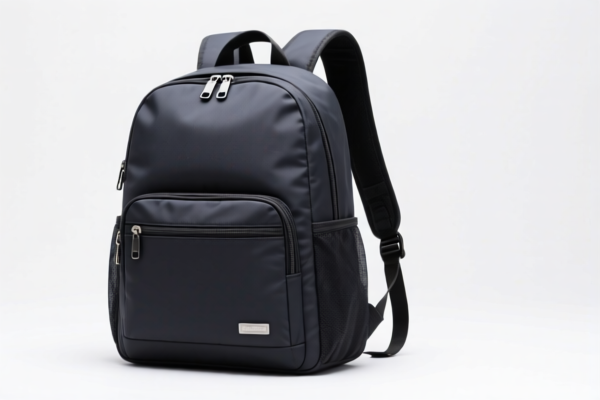
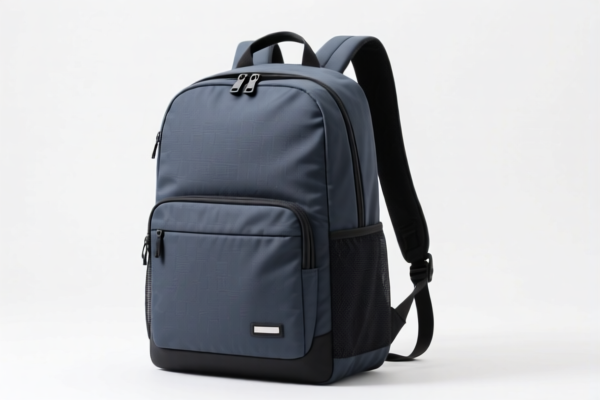
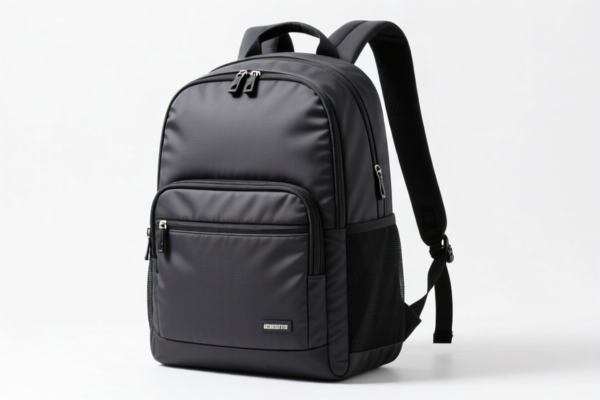
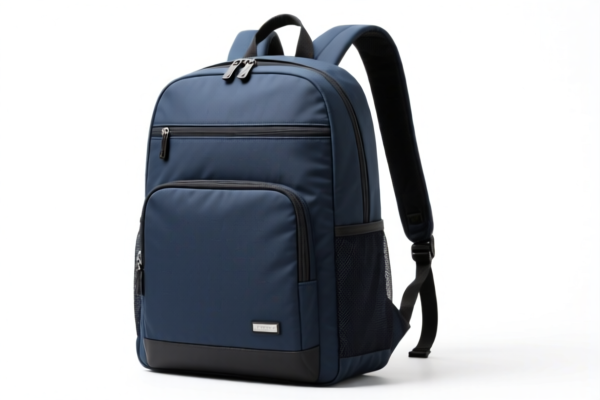
AI Analysis
🎒 Polyester Business Backpack
🌐 HS Code Reference & Customs Clearance Guide | 2026 Latest Tariff Analysis | Professional Clearance Strategy
📌 I. Product Definition & Classification: Do You Truly Understand "Polyester Business Backpack"?
A Polyester Business Backpack is a portable container designed for carrying laptops, documents, and personal items, typically used in professional or travel contexts. In international trade, its classification depends heavily on two key factors: 1. Material Composition: Is it primarily treated as a textile product (backpack) or a plastic product? 2. Structural Integrity: Is it a finished good with specific shape/form, or merely a component?
⚠️ Key Distinction Point:
- If classified under Chapter 39 (Plastics): It is viewed as a "Plastic Article" where polyester is treated as a resin/plastic material.
- If classified under Chapter 42 (Articles of Leather; Travel Goods): It is viewed as a "Bag/Backpack" where polyester is treated as a textile material.
Note: The latter usually incurs significantly higher tariffs due to specific trade restrictions.
📦 II. HS Code Classification Details (2026 Latest Tariff Authority Comparison)
Based on the provided data, here are the four possible HS Code classifications, ranging from lowest to highest tariff impact:
| HS Code | Product Description | Logic for Classification | Total Tax Rate |
|---|---|---|---|
3926.90.48.00 |
Other articles of plastics and articles of other materials of headings 3901 to 3914 | Plastic Perspective: Polyester is treated as "Plastic/Synthetic Resin." The backpack is classified as an "Other Plastic Product." | 13.4% |
3926.90.33.00 |
Other articles of plastics: Of polyesters | Plastic Perspective: More specific than above. Polyester is explicitly identified as "Polyester Plastic Articles." | 16.5% |
4202.92.39.00 |
Travelling, sports and similar bags: With outer surface of textile materials | Textile Perspective: Polyester is treated as a "Textile Material." The item is a "Bag" with an outer surface made of textiles. | 52.6% |
4202.92.31.20 |
Travelling, sports and similar bags: With outer surface of man-made fibers | Textile Perspective: Specific sub-category for bags made of "Synthetic Fibers" (Polyester is a synthetic fiber). | 52.6% |
🔍 Critical Insight:
- The Plastic Classification (HS 39...) results in a low duty of ~13-16%.
- The Textile/Bag Classification (HS 42...) results in a punitive duty of 52.6%.
- Why the huge difference? The US imposes heavy Section 301 (25%) and IEEPA (10%) surcharges on textile/luggage products from China, whereas plastic articles face lower or different surcharges.
💰 III. 2026 Latest Tariff Rate Breakdown (Including Surcharges & Policy Add-ons)
✅ Applicable Country: United States (US)
✅ Origin: China (CN)
✅ Effective Date: Current trade war tariffs apply (Section 301 + IEEPA)
🎯 1. 3926.90.48.00 & 3926.90.33.00 —— Plastic Articles (Low Tax Strategy)
These codes classify the backpack as a plastic product rather than a textile bag. This is a crucial strategic choice if the product design or material composition allows it.
| Item | Content |
|---|---|
| Base Tariff | 3.4% (3926.90.48.00) / 6.5% (3926.90.33.00) |
| Section 301 Surcharge | 0.0% (Note: Some plastic articles may be exempt or lower, but data shows 0.0% for these specific codes) |
| IEEPA Section 122 Surcharge | 10.0% |
| Total Effective Rate | 13.4% (3926.90.48.00) 16.5% ( 3926.90.33.00) |
| De Minimis Exemption | ❌ No (Section 301/IEEPA goods are generally not eligible for de minimis exemption under current enforcement) |
| Legal Basis Path | IEEPA:122 → USITC:3926.90.xx.xx |
📌 Explanation:
- Base Tariff: Reflects the standard Most Favored Nation (MFN) rate for plastic articles.
- IEEPA 10%: A specific surcharge applied to Chinese-origin plastic goods.
- Section 301 (25%): Not applied here, which is why the total rate is significantly lower.
- Strategy: If the backpack can be argued to be a "plastic article" (e.g., rigid shell, plastic-dominated components), this is the cost-effective path.
🎯 2. 4202.92.39.00 & 4202.92.31.20 —— Textile Bags (High Tax Reality)
These codes classify the backpack as a textile bag. Polyester is a synthetic fiber, falling under textile chapters. This classification attracts the maximum trade war penalties.
| Item | Content |
|---|---|
| Base Tariff | 17.6% |
| Section 301 Surcharge | 25.0% |
| IEEPA Section 122 Surcharge | 10.0% |
| Total Effective Rate | 52.6% |
| De Minimis Exemption | ❌ No |
| Legal Basis Path | Section 301 + IEEPA:122 → USITC:4202.92.xx.xx |
📌 Explanation:
- Base Tariff: Standard MFN rate for travel goods/bags.
- Section 301 (25%): The primary punitive tariff on Chinese textiles and luggage.
- IEEPA 10%: Additional surcharge on Chinese goods.
- Total 52.6%: This is a prohibitive tariff that can destroy profit margins for small items unless the retail price is very high.
🛠️ IV. Customs Clearance Practical Advice (Battle-Tested Pitfall Guide)
✅ 1. Documentation Checklist (Non-Negotiable)
| Document | Required | Purpose |
|---|---|---|
| ✅ Product Specification Sheet | ✔️ | Must detail material composition (e.g., "100% Polyester Fabric," "Plastic YKK Zippers," "PC Shell"). |
| ✅ Material Breakdown | ✔️ | Show percentage by weight/volume. If plastic components dominate, argue for Chapter 39. |
| ✅ Product Photos | ✔️ | Show structure. Is it a soft bag (Textile) or a rigid shell (Plastic)? |
| ✅ Commercial Invoice | ✔️ | Accurate description: "Polyester Travel Bag" vs. "Plastic Storage Case." |
| ✅ Origin Certificate | ✔️ | Prove Chinese origin to apply correct IEEPA rates. |
| ✅ Structure Diagram | ✔️ | Useful for challenging classification if disputed. |
✅ 2. Classification Strategy & Declarations
🔥 "Material Dictates Chapter, Structure Dictates Duty!"
| Scenario | Recommended HS Code | Reasoning |
|---|---|---|
| Soft Backpack (Fabric body, flexible) | 4202.92.39.00 or 4202.92.31.20 |
Standard classification for fabric bags. Expect 52.6% tax. |
| Hard-Shell Backpack (Rigid plastic exterior) | 3926.90.48.00 |
Argue as "Plastic Article." Expect 13.4% tax. |
| Hybrid Bag (Textile body + Plastic pockets/lining) | 4202.92.39.00 |
Usually classified by principal material or essential character. If textile >50%, Chapter 42 applies. |
| Non-Woven Polyester Bag | Check specific notes | May fall under different subheadings; verify GRI 3(b) for essential character. |
✅ 3. Critical Compliance Tips
- Avoid "De Minimis" Abuse: Do not attempt to split shipments to bypass the $800 de minimis threshold for Section 301/IEEPA goods. CBP is actively auditing "split shipments" for high-tax items.
- Exact Description Matters: Never use vague terms like "Bag." Use "Polyester Travel Backpack" or "Plastic Storage Container" depending on the HS code chosen.
- Advance Ruling: For new product lines, consider filing a Binding Tariff Information (BTI) or Advance Ruling to secure the 13.4% classification if technically justified.
🌍 V. Global Market Comparison (2026 Context)
| Country/Region | Recommended HS Code | Tariff Rate | Key Requirement |
|---|---|---|---|
| 🇺🇸 USA | 3926.90.48.00 (Preferred) |
13.4% | Must justify as plastic article; otherwise 52.6% |
| 🇨🇳 China | 4202.92.39.00 |
5-10% | Standard import duty; no trade war surcharges |
| 🇪🇺 EU | 4202.92.95 |
4-6% | CE marking if applicable; no IEEPA surcharges |
| 🇬🇧 UK | 4202.92.90 |
4-12% | Post-Brexit rules of origin apply |
📌 Conclusion:
- The USA is the only major market with such extreme disparity (13.4% vs. 52.6%) based on classification nuance.
- For the US market, defending the "Plastic Article" classification (Chapter 39) is a critical cost-saving strategy, provided the product's physical characteristics support it.
📌 VI. Common Errors & Pitfalls (Lessons Learned)
❌ Error 1: Classifying a soft fabric backpack as a plastic article (3926...) without rigid structure.
👉 Consequence: CBP reclassification → Back taxes of ~39% + penalties.
❌ Error 2: Using generic description "Backpack" on invoice.
👉 Consequence: Delayed clearance, additional scrutiny on material composition.
❌ Error 3: Ignoring IEEPA Section 122 surcharge for plastic goods.
👉 Consequence: Underpayment of the 10% surcharge, leading to audits.
❌ Error 4: Assuming "Polyester" automatically means "Textile."
👉 Consequence: Missing the opportunity to classify as "Plastic Resin" if the form factor is non-textile.
✅ Correct Practice:
"Hard-Shell Polyester Travel Backpack, Rigid PC Exterior, Textile Lining" → Argue for
3926.90.48.00
"Soft-Side Polyester Laptop Backpack" → Declare4202.92.39.00with full tax compliance.
🎯 VII. Conclusion: Precision Classification for Profit Protection
🎯 Remember the Golden Rule:
🔹 "Structure Defines Chapter, Chapter Defines Cost."
🔹 "Plastic Shell = 13.4% | Textile Body = 52.6%"
🔹 "Don't guess the HS Code; let the product's physical reality dictate it."
📌 Pro Tip:
If your product is a hybrid, consult a customs broker to analyze the "Essential Character" under GRI 3(b). If the plastic components (zippers, buckles, shell) provide the primary utility, you may have a stronger case for Chapter 39.
📣 Immediate Action:
📞 Engage a Customs Broker: Provide detailed photos and material specs.
🚀 Request Pre-Ruling: If the product is innovative, secure a binding classification to avoid sudden cost spikes.
💼 Optimize Your Supply Chain: If classified as Chapter 42, factor the 52.6% tariff into your pricing model immediately.
✨ Professional Clearance Starts with Accurate Classification!
💼 Every Percentage Point Saved is Pure Profit!
Customer Reviews
About HS Code Classification
The Harmonized System (HS) is an internationally standardized nomenclature developed by the World Customs Organization (WCO) to classify traded products. Over 200 countries use the HS system as the basis for customs tariffs, trade statistics, and import/export regulations.
Each HS code follows a hierarchical structure:
- Chapter (2 digits) — Broad category of goods (e.g., Chapter 84: Machinery and Mechanical Appliances)
- Heading (4 digits) — More specific grouping within the chapter
- Subheading (6 digits) — Internationally standardized breakdown, used by all WCO member countries
- National subdivisions (8-10 digits) — Country-specific extensions for further classification, such as US HTSUS 10-digit codes
Correct HS code classification is essential for smooth customs clearance, accurate duty payment, and compliance with trade regulations. Misclassification can lead to customs delays, overpayment of duties, or penalties.
When importing from CN to US, the applicable tariff rates may include:
- Most-Favored-Nation (MFN) rate — The standard duty rate applied to WTO members
- General rate — Applied to countries without trade agreements
- Trade remedy duties — Additional tariffs such as Section 301 (anti-dumping), Section 232 (national security), or countervailing duties
The information provided on this page is for reference purposes only. For official classification, please consult with your local customs authority or a licensed customs broker.